This article may contain affiliate links. If you book through them, we may earn a small commission at no extra cost to you.
Shinkansen Line Guide · Kyushu Shinkansen
Kyushu Shinkansen Guide: Hakata to Kagoshima —
Kumamoto, Volcanoes & the Deep South
12 Stations · Hakata to Kagoshima-Chuo · The Whole Line in About 1h20 · Mizuho, Sakura & Tsubame
🚄 Hakata → Kagoshima-Chuo in as little as ~1 hr 16 min on the Mizuho
🏰 Kumamoto Castle, Mt. Aso and the road to the volcanoes
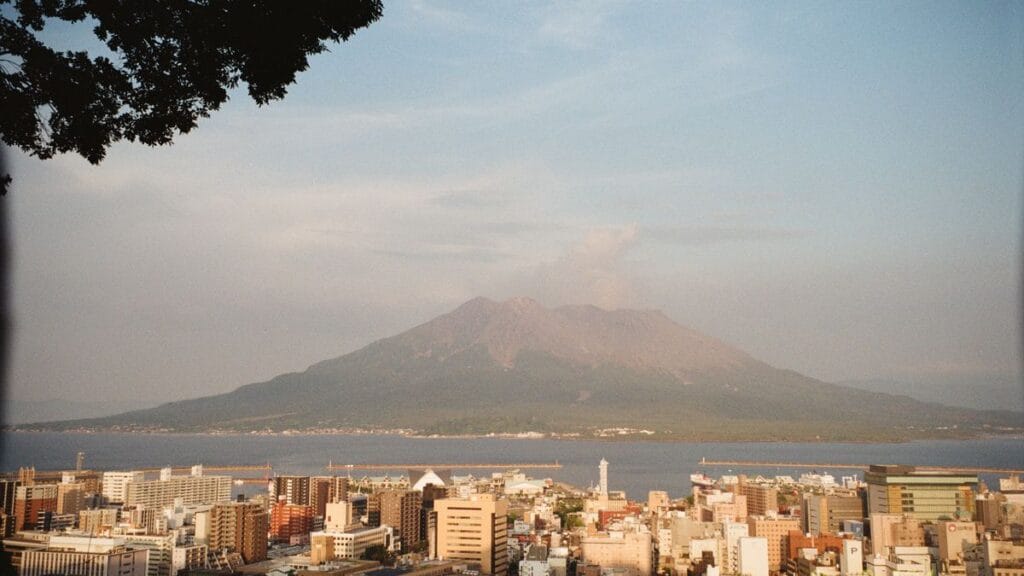
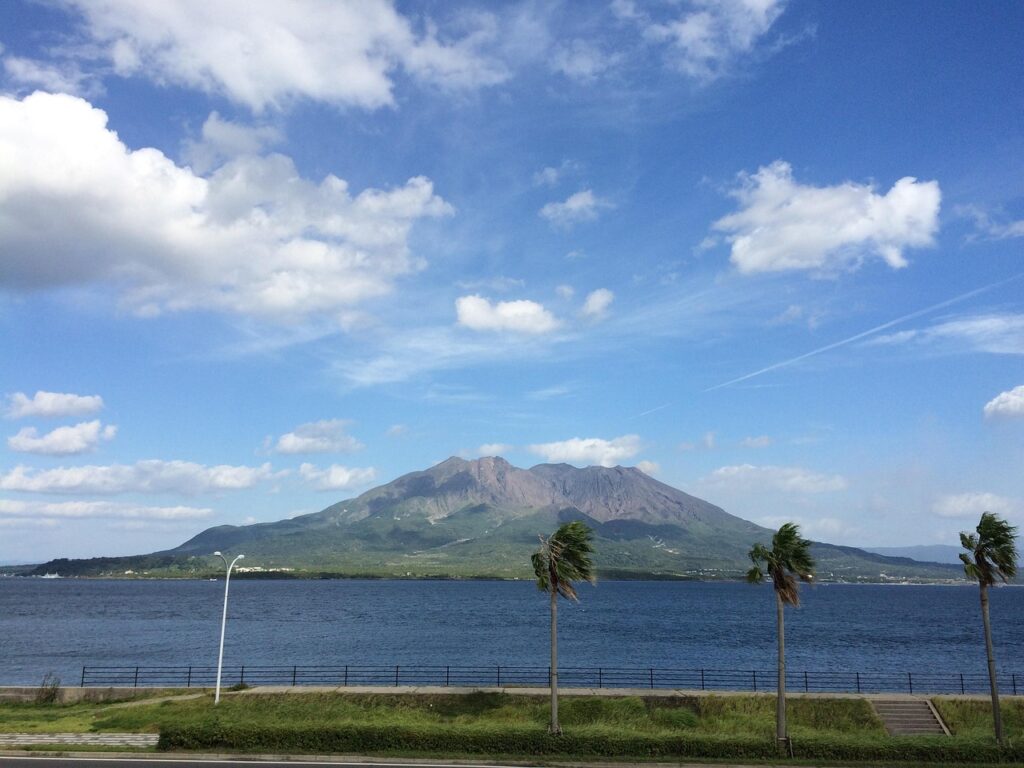
🌋 Ends beneath the smoking cone of Sakurajima
🚄 Through-trains run onto the Sanyo line all the way to Shin-Osaka
On this page
What Is the Kyushu Shinkansen?
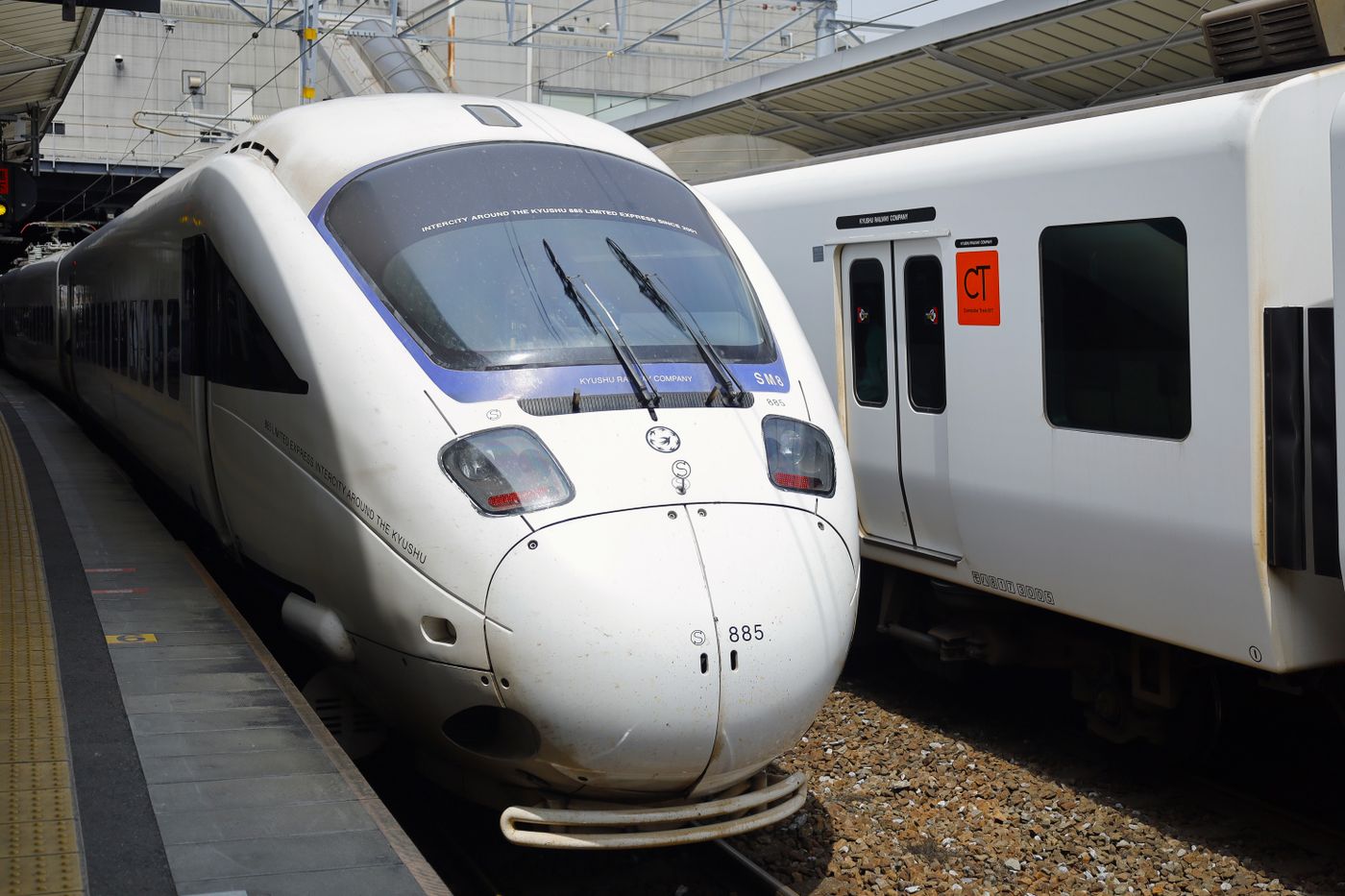
The Kyushu Shinkansen carries you down the western spine of Japan’s southern main island, from Hakata in Fukuoka through Kumamoto to Kagoshima-Chuo, beneath the smoking volcano of Sakurajima. Operated by JR Kyushu, it opened in stages and was completed in 2011, and its stylish trains — designed, like much of JR Kyushu, by Eiji Mitooka — are among the most characterful in the country.
It connects seamlessly with the Sanyo Shinkansen at Hakata, and the fastest Mizuho and Sakura services run straight through to Hiroshima and Shin-Osaka — so a single train can carry you from the Kansai region to the deep south of Kyushu. Along the way it opens up castles, hot springs, volcanoes, tea country and crane-filled wetlands.
Ride a Sakura or Tsubame just to enjoy the interiors: warm wood, fabric blinds and golden seats designed to feel like a boutique hotel rather than a train. JR Kyushu turned the shinkansen into a piece of design.
Mizuho, Sakura & Tsubame: Which Train?
🚄 Mizuho — the fastest, running through to the Sanyo line. Stops only at Hakata, Kumamoto and Kagoshima-Chuo. Not covered by the ordinary Japan Rail Pass.
🌸 Sakura — nearly as fast, with a few more stops and lovely 2+2 seating; through-trains to Shin-Osaka. Fully covered by the Japan Rail Pass.
🟢 Tsubame — the all-stations service within Kyushu, the only way to reach the smaller stops; JR Pass valid.
For the big cities, take a Mizuho or Sakura; for the small towns, a Tsubame. Regional JR Kyushu rail passes are excellent value for a Kyushu-focused trip.
The 12 Stations
From north to south, Hakata to Kagoshima-Chuo. Each links to our full area-and-hotel guide.
1. Hakata (Fukuoka) — the northern terminus and junction with the Sanyo line.
2. Shin-Tosu (Saga) — a junction town with premium outlets and football.
3. Kurume (Fukuoka) — the birthplace of tonkotsu ramen and Bridgestone.
4. Chikugo-Funagoya (Fukuoka) — gateway to the Yame green-tea country.
5. Shin-Omuta (Fukuoka) — near the Miike coal mine, a UNESCO industrial site.
6. Shin-Tamana (Kumamoto) — a quiet gateway to Tamana Onsen.
7. Kumamoto (Kumamoto) — castle city and gateway to Mt. Aso and Kurokawa Onsen.
8. Shin-Yatsushiro (Kumamoto) — door to the Kuma River valley and Hitoyoshi.
9. Shin-Minamata (Kumamoto) — an environmental-recovery city and gateway to Amakusa.
10. Izumi (Kagoshima) — a samurai town and Japan’s greatest crane-wintering site.
11. Satsuma-Sendai (Kagoshima) — gateway to the Koshikijima islands.
12. Kagoshima-Chuo (Kagoshima) — the southern terminus, beneath the Sakurajima volcano.
Journey Times & Fares
Times are for the fastest applicable service; fares are approximate reserved-seat totals, one way.
| Route | Fastest time | Approx. fare (reserved) |
|---|---|---|
| Hakata → Kagoshima-Chuo (Mizuho) | ~1 hr 16 min | ~¥11,950 |
| Hakata → Kumamoto | ~35 min | ~¥5,230 |
| Kumamoto → Kagoshima-Chuo | ~45 min | ~¥6,990 |
| Shin-Osaka → Kagoshima-Chuo (Mizuho, through) | ~3 hr 45 min | ~¥21,600 |
The Japan Rail Pass covers Sakura and Tsubame, but not the Mizuho without a supplement. The JR Kyushu regional passes are the smart choice for exploring the island.
Volcanoes, Castles & Hot Springs
Kyushu is Japan’s land of fire, and this line is your way into it. From Kumamoto, buses reach the vast caldera of Mt. Aso and the storybook hot springs of Kurokawa Onsen; Kagoshima faces the ever-active Sakurajima across its bay; and hot springs, from Ibusuki’s sand baths to countless local onsen, are everywhere. Add Kumamoto’s great castle and Kagoshima’s Shimazu-clan heritage, and the line strings together some of Kyushu’s finest experiences.
Which Airports Connect to This Line?
✈️ Fukuoka Airport (FUK): Two subway stops from Hakata — the main northern gateway.
✈️ Kumamoto Airport (KMJ): Linked to Kumamoto by bus (and a new rail connection under way).
✈️ Kagoshima Airport (KOJ): About 40 minutes by bus from Kagoshima-Chuo — the southern gateway, with flights to the Amami and Okinawa islands.
Where Should You Stay Along the Line?
Kumamoto and Kagoshima are the essential city bases — Kumamoto for its castle and the Aso/Kurokawa hinterland, Kagoshima for Sakurajima, Sengan-en and the deep south. Kurume rewards ramen pilgrims, Izumi charms with cranes and samurai streets, and the smaller stops are gateways to tea, hot springs and islands. Each station guide above gives the honest verdict.
Keep exploring
🏨 Planning where to stay?
Every area guide on this site pairs with honest, station-by-station hotel picks. Start here: Fukuoka Hotel Guides →