This article may contain affiliate links. If you book through them, we may earn a small commission at no extra cost to you.
Kyushu Shinkansen Guide · Kurume Station
Best Hotels Near Kurume Station: The Birthplace of Tonkotsu Ramen
& a City of Craft
A Sakura & Tsubame Stop · Where Tonkotsu Ramen Was Born · Ikat Textiles, a Water Shrine & Bridgestone
🚄 Hakata ~15 min · Kumamoto ~20 min
🍜 The original home of milky tonkotsu ramen
🧵 Kurume kasuri — indigo ikat textiles
⛩️ Suitengu, head shrine of Japan’s water-god shrines
On this page
What Kind of Area is Kurume? A Local’s Honest Take
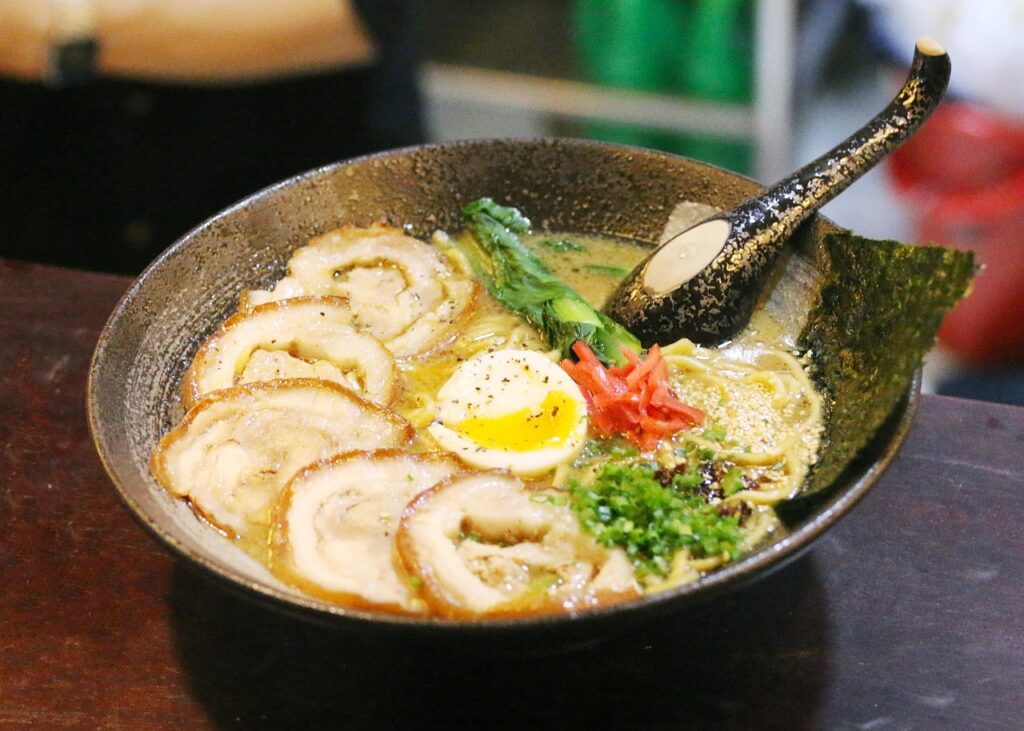
Kurume is a mid-sized Fukuoka city with a surprisingly outsized claim to fame: it is the birthplace of tonkotsu ramen. The rich, milky pork-bone broth now associated with all of Kyushu was first served here in the 1930s, and Kurume’s ramen shops still make a robust, old-school version worth a pilgrimage. The city is also the cradle of Bridgestone (whose founder was born here), a centre for the indigo ikat weaving called Kurume kasuri, and home to Suitengu, the head shrine of all Japan’s water-god shrines.
Sakura and Tsubame services stop here, just 15 minutes from Hakata. Kurume is not a major tourist town, but for ramen lovers, craft travelers and anyone wanting a genuine, unpolished Kyushu city, it makes a rewarding stop or an easy, cheaper base than Fukuoka.
Kurume’s tonkotsu is the original — often cloudier and porkier than the Hakata style it inspired. Seek out a long-established shop and taste where a whole genre of Japanese ramen began.
Getting Around from Kurume
🚄 Shinkansen
Hakata ~15 min · Shin-Tosu ~5 min · Kumamoto ~20 min. Sakura and Tsubame stop.
🚃 Around the city
The conventional Kurume Station and the Nishitetsu line link the shinkansen station to the city centre, Suitengu and the riverside.
⛰️ To Yame & the hills
Buses and local lines reach the Yame tea country and the mountain onsen of the Chikugo region.
What to See Around Kurume
🍜 The Ramen Shops
A crawl of Kurume’s historic tonkotsu counters is the city’s signature experience — the taproot of Kyushu ramen.
⛩️ Suitengu Shrine
The head shrine of the nationwide Suitengu (water-god) network, on the banks of the Chikugo River — popular for safe childbirth and water blessings.
🧵 Kurume Kasuri & the Ishibashi Culture Center
The indigo ikat weaving tradition, plus the Bridgestone-founded Ishibashi Bunka Center with its art museum and gardens.
Where Should You Actually Stay?
Kurume has a practical, good-value hotel supply.
🏨 Station-front: Business hotels near the shinkansen and the city-centre Nishitetsu station suit a ramen-and-craft stop.
🍜 Foodie base: Staying central puts the ramen shops and izakaya within walking distance.
🏙️ Fukuoka alternative: Hakata, 15 minutes north, offers far more if you prefer a big city.
Overall Rating: Kurume Area
| Category | Rating | Notes |
|---|---|---|
| Shinkansen Access | ★★★★☆ | Sakura/Tsubame, 15 min from Hakata |
| Around the Station | ★★★☆☆ | Mid-sized city; centre a short hop |
| Food & Craft | ★★★★★ | Original tonkotsu ramen and kasuri textiles |
| Hotel Choice | ★★★☆☆ | Practical and good value |
| Charm & Atmosphere | ★★★☆☆ | Genuine, unpolished Kyushu city |
Who Should Stay Here?
✔ Ramen pilgrims after the original tonkotsu
✔ Craft and textile travelers
✔ Anyone wanting a cheaper base near Fukuoka