This article may contain affiliate links. If you book through them, we may earn a small commission at no extra cost to you.
Shinkansen Line Guide · Tokaido Shinkansen
Tokaido Shinkansen Guide: Tokyo to Osaka on Japan’s Busiest Bullet Train —
Nozomi, Hikari, Kodama & the Mount Fuji Window
17 Stations · Japan’s Original Shinkansen (1964) · Tokyo–Osaka in 2 hr 21 min · A Train Every Few Minutes
🚄 Tokyo → Shin-Osaka in as little as 2 hr 21 min on the Nozomi
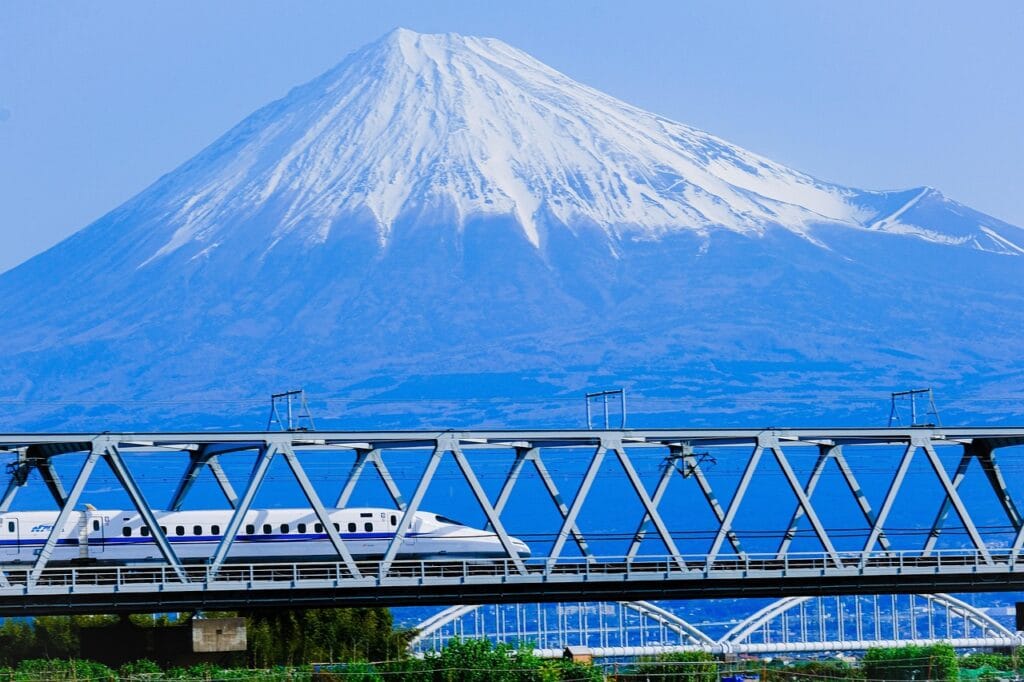
🗻 Mount Fuji framed in the window about 40 minutes out of Tokyo
🏙️ Links Tokyo, Yokohama, Nagoya, Kyoto and Osaka — Japan’s core
🎫 Hikari and Kodama fully covered by the Japan Rail Pass
On this page
What Is the Tokaido Shinkansen?
The Tokaido Shinkansen is the line that started it all — the world’s first high-speed railway, opened for the 1964 Tokyo Olympics. It runs 515 km down Japan’s Pacific belt from Tokyo through Yokohama, Nagoya and Kyoto to Shin-Osaka, stitching together the four cities where most first-time visitors spend their time. It is also the busiest high-speed line on earth: at peak times a train departs Tokyo roughly every three minutes, and the whole line runs with an average delay measured in seconds.
Operated by JR Central, every train is a white-and-blue N700S or N700A series set. What changes is not the train but how often it stops — and that is the one thing every traveler needs to understand before booking.
If you remember one thing: the Tokaido line has three service tiers — Nozomi, Hikari and Kodama — running on the same tracks. They cost almost the same. The difference is how many stations they skip, and whether your rail pass covers them.
Nozomi vs Hikari vs Kodama: Which Train?
🚄 Nozomi — the fastest. Stops only at Shinagawa, Shin-Yokohama, Nagoya and Kyoto between Tokyo and Shin-Osaka. Tokyo–Osaka in 2 hr 21 min. Not covered by the ordinary Japan Rail Pass — pass holders must pay a Nozomi supplement (introduced in 2023) or simply take a Hikari instead.
⚡ Hikari — the sweet spot. Adds a handful of stops (typically Odawara or Shizuoka, plus stations west of Nagoya) and reaches Osaka in about 2 hr 55 min. Fully covered by the Japan Rail Pass. For pass holders this is the default train.
🟢 Kodama — the local. Stops at every single station, so Tokyo–Osaka takes around 4 hours. Slow for long trips, but the only way to reach the small stations (Atami, Mishima, Shin-Fuji, Kakegawa, Mikawa-Anjo, Gifu-Hashima), and often the emptiest, most relaxed ride.
Practical rule: if you are paying cash and going city-to-city, take the Nozomi. If you hold a Japan Rail Pass, take the Hikari. If your destination is a small station, you will be on a Kodama.
The 17 Stations
From east to west, Tokyo to Shin-Osaka. Each links to our full area-and-hotel guide.
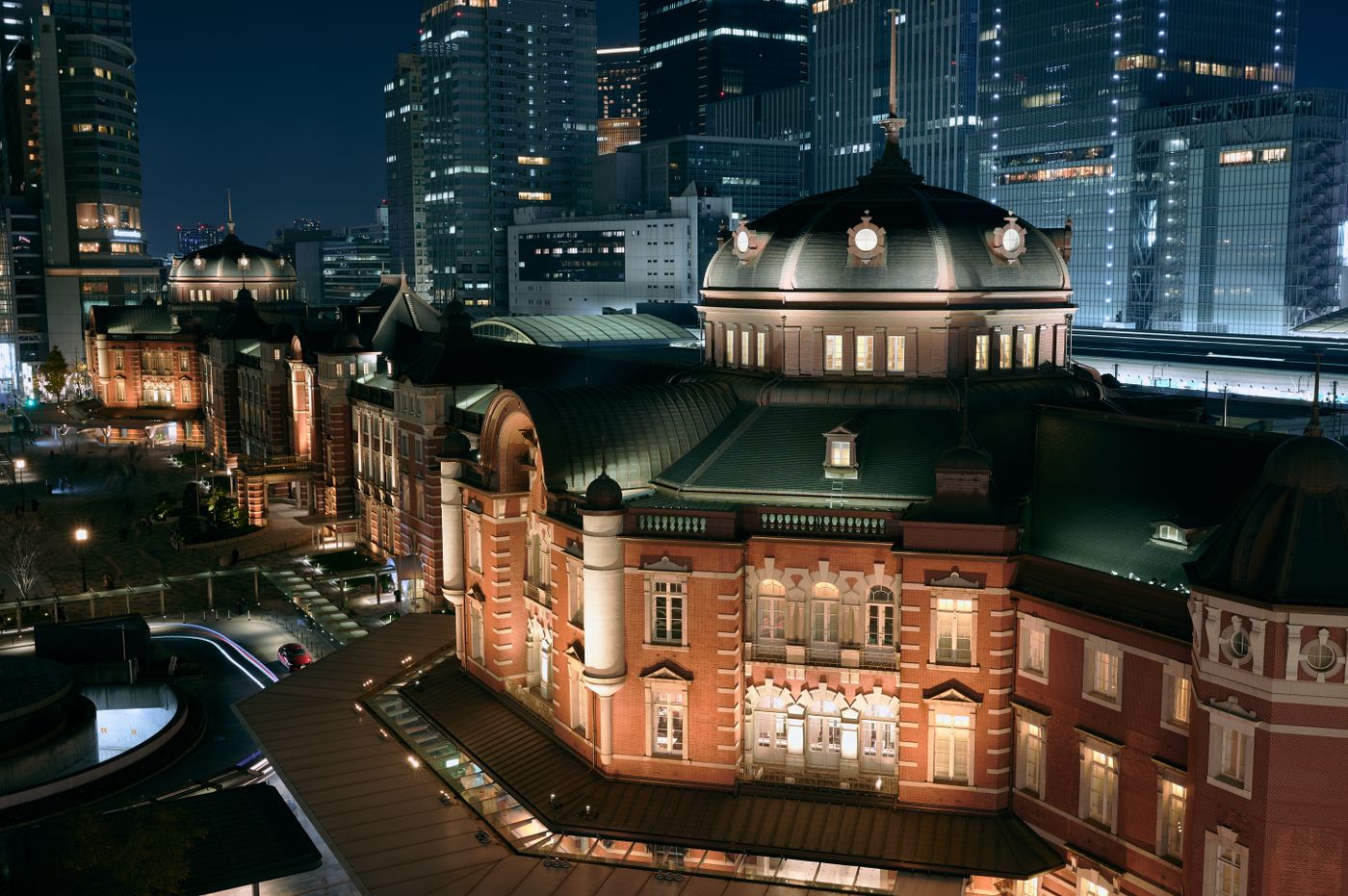
1. Tokyo (Tokyo) — the eastern terminus; every Tokaido train starts here.
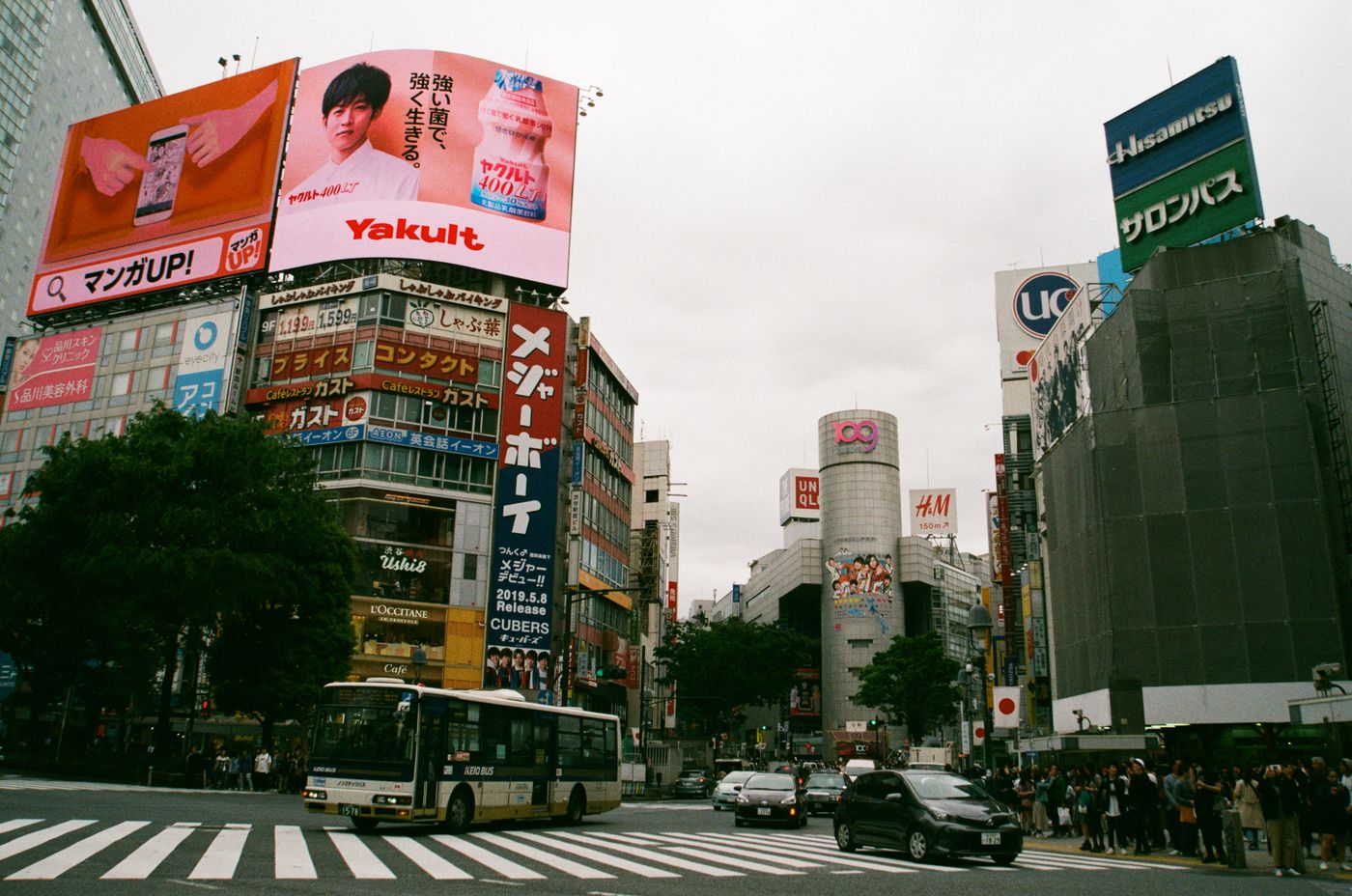
2. Shinagawa (Tokyo) — the closest shinkansen stop to Haneda Airport.
3. Shin-Yokohama (Kanagawa) — gateway to Yokohama, Chinatown and the ramen museum.
4. Odawara (Kanagawa) — castle town and the fastest shinkansen door to Hakone.
5. Atami (Shizuoka) — a retro seaside hot-spring resort an hour from Tokyo.
6. Mishima (Shizuoka) — spring-water town and the eastern gateway to the Izu Peninsula and Mount Fuji’s south side.
7. Shin-Fuji (Shizuoka) — the single best head-on view of Mount Fuji from any shinkansen platform.
8. Shizuoka (Shizuoka) — green-tea capital, Sengen Shrine and gateway to the Miho pine grove.
9. Kakegawa (Shizuoka) — a reconstructed wooden castle and the tea hills of the Makinohara plateau.
10. Hamamatsu (Shizuoka) — Japan’s musical-instrument city on Lake Hamana, home of unagi eel.
11. Toyohashi (Aichi) — a friendly streetcar city and the shinkansen door to the Okumikawa hills.
12. Mikawa-Anjo (Aichi) — the quietest Tokaido stop, in the heart of Toyota country.
13. Nagoya (Aichi) — Japan’s fourth-largest city and the line’s great midpoint hub.
14. Gifu-Hashima (Gifu) — a rural junction and snow-country gateway toward Gifu and the Nagara River.
15. Maibara (Shiga) — the Lake Biwa transfer point where the Tokaido meets the JR lines north.
16. Kyoto (Kyoto) — the old capital; the busiest tourist stop on the entire line.
17. Shin-Osaka (Osaka) — the western terminus, where the Tokaido hands over to the Sanyo Shinkansen for Hiroshima and Hakata.
Journey Times & Fares
Times are for the fastest applicable service; fares are approximate reserved-seat totals (base fare + limited-express charge), one way.
| Route | Fastest time | Approx. fare (reserved) |
|---|---|---|
| Tokyo → Shin-Osaka (Nozomi) | 2 hr 21 min | ~¥14,720 |
| Tokyo → Kyoto (Nozomi) | ~2 hr 09 min | ~¥14,170 |
| Tokyo → Nagoya (Nozomi) | ~1 hr 34 min | ~¥11,300 |
| Tokyo → Shizuoka (Hikari) | ~1 hr 00 min | ~¥6,470 |
| Tokyo → Odawara (Kodama/Hikari) | ~35 min | ~¥3,280 |
| Tokyo → Shin-Yokohama | ~18 min | ~¥1,380 |
The Japan Rail Pass covers Hikari and Kodama trains in full; for Nozomi you now pay a supplement. Reserved seats are worth booking on this line — unreserved cars fill fast around Nagoya and Kyoto, and cost only a few hundred yen less.
Mount Fuji: Where to Sit
The Tokaido Shinkansen delivers Japan’s most famous train view. About 40–45 minutes after leaving Tokyo, between Mishima and Shin-Fuji, Mount Fuji rises huge and close over the tea fields.
Going west (Tokyo → Osaka), sit on the right — seats D and E. Going east (Osaka → Tokyo), sit on the left, also seats D and E. Clear mornings in autumn and winter give the best odds; summer often hides the peak in haze. Have your camera ready around Shin-Fuji — the view lasts less than a minute at 285 km/h.
Which Airports Connect to This Line?
✈️ Tokyo Haneda (HND): Closest to Shinagawa — the Keikyu line reaches it in about 12 minutes, making Shinagawa the smartest place to start or end a Tokaido trip if you fly Haneda.
✈️ Tokyo Narita (NRT): The N’EX runs to Tokyo Station in about 55 minutes, connecting straight onto the shinkansen.
✈️ Chubu Centrair (NGO): Nagoya’s airport, ~28 minutes from Nagoya Station by the Meitetsu µ-Sky train — an excellent mid-line entry or exit point.
✈️ Kansai (KIX) & Itami (ITM): Osaka’s two airports feed the western end. The Haruka express links KIX to Shin-Osaka in about 45–50 minutes; Itami handles domestic flights close to the city.
Flying into one end and out of the other — for example Haneda in, Kansai out — turns the Tokaido into a natural one-way spine for a first Japan trip, with no backtracking.
Where Should You Stay Along the Line?
For most trips the answer is simple: base in the big cities — Tokyo, Nagoya, Kyoto or Osaka — and treat the smaller stations as day trips or scenic stopovers. But there are excellent reasons to sleep along the way: an onsen night in Atami, a Hakone gateway stay at Odawara, a Fuji-view morning near Mishima, or an eel dinner in Hamamatsu. Each station guide above tells you honestly whether to stay or just pass through.
Keep exploring
🏨 Planning where to stay?
Every area guide on this site pairs with honest, station-by-station hotel picks. Start here: Tokyo Hotel Guides →