This article may contain affiliate links. If you book through them, we may earn a small commission at no extra cost to you.
On this page
Introduction: The City That Accepts What It Cannot Change
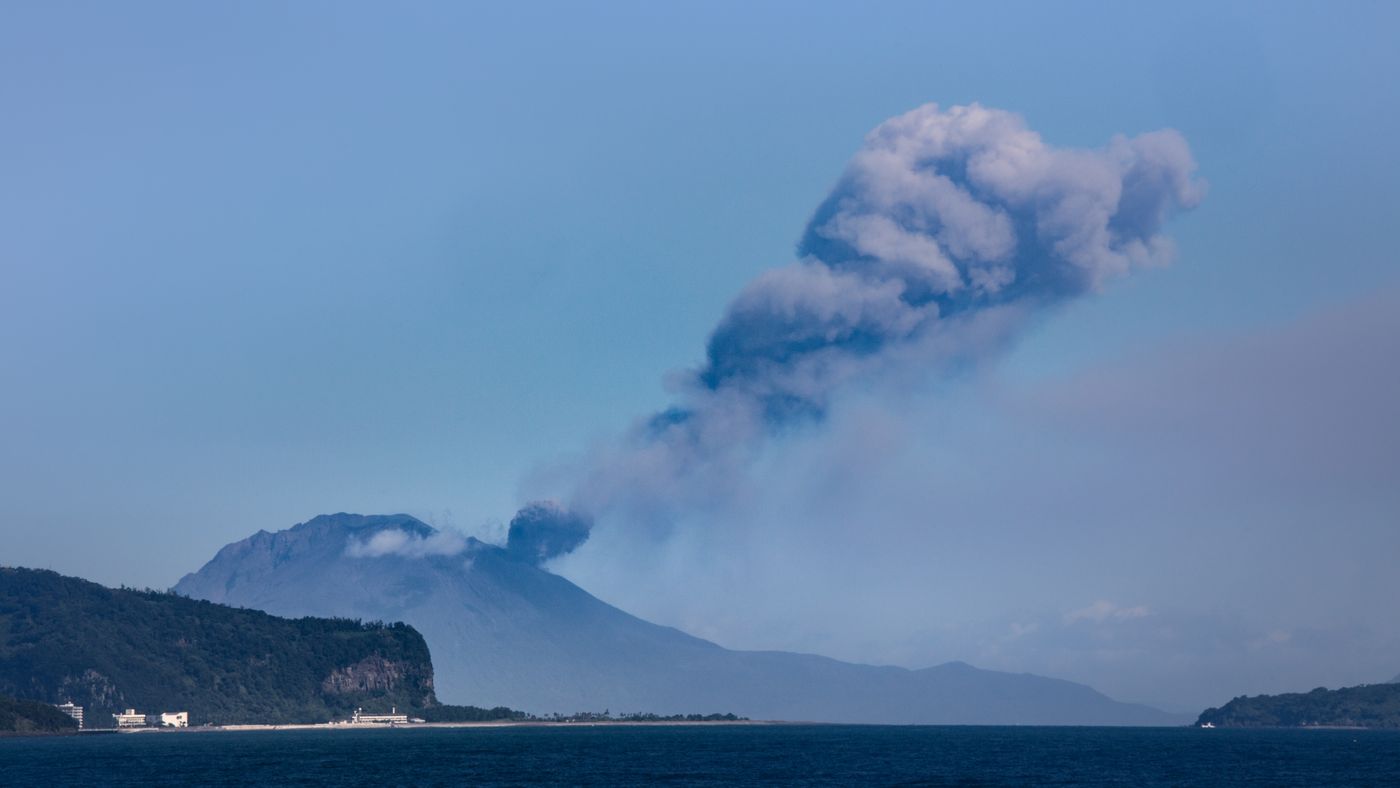
At the southern tip of Kyushu, a city of 600,000 people goes about its daily business under a cloud of volcanic ash. Sakurajima (桜島) — a 1,117-meter active stratovolcano that erupts an average of several hundred times per year — sits approximately 4 kilometers from Kagoshima (鹿児島) city center, separated from it by the Kinko Bay (錦江湾). The ash from Sakurajima's eruptions falls on Kagoshima regularly — occasionally enough to require cars and outdoor furniture to be covered, sometimes enough to disrupt air travel, always enough to be a visible presence in daily life.
The relationship between Kagoshima and Sakurajima is one of the most extraordinary human-geological coexistences on earth. The city has adapted not by fighting or fleeing the volcano but by incorporating it — building ash evacuation shelters in playgrounds, selling Sakurajima daikon (giant volcanic-soil radishes), measuring ash fall as a public utility alongside temperature and wind speed, and maintaining a civic pride in living with a genuinely dangerous natural neighbor that is unique in Japan.
Sakurajima: The Living Volcano
Sakurajima was an island until 1914, when the Great Taisho Eruption produced a lava flow so massive that it filled the strait between the island and the Osumi Peninsula, connecting Sakurajima permanently to the mainland. The Great Taisho Eruption remains the most significant volcanic event in modern Japanese history — it deposited lava flows 3–5 meters deep across large areas and reshaped the geography of the region permanently.
Today, Sakurajima continues erupting from its Minamidake (南岳) summit vent at an extraordinary frequency — typically several small eruptions per day, with periodic larger events that produce ash columns visible from Kagoshima across the bay. The ash (火山灰 / kazanbai) is Kagoshima residents' most constant reminder of the volcano: the city distributes free ash collection bags to residents, ash removal trucks make regular rounds, and commuters learn to distinguish good ash days from bad ones.
The Lava Fields (溶岩原)
The 1914 lava flow created an extraordinary landscape of rough, dark volcanic rock that extends across the northeastern peninsula connecting Sakurajima to the mainland. Walking through the lava fields — the surface black and jagged, the occasional plant forcing its way through cracks, the distant summit visible above — is the most direct encounter available with the reality of what Sakurajima does to the landscape around it.
Arimura Lava Observatory (有村溶岩展望所): A platform built within the lava fields specifically for Sakurajima eruption viewing — an extraordinary facility that normalizes the extraordinary by treating eruption viewing as a recreational activity. On active eruption days, the observatory fills with both tourists and locals who want to watch from a safe distance. Entry is free.
The Sakurajima Ferry (桜島フェリー)
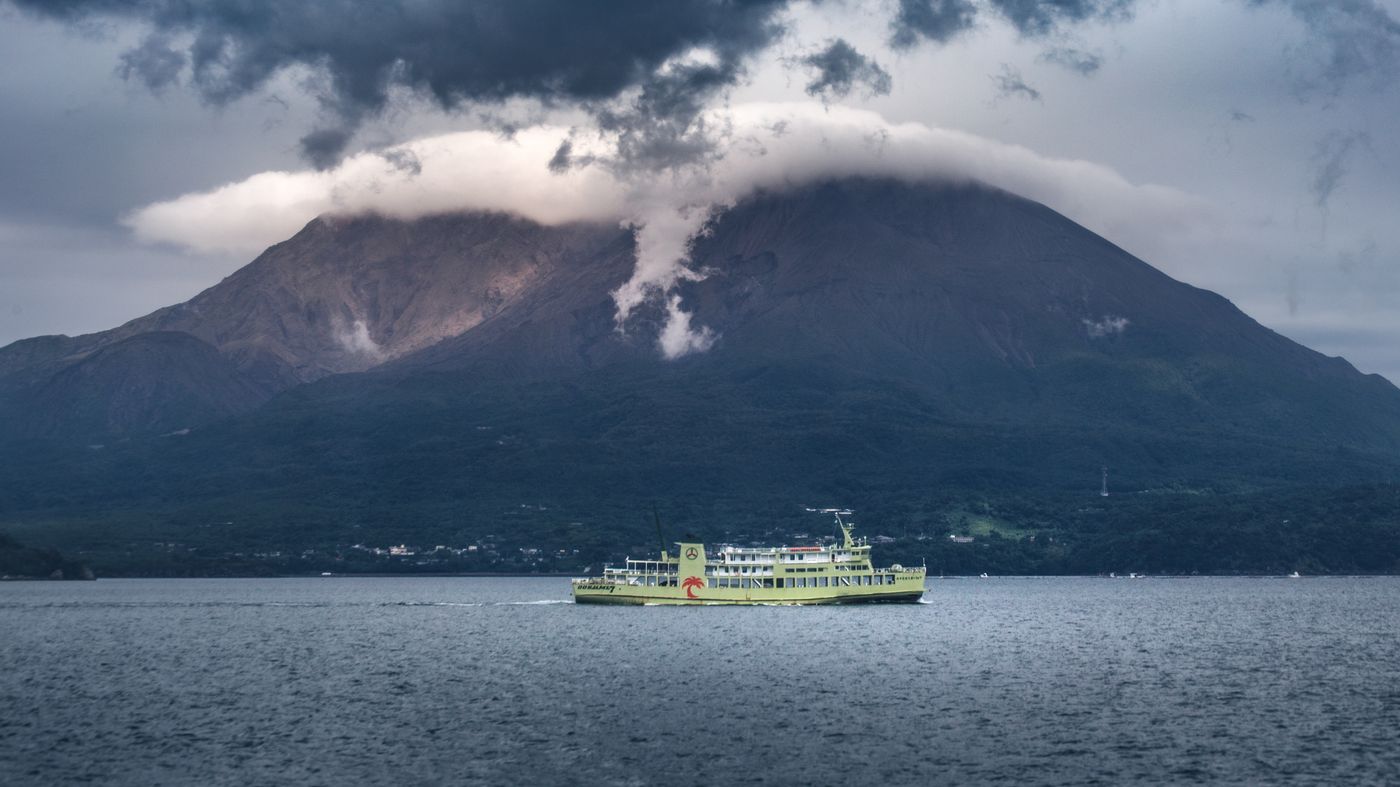
The 15-minute ferry crossing between Kagoshima Port and Sakurajima runs from around 4:00am until close to midnight, every 15–30 minutes by day (¥250 — note that the famous 24-hour operation ended on October 1, 2025, when the small-hours sailings were cut). The crossing provides the most complete view of Sakurajima — the full cone rising from the water, the ash cloud if present, the city of Kagoshima receding behind. The ferry also serves as Sakurajima's residents' primary means of accessing Kagoshima's services — the crossing is a daily commute for thousands of people.
Night Ferry: The crossing at night — the city lights of Kagoshima behind, Sakurajima's dark mass ahead with an occasional glow from the summit — is one of Kagoshima's most atmospheric experiences. Evening sailings continue until close to midnight, though since October 2025 the small-hours boats no longer run.
Volcano Museum and Sakurajima Visitor Center
The Sakurajima Visitor Center near the ferry terminal provides excellent English-language context for the volcano's history, geology, and ongoing activity, including real-time data on eruptions and ash fall. This is the best orientation before exploring the island further.
Kagoshima City: The Saigo Takamori Legacy
Kagoshima is the homeland of Saigo Takamori (西郷隆盛 / 1828–1877) — the samurai general who helped overthrow the Tokugawa shogunate and restore imperial rule in the Meiji Restoration, then led the last major samurai rebellion (the Seinan War / 西南戦争) against the very government he had helped create when he felt it had betrayed the samurai class. Saigo's final stand and death near Kagoshima — at Shiroyama (城山) — established his posthumous reputation as the embodiment of samurai virtue, and his memory permeates Kagoshima's civic identity.
Terukuni Shrine (照国神社): The shrine dedicated to Shimazu Nariakira — the Satsuma domain lord who was Saigo's mentor and patron. The shrine is a center of Kagoshima's historical consciousness.
Shiroyama Observation Deck (城山展望台): The hilltop where Saigo made his last stand — now an observation deck with the finest view of Kagoshima city and Sakurajima. The view combining the city, the bay, and the volcano is one of the most compositionally complete urban views in Kyushu.
Senganen Garden (仙厳園): The Shimazu Family's Mountain Garden
Senganen (仙厳園) — the 1658 garden of the Shimazu clan, Satsuma's feudal lords — is one of Japan's finest stroll gardens, using Sakurajima and Kinko Bay as borrowed scenery (借景). The volcano appears behind every garden composition as a framing element — an extraordinary example of the borrowed scenery technique using an active volcano as the borrowed landscape.
The garden's connection to Japan's modernization is also significant: the Shimazu family established the Shūseikan industrial complex (集成館) adjacent to Senganen in the 1850s — Japan's first Western-style manufacturing complex, using technology imported through the Dutch trading connection — and the surviving buildings (a UNESCO World Heritage component) provide direct physical connection to Japan's industrial revolution.
Kagoshima Food: Black Pork and Shochu
Kagoshima Kurobuta (鹿児島黒豚): Black Berkshire pork from pigs raised in Kagoshima's volcanic soil conditions — the premium pork brand of Japan, valued for its exceptional fat marbling and flavor. Available as shabu-shabu, tonkatsu, and stewed preparations throughout the city.
Imo Jochu (芋焼酎): Kagoshima's distilled spirit — sweet potato-based shochu that is the defining drink of Kyushu's southern culture. The Kagoshima style (typically drunk on the rocks or with water) is the most widely produced and consumed shochu in Japan. Distillery tours are available in the city.
Kagoshima Ramen: A pork-bone broth blended with chicken and vegetables — lighter and less opaque than Hakata's pork-only style.
Recommended Base Hotels
Shiroyama Hotel Kagoshima (Luxury / from ¥25,000): Hillside position with Sakurajima view, the city's finest hotel.
- Remm Kagoshima (Mid-range / from ¥12,000): Excellent city center location near the tram network.
- Dormy Inn Kagoshima (Budget-mid / from ¥10,000): Natural hot spring, Kagoshima Station area.
Planning where to stay in Kyushu & Okinawa? Browse our honest hotel picks and area guides.
🏨 Planning where to stay?
Every area guide on this site pairs with honest, station-by-station hotel picks. Start here: Kagoshima Hotel Guides →