This article may contain affiliate links. If you book through them, we may earn a small commission at no extra cost to you.
On this page
Introduction: The Park Beyond the Crater
Aso-Kuju National Park (阿蘇くじゅう国立公園) encompasses the Mount Aso caldera (covered extensively in the dedicated Mt. Aso article) and extends eastward into the Kuju Mountains (くじゅう連山) — a separate volcanic range straddling the border of Oita and Kumamoto prefectures, less internationally known than Aso's dramatic crater but offering some of Kyushu's finest highland hiking and grassland scenery.
The Kuju Mountains: Kyushu's Roof
The Kuju range contains Kyushu's highest non-Aso peaks, including Mount Nakadake (中岳, 1,791m) and Mount Kuju (久住山, 1,787m) — a cluster of volcanic peaks separated by grassy plateaus and connected by a well-developed trail network that makes multi-peak day hikes genuinely achievable.
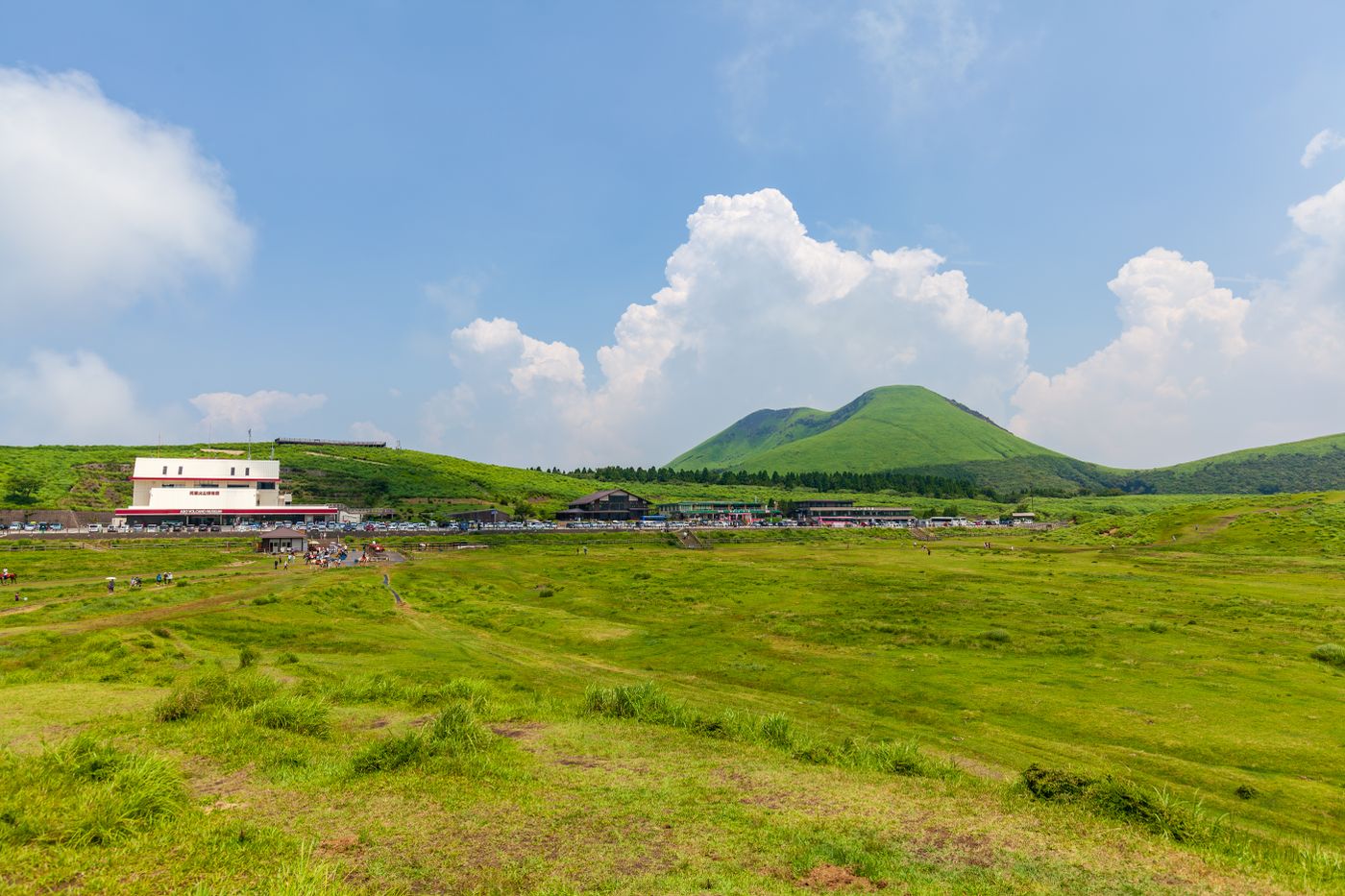
The grassland character: Unlike the more forested mountain ranges of Honshu, much of the Kuju area's lower and mid-elevation terrain is open grassland (草原 / sōgen), maintained historically through controlled burning practices (野焼き / noyaki) associated with traditional cattle grazing. This produces sweeping panoramic views across rolling grass-covered terrain punctuated by volcanic peaks — a landscape character genuinely distinct from the typical Japanese mountain forest experience.
Grazing horses: On the Aso side, the Kusasenri meadow (草千里) keeps horses grazing across the crater plateau — a classic Aso image (rides are offered in season). For genuinely wild horses, Cape Toi in Miyazaki, covered in its own article, is the place.
Hiking the Kuju Range
Mount Kuju and Mount Nakadake traverse: The most popular route, typically accessed from the Makinoto Pass (牧ノ戸峠) trailhead — a multi-peak traverse covering several of the range's main summits in a single day (approximately 5–6 hours), with the terrain alternating between grassland sections and volcanic rock scrambles near the peaks.
Bogatsuru Marsh (坊ガツル): A high-elevation wetland within the Kuju range, similar in ecological character (though smaller in scale) to Oze — surrounded by peaks and accessible via trail from multiple directions, with a mountain hut providing overnight accommodation for multi-day traverse hikers.
Tadewara Marsh (タデ原湿原): A more accessible wetland area near the Chōjabaru area, with boardwalk access suitable for casual visitors, providing a wetland experience without requiring serious hiking commitment.
The Hot Spring Connection
The Kuju area sits within easy reach of Beppu and Yufuin (both covered in dedicated articles), making the combination of highland hiking and onsen recovery one of central Kyushu's most appealing multi-day itineraries. Several smaller, less-developed onsen towns within the Kuju area itself — including Hokkein Onsen (法華院温泉), accessible only by foot and providing one of Japan's most remote mountain hot spring experiences — offer the chance to combine genuine wilderness hiking with traditional bathing in a single trip.
Hokkein Onsen: Located within Bogatsuru Marsh, accessible only via a 2–3 hour hike — Japan's most isolated mountain onsen, requiring overnight commitment but providing an experience of genuine remoteness rare in Japan's well-developed mountain infrastructure.
Recommended Base Hotels
Yufuin or Beppu accommodation (see dedicated articles) for the most comfortable base with good transport access to Kuju trailheads.
Aso area ryokan (see Mt. Aso article) for combined Aso-Kuju itineraries.
Planning where to stay in Kyushu & Okinawa? Browse our honest hotel picks and area guides.
🏨 Planning where to stay?
Every area guide on this site pairs with honest, station-by-station hotel picks. Start here: Kumamoto Hotel Guides →