This article may contain affiliate links. If you book through them, we may earn a small commission at no extra cost to you.
On this page
Introduction: The Ritual That Connects You to 1,500 Years of Practice
Praying at a Japanese shrine is not a casual activity — it is a ritual with specific forms that have been maintained continuously since the Heian period. Non-Japanese visitors are entirely welcome to participate, and the ritual's relative simplicity (the basic form is learned in a single explanation) makes respectful engagement accessible to anyone who takes a moment to understand what they are doing and why.
Step by Step: The Complete Process
Step 1: Temizu (手水 / Ritual Hand Washing)
- Before approaching the main hall, stop at the temizuya (手水舎) — the stone water basin with ladles:
Take a ladle (柄杓 / hishaku) with your right hand
Pour water over your left hand
Transfer the ladle to your left hand
Pour water over your right hand
Transfer back to right hand, cup left hand to receive water, rinse your mouth (optional; some shrines advise against drinking in current practice)
Tilt the ladle upright so remaining water flows down the handle, cleansing it
The purpose: The water purification represents the removal of spiritual impurity (穢れ / kegare) before entering the sacred space.
Step 2: Approach and Offering
Walk along the side of the main approach path (参道 / sandō) rather than the center — the center is considered the path of the kami.
At the offering box (賽銭箱 / saisen-bako), throw a coin in a gentle arc — not dropped directly, not thrown hard. The coin denomination is your choice; ¥5 (ご縁 / go-en, meaning "connection/fate") and ¥50 coins are popular because of the homophone (縁 / en = fate/connection).
If a bell rope (鈴緒 / suzuo) hangs above, shake it gently to produce the suzu bell sound — this is understood to announce your presence to the kami.
Step 3: Two Bows (二礼 / Nirei)
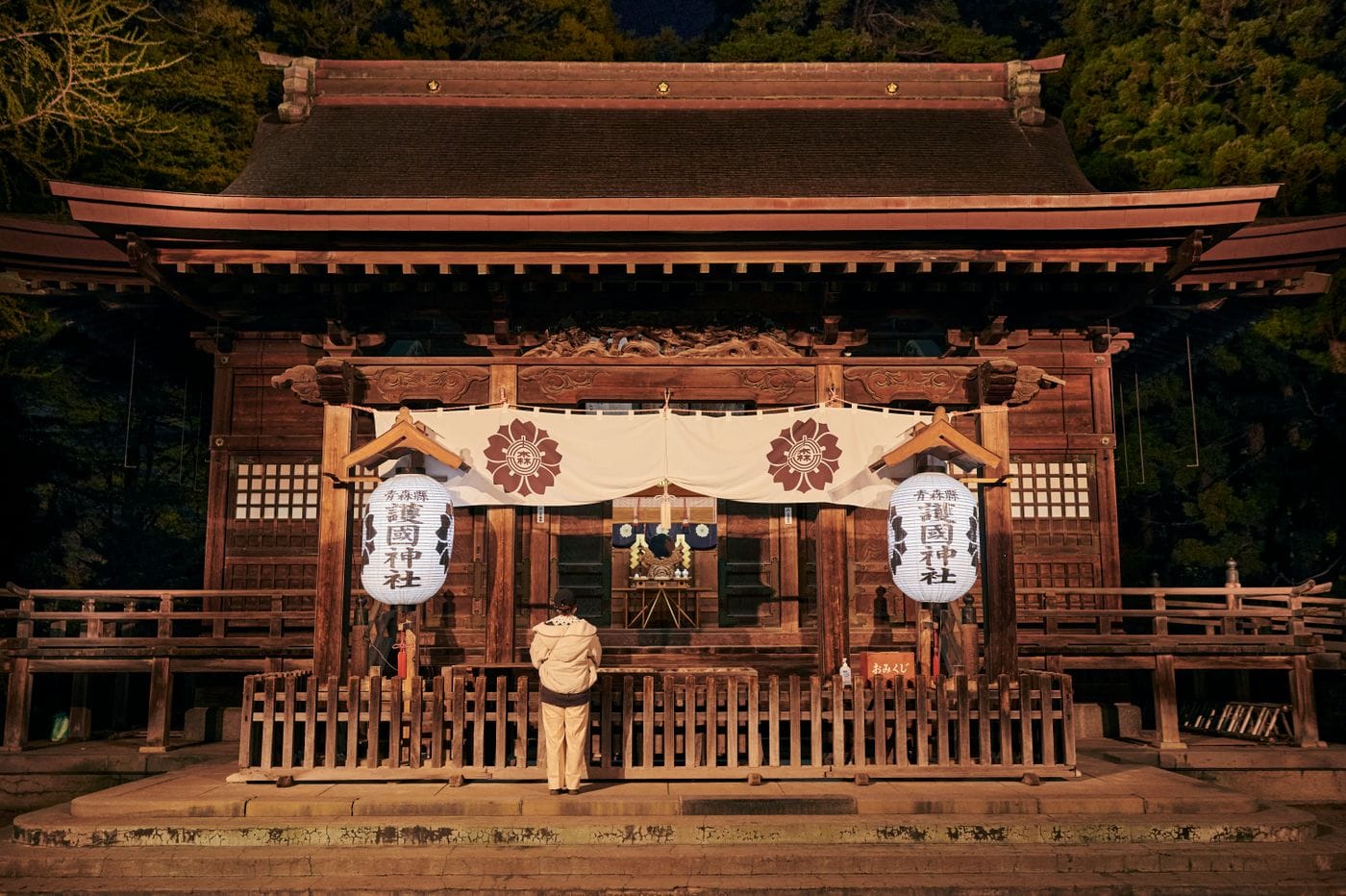
Stand before the offering box, face the main hall, and bow twice — deep bows, approximately 90 degrees, held for 2–3 seconds each. The bows express reverence.
Step 4: Two Claps (二拍手 / Nihakushu)
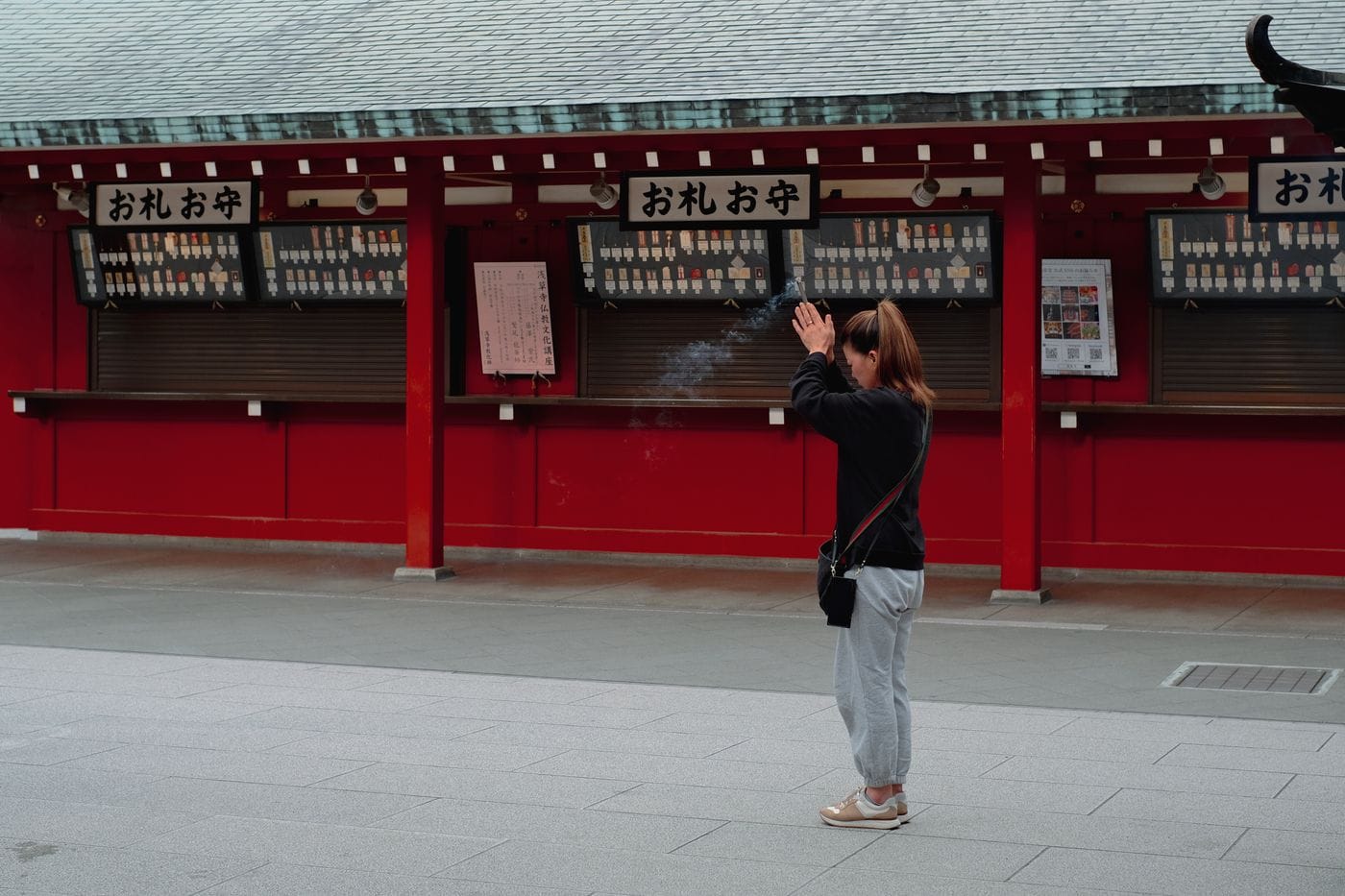
Raise your hands to chest height, palms together. Separate them slightly (right hand slightly lower than left), then clap twice — the sound announces your prayer to the kami. After the two claps, keep your hands together in a position of prayer.
Note: At Izumo Taisha and a few other shrines, the tradition is four claps rather than two — regional variations exist.
Step 5: Prayer (祈り / Inori)
With hands together, offer your prayer, wishes, or simple gratitude in silence. There is no required formula or language — a quiet moment of genuine intention is the correct prayer.
Step 6: One Final Bow (一礼 / Ichirei)
Complete the ritual with a single deep bow, expressing gratitude for the kami's attention.
Common Mistakes to Avoid
Photographing the ritual from very close range: The approach and prayer area is a functioning ritual space — photographing from a respectful distance is fine, but pointing a camera at someone in prayer from close quarters is inappropriate.
Walking the center of the sandō: Traditionally reserved for the kami's passage, the approach path's center should be avoided.
Treating the experience purely as photography: Shrines are active places of worship. Approaching with genuine respect, even as a secular visitor, is the appropriate attitude.
Ofuda Ceremonies and Additional Rituals
Many shrines offer additional services beyond the basic approach-and-pray:
Goshuin (御朱印 / shrine stamp): The official stamp of the shrine, hand-inscribed in calligraphy in a dedicated stamp book (御朱印帳 / goshuinchō) — a meaningful souvenir of your visit. Available at the shrine's reception desk (授与所 / juyosho) for typically ¥300–¥500.
- Omikuji (おみくじ / fortune slips): Covered in the dedicated charms article.
🏨 Planning where to stay?
Every area guide on this site pairs with honest, station-by-station hotel picks. Start here: Hotel Guides by Station →