This article may contain affiliate links. If you book through them, we may earn a small commission at no extra cost to you.
On this page
- Introduction: The City That Makes Winter Worth It
- The Sapporo Snow Festival (さっぽろ雪まつり): Understanding the Scale
- Susukino: The Winter Night Market
- Sapporo Miso Ramen (札幌味噌ラーメン): The Winter Bowl
- Hokkaido Food in Sapporo: The Winter Market
- The Underground City: Sapporo's Winter Architecture
- Recommended Base Hotels
Introduction: The City That Makes Winter Worth It
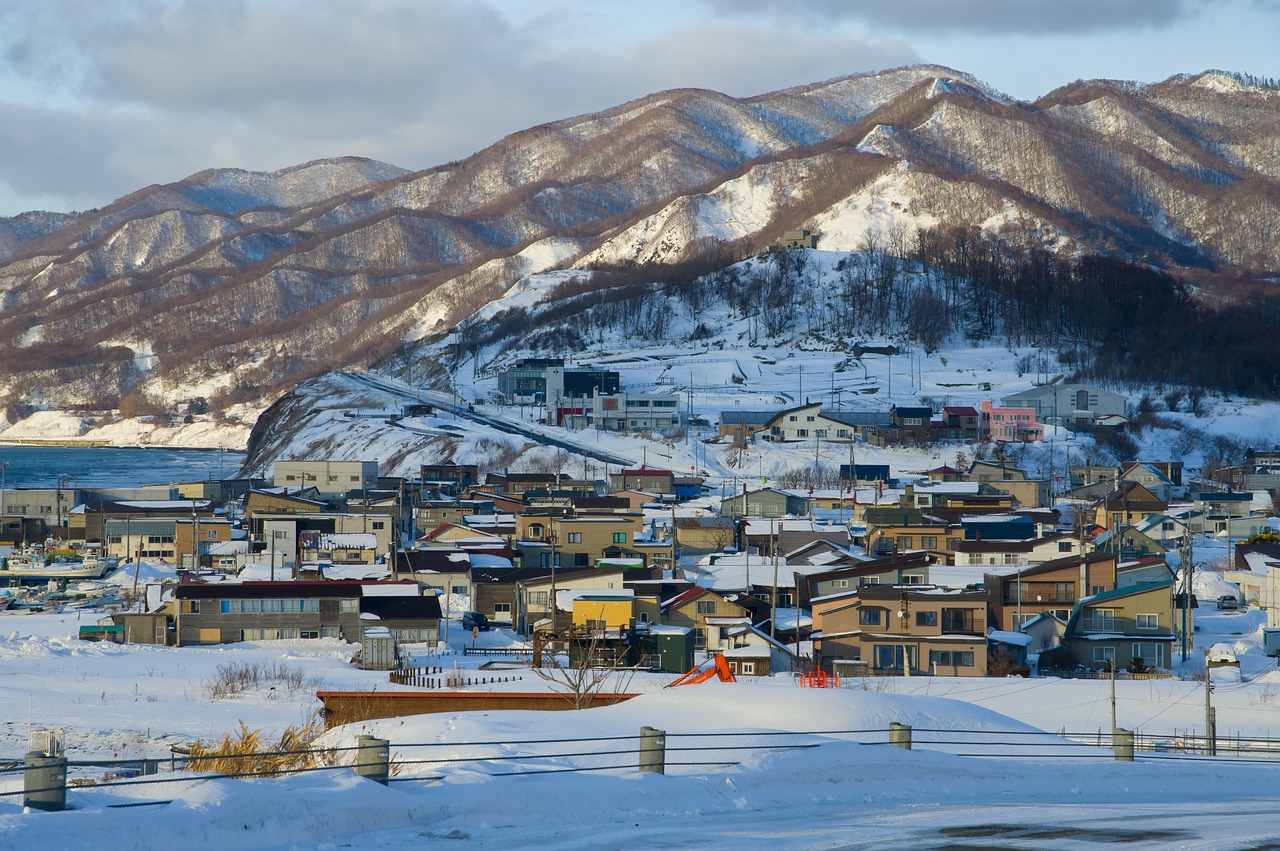
There are cities that tolerate winter and cities that embrace it. Sapporo (札幌) — the capital of Hokkaido, Japan's northernmost main island — belongs firmly in the second category. The city receives an average of 6 meters of snowfall per year, and rather than treating this as an inconvenience to be managed, Sapporo has built its civic identity, its food culture, and its most celebrated annual event entirely around the reality of deep winter.
The Sapporo Snow Festival (さっぽろ雪まつり) — held each February — is the most internationally attended winter event in Japan, drawing approximately 2 million visitors over its seven days to see snow sculptures of extraordinary scale and technical ambition carved from hundreds of tons of snow packed and shaped over weeks. But the festival, significant as it is, is only the most visible expression of what Sapporo does in winter. The city's ramen, its beer culture, its seafood market, its underground shopping network, and the warmth of its hospitality are all optimized for the cold months in ways that make Sapporo in winter a genuinely unique urban experience.
The Sapporo Snow Festival (さっぽろ雪まつり): Understanding the Scale
The Snow Festival began in 1950 when local high school students built six snow sculptures in Odori Park (大通公園). The current festival — one of Japan's most internationally recognized events — occupies three sites across the city and involves sculptures that range from elaborate small figures to structures the size of buildings.
Odori Site (大通会場)
The main festival venue — the 1.5 km length of Odori Park from 1-chome to 12-chome — is the site of the largest sculptures. The international snow sculpture contest section features teams from 12–15 countries competing over several days using identical snow blocks. The large-scale snow statues (大雪像) — reproductions of famous buildings, historical scenes, or specially commissioned designs, some reaching 15 meters in height and 25 meters in width — are the visual anchors of the festival.
Scale context: The largest sculptures require over 6,000 tons of packed snow, transported from the mountains outside the city. Construction begins in mid-January, approximately three weeks before the festival opens. An army of Japan Self-Defense Force (自衛隊) personnel assists with the heavy construction work — the only event in Japan where the military's engineering capabilities are deployed for a festival.
Night illumination: Every evening of the festival, the sculptures are illuminated from within and without, creating a completely different visual experience from the daytime visit. The combination of ice sculptures (which glow translucently from internal lighting) and snow sculptures (which are lit by colored floodlights) transforms Odori Park into an environment of extraordinary visual complexity. If you can only choose one time of day, choose the evening illumination.
Susukino Site (すすきの会場)
Susukino (すすきの) — Sapporo's entertainment district and one of the largest nightlife areas in northern Japan — hosts the ice sculpture section of the festival. Unlike the Odori Park snow sculptures (opaque, massive), the Susukino ice sculptures are transparent — carved from clear ice blocks, illuminated from within, and displaying a different quality of technical artistry. The ice carvings of faces, animals, and architectural details catch light and refract it in ways that snow cannot.
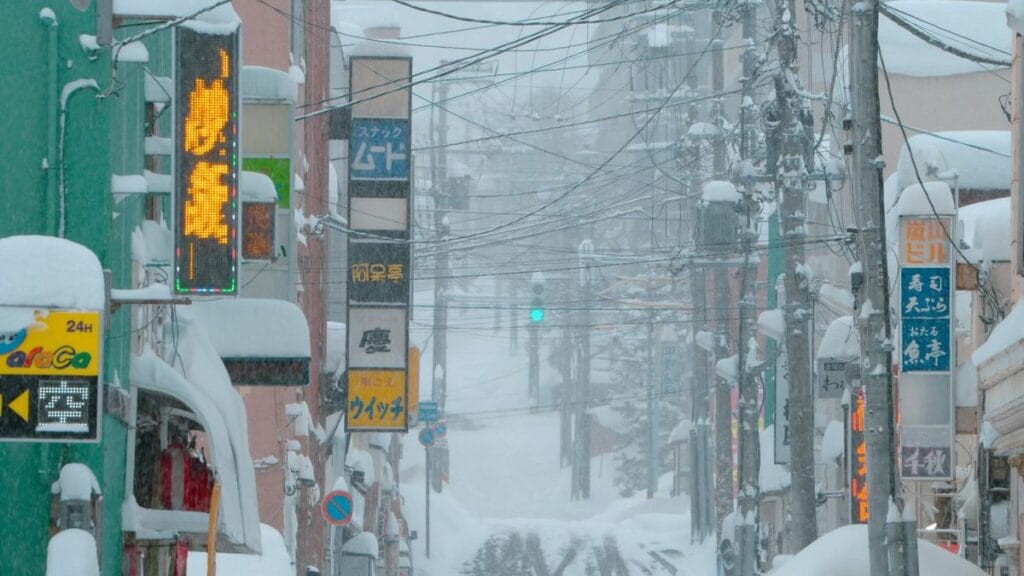
Susukino's ambient atmosphere — the neon of the entertainment district, the warmth from restaurant and bar frontages spilling onto the cold street, the crowd energy of Sapporo's night economy at full operation — makes the ice sculpture viewing simultaneously artistic and socially lively.
Tsu Dome Site (つどーむ会場)
The family-oriented outdoor venue in Sakaemachi (reachable by Toho subway line) features snow slides, snow activities, and indoor warming areas. Less interesting for adult visitors without children, but the enormous snow slides (some over 50 meters) are genuinely exhilarating.
Susukino: The Winter Night Market
Susukino (すすきの) — approximately 400 meters south of Odori Park along the Odori subway line — is Hokkaido's largest entertainment district and one of Japan's major nightlife areas: approximately 4,000 restaurants, bars, clubs, and entertainment venues concentrated in a roughly 10-block area.
In winter, Susukino operates with a warmth and energy that contradicts the temperature outside. The district's covered arcades and the practice of moving between establishments rather than staying in one place make Susukino's winter nightlife simultaneously social and practical — the cold outside becomes a reason to explore rather than a reason to stay home.
Ramen Yokocho (ラーメン横丁): The most famous single street in Sapporo's food landscape — a narrow alley lined with approximately 17 ramen shops, each tiny (6–10 counter seats), each with its own interpretation of Sapporo-style miso ramen. The alley has been operating since 1951, and the density of steam, smell, and warmth it generates in winter makes it one of the most atmospheric food experiences in Japan.
Sapporo Miso Ramen (札幌味噌ラーメン): The Winter Bowl
Sapporo-style ramen is one of Japan's four canonical styles and the only major regional ramen built around miso (味噌) as the primary flavoring. The style was invented at Aji no Sanpei (味の三平) — a Sapporo restaurant in 1955 — and spread from there throughout Hokkaido and eventually Japan.
The defining characteristics:
Miso tare (味噌タレ): A fermented soybean paste blending that is fried briefly in lard before broth is added — this cooking step (stir-frying the tare) is unique to Sapporo ramen and produces a depth of flavor unavailable from cold-mixing.
- Rich pork-based broth: The miso tare is dissolved into a pork bone base.
- Thick, wavy noodles: Yellow, alkaline noodles that hold the heavy broth.
Corn and butter: The most characteristic Sapporo ramen toppings — the sweetness of Hokkaido corn and the richness of Hokkaido butter complementing the miso's intensity.
- Thick sliced pork belly and bean sprouts: The standard accompaniments.
The theory behind the miso-corn-butter combination is not arbitrary: all three ingredients are Hokkaido productions of exceptional quality, and the combination in a single bowl is both a culinary statement and a regional pride expression.
Hokkaido Food in Sapporo: The Winter Market
Sapporo Central Wholesale Market (中央卸売市場) and the adjacent Jōgatsu-ji Market (場外市場 / Jonai Market) constitute the most significant food market complex in Hokkaido — the wholesale clearinghouse for the extraordinary agricultural and marine produce that makes Hokkaido's food culture the most celebrated in Japan.
What Hokkaido Does Best
King Crab (タラバガニ) and Snow Crab (ズワイガニ): Hokkaido's cold waters produce Japan's finest crab, and winter — the peak of the crab season — is when the Sapporo market's live crab displays are most impressive. A single large king crab leg at a market stall, cracked and served with a lemon wedge, is the most direct expression of Hokkaido's marine bounty.
Genghis Khan (ジンギスカン): Hokkaido's signature grilled mutton dish — marinated lamb grilled on a distinctive dome-shaped iron grill — reflects the sheep farming tradition of Hokkaido's agricultural history. The name (Genghis Khan) was adopted because the dome-shaped grill supposedly resembles a Mongolian warrior's helmet. The dish is eaten in dedicated Jingisukan restaurants, where the smell of grilling mutton and the characteristic slightly sweet marinade fills the room.
Soup Curry (スープカレー): A Sapporo invention from the 1970s — an Indian-influenced curry broth served with large pieces of chicken, vegetables, and rice for dipping rather than mixing. The combination of warming spice and Hokkaido vegetables (particularly the potato and pumpkin) has made soup curry one of the most beloved local dishes in Hokkaido.
The Underground City: Sapporo's Winter Architecture
Sapporo's response to its heavy snowfall is partially underground. The Chika-ho (地下歩行空間 / Underground Pedestrian Space) connecting Sapporo Station to Odori Park via a 520-meter underground walkway — with shops, cafés, and exhibition spaces — is the most comprehensive example of Sapporo's underground city development. The ability to move between the main shopping areas (Sapporo Station, Odori Park, Susukino) without exposing yourself to the elements is one of the city's most practical qualities during winter.
Recommended Base Hotels
JR Tower Hotel Nikko Sapporo (Luxury / from ¥28,000): Sapporo Station direct connection, panoramic views, the most convenient festival location.
Sapporo Grand Hotel (Mid-range / from ¥18,000): Historic 1934 hotel in central Sapporo, excellent festival walking access.
- Dormy Inn Premium Sapporo (Mid-range / from ¥12,000): Natural hot spring, Susukino walking distance.
Planning where to stay in Hokkaido? Browse our honest hotel picks and area guides.
🏨 Planning where to stay?
Every area guide on this site pairs with honest, station-by-station hotel picks. Start here: Hokkaido Hotel Guides →