This article may contain affiliate links. If you book through them, we may earn a small commission at no extra cost to you.
On this page
Introduction: The Hot Spring Town Built on Geological Drama
Noboribetsu Onsen (登別温泉) has a legitimate claim to being the finest onsen resort town in Hokkaido — and by extension, the argument can be made for all of Japan. The claim rests on a specific quality: not the scale of the ryokan or the comfort of the rooms (though both are impressive), but the variety and volume of the hot spring water available.
Noboribetsu's springs discharge an extraordinary 10,000 tons of hot spring water daily from a geologically active volcanic zone, and this water comes in nine distinct chemical compositions — including sulfurous, sodium chloride, ferrous, alum, and radium varieties — available in the same resort complex. No other onsen town in Japan offers this chemical diversity in a single location, and the physiological effects of moving between different spring types within a single bathing session are considered by specialists to be greater than prolonged immersion in a single spring type.
Jigoku-dani (地獄谷): The Hell Valley
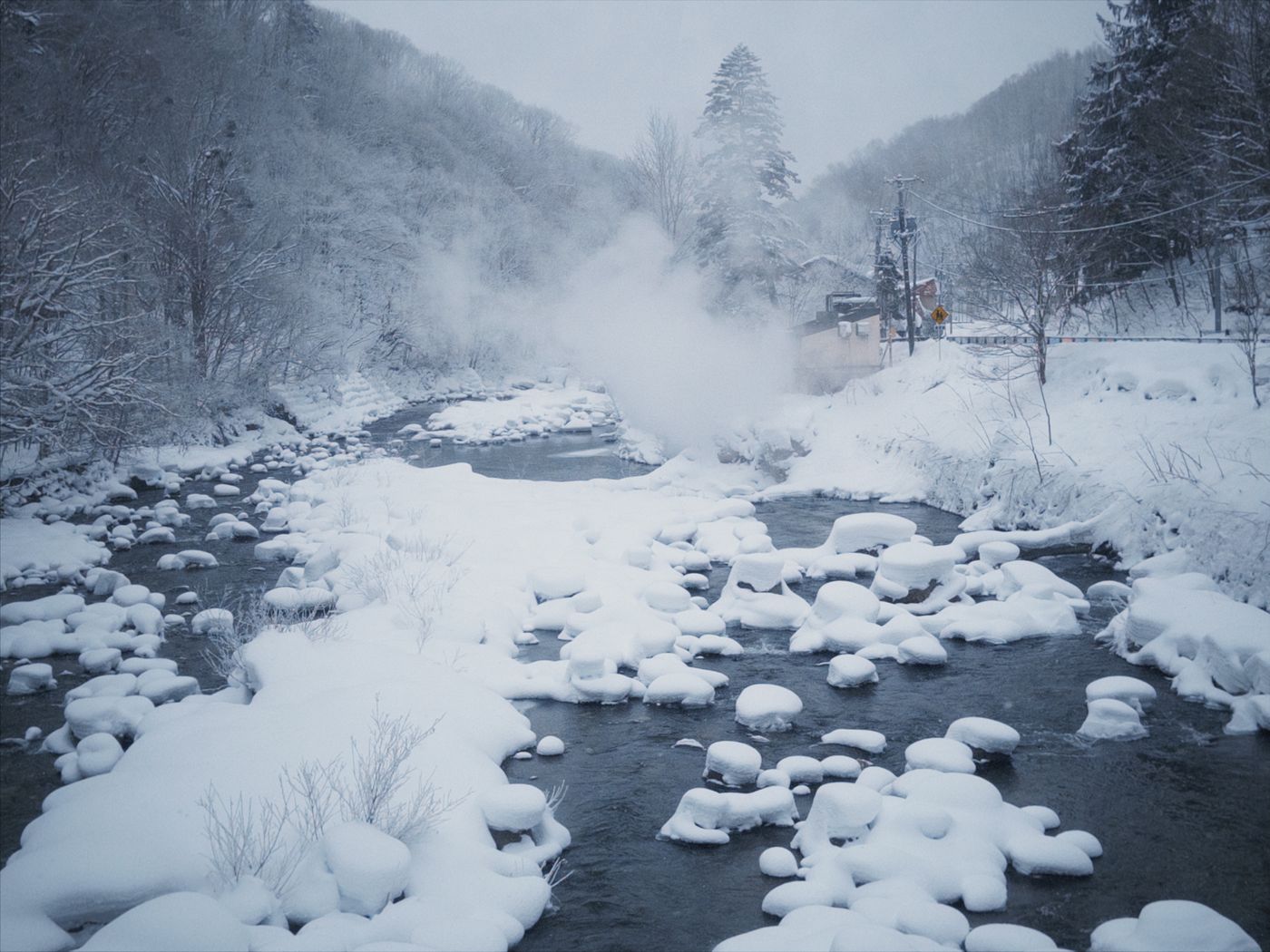
The visual centerpiece of Noboribetsu Onsen is Jigoku-dani — "Hell Valley" — a volcanic crater area approximately 450 meters in diameter immediately behind the town's main ryokan strip. The crater's floor is a landscape of sulfurous vents, boiling mud pools, and steaming ground that produces a continuous column of vapor visible from the surrounding hills.
The Jigoku-dani walking path (地獄谷遊歩道) — a boardwalk circuit through the crater area, approximately 1 km round trip — is the essential Noboribetsu visitor experience. The path runs alongside the main volcanic vent channels, within meters of boiling sulfurous water flowing freely over orange-stained rocks, with the smell of sulfur strong enough to be considered medicinal and the sound of the earth's internal processes audible as a continuous low hissing.
Oyunuma (大湯沼): A short walk beyond the main Jigoku-dani viewpoint, Oyunuma is a vast natural hot spring lake with a surface temperature of approximately 50°C and a depth temperature near 130°C. The lake's grey-green surface, perpetually steaming, surrounded by sulfur-bleached cliff walls, is one of Hokkaido's most otherworldly natural scenes.
Oyunuma River Natural Footbath (大湯沼川天然足湯): One of Hokkaido's most unusual free outdoor experiences — a section of the stream flowing from Oyunuma where the water has cooled to approximately 40°C, creating a natural footbath along the riverbank. Removing your shoes and sitting with your feet in volcanic hot spring water flowing through a forested valley is available at no cost to any visitor.
The Nine Spring Types: What Makes Noboribetsu Unique
Noboribetsu's nine distinct spring water types are the scientific basis for its pre-eminence:
1. Sulfurous springs (硫黄泉): The most characteristic Noboribetsu water — milky white with sulfur compounds, known for skin-softening effects and respiratory benefits from the inhaled steam.
2. Sodium chloride springs (食塩泉): Salty springs that warm the body deeply and are considered effective for circulation.
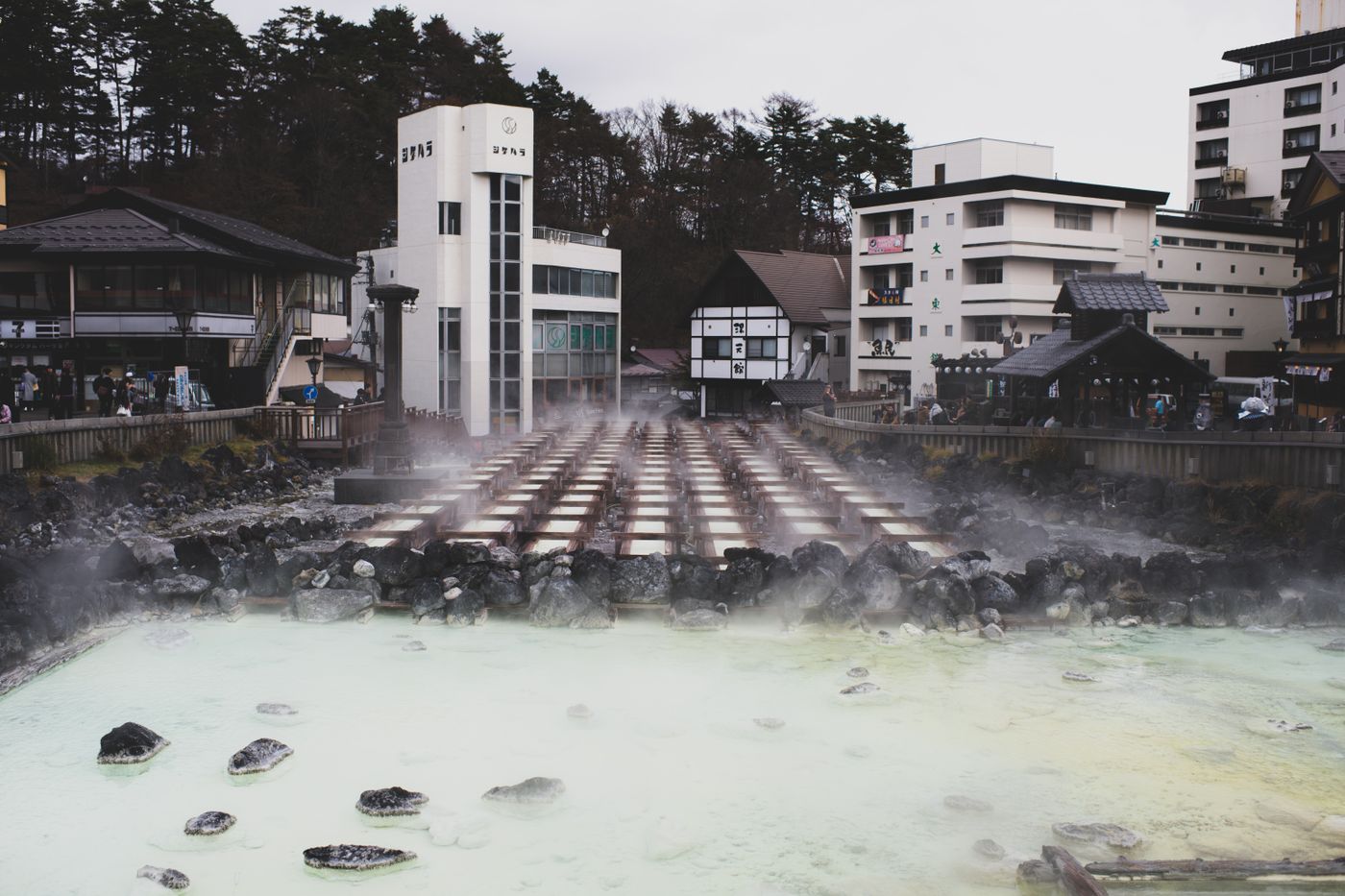
- 3. Ferrous springs (含鉄泉): Iron-rich, reddish-brown water believed to be beneficial for anemia.
- 4. Alum springs (明礬泉): Acidic, astringent water effective for skin conditions.
- 5. Hydrogen sulfide springs (硫化水素泉): High-concentration sulfur, the most intensely smelling variety.
6. Radium springs (放射能泉): Low-level naturally radioactive spring water — considered beneficial in the traditional Japanese onsen medical framework.
- 7. Simple alkaline springs (単純温泉): The gentlest type, recommended for first-time and sensitive bathers.
- 8. Sodium bicarbonate springs (重曹泉): Smooth, silk-like water effect on skin.
- 9. Calcium sulfate springs (石膏泉): The rarest type, known for its beautiful effect on skin texture.
The large ryokan in Noboribetsu typically offer access to four to six of these types in separate baths within their facilities — the practice of moving through different baths sequentially (alternating between types) is considered the optimal approach.
The Ryokan Experience in Noboribetsu
Noboribetsu's ryokan are, by Hokkaido standards, large-scale resort establishments — some accommodating several hundred guests with bath complexes of extraordinary scope. This scale is different from the intimate ryokan experience of Yufuin or Kinosaki — the emphasis is on the variety and quality of the bathing rather than the personalized service.
Daiichi Takimotokan (第一滝本館): The largest and most comprehensive spa facility in Noboribetsu — a hotel-scale building with a bathing complex containing over 35 different baths using six of the nine spring types. The complex is accessible to day visitors (入浴のみ) as well as guests. Entry for day bathing: approximately ¥2,000.
Noboribetsu Grand Hotel (登別グランドホテル): Among the best-reviewed for service quality — the balance of spring variety (three types), ryokan service, and kaiseki cuisine makes this the most consistent recommendation for the complete Noboribetsu experience.
The Demons: Noboribetsu's Mascot Culture
Noboribetsu has embraced demon (鬼 / oni) imagery as its tourism mascot — an appropriate choice for a town with a "Hell Valley" at its center. Demon statues and figures appear throughout the town, the Jigoku-dani crater has a designated oni-viewing pavilion, and the annual Jigoku Matsuri (地獄まつり) festival in August features demon processions through the town.
The demon mascot culture is playful rather than sinister — Noboribetsu's oni are cheerful, cartoonish figures rather than threatening ones — and their proliferation throughout the town's visual environment gives the resort a slightly surreal character that distinguishes it from more refined hot spring destinations.
Recommended Base Hotels
Noboribetsu Grand Hotel (Luxury / from ¥30,000 per person): Three spring types, excellent kaiseki, consistently among the highest-rated.
Ryokan Hanayura (Mid-range / from ¥20,000 per person): Smaller, more personal atmosphere than the large resort hotels.
- Daiichi Takimotokan (Mid-range / from ¥22,000 per person): Maximum spring variety, day bathing available.
Planning where to stay in Hokkaido? Browse our honest hotel picks and area guides.
🏨 Planning where to stay?
Every area guide on this site pairs with honest, station-by-station hotel picks. Start here: Hokkaido Hotel Guides →