This article may contain affiliate links. If you book through them, we may earn a small commission at no extra cost to you.
On this page
Introduction: Two Cities, Two Histories, One Memory
On August 6, 1945, at 8:15 AM, the United States dropped an atomic bomb on Hiroshima — the first use of nuclear weapons in warfare. Three days later, on August 9, 1945, a second atomic bomb was dropped on Nagasaki. Between them, the two attacks killed between 129,000 and 226,000 people — the majority civilians — with deaths continuing for months from radiation exposure.
How Japan has chosen to remember, memorialize, and educate about these events is one of the most carefully considered processes of historical memory in the 20th century — a national conversation that is simultaneously about specific historical events, about the nature of nuclear weapons, about Japan's own wartime conduct, and about the political uses of historical memory.
Hiroshima
The Atomic Bomb Dome (原爆ドーム / Genbaku Dōmu)
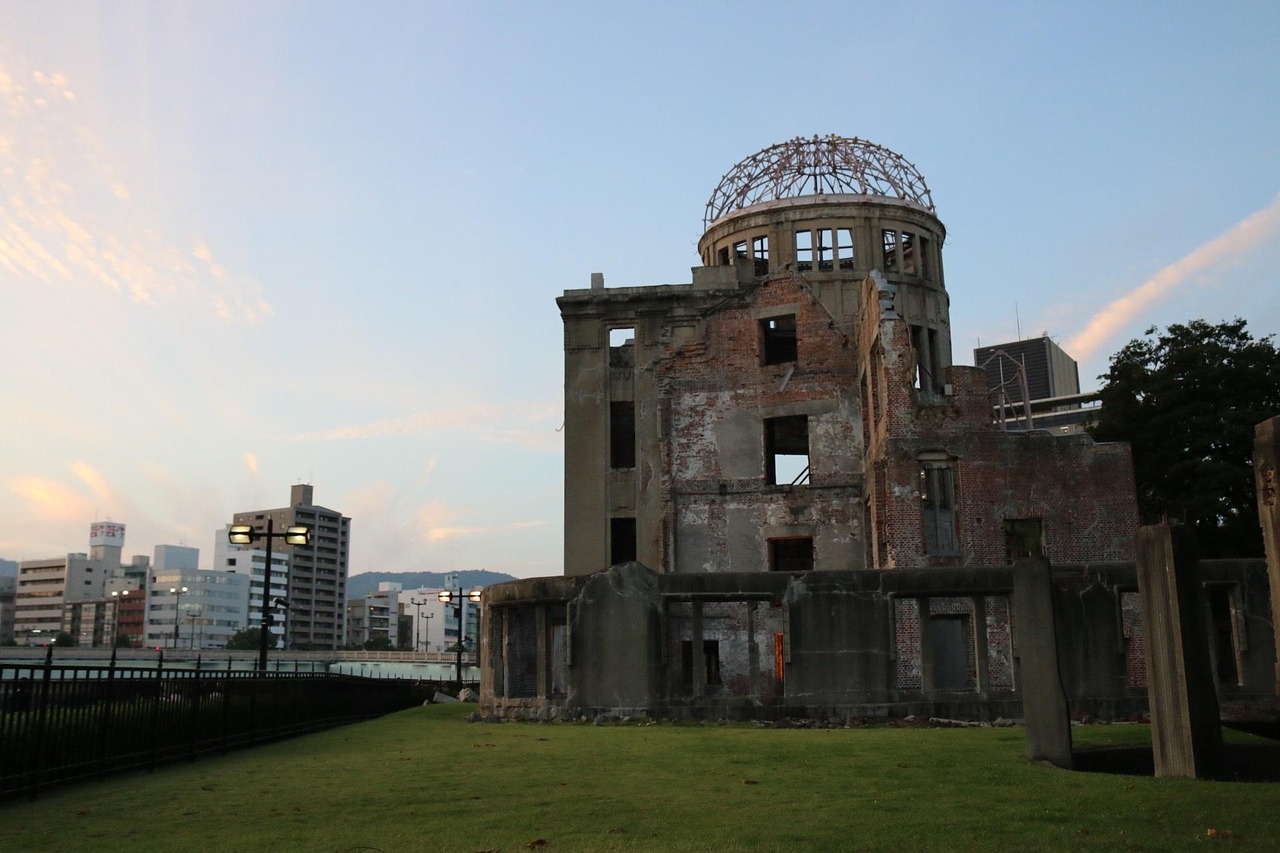
The Hiroshima Prefectural Industrial Promotion Hall — the building directly below the explosion's hypocenter — survived the blast in a specific way: the near-vertical angle of the explosion's downward pressure preserved the building's walls while destroying the interior and roof. The result is the most vivid single piece of physical evidence of the atomic bomb's power: the skeletal dome and the exposed brick walls, preserved exactly in their post-bombing condition by a 1966 city council decision and maintained as a ruin ever since.
The UNESCO designation (1996): The Atomic Bomb Dome's designation as a UNESCO World Heritage Site was controversial — both the United States and China abstained from the vote, for different reasons. The inscription acknowledges the site's significance as evidence of nuclear warfare's effects and as a call for peace.
Visiting: The dome is visible from the banks of the Motoyasu River surrounding the Peace Memorial Park — the reflection in the river on still days produces the composition most photographed. The structure is not entered; it is observed. The effect of the ruined building against the contemporary cityscape — Hiroshima rebuilt around it — is one of the most powerful visual arguments against nuclear weapons available anywhere.
Hiroshima Peace Memorial Museum (広島平和記念資料館)
The museum — renovated and reopened with new display design in 2019 — presents the history of the atomic bombing through survivor testimony, physical evidence, and historical documentation in a format that prioritizes the human experience over technical or political framing.
The main building: Artifacts recovered from beneath the blast — a child's tricycle, a lunch box, shadow images burned into stone surfaces — create the specific quality of intimacy that abstract casualty statistics cannot achieve.
The western building: Personal testimonies and survivor photographs — the hibakusha (被爆者 / atomic bomb survivors) perspective that has been the moral center of Japan's peace advocacy since 1945.
The approach to politics: The museum's narrative is carefully constructed — acknowledging the specific context of Japan's own wartime conduct more explicitly in recent renovations than in earlier versions. The question of Japan's role in the war that produced the atomic bombing is present in the display, though the museum's primary frame is the experience of the bombing's victims rather than the political causality chain.
The Peace Memorial Park
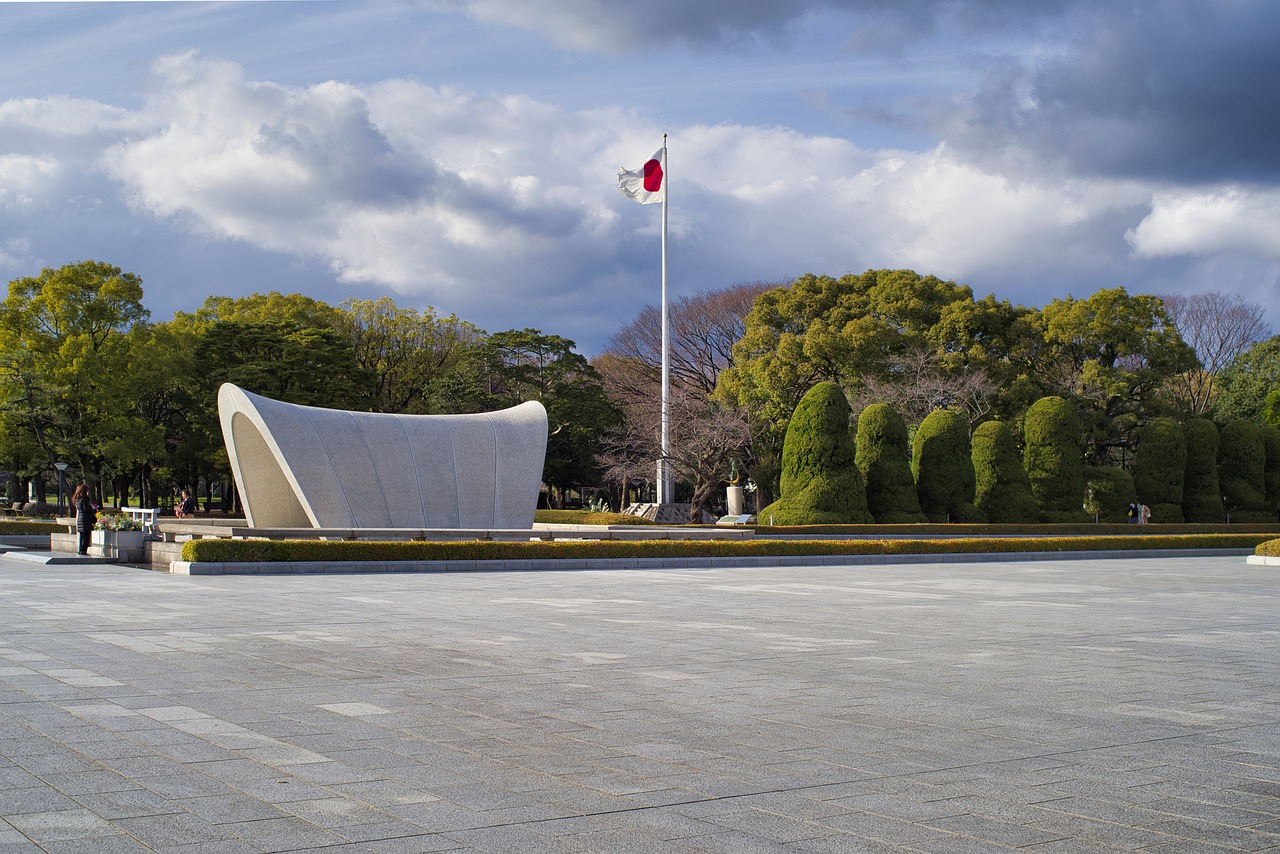
The park occupies the hypocenter area — a deliberate urban planning decision by the city to dedicate the area closest to the blast as permanent memorial space rather than commercial or residential redevelopment. The park contains:
The Cenotaph (原爆死没者慰霊碑): The arched concrete monument over the victims' register — the arch frames a direct view of the Atomic Bomb Dome across the Motoyasu River.
The Flame of Peace (平和の灯): Burning continuously since 1964 with the intention of burning until all nuclear weapons are eliminated from the world.
The Children's Peace Monument (原爆の子の像): Dedicated to Sadako Sasaki (佐々木禎子) — the 12-year-old girl who, dying of leukemia caused by radiation exposure from the bombing, folded paper cranes hoping to reach 1,000 (the traditional Japanese symbol of a wish granted). She died in 1955 having folded approximately 1,400. The monument receives millions of folded paper cranes annually from schools and individuals throughout Japan and internationally.
Nagasaki
The Urakami Difference
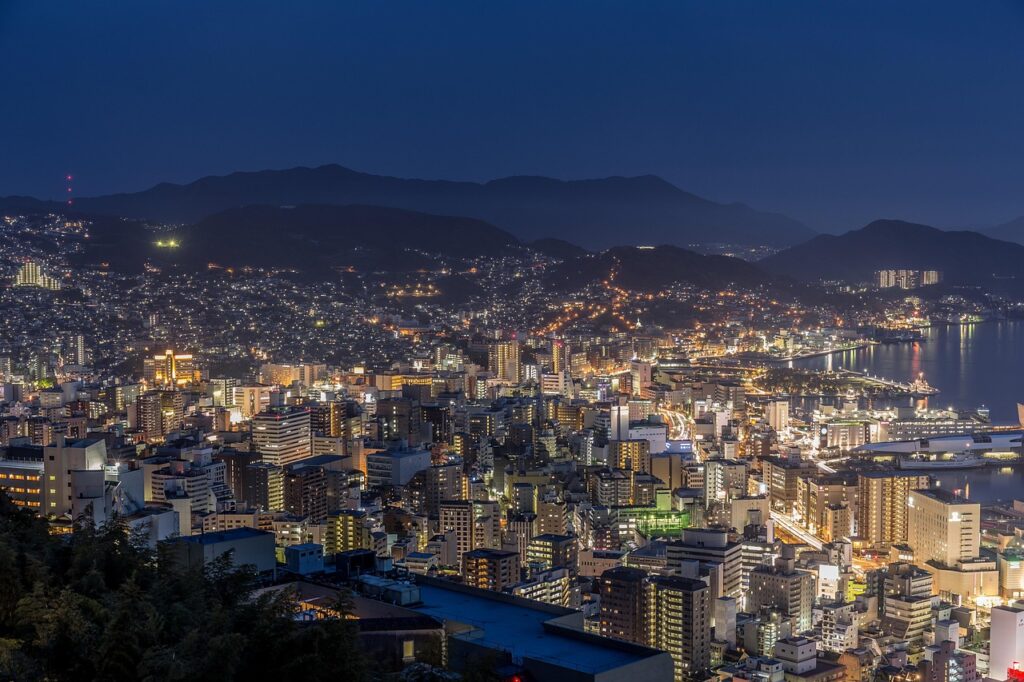
Nagasaki's experience of the atomic bombing has a specific quality distinct from Hiroshima's — the bomb fell on the Urakami valley, where the Christian community described in the Hidden Christian article was concentrated. The Urakami Cathedral — rebuilt after its destruction — and the Nagasaki Atomic Bomb Museum are concentrated in this specific neighborhood, which bore the primary burden of the bomb's destruction despite being a district rather than the city center.
The hypocenter: The Nagasaki bomb actually missed its intended target (the Mitsubishi Steel and Arms Works) by approximately 3 km due to cloud cover — falling instead on the residential Urakami Valley. This specific detail of the bombing's actual impact is a reminder of nuclear weapons' indiscriminate character.
Nagasaki Atomic Bomb Museum (長崎原爆資料館)
Similar in structure and intent to Hiroshima's museum — survivor testimony, physical evidence, historical framing. The Nagasaki museum gives particular attention to the human cost of nuclear radiation through the accounts of the medical teams who treated survivors in the immediate aftermath.
The August 6 and 9 Memorial Ceremonies
Both cities hold annual peace memorial ceremonies (平和記念式典) on their respective bombing dates:
August 6: Hiroshima — attended by the Prime Minister, representatives of foreign governments, and survivor community members. The Mayor of Hiroshima delivers a Peace Declaration calling for nuclear weapons abolition.
- August 9: Nagasaki — similar structure and intent.
Both ceremonies are open to the public. The experience of attending the early-morning ceremony on the anniversary — the 8:15 AM moment of silence in Hiroshima, the bell, the assembled representatives of nations — is one of Japan's most moving public events.
Planning where to stay in Kyushu & Okinawa? Browse our honest hotel picks and area guides.
🏨 Planning where to stay?
Every area guide on this site pairs with honest, station-by-station hotel picks. Start here: Nagasaki Hotel Guides →