This article may contain affiliate links. If you book through them, we may earn a small commission at no extra cost to you.
On this page
Introduction: The Villages That Hid for Centuries
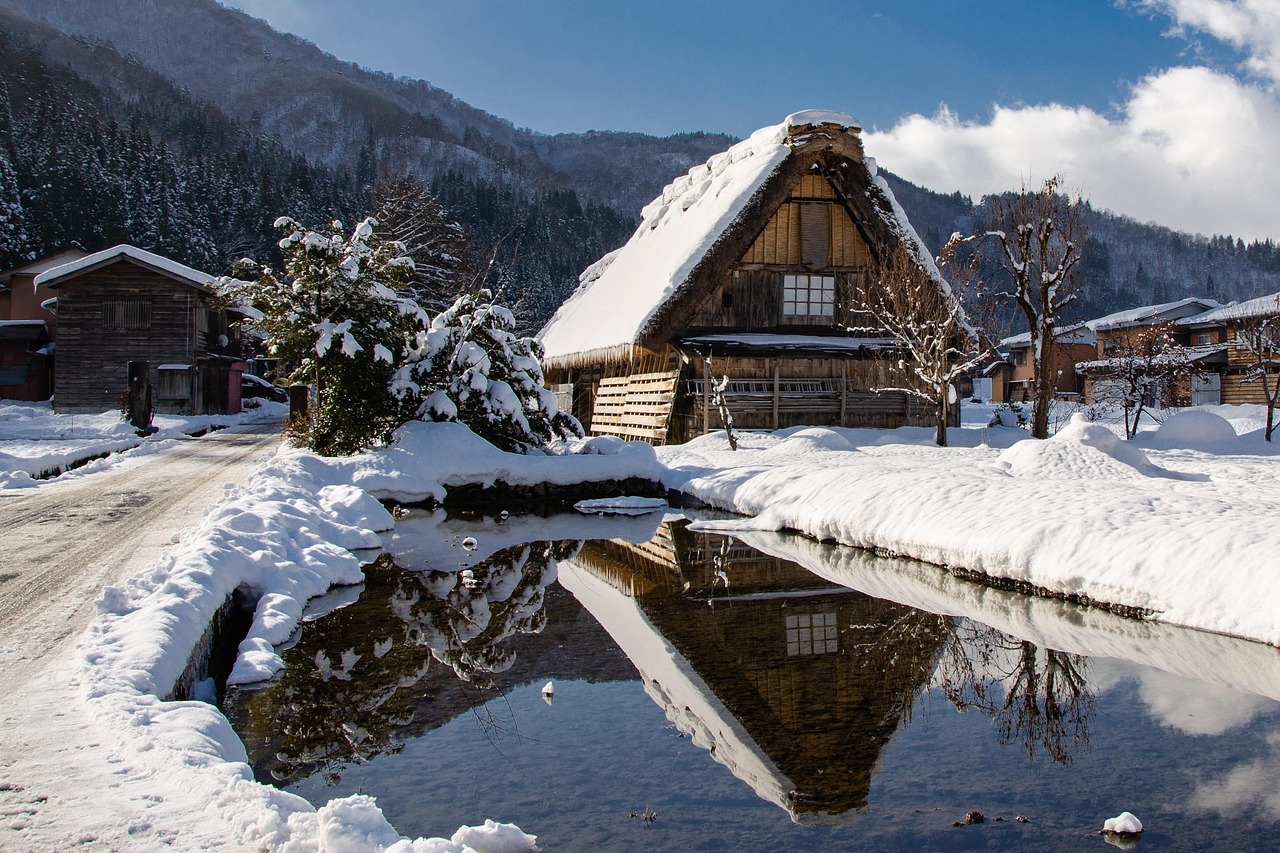
Deep in the mountain valleys where the Sho River (庄川) cuts through the Japanese Alps between Gifu and Toyama Prefectures, there are villages of gassho-zukuri farmhouses (合掌造り) — enormous thatched-roof structures whose steep A-frame roofs are designed to shed the enormous snowfall of the valley winters. These villages — Shirakawa-go (白川郷) and the smaller Gokayama (五箇山) — were designated as UNESCO World Heritage Sites in 1995 on the basis of the surviving ensemble of traditional farmhouse architecture and the living communities that maintain them.
The name "gassho-zukuri" (合掌造り) means "prayer-hands construction" — the steep angle of the thatched roof resembles human hands pressed together in Buddhist prayer. The structural logic is practical: the steep pitch sheds snow before it accumulates to a weight that would damage the structure; the thick thatch (sometimes 80–90 cm deep) provides insulation; and the large interior space of the A-frame upper stories was historically used for silkworm cultivation, which required the specific temperature and humidity the attic space naturally provided.
Ogimachi Village (荻町集落): Shirakawa-go's Heart
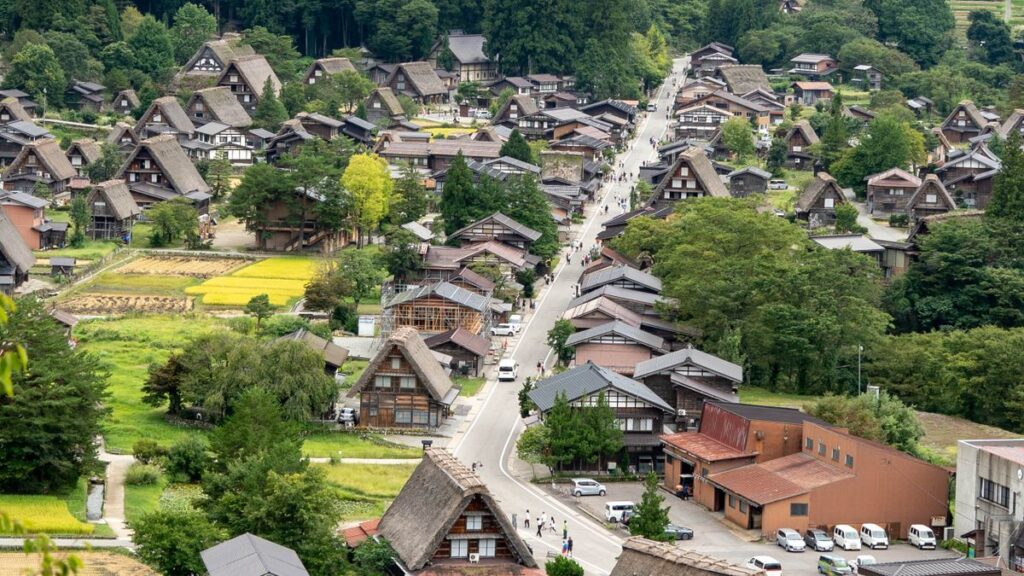
Ogimachi — the largest and most accessible of the gassho-zukuri villages — contains approximately 59 gassho-zukuri farmhouses, the largest surviving concentration of this building type in Japan. The village sits in the valley floor of the Sho River, with the farmhouses arranged in a settlement pattern that reflects both agricultural logic (south-facing roofs maximize passive solar heating in winter) and the specific valley topography.
The Shiroyama Viewpoint (城山展望台)
The Shiroyama Viewpoint — a 15-minute walk up the hillside east of the village — provides the definitive panoramic view of Ogimachi: the entire village visible below, the farmhouses arranged in the valley, the surrounding mountains, and (in winter) the snow covering everything uniformly. This view is the source of the UNESCO photographs that drew international attention to the villages, and it is available year-round from the observation platform.
Winter lighting events (ライトアップ): On selected weekends in January and February, the village is illuminated after dark — the warm light from the farmhouse windows, the illuminated thatched roofs, and the surrounding snow create an image that has been widely circulated internationally. The lighting events are now fully reservation-only: day visitors need a booked light-up bus tour or reserved parking slot, and village accommodation for those nights sells out close to a year ahead — plan this one before anything else in your itinerary. (Checked July 17, 2026.)
The Interior of a Gassho-zukuri Farmhouse
Several farmhouses in Ogimachi are open to visitors:
Wada House (和田家): The largest and most elaborate of the open farmhouses — a National Important Cultural Property. The interior reveals the functional brilliance of the gassho-zukuri design: the ground floor organized around an open hearth (irori), the upper floors progressively subdivided for sleeping and storage/production areas, the A-frame attic accessible by steep ladders and used historically for silkworm cultivation. The central hearth smoke permeates the interior — the wood of the beams is blackened by centuries of smoke, and the smell (cedar, old thatch, wood smoke) is one of the most distinctive sensory experiences in Japanese vernacular architecture.
Kanda House (神田家): A smaller, more intimate farmhouse with excellent interpretive materials about the silkworm cultivation that economically justified the buildings' unusual scale.
Gokayama (五箇山): The Quieter Alternative
Gokayama — approximately 20 km north of Ogimachi on the Sho River — consists of two smaller villages: Ainokura (相倉) and Suganuma (菅沼). Both are UNESCO-listed and both offer the gassho-zukuri experience with dramatically fewer visitors than Ogimachi.
Ainokura Village (相倉集落): 23 gassho-zukuri farmhouses on a hillside above the river — smaller than Ogimachi but with an elevated position that provides different photographic compositions and a stronger sense of agricultural landscape context. The village has maintained genuine resident population (most of Ogimachi's visitors experience a settlement that has become primarily tourism-oriented), and the encounter with a genuinely inhabited historical settlement is different in quality from the more museum-like Ogimachi experience.
The Gokayama character: The valley's extreme geographic isolation — accessible historically only by a single mountain path that was snowbound for much of the year — created a specific cultural character. The area was associated with paper-making (和紙 / washi) and the production of gunpowder (火薬) for the Kaga domain — industries that required seclusion from outside interference. The cultural residue of this isolation includes folk songs (Kokiriko-bushi / こきりこ節) that reflect the valley's specific historical experience.
The Winter Experience: Why Snow Changes Everything
Shirakawa-go and Gokayama in winter — specifically from late December through February, when the valley receives its heaviest snowfall — present a landscape that is categorically different from any other season.
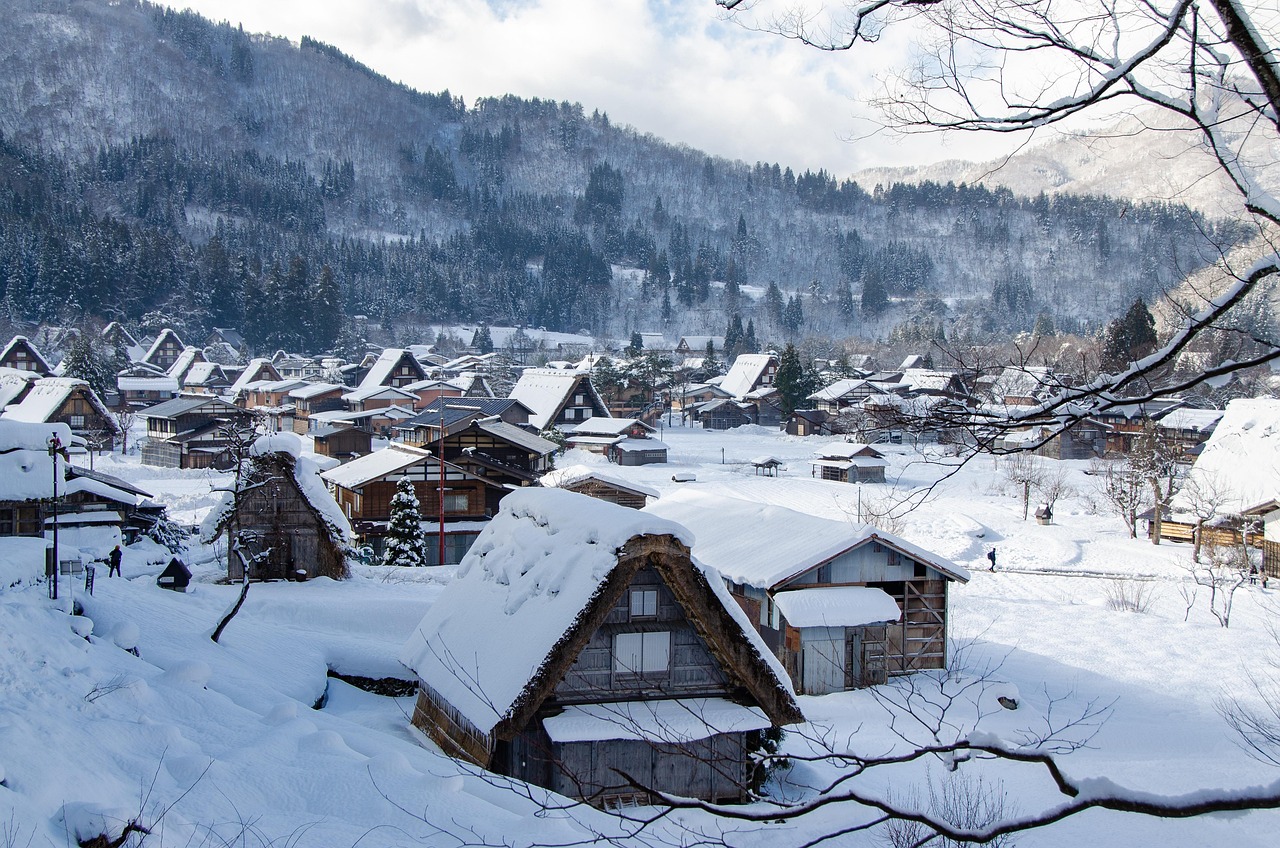
The snowfall: The valley receives some of the heaviest snowfall in Japan — sometimes exceeding 2 meters of accumulated depth in the village. The gassho-zukuri roofs — their entire architectural logic is winter-specific — are covered with snow that emphasizes the steep pitch rather than obscuring it, and the village in heavy snow becomes as close to the original historical condition as any weather event can produce.
The practical challenge: Heavy snowfall closes the access roads and complicates transportation. The combination of visiting during significant snowfall and being prepared for road closures and delays is an important planning consideration.
Recommended Base Hotels
Staying in a Gassho-zukuri Farmhouse
Several families in Ogimachi rent rooms within functioning gassho-zukuri farmhouses — providing the most immersive possible experience of the buildings' interior:
Fuemon-no-Yado (Mid-range / from ¥15,000 per person with meals): A restored gassho-zukuri with traditional irori hearth, evening meal using local mountain vegetables and river fish.
Shirakawa-go Gassho-an (Mid-range / from ¥14,000 per person): One of the most warmly reviewed farmhouse stays in Ogimachi.
Kanazawa or Takayama Base
Both Kanazawa (1.25 hours) and Takayama (50 minutes) provide better accommodation options for those visiting Shirakawa-go on a day trip:
Hotel Nikko Kanazawa (Mid-range / from ¥16,000)
Associa Takayama Resort (Mid-range / from ¥20,000)
Planning where to stay in Chubu? Browse our honest hotel picks and area guides.
🏨 Planning where to stay?
Every area guide on this site pairs with honest, station-by-station hotel picks. Start here: Gifu Hotel Guides →