This article may contain affiliate links. If you book through them, we may earn a small commission at no extra cost to you.
On this page
Introduction: The Mountain Town That Became Too Remote to Destroy
Takayama (高山) in the mountains of Gifu Prefecture owes its extraordinary historical preservation to the same geographical accident as Kanazawa — remoteness. The city sits at approximately 570 meters elevation in the Hida mountains (飛騨山脈), surrounded by peaks that historically made access difficult and industrial development economically unattractive. The buildings that were constructed during the Edo period were never needed to be replaced by more modern infrastructure, and the result is Japan's most complete surviving Edo-period merchant town outside Kyoto.
The Sanmachi-suji (三町筋 / Three Town Streets) district — three parallel streets of dark-wood sake breweries, merchant houses, craft shops, and restaurants — has been designated an Important Preservation District for Groups of Historic Buildings (重要伝統的建造物群保存地区). Walking these streets — with the dark wood facades, the distinctive lattice windows of the sake breweries, and the mountain air carrying the smell of fermentation from the active breweries — produces an encounter with Edo-period commercial architecture of extraordinary completeness.
Sanmachi-suji (三町筋): The Historical Merchant District
The three streets of Sanmachi-suji — Ichi-no-Machi (一之町), Ni-no-Machi (二之町), and San-no-Machi (三之町) — form a compact, roughly 600-meter grid of Edo-period merchant buildings whose collective preservation is the fundamental basis of Takayama's reputation.
The sake breweries: Six operating sake breweries are located within or immediately adjacent to Sanmachi-suji, their presence indicated by the traditional sugidama (杉玉) — spheres of cedar branches hung above the entrance, traditionally indicating that new sake has been pressed. When the sugidama are fresh and green (typically December), the sake is freshest; as the sphere browns through the year, the sake has aged.
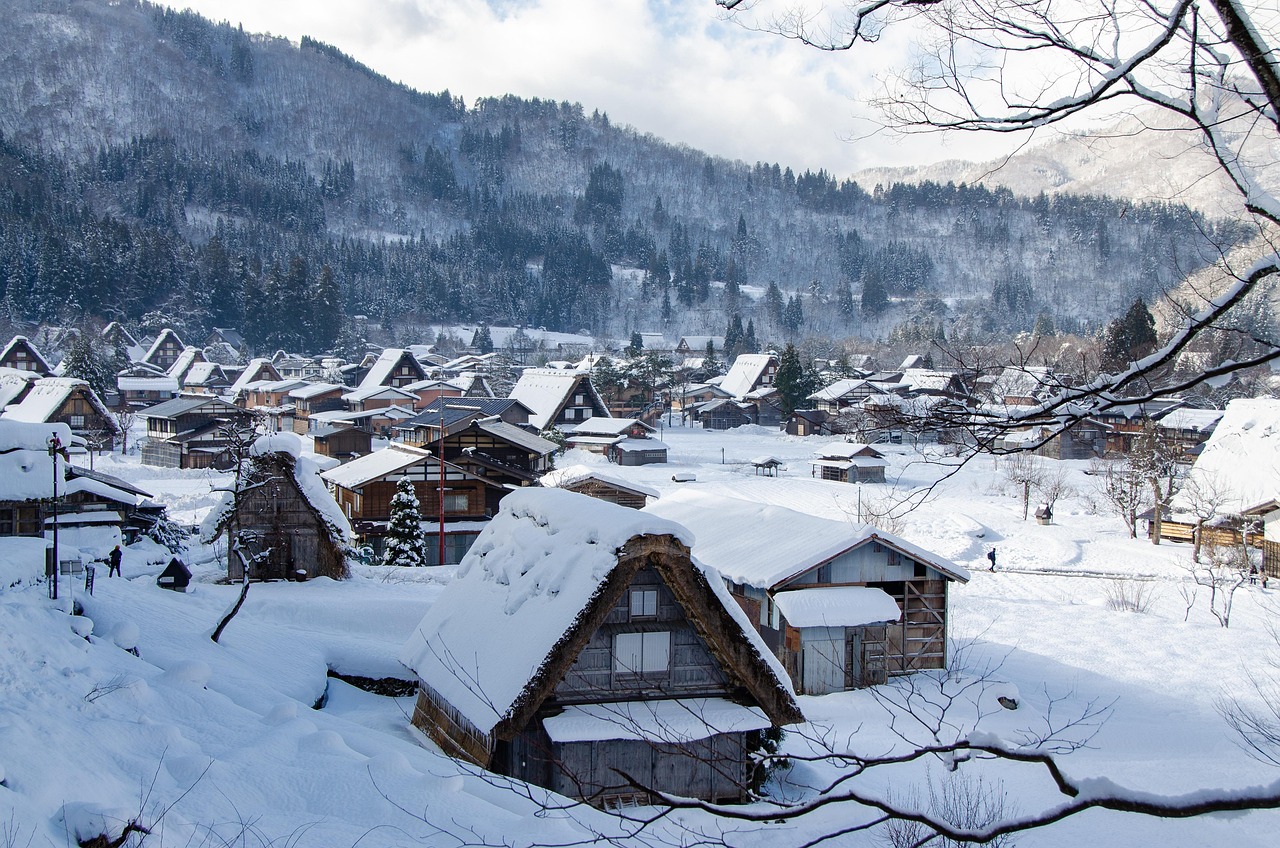
Hida no Sato (飛騨の里 / Hida Folk Village): An open-air museum approximately 2 km from the center containing relocated gassho-zukuri farmhouses from the surrounding Hida mountains — providing the connection between Takayama's urban merchant culture and the rural farmhouse architecture of the surrounding region.
Takayama Jinya (高山陣屋): The Preserved Government Office
Takayama Jinya is the only surviving example of an Edo-period government administration building (陣屋 / jinya) in Japan — the office of the shogunate's direct administrator (代官 / daikan) who governed this strategically important mountain region from 1692 onwards.
The building complex — including the administrative offices, the audience chambers, the rice store (where tax collection in rice was administered), and most significantly the interrogation room with its torture implements — presents a complete picture of how Edo-period bureaucratic power actually functioned at the local level.
The morning market (朝市) held daily in front of the Jinya from approximately 6:00 AM to noon is one of Takayama's most atmospheric experiences: local farmers selling seasonal vegetables, pickles, preserved foods, and crafts in a market format that has occupied this location since the Edo period.
Takayama Festivals (高山祭): Japan's Three Greatest
Takayama Matsuri is consistently cited as one of Japan's three greatest festivals (alongside Kyoto's Gion Matsuri and Chichibu Night Festival). Actually comprising two distinct festivals:
Sanno Matsuri (山王祭 / April 14–15): The spring festival of Hie Shrine — 12 elaborately decorated festival floats (屋台 / yatai) are paraded through the city streets in one of Japan's finest examples of Edo-period festival arts.
Hachiman Matsuri (八幡祭 / October 9–10): The autumn festival of Sakurayama Hachiman Shrine — 11 festival floats paraded, with the distinctive evening procession by lantern light that many visitors describe as the single most beautiful of all Japanese festival processionals.
The festival floats (yatai) — preserved in purpose-built exhibition buildings (屋台蔵 / yatai-gura) that are permanently open to visitors — are the finest surviving examples of Edo-period decorative arts in the Chubu region: hand-carved lacquered woodwork, woven brocade curtains, and mechanical puppets (からくり人形 / karakuri ningyō) that perform trick movements when operated during the festivals.
Hida no Sake: Takayama's Brewing Tradition
Takayama's six operating sake breweries — all within or adjacent to Sanmachi-suji — collectively produce a range of sake styles that reflect the specific water chemistry of the Hida mountains (soft, slightly acidic) and the cooler fermentation temperatures of the mountain climate.
Free tasting: Most of the breweries offer free tasting of their current products at the storefront — the norm of sampling multiple breweries along a single street, comparing styles without commitment to purchase, is one of the specific pleasures of the Sanmachi-suji walk.
Harada Sake Brewery (原田酒造場) and Funasaka Sake Brewery (舩坂酒造店) are among the most visitor-accessible and most consistently well-reviewed.
Recommended Base Hotels
- Associa Takayama Resort (Mid-range / from ¥20,000): The city's finest hotel, mountain and city views.
Rickshaw Inn (Budget / from ¥8,000): International backpacker-friendly, excellent Sanmachi-suji walking access.
Ryokan Tanabe (Mid-range / from ¥18,000 per person): Traditional Hida inn experience with regional kaiseki cuisine.
Planning where to stay in Chubu? Browse our honest hotel picks and area guides.
🏨 Planning where to stay?
Every area guide on this site pairs with honest, station-by-station hotel picks. Start here: Gifu Hotel Guides →