This article may contain affiliate links. If you book through them, we may earn a small commission at no extra cost to you.
On this page
Introduction: The Bowl That Defines a Region
When Japanese people talk about Sapporo ramen, they use a word that doesn't appear in discussions of most regional ramen: "kategori (カテゴリー)" — category. Not style, not variation, not interpretation — category. The implication is that Sapporo miso ramen is not a subset of Japanese ramen but a separate classification that happens to share a name with the rest.
The claim is not entirely unfounded. The specific technique of stir-frying the miso tare in lard before adding broth, the specific combination of Hokkaido agricultural products in a single bowl, and the broth's specific richness-to-complexity ratio collectively produce something that — despite using the same basic format as Tokyo shoyu — tastes and functions as a fundamentally different food.
The Sapporo Miso Technique
The defining technical innovation of Sapporo miso ramen — the stir-frying of the tare — is what separates it from miso ramen made anywhere else.
The process: The miso tare (a blended combination of typically 2–4 different miso varieties — red miso, white miso, and specialty miso from Hokkaido fermenters) is placed in a very hot wok with a significant quantity of lard (豚脂 / buta-abura). The miso is stir-fried briefly — 30–60 seconds — until it takes on a slightly toasted quality and the lard has fully integrated. Then hot pork bone broth is added in a single motion, the wok's heat flashing the broth to temperature instantly.
This brief cooking of the miso develops Maillard reaction compounds (the same browning chemistry that gives grilled meat its flavor) that cold-mixed miso cannot achieve. The resulting broth has a toasted depth underneath the miso's fermented character — a flavor layer invisible in standard miso ramen.
The Sapporo Ramen Bowl: What's In It
The broth: The combination of the stir-fried miso tare and pork bone broth produces a soup that is simultaneously thick (collagen from the bones), rich (lard), and complex (fermented miso, toasted notes).
The noodles: Thick, wavy, high-alkalinity noodles that complement the heavy broth's viscosity — thinner or straighter noodles would slide through the broth rather than carrying it to the mouth.
Corn (コーン): Hokkaido sweet corn — the finest in Japan — is added not merely as a garnish but as a flavoring element whose sweetness cuts through the miso richness.
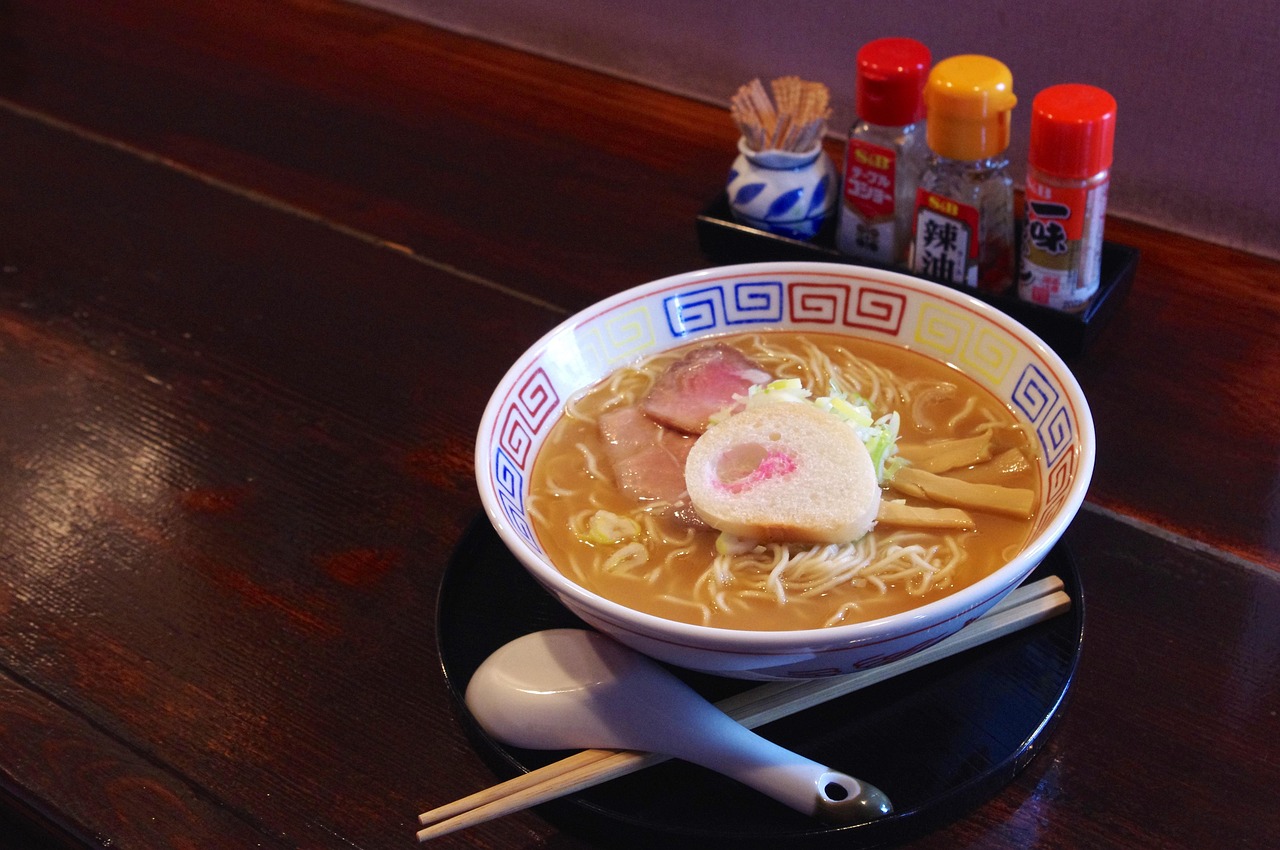
Butter (バター): A pat of Hokkaido butter, placed on top after serving, melts gradually into the broth — adding richness and the specific dairy note that distinguishes Sapporo ramen from every other miso style.
Bean sprouts (もやし): Stir-fried before adding to the bowl — their slight crunch provides textural contrast to the noodles.
- Chashu: Typically pork belly, braised in soy and mirin.
Ramen Yokocho (ラーメン横丁): Sapporo's Ramen Alley
Ramen Yokocho — literally "Ramen Alley" — is an indoor alley of approximately 17 ramen shops in the Susukino entertainment district that has been operating since 1951. Each shop serves its own interpretation of Sapporo miso ramen, and the collective concentration creates both a tourist destination and a genuine competitive environment where quality is maintained by comparison.
The two alleys: There are now two Ramen Yokocho — the Original Sapporo Ramen Yokocho (札幌ラーメン横丁) and the New Sapporo Ramen Yokocho (新札幌ラーメン横丁) — each with its own set of shops.
Best approach: Walk the full length of the original alley first, observe which shops have queues (a reliable indicator), and choose based on the visible character of the interior and the broth color visible through the open kitchen.
Beyond Yokocho: The Serious Sapporo Shops
Sumire (すみれ): Consistently ranked the finest Sapporo miso ramen shop — the broth uses a triple pork bone extraction process that produces exceptional depth. Multiple Sapporo locations; the Nakajima Park location is the flagship.
Shirakaba Sansō (白樺山荘): The most celebrated shop among Japanese ramen enthusiasts visiting Sapporo specifically — a broth of unusual complexity that incorporates both Chinese and Japanese miso varieties.
Shio and Shoyu in Sapporo
While miso is the dominant style, Sapporo's shio (salt) ramen deserves attention — specifically from Hakodate-influenced shops that bring the lighter, seafood-forward broth tradition of southern Hokkaido into Sapporo's ramen culture. Ajisai (味彩) operates in Sapporo and represents this lighter tradition.
Recommended Base Hotels
JR Tower Hotel Nikko Sapporo (Luxury / from ¥28,000): Sapporo Station, ideal for Ramen Yokocho evening visits.
- Dormy Inn Premium Sapporo (Mid-range / from ¥12,000): Susukino walking distance.
Planning where to stay in Hokkaido? Browse our honest hotel picks and area guides.
🏨 Planning where to stay?
Every area guide on this site pairs with honest, station-by-station hotel picks. Start here: Hokkaido Hotel Guides →