This article may contain affiliate links. If you book through them, we may earn a small commission at no extra cost to you.
Tokyo Travel Guide · Ueno
Ueno Station: Museums, Market Streets
& the Cultural Heart of Old Tokyo
Japan's Greatest Museum District · Ameyoko Market · Skyliner to Narita · Northbound Shinkansen Stop
🏛️ Japan's densest museum district
🌸 Ueno Park — roughly 1,000 cherry trees
✈️ Narita in ~45 min (Keisei Skyliner)
🚄 Northbound Shinkansen call here
On this page
What Kind of Area is Ueno? A Local's Honest Take
Every Tokyoite has an Ueno memory. A school trip to the museums, a first cherry blossom party under the park's trees, a bargain hunted down in the roar of Ameyoko — Ueno is where Tokyo goes to be its older, louder, warmer self. For visitors, it is one of the most complete single bases in the city: culture, transport, food and price advantage all overlap within a ten-minute walk of the station.
The scale of the culture is easy to understate. Ueno Park holds the Tokyo National Museum (founded 1872, Japan's oldest museum), the National Museum of Nature and Science, and the National Museum of Western Art — the latter housed in a Le Corbusier building inscribed as a UNESCO World Heritage Site in 2016 — plus concert halls, temples and Ueno Zoo, Japan's oldest (1882). Nowhere else in Japan concentrates this much culture around one station. (One honest note: the zoo's beloved giant pandas were returned to China in early 2026, so check the latest news before promising children a panda.)
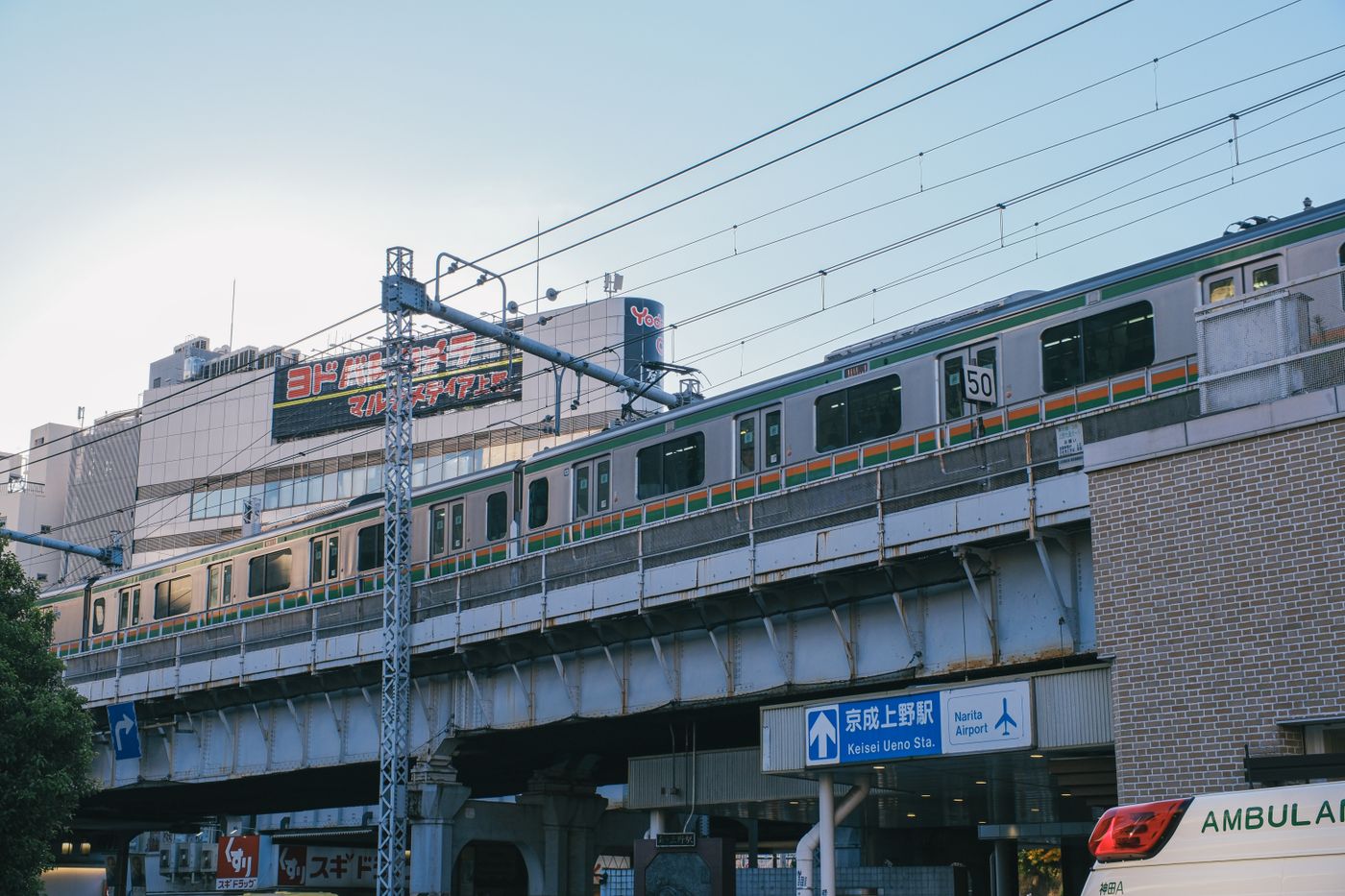
Then there is the other Ueno: Ameyoko, the market street that grew out of the postwar black market beneath the Yamanote tracks — hundreds of stalls selling seafood, dried goods, sneakers and street food at volumes and prices that feel closer to Osaka than to polished central Tokyo. Between the two, the neighborhood keeps a rough-edged friendliness that first-time visitors remember.
Go into the park at 8am, before the museums open: joggers circle Shinobazu Pond's lotus beds, monks sweep at Kiyomizu Kannon-do, and the 1651 gold-leafed Toshogu shrine glows under the trees. The calm before Ameyoko wakes up is Ueno's best-kept rhythm.
Getting Around from Ueno
✈️ To Narita Airport
The Keisei Skyliner runs from Keisei-Ueno Station (a short walk from JR Ueno) to Narita in about 41–45 minutes — one of the best airport connections on the Yamanote Line.
🚄 Shinkansen
Ueno is the second stop for the northbound network — most Tohoku, Yamagata, Akita, Joetsu and Hokuriku Shinkansen services call here, which can save a trek across Tokyo Station. For the Tokaido line west, Tokyo Station is 4 minutes away.
🚇 Around the city
Yamanote and Keihin-Tohoku lines plus the Ginza and Hibiya subway lines fan out from the station; Asakusa is two subway stops or a pleasant 30-minute walk through Kappabashi.
What to See Around Ueno
🏛️ The Museum District
The Tokyo National Museum's Japanese galleries (Honkan) are the single best introduction to Japanese art in the country; the Science Museum's blue whale and the Western Art museum's Rodin bronzes anchor the park's other corners. Any one museum fills half a day — pick one and do it slowly.
🌸 Ueno Park & Shinobazu Pond
Roughly 1,000 cherry trees make the central avenue one of Japan's most famous (and most crowded) hanami sites in late March–early April. In summer, Shinobazu Pond disappears under lotus leaves; in any season, the Benten-do island shrine and pedal boats give the park its unhurried heart.
🍢 Ameyoko & the Station Yokocho
Ameyoko's ~400 shops run from fresh tuna to spice stalls; go late afternoon when the fishmongers start discounting and the standing bars fill. Under the tracks toward Okachimachi, cheap izakaya pour highballs from noon — the most honest drinking culture on the Yamanote Line.
Recommended Hotels Near Ueno Station
🏨 Mitsui Garden Hotel Ueno
UPPER MID-RANGE
From approx. ¥20,000 / night
Directly across from the station's Asakusa exit — the most polished full-service option in the immediate station area, with panda-themed touches, well-designed rooms and staff long accustomed to international guests. For museum mornings and Skyliner departures alike, the position is unbeatable.
✦ Best for: First-time visitors, families, Narita users
🎨 NOHGA HOTEL UENO TOKYO
DESIGN MID-RANGE
From approx. ¥22,000 / night
A few minutes east of the station, this design hotel built its identity on collaborations with local Taito-ward craftsmen — leather goods, ceramics and coffee from the surrounding streets fill the rooms and lobby. The restaurant and rooftop terrace are destinations in their own right. The thinking traveler's Ueno base.
✦ Best for: Design lovers, couples, craft & coffee culture fans
♨️ Dormy Inn Ueno-Okachimachi
MID-RANGE
From approx. ¥14,000 / night
Between Ueno and Okachimachi — the chain's natural hot-spring bath on the top floor and free late-night noodles are exactly what a day of museums and market walking calls for. Consistently one of the best value-to-comfort ratios in the area.
✦ Best for: Onsen seekers, budget-conscious couples, long sightseeing days
Overall Rating: Ueno Station Area
| Category | Rating | Notes |
|---|---|---|
| Haneda Airport Access | ★★★☆☆ | Keihin-Tohoku + Monorail or Keikyu, ~40 min |
| Narita Airport Access | ★★★★★ | Keisei Skyliner direct, ~45 min |
| West Japan Shinkansen | ★★★★☆ | Tokyo Station 4 min on Yamanote |
| North Japan Shinkansen | ★★★★★ | Most northbound services stop at Ueno itself |
| Local Neighborhood Feel | ★★★★★ | Museums, market roar and old-Tokyo warmth |
| Sightseeing Density | ★★★★★ | Park, museums, zoo, Ameyoko — all on foot |
Who Should Stay in Ueno?
✔ Museum & culture travelers
✔ Narita arrivals and departures (Skyliner)
✔ Cherry blossom season visitors
✔ Travelers heading north by Shinkansen
✔ Anyone who wants old Tokyo's energy at fair prices