This article may contain affiliate links. If you book through them, we may earn a small commission at no extra cost to you.
On this page
Introduction: The Objects That Carry Prayers
Japanese shrine and temple culture has developed a sophisticated material expression of spiritual practice — a range of objects that carry prayers, represent wishes, and provide ongoing protective connection between the worshipper and the divine. These objects are not mere souvenirs (though they function as souvenirs as well) but are understood within Japanese spiritual culture as genuinely efficacious — things that work, that protect, that connect.
Omamori (お守り / Protective Amulets)
Omamori are small cloth pouches containing sacred inscriptions on paper or wood, sealed within the pouch and typically never opened (opening is considered to diminish the protective power). They are issued by specific shrines and temples, each version carrying the power associated with the issuing institution's kami or Buddhist deity.
The Variety
The range of omamori types reflects the full spectrum of human concern:
Kōtsū anzen (交通安全): Traffic safety — the most widely purchased omamori category in Japan, typically hung from car rear-view mirrors.
Gakugyō jōju (学業成就): Academic success — overwhelmingly popular around entrance examination season, particularly at shrines dedicated to Tenjin (the deity of learning).
- Kaiun (開運): General good fortune and opportunity.
- En-musubi (縁結び): Romantic connection — the formation of fateful relationships.
- Anzan (安産): Safe pregnancy and childbirth.
- Byōki heiyu (病気平癒): Recovery from illness.
- Shōbai hanjō (商売繁盛): Business prosperity — particularly associated with Inari shrines.
Care and Disposal
An omamori's efficacy is typically understood to extend for approximately one year. At year's end, the correct practice is to return the omamori to the issuing shrine or temple for otakiage (お焚き上げ) — ritual burning — rather than simply discarding it. Most shrines accept returned omamori (with appropriate donation) during the New Year period.
Ema (絵馬 / Votive Plaques)
Ema are wooden plaques on which worshippers write their wishes and hang them at the shrine or temple on a designated wooden rack (絵馬掛け / ema-kake), leaving them for the kami to read and act upon. The name derives from the historical practice of donating horses (馬 / uma) to shrines — ema developed as a paper or wooden substitute for the real animal as the tradition became more broadly accessible.
Current design: The front of the ema typically bears the image of the shrine's associated motif (the zodiac animal of the current year, the shrine's symbol, a sacred horse) and the shrine's name. The back is left blank for the worshipper's inscription.
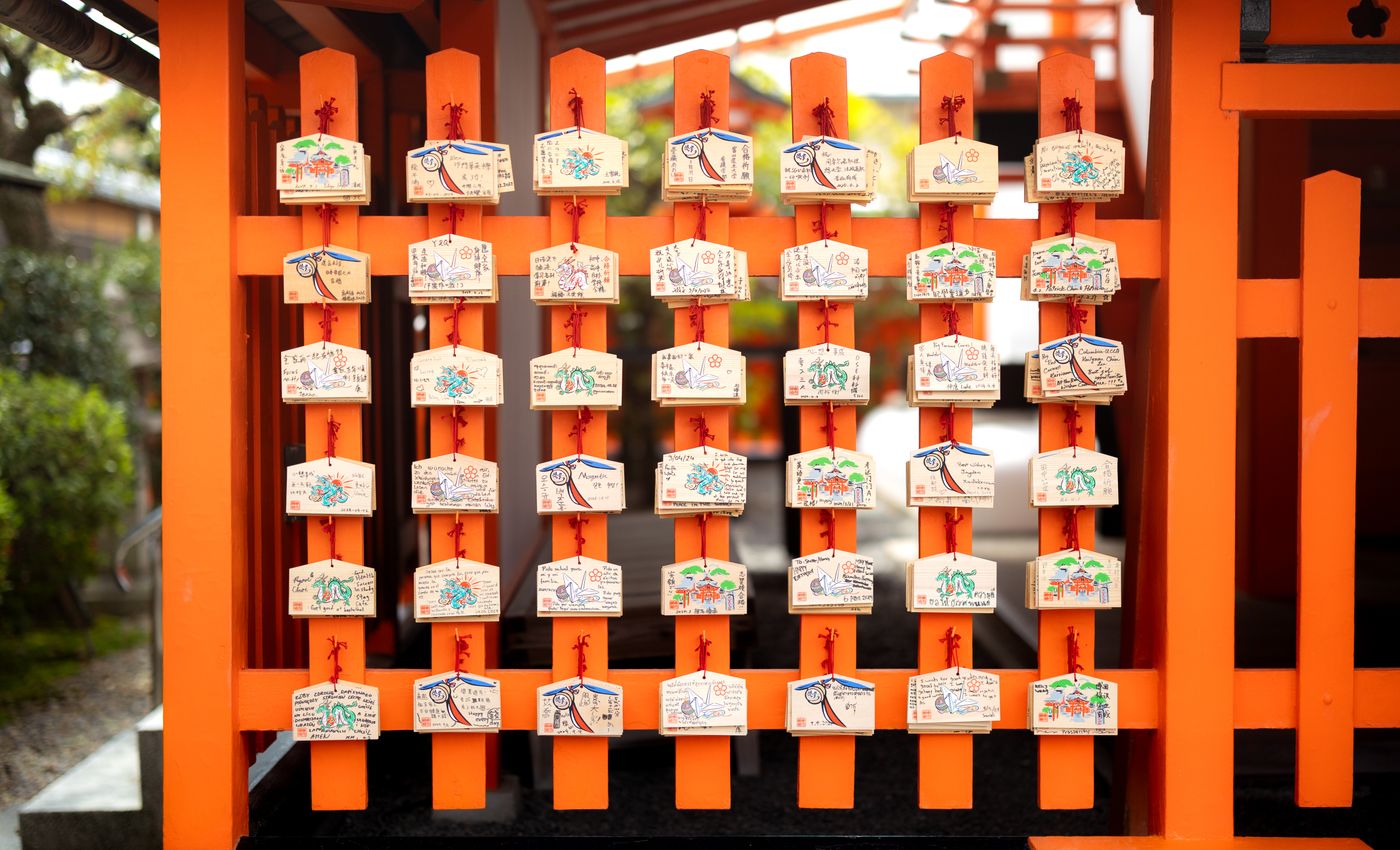
What to write: Wishes can be written in any language — non-Japanese wishes are entirely appropriate, and the ema racks at internationally famous shrines (Meiji Jingu, Fushimi Inari) contain inscriptions in dozens of languages.
- The price: Typically ¥500–¥1,000 for a standard ema; specialty or larger versions cost more.
The privacy question: Ema wishes are technically public (hanging on the rack for anyone to read) but are not conventionally read by other visitors — there is an understood social privacy to the rack, where one avoids reading others' wishes closely.
Ofuda (お札 / Sacred Tablets)
Ofuda are flat paper or wooden tablets bearing the name of the enshrined deity — the closest equivalent to a talisman in the Western sense. Where omamori are portable protective objects, ofuda are typically placed in the home's kamidana (神棚 / household altar), positioned in the main room at head height, facing south or east, representing the protective presence of the kami in the household.
The New Year tradition: In Shinto tradition, households ideally receive a new ofuda each year from their local shrine or a significant shrine they visit during hatsumode — the old ofuda is returned for ritual burning, the new one installed. This annual renewal cycle connects domestic life to the shrine's ongoing ritual calendar.
Ise Ofuda: The most significant ofuda in Japan is the Jingū taima (神宮大麻) from Ise Grand Shrine, considered to carry the protective power of Amaterasu Ōmikami (the sun deity) — distributed through the national shrine network to households throughout Japan each year.
Omikuji (おみくじ / Fortune Slips)
Omikuji are random fortune slips, drawn from a container (typically by shaking a numbered stick from a cylindrical box, then matching the number to a corresponding drawer) that reveal fortune predictions for various areas of life — health, romance, finances, travel, and others.
The fortune spectrum: From most to least fortunate:
大吉 (Daikichi / "great luck")
吉 (Kichi / "luck")
中吉 (Chūkichi / "moderate luck")
小吉 (Shōkichi / "small luck")
末吉 (Suekichi / "future luck")
凶 (Kyō / "misfortune")
大凶 (Daikyō / "great misfortune")
(The exact ranking — especially where 吉 sits relative to 中吉 — varies from shrine to shrine.)
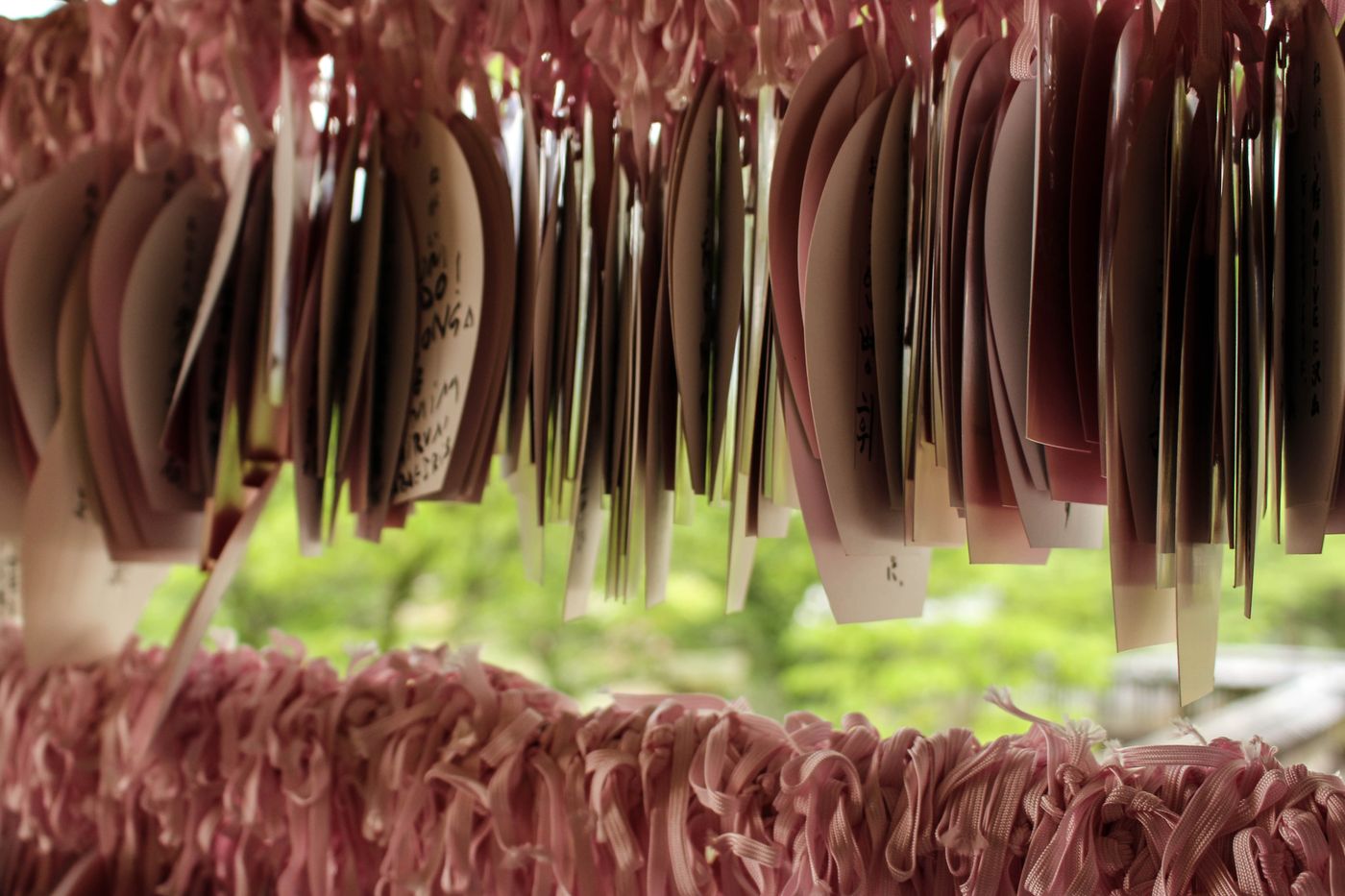
The tying tradition: Unfavorable omikuji are traditionally tied to a designated pine tree or wire rack at the shrine — the word "pine" (松 / matsu) shares a reading with the word "to wait" (待つ / matsu), and leaving the bad fortune tied at the shrine is understood to leave it with the kami rather than carrying it home. Good fortune omikuji may be taken home.
🏨 Planning where to stay?
Every area guide on this site pairs with honest, station-by-station hotel picks. Start here: Hotel Guides by Station →