This article may contain affiliate links. If you book through them, we may earn a small commission at no extra cost to you.
Ghibli Real Locations · Princess Mononoke
Princess Mononoke: Where the Forest
Spirit’s Forest Actually Exists
Yakushima’s Moss Forest · Shirakami Sanchi’s Primeval Beech · UNESCO World Heritage Natural Sites
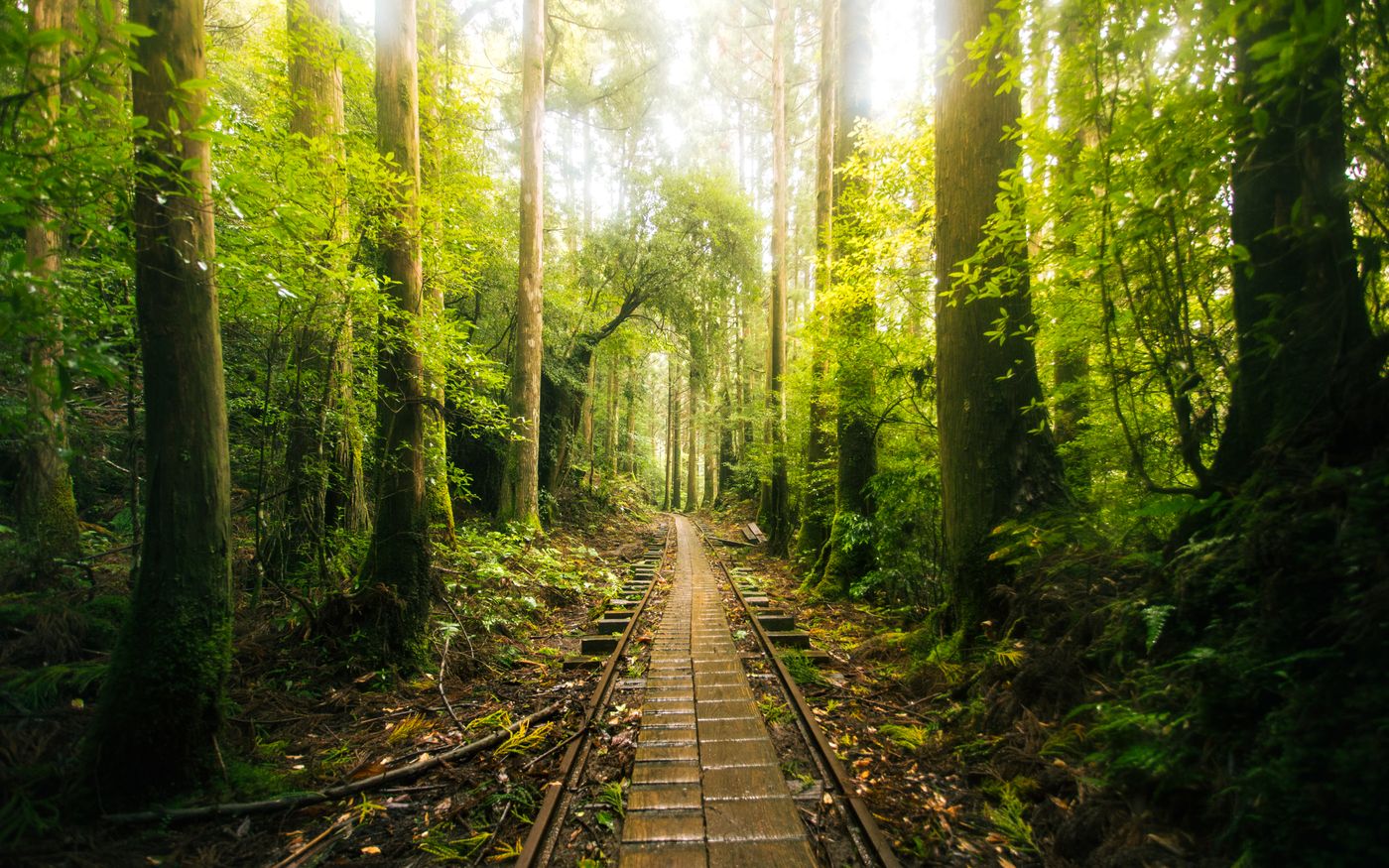
🌿 Shiratani Unsuikyo — the Kodama forest
🌲 Jomon Cedar — estimated 2,000–7,200 years old
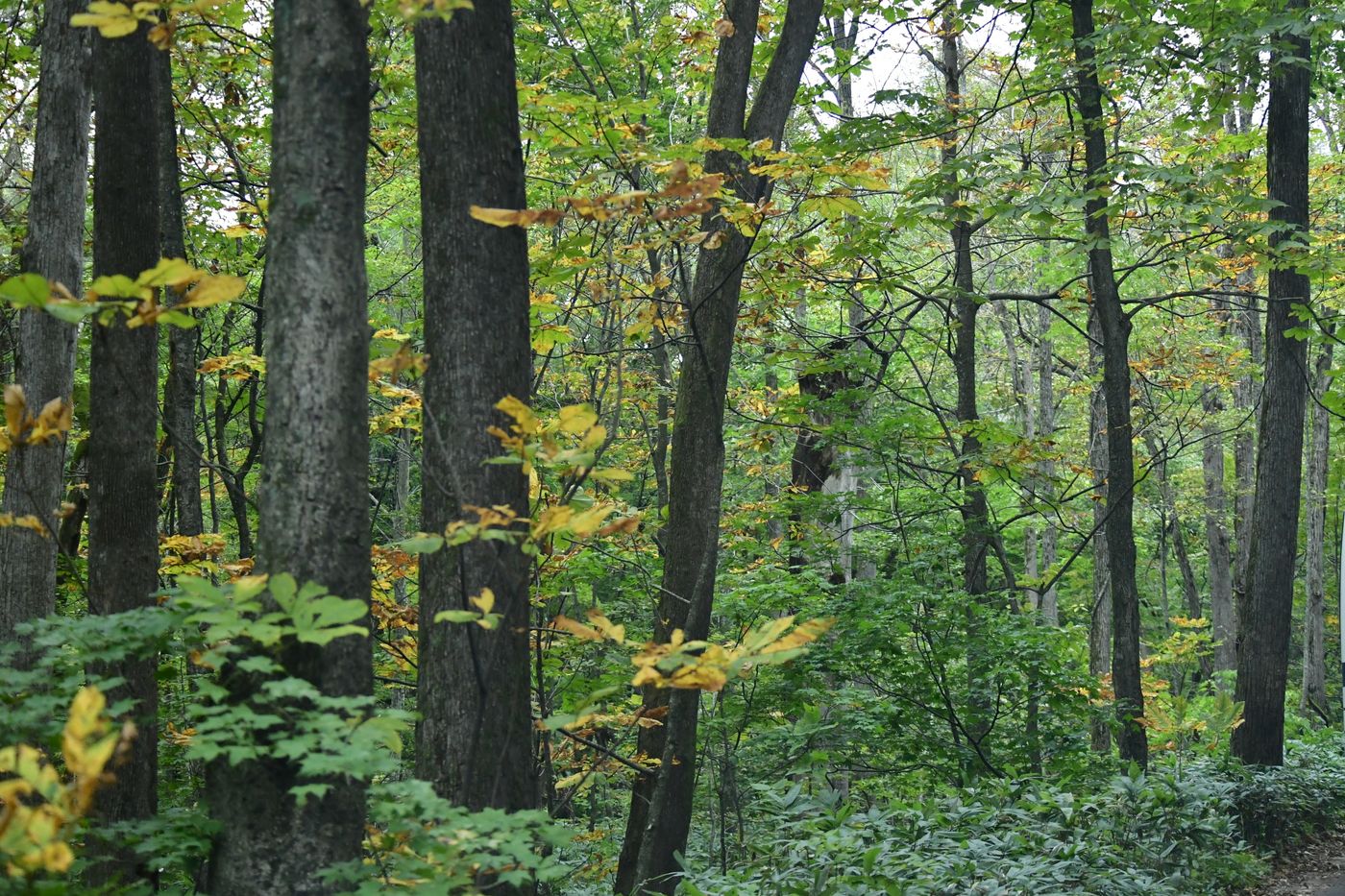
🏔️ Shirakami Sanchi — Japan’s largest primeval beech forest
🌊 “Kubi-ore Saba” — Yakushima’s legendary mackerel
On this page
What Miyazaki Was Trying to Show
Released in 1997, Princess Mononoke is set in the late Muromachi period and depicts the collision between an iron-smelting settlement and the gods of the forest. The spiritual heart of the film is the Forest Spirit’s domain — a place of ancient moss, enormous trees, and a force that neither humans nor gods can fully control.
Miyazaki visited Yakushima while developing the film and reportedly experienced there what he called the sensation of entering a place where humans are not fully welcome. That sensation — of being in a forest so old and so complete that your presence feels provisional — is the emotional foundation of the film’s forest scenes.
Both Yakushima and the Shirakami Sanchi beech forests were designated UNESCO World Natural Heritage Sites in 1993. They are the most significant intact natural forests in Japan, and the most direct real-world expressions of what the film describes.
Walking into Shiratani Unsuikyo for the first time, most visitors stop speaking. Not because they’ve been told to. Because the forest seems to require it.
Location 1: Yakushima, Kagoshima Prefecture
Access: ~35 min by plane from Kagoshima Airport to Yakushima Airport · Or ~4 hrs by ferry from Kagoshima Port
🌿 Shiratani Unsuikyo — “The Mononoke Forest”
The production staff for Princess Mononoke conducted location research here, and Shiratani Unsuikyo is the site most directly connected to the film’s forest imagery. A ravine filled with ancient moss-covered trees, fallen logs colonized by ferns, and streams running over granite — the visual density of the place is extraordinary even by Yakushima’s standards.
Two main hiking options: the Mononoke Forest course (approx. 2 hrs return) reaches the most celebrated moss-carpeted sections; the Taikoiwa course (approx. 4 hrs return) continues to a summit rock with panoramic views. The shorter course delivers the full forest experience and is appropriate for most visitors.
✦ Entry fee: ¥500 (environmental conservation tax) · Rain intensifies the moss’s color and atmosphere — Yakushima receives among the highest rainfall in Japan · Best months: May–June and October–November
🌲 Jomon Cedar Trek
The island’s defining pilgrimage: 22km return to a cedar tree whose age is estimated at anywhere from 2,000 to 7,200 years. Allow a full day (10+ hours). The cedar itself — 16 meters in circumference, 25 meters tall, visibly ancient in a way that photographs cannot capture — produces a response in visitors that is difficult to describe as anything other than reverence.
This is not a casual hike. Proper trekking boots, rain gear, and sufficient food and water are essential. A mountain registration (tozan todoke) must be submitted the day before departure.
✦ Distance: 22km return · Time: ~10 hours · Difficulty: ★★★★☆ · Start from Arakawa Trailhead (shuttle bus from Yakushima Airport area)
🌳 Yakusugi Land
For visitors without the time or physical capacity for the Jomon Cedar, Yakusugi Land offers 30-minute to 3-hour trails through ancient cedar forest. The shorter courses are accessible on walking shoes and provide a genuine encounter with trees centuries old in the same primeval forest context.
Location 2: Shirakami Sanchi, Aomori & Akita Prefectures
Access: ~2 hrs by car from Aomori Airport or Akita Airport
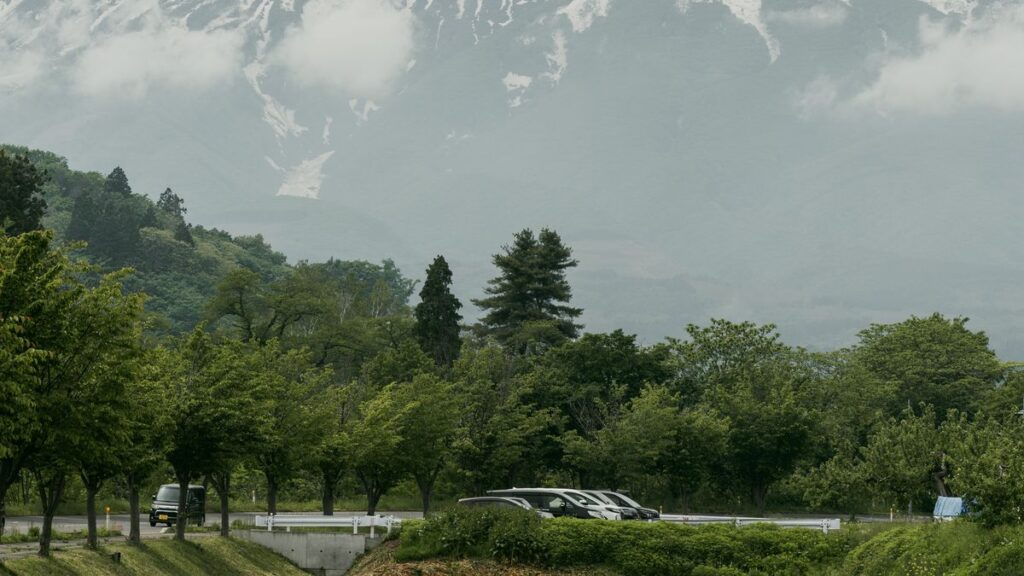
Japan’s largest primeval beech forest — 130,000 hectares, with a UNESCO-designated core zone of 17,000 hectares essentially untouched by human activity. The Shirakami Sanchi beech trees are not individually ancient in the way Yakushima’s cedars are; their power comes from scale and completeness. A forest this large, this undisturbed, produces its own atmospheric conditions — mist, silence, an impenetrability that the film’s forest captures directly.
The Juniko Lakes (Twelve Lakes) area on the western edge of Shirakami contains 33 ponds and lakes in a small area, including the celebrated Aoike (Blue Pond) — a body of water of such intense cobalt color that its cause has never been fully explained scientifically. The inexplicability of the color is, somehow, exactly right for the setting.
Access to Aoike: JR Gono Line to Juniko Station, then bus ~10 min.
What to Eat
Yakushima — Kubi-ore Saba (Broken-Neck Mackerel): Mackerel caught by single line off Yakushima, whose neck is broken immediately upon landing to drain the blood — resulting in a freshness and depth of flavor entirely unlike any other mackerel available in Japan. Served as sashimi at restaurants near the port.
Yakushima — Flying fish (Tobi-uo): The island’s other signature seafood — fried, grilled, or raw depending on the restaurant.
Shirakami — Mountain cuisine: Wild vegetables, river fish (iwana char), mushrooms. Seasonal and honest.
Recommended Hotels
Yakushima: Yakushima Iwasaki Hotel (Luxury / from approx. ¥30,000 ~$200 USD) — the island’s highest-standard hotel, best base for all trailheads. Local guesthouses/minshuku (Economy / from approx. ¥8,000 ~$53 USD) — home cooking, direct local experience.
Shirakami / Aomori side: Furofushi Onsen (Mid-Range / from approx. ¥20,000 ~$133 USD) — famous cliff-face outdoor baths facing the Sea of Japan; superb base for Shirakami. Hirosaki city business hotels for more central access.
Prices approximate. Verify on booking sites.
Who Should Visit
✔ Princess Mononoke fans
✔ Serious hikers & nature travelers
✔ UNESCO World Heritage seekers
✔ Those who want to feel genuinely small in nature
✔ Photographers seeking otherworldly green
🏨 Planning where to stay?
Every area guide on this site pairs with honest, station-by-station hotel picks. Start here: Kagoshima Hotel Guides →