This article may contain affiliate links. If you book through them, we may earn a small commission at no extra cost to you.
Fifteen rocks on a bed of raked white gravel. No pond, no flowers, almost no color. And yet visitors sit on the veranda of Ryoan-ji Temple in Kyoto staring at this rectangle of stone for half an hour, and many describe it as the most memorable “sight” of their trip. Japanese Zen gardens are deliberately difficult to explain—which is exactly the point. Here is a guide to what Zen is, how to look at these enigmatic gardens, and where you can go beyond looking to actually practice meditation in a Japanese temple.
On this page
What Is Zen?
Zen is a school of Buddhism that reached Japan from China in the 12th–13th centuries and profoundly shaped samurai culture, tea ceremony, ink painting, martial arts, and Japanese aesthetics generally. Its core proposition is radical in its simplicity: enlightenment is not found in scripture or ritual but through direct experience—principally seated meditation, zazen. Words, Zen insists, can point at the moon but are not the moon.
This distrust of explanation is why Zen expresses itself through arts instead: a garden, a bowl of tea, a brushstroke. Each is designed to stop your discursive mind for a moment and let you simply see.
Karesansui: The Dry Landscape Garden
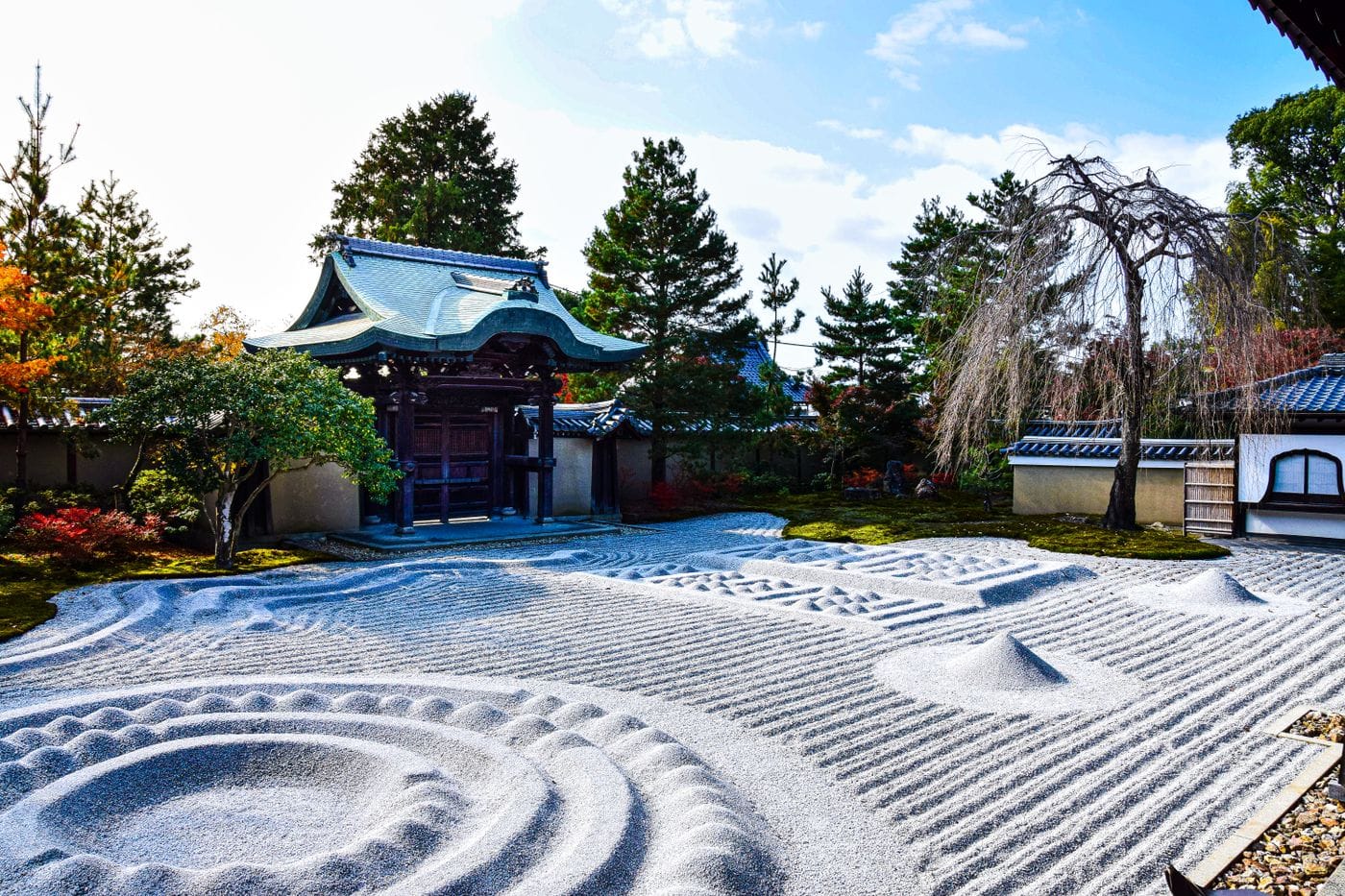
The rock gardens attached to Zen temples are called karesansui—”dry mountain-water” landscapes. Developed in the Muromachi period (1336–1573), they render nature in radical abstraction:
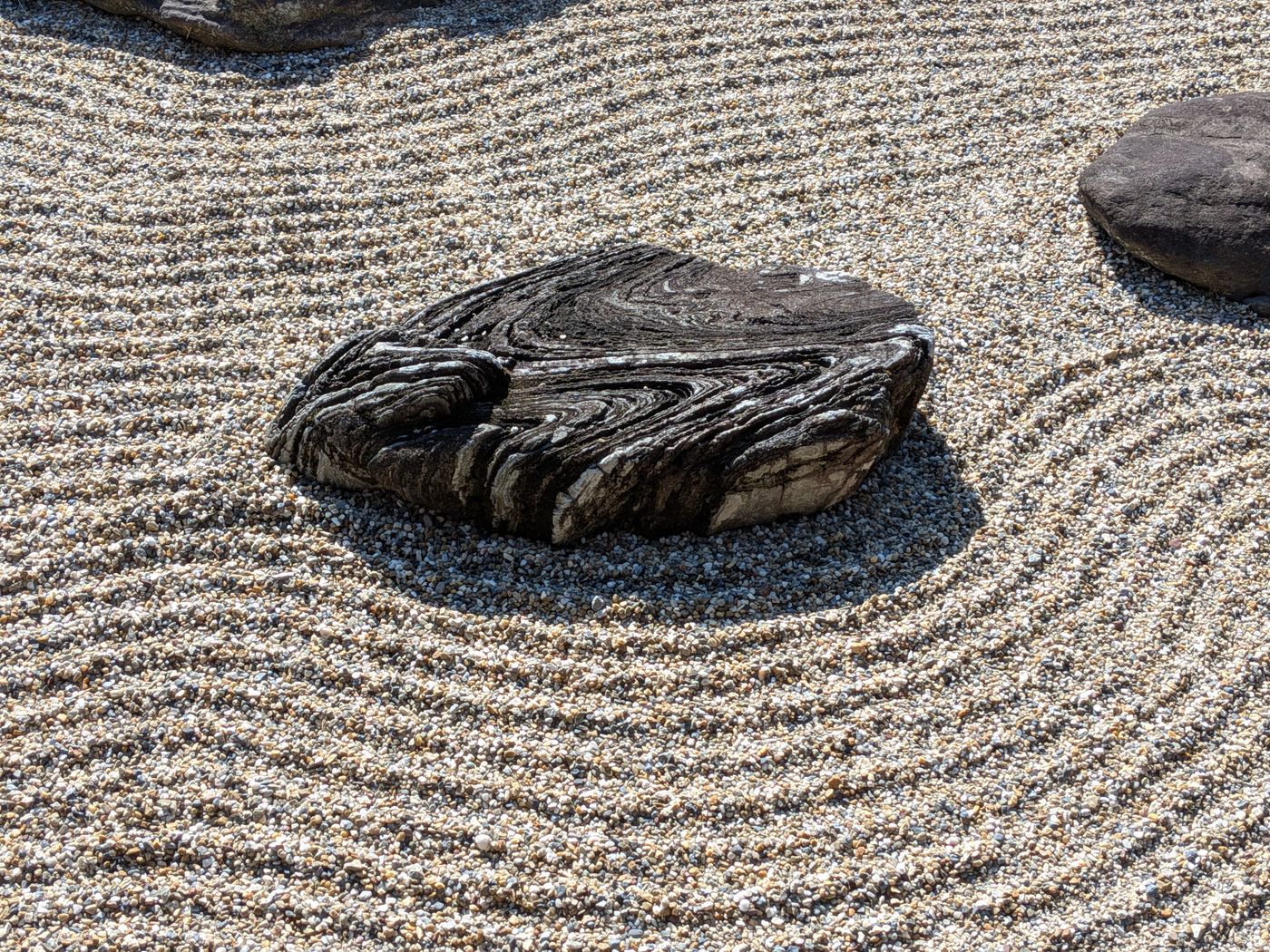
- Raked gravel represents water—ocean, rivers, or clouds—with the raking patterns suggesting waves and currents. Monks rake the gravel as a form of moving meditation.
- Rocks stand for mountains, islands, waterfalls—or, in some readings, a tigress swimming with her cubs, or islands of the immortals. Their placement follows compositional principles of asymmetry and odd numbers.
- Moss and clipped shrubs, where present, soften the austerity and mark the seasons.
- Borrowed scenery (shakkei) – distant mountains or trees beyond the wall are deliberately incorporated into the composition.
Crucially, karesansui are gardens for viewing from a fixed vantage—usually a temple veranda—not for strolling. They are paintings made of stone, and you are meant to sit with them the way you would sit with a koan.
How to “Read” Ryoan-ji
Japan’s most famous rock garden offers a built-in lesson: its fifteen rocks are arranged so that from any seated position, at least one rock is always hidden. Only when—so the tradition goes—you attain enlightenment can you see all fifteen at once. Whether or not you take that literally, the design gently teaches Zen’s central insight: your perspective is always partial. Sit, count the rocks, move, count again, and smile.
The Aesthetics Zen Gave Japan
A few concepts will deepen everything you see in Japan, far beyond the gardens:
- Wabi-sabi – beauty in imperfection, impermanence, and rustic simplicity: the asymmetric tea bowl, the weathered wooden gate.
- Ma – the eloquence of empty space and silence; what is left out matters as much as what is included.
- Yugen – profound, shadowy grace; beauty that is suggested rather than shown.
- Kanso – simplicity; the elimination of clutter until only essence remains.
Once you have these words, you will start noticing their fingerprints everywhere—in flower arrangements, bento boxes, architecture, even minimalist Japanese product design.
Where to See Japan’s Greatest Zen Gardens
- Ryoan-ji (Kyoto) – the iconic fifteen-rock enigma; arrive at opening time (8:00 AM) to experience it in near silence.
- Daitoku-ji (Kyoto) – a walled complex of two dozen sub-temples, several with sublime gardens (Daisen-in’s allegorical “river of life” garden is a masterpiece) and far fewer crowds.
- Tofuku-ji (Kyoto) – the modern classic: Mirei Shigemori’s 1939 checkerboard moss garden proves the tradition is still alive and inventing.
- Ginkaku-ji (Kyoto) – the Silver Pavilion’s sculpted sand cone and “sea of silver sand” beside lush moss hillsides.
- Komyozen-ji (Dazaifu, Fukuoka) – Kyushu’s hidden karesansui gem, often nearly empty.
- Zuisen-ji and Kencho-ji (Kamakura) – an easy Zen day trip from Tokyo; Kencho-ji is Japan’s oldest Zen training monastery.
Beyond Looking: Experience Zazen Yourself
The gardens are the poster; meditation is the practice. Travelers have more options than ever:
- Temple zazen sessions – many temples hold beginner-friendly sittings. In Kyoto, Shunkoin Temple (within the Myoshin-ji complex) offers zazen instruction in English from its bilingual deputy priest; Kennin-ji and Nanzen-ji hold regular public sittings. Near Tokyo, Kamakura’s Engaku-ji and Tokyo’s Chokoku-ji welcome first-timers.
- What to expect – you’ll sit cross-legged (chairs usually available) facing a wall or the garden for one or two 15–25 minute periods, focusing on posture and breath. The monitor’s flat wooden stick (kyosaku) is applied to the shoulders only on request—a wake-up aid, not a punishment—and being struck is oddly refreshing.
- Shukubo temple stays – sleep in a monastery, eat shojin ryori (Buddhist vegetarian cuisine that will convert committed carnivores), and join pre-dawn services. Mt. Koya (Shingon Buddhism rather than Zen, but the definitive temple-stay experience) has dozens of welcoming lodgings; Eihei-ji in Fukui, Zen’s austere great monastery in the cedar forest, offers a stricter taste of real monastic life.
Zazen Etiquette Basics
- Arrive early; sessions start precisely.
- Wear loose clothing you can sit in; remove watches and silence phones completely.
- Follow the bows of those around you—entering the hall, greeting your cushion, greeting the room.
- Stillness matters more than perfect posture; if your legs ache, adjust quietly and forgive yourself. That, too, is practice.
Where to Stay for a Zen-Focused Trip
Luxury: Aman Kyoto – a forest garden resort in northern Kyoto whose design is itself a meditation, near Kinkaku-ji and Daitoku-ji.
Mid-range: Hotel Alza Kyoto – quiet comfort within walking distance of the eastern temple districts.
Unique: Shunkoin Temple guesthouse (Kyoto) or Ekoin (Mt. Koya) – sleep where you practice; morning meditation is steps from your futon.
Final Thoughts
You can photograph a Zen garden in three seconds, or you can give it thirty minutes and let it start working on you. My suggestion: pick one garden—just one—arrive when the gates open, sit on the wooden veranda, and stay past the point of boredom. Somewhere on the far side of restlessness, the raked gravel begins to look like water, the rocks like mountains in mist, and you understand why fifteen stones have held people’s attention for five hundred years. That understanding, which fits in no photograph, may be the lightest and most durable souvenir Japan offers.
🏨 Planning where to stay?
Every area guide on this site pairs with honest, station-by-station hotel picks. Start here: Hotel Guides by Station →