This article may contain affiliate links. If you book through them, we may earn a small commission at no extra cost to you.
Ghibli Real Locations · Howl’s Moving Castle
Howl’s Moving Castle:
The Japanese Town With European Bones
Kurashiki Bikan Quarter — White Walls, Willow-Lined Canals & the Ohara Museum of Art
🏛️ Ohara Museum — Japan’s first Western art museum (1930)
🌊 Canal-lined white-walled storehouses
🍑 Okayama fruit — Japan’s finest peach & muscat
🚄 3.5 hrs from Tokyo by Shinkansen
Where Japanese Preservation Meets European Atmosphere
Released in 2004, Howl’s Moving Castle is primarily set in a fictional European country — and is the Ghibli film most explicitly drawn from non-Japanese visual sources (the source novel by Diana Wynne Jones is British). However, within Japan, Kurashiki’s Bikan Historic Quarter has become recognized as the location whose atmosphere most closely resonates with the film’s townscape aesthetic.
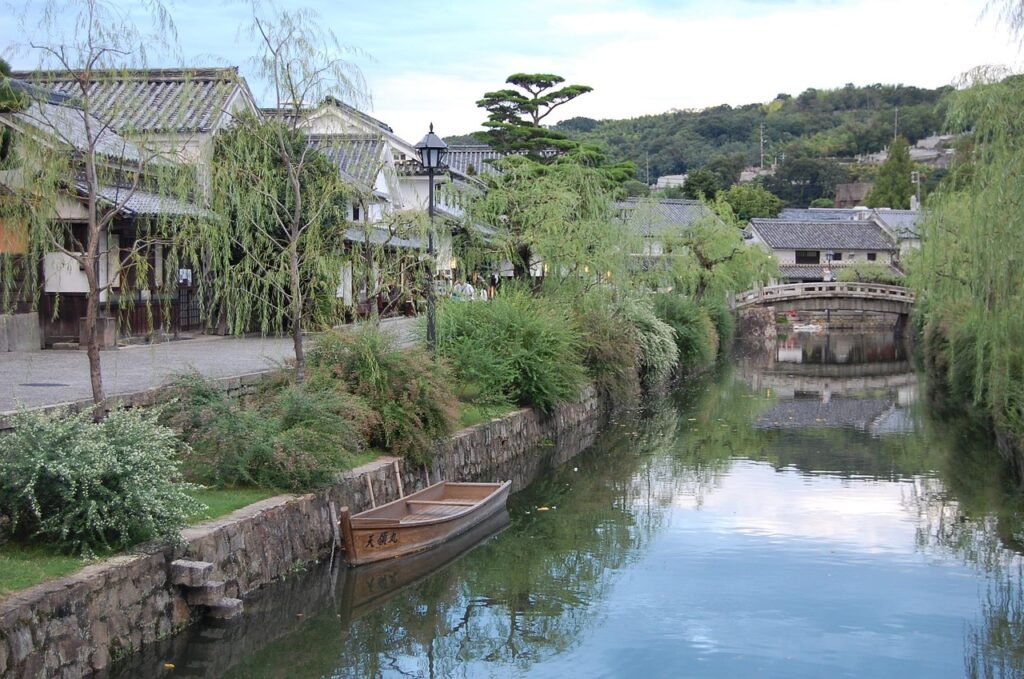
What Kurashiki and Howl’s town share is a specific quality: a place where the architecture of a previous era has been preserved intact, surrounded by a living city that has moved on. The white-walled kura storehouses along the canal were built in the Edo period; the willow trees, the stone bridges, the punted boats — all of it has been here for 200 years. The effect is not anachronism but layering, which is also how Howl’s town functions in the film.
Access: Shinkansen to Okayama (~3 hr 20 min from Tokyo, ~45 min from Shin-Osaka), then the JR San’yō line local to Kurashiki Station (~15 min) · 15 min walk to the Bikan Quarter
🌊 Kurashiki Bikan Historic Quarter
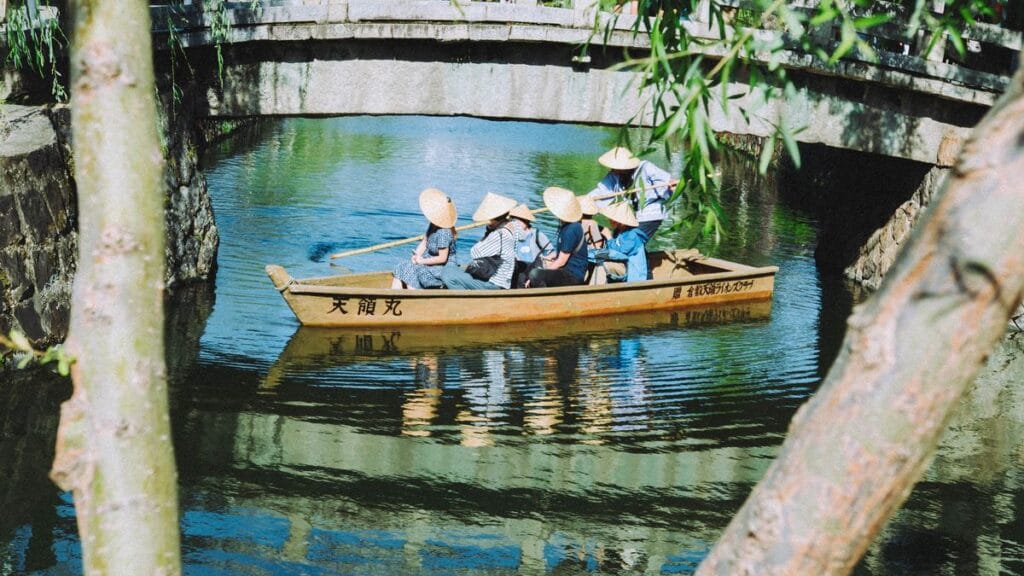
The canal at the center of the Bikan Quarter is lined on both sides with Edo-era white-plastered storehouses (kura), now operating as museums, cafes, and shops. Willow trees trail into the water; stone bridges cross at intervals; small punted boats carry visitors along the length. At dusk, when the white walls turn gold and the canal reflects both, the visual is one of Japan’s most elegant townscape images — European in atmosphere despite being entirely Japanese in origin.
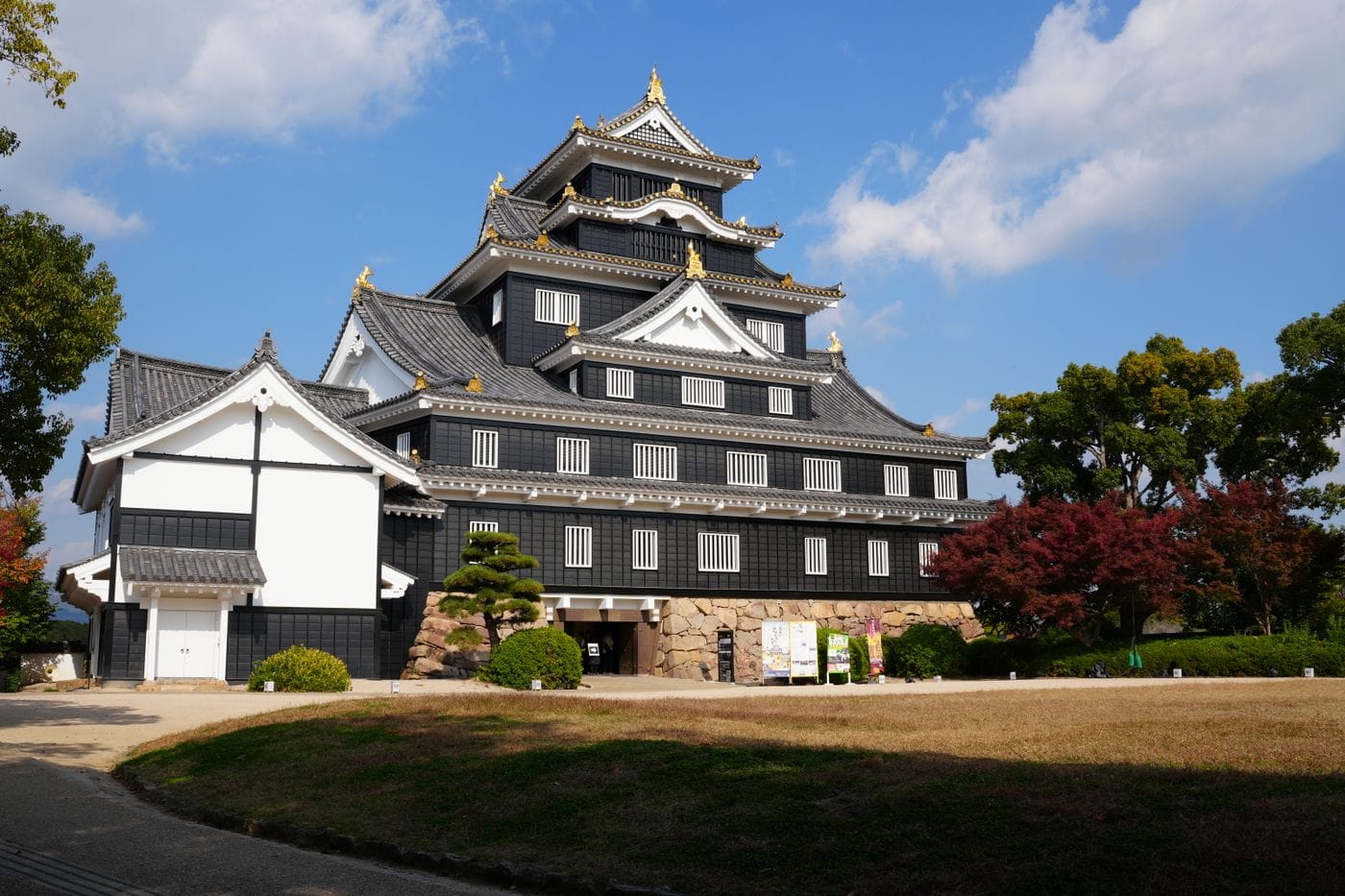
🏛️ Ohara Museum of Art (Est. 1930)
Japan’s first private Western art museum — founded by a Kurashiki industrialist in 1930, built in a Greek Revival style, and housing works by Monet, El Greco, Gauguin, and Rodin alongside a Japanese modern art annex. The coexistence of European fine art and traditional Japanese townscape within a single district is exactly the cultural layering that Howl’s Moving Castle builds from. The museum is world-class and almost unknown internationally.
What to Eat & Hotels
Okayama food: Okayama fruit (the prefecture grows Japan’s finest peaches and Muscat grapes — available fresh in season at the market) · Barazushi (Okayama-style scattered sushi with local seafood) · Mamakari (pickled sardine — an intensely local specialty) · Kibi dango (millet dumplings — the snack from the Momotaro legend)
Hotels: Ryokan Kurashiki (Luxury / from approx. ¥35,000 ~$233 USD) — an Edo-era kura converted to a ryokan; sleeping inside a 200-year-old storehouse is the most complete Kurashiki experience. Kurashiki Ivy Square (Mid-Range / from approx. ¥18,000 ~$120 USD) — converted Meiji-era cotton mill with ivy-covered brick exterior; character and convenience combined.
All prices approximate. Verify on booking sites.
Who Should Visit
✔ Howl’s Moving Castle fans
✔ Western art museum & canal district lovers
✔ Travelers on the San’yo Shinkansen corridor
✔ Those who want preserved Edo townscapes without Kyoto crowds
✔ Photography & heritage architecture travelers
🏨 Planning where to stay?
Every area guide on this site pairs with honest, station-by-station hotel picks. Start here: Okayama Hotel Guides →