This article may contain affiliate links. If you book through them, we may earn a small commission at no extra cost to you.
On this page
Introduction: The Festival of Returning Spirits
Obon (お盆) is Japan's most significant traditional summer observance — a Buddhist-derived festival, typically held in mid-August (though regional variation exists, with some areas observing it in mid-July), during which Japanese families honor the spirits of deceased ancestors who are believed to return to visit the living world during this period.
The combination of solemn ancestral observance and joyful communal celebration that characterizes Obon — family grave visits and offerings on one hand, festive bon odori (盆踊り) community dancing on the other — reflects the Japanese cultural capacity for holding contemplative and celebratory modes simultaneously within a single occasion.
The Religious and Family Dimension
Mukaebi (迎え火 / welcoming fire): On the first evening of Obon, families light small fires (traditionally hemp stalks, though many urban households now use simplified alternatives) outside their homes to guide ancestral spirits back to the household.
Ohaka mairi (お墓参り / grave visiting): Families visit and clean ancestral graves, leaving flowers, incense, and food offerings — one of the most significant family observances in the Japanese calendar, comparable in social importance to the New Year period.
Okuribi (送り火 / send-off fire): At Obon's conclusion, families light fires to send the spirits back to the afterlife — the most famous public version of this ritual is Kyoto's Daimonji (大文字), when enormous bonfires in the shape of kanji characters are lit on the mountains surrounding the city on August 16th, visible from across Kyoto.
Bon Odori (盆踊り): The Public Celebration
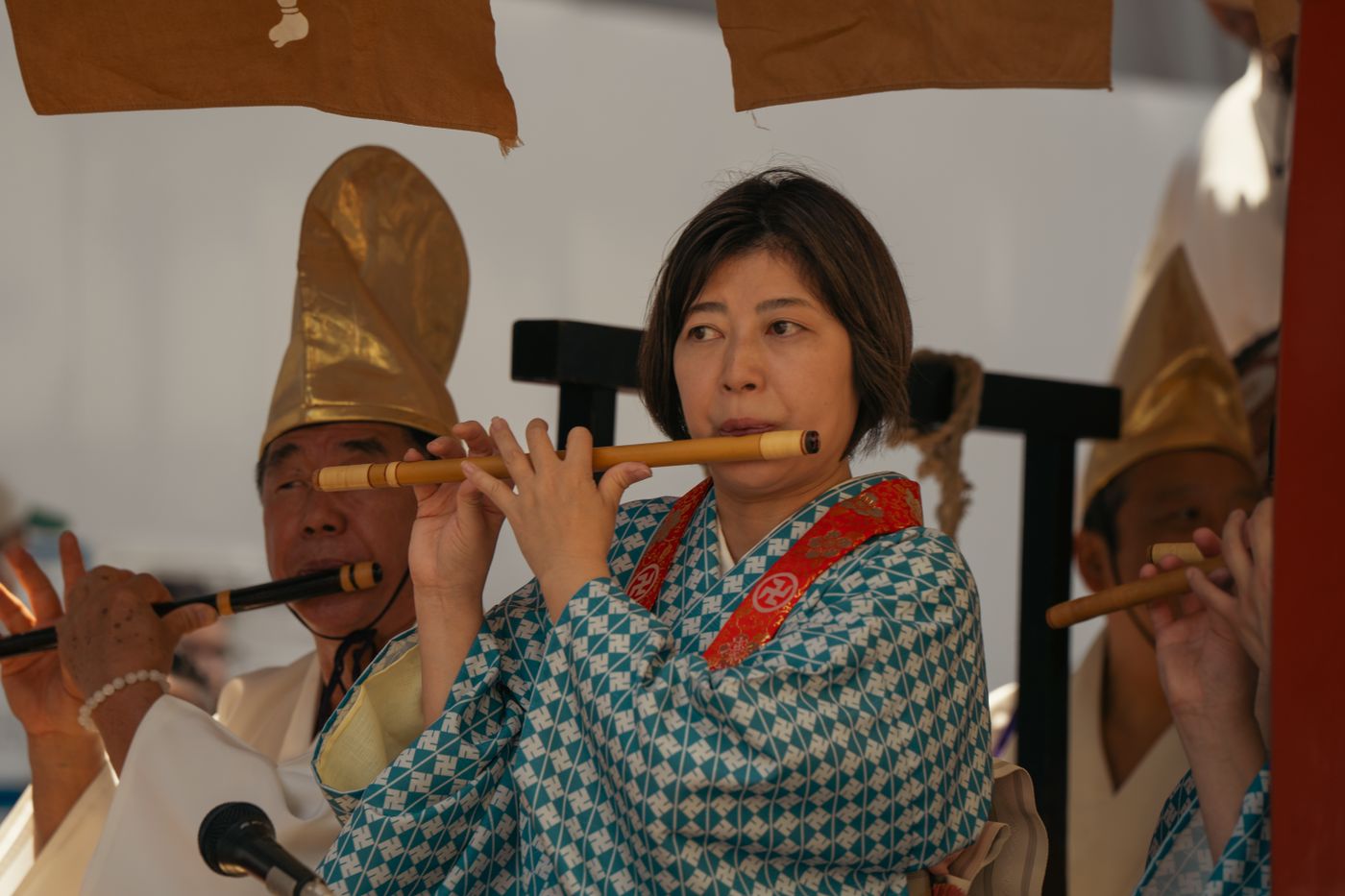
Bon odori — community dancing performed during Obon — is the most accessible and visitor-friendly element of the festival period. Unlike the family-oriented grave visits, bon odori is explicitly public and communal: a yagura (櫓 / raised central platform) is constructed in a park or temple grounds, musicians perform traditional Obon music from the platform, and participants dance in a circle around it, following simple repeated movement patterns.

The accessibility: Bon odori choreography is intentionally simple and learnable by observation — most events welcome anyone who wants to join the circle, regardless of experience or background. The communal, repetitive nature of the dance, performed by hundreds of participants moving in unison around the central yagura, creates one of Japan's most genuinely participatory cultural experiences.
Regional variations: Each region has developed its own bon odori music and movement style — the most famous regional variants include Tokushima's Awa Odori (covered in detail in the dedicated article, though technically a separate but related tradition), Gujo Hachiman's Gujo Odori (also covered separately, similarly related to but distinct from standard Obon bon odori), and the more standard Tokyo Ondo style danced throughout the greater Tokyo area.
Where to See Bon Odori in Tokyo
Various neighborhood shrine and temple grounds throughout Tokyo host bon odori during mid-July (Tokyo's regional Obon timing) — these are genuinely local, neighborhood-scale events rather than major tourist destinations, and visiting one provides direct access to community-level Japanese cultural life.
Roppongi Hills Bon Odori (六本木ヒルズ盆踊り): A larger-scale, more visitor-accessible bon odori event held in the Roppongi Hills complex — combines traditional dance with the contemporary urban setting, drawing both Japanese residents and the area's significant international community.
Tsukiji Hongan-ji Bon Odori: Held at the distinctive Indian-influenced Buddhist temple in Tsukiji — combines the religious significance of the location with accessible public participation.
Toro Nagashi (灯籠流し): Lantern Floating
Several locations throughout Japan conclude Obon with toro nagashi — releasing paper lanterns onto rivers, each lantern representing a returning spirit being guided back to the spirit world. The visual of hundreds of small illuminated lanterns drifting down a dark river is one of Japan's most quietly moving seasonal observances.
Hiroshima's toro nagashi: Held on August 6th in connection with the Peace Memorial commemorations, combining Obon traditions with the city's specific historical memory — described in the dedicated Hiroshima article.
🏨 Planning where to stay?
Every area guide on this site pairs with honest, station-by-station hotel picks. Start here: Hotel Guides by Station →