This article may contain affiliate links. If you book through them, we may earn a small commission at no extra cost to you.
Ghibli Real Locations · My Neighbor Totoro
My Neighbor Totoro: The Real Forest
Still Exists — 60 Minutes from Tokyo
Sayama Hills · Hakkokuzan Green Space · The Totoro Foundation’s Protected Woodland
🌳 Sayama Hills — the actual Totoro forest
🏥 Hakkokuzan — “Seven-Country Mountain Hospital” model
🍵 Sayama tea — Japan’s third great tea
🌰 Acorn picking in autumn
On this page
The Forest Behind the Film
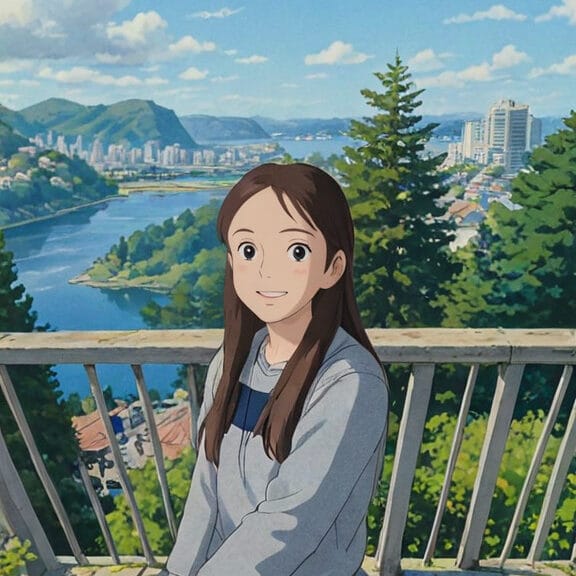
Released in 1988, My Neighbor Totoro is set in the rural outskirts of Tokyo in the late 1950s — a time when the city’s suburbs still held paddies, old farmhouses, and deep woodland. Director Hayao Miyazaki walked the Sayama Hills, straddling Tokyo and Saitama prefectures, repeatedly while developing the film’s landscapes. The camphor tree shrine, the dark forest path, the rice paddies at dusk — all of it came from here.
The Sayama Hills are real, accessible, and largely intact. In 1990, the Totoro no Furusato Fund — supported by Miyazaki himself — was established to purchase and protect the woodland. It has since bought more than 60 small plots of forest (around 14 hectares in total — checked July 2026) and helps care for far larger areas of the hills. The forest Totoro lives in is not a fantasy. It is a protected natural area that you can walk through today.
I grew up in Tokyo. When I was a child, my parents told me Totoro might live in the forests of Saitama. As an adult, walking Sayama Hills for the first time, I understood that was not a joke.
The Real Locations
🌳 Hakkokuzan Green Space (Higashimurayama City)
Access: ~12 min walk from Seibuen Station (Seibu Seibuen Line), or ~20 min from Higashi-Murayama Station
This is where the film is most directly present. Hakkokuzan (“Eight-Country Mountain”) is the model for Nanakokuyama Hospital — the hilltop facility where Satsuki and Mei’s mother is recovering. The name comes from a legend that eight ancient provinces were once visible from the summit; the hill is now covered in the same mixed deciduous woodland that defines the film’s forest atmosphere.
Paved walking paths make the forest accessible without hiking gear. The canopy in May (new green) and November (autumn color) matches the film’s imagery most directly. Walking quietly here — no urban sound, only birds — produces the sensation, involuntary and genuine, that something large might be watching from above.
✦ Best seasons: May (fresh green) · November (autumn foliage) · Acorn season (October) is popular with families
🌲 Totoro no Furusato Foundation Conservation Areas
Scattered across Tokorozawa, Iruma, and Sayama cities, the Foundation’s protected parcels of woodland are accessible to the public on a rotating basis. Several sites allow free walking. Check the Foundation’s website before visiting for current public access information.
The woodland type — oak, hornbeam, and chestnut mixed forest managed as traditional satoyama (worked landscape) — is exactly what Miyazaki walked. These are not ornamental gardens. They are working woodlands with the seasonal texture the film captures.
💧 Sayama Lake & Tama Lake
Access: 10 min walk from Seibu Kyujomae Station (Seibu Ikebukuro Line)
Two reservoir lakes at the center of Sayama Hills, built in the 1920s–30s as Tokyo water sources and now surrounded by mature forest. Early morning mist over the water, the tree reflections, the absence of urban noise — the atmosphere resonates strongly with the film’s quieter landscape passages. A lakeside walking trail follows the perimeter.
Getting There
For Hakkokuzan
Seibu Haijima Line to Hana-Koganei Station — from Shinjuku approx. 45 min via Seibu Shinjuku Line transfer at Tamachi.
For Sayama Lake
Seibu Ikebukuro Line to Seibu-Kyujomae Station — from Ikebukuro approx. 35 min. 10 min walk to the lake.
For Foundation Woodland
Base in Tokorozawa or Iruma. Seibu Ikebukuro Line to Tokorozawa from Ikebukuro approx. 30 min.
What to Eat
Sayama tea (Sayama-cha): One of Japan’s three great tea varieties — praised for its depth of flavor over Uji’s aroma or Shizuoka’s color. Tea fields in the hills surrounding Sayama are visually part of the Totoro landscape, and drinking freshly brewed Sayama tea at a local tea shop is the most appropriate food experience in the area.
Musashino udon: The regional noodle of western Tokyo — thick, chewy handmade wheat noodles in a dark soy broth. Rough, satisfying, and entirely unlike Sanuki udon. Several traditional restaurants serve it near Tokorozawa and the Sayama area.
Recommended Hotels
Tokorozawa / Higashimurayama area: Hotel Sunroute Tokorozawa (Mid-Range / from approx. ¥12,000/night ~$80 USD) — convenient base for Sayama Hills and Hakkokuzan. Toyoko Inn Tokorozawa Higashi-guchi (Economy / from approx. ¥8,000 ~$53 USD) — budget option, good Seibu Line access.
Shinjuku (combining with Tokyo): Seibu Shinjuku Line gives direct access to the Sayama area. Most central Tokyo hotels serve as practical bases.
Prices approximate. Check current rates on booking sites.
Who Should Visit
✔ My Neighbor Totoro fans (all ages)
✔ Families with young children
✔ Nature lovers within day-trip range of Tokyo
✔ Autumn acorn & foliage season visitors
🏨 Planning where to stay?
Every area guide on this site pairs with honest, station-by-station hotel picks. Start here: Tokyo Hotel Guides →