This article may contain affiliate links. If you book through them, we may earn a small commission at no extra cost to you.
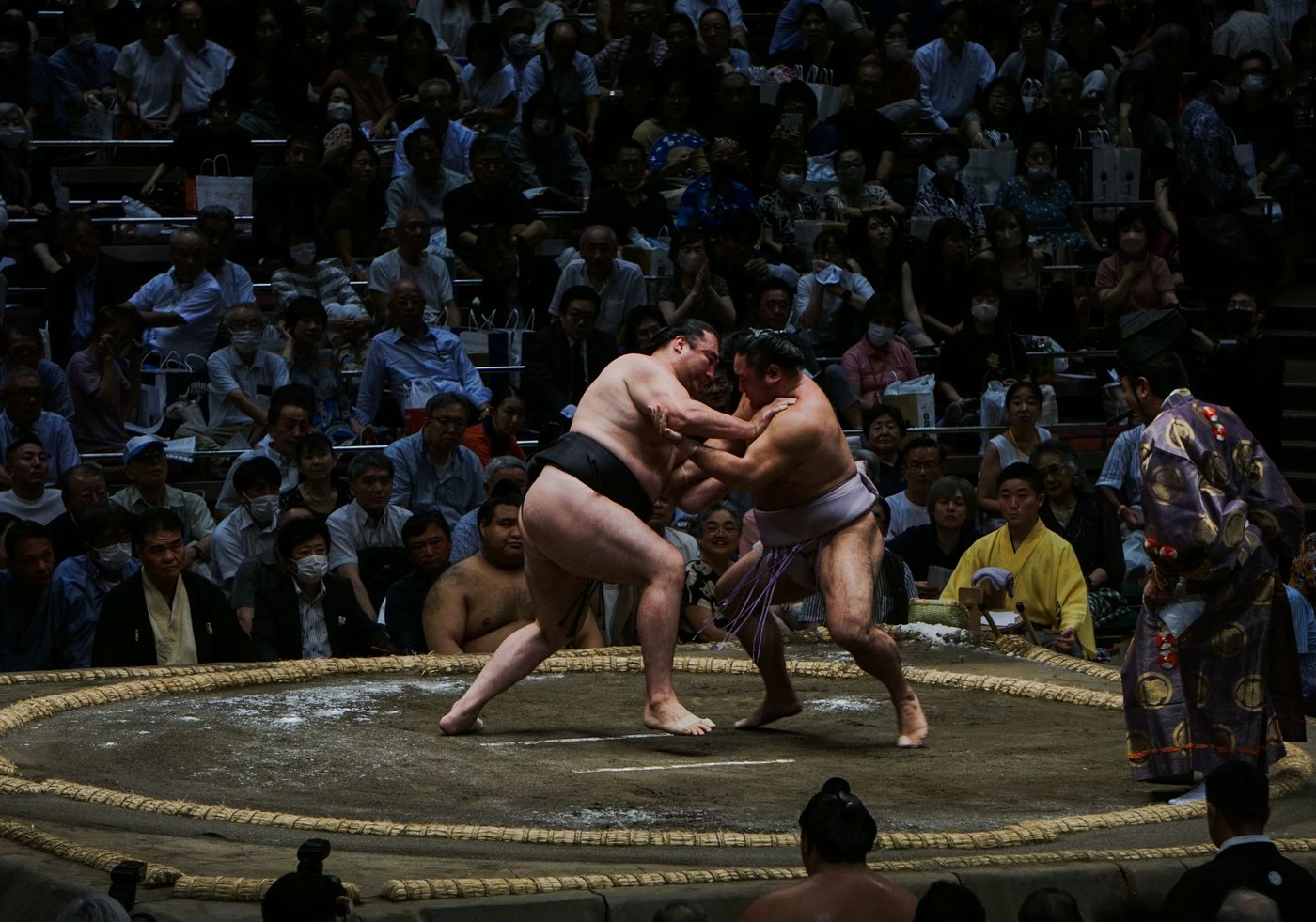
Two mountains of muscle face each other across a clay ring. Salt flies through the air. Legs rise and stamp the earth. Then—stillness, a held breath from 10,000 spectators, and an explosion of impact that lasts, on average, less than ten seconds. Sumo is Japan’s national sport, but calling it a sport undersells it: it is a 1,500-year-old Shinto ritual that happens to have a winner. Here is how to understand what you’re watching, and exactly how to see it live.
On this page
Sumo’s Sacred Origins
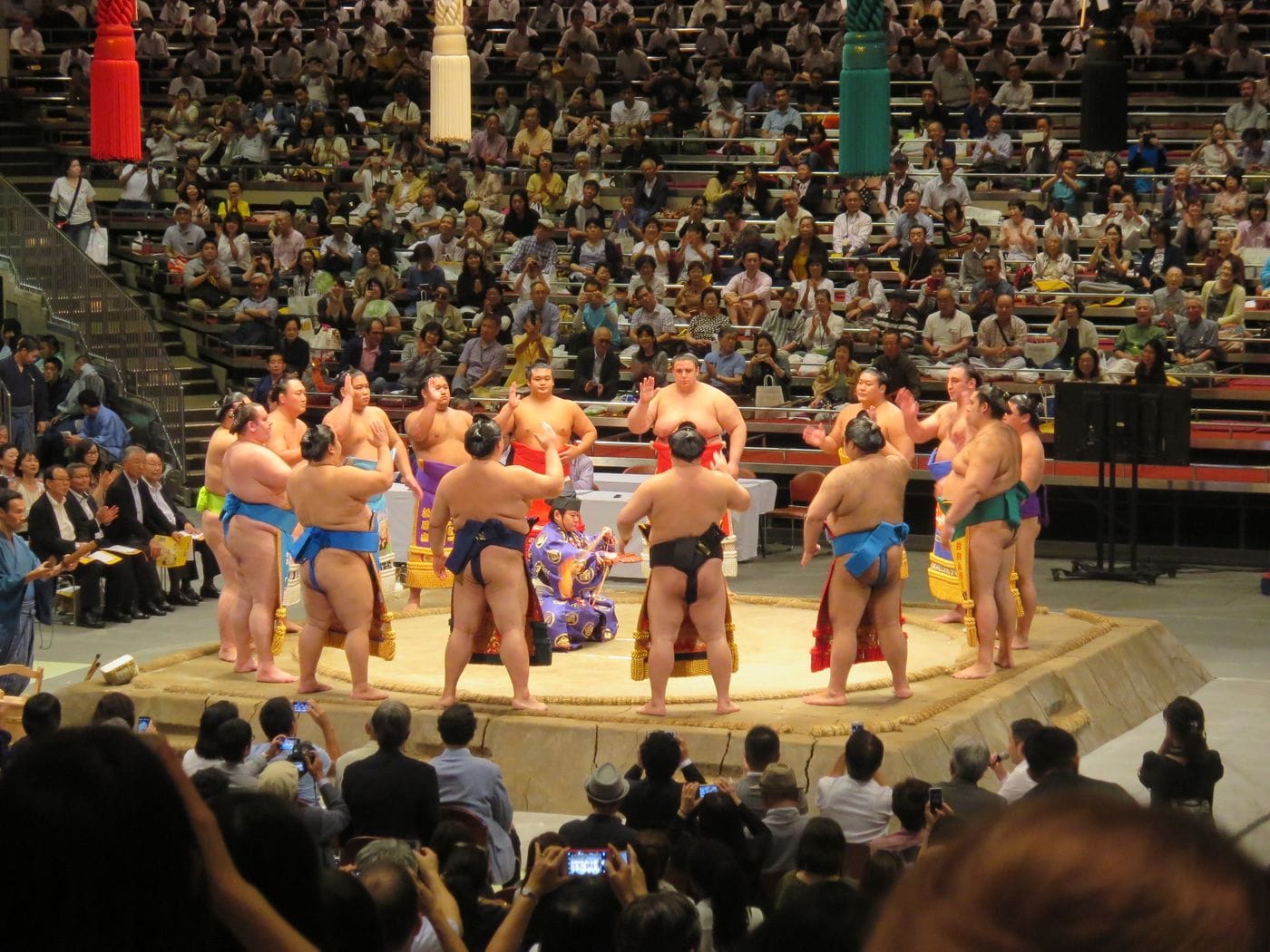
Sumo began as a Shinto ritual—wrestling performed at shrines to entertain the kami and pray for good harvests, with legendary matches recorded in Japan’s oldest chronicles. The religious DNA is visible everywhere in the modern sport: the roof suspended over the ring (dohyo) is built in the style of a Shinto shrine, the referee (gyoji) dresses like a Shinto priest, and the ring itself is consecrated before each tournament with offerings of salt, rice, and dried squid buried in the clay. Women are traditionally not permitted to enter the dohyo—a controversial rule, but one that underlines how literally sacred the ring remains.
The Rituals, Decoded
First-time spectators are often surprised that the ceremony takes far longer than the fighting. Every gesture has meaning:
- Throwing salt – purifies the ring, exactly as salt purifies at shrines and funerals. Top-division wrestlers throw around 45 kg of salt per tournament day between them; certain wrestlers are crowd favorites for their extravagant, ceiling-high throws.
- Shiko (leg stomps) – the iconic high leg raises drive evil spirits from the ground.
- Chirichozu – the crouch with arms extended and palms turned shows the opponent (and the gods) that the wrestler carries no weapons.
- The staredown ritual – wrestlers may return to their corners, throw more salt, and reset several times. This is psychological warfare within a permitted time limit (four minutes in the top division), and the crowd’s tension builds with every reset.
- Ring-entering ceremonies (dohyo-iri) – each afternoon, the upper divisions parade in embroidered ceremonial aprons worth millions of yen, and the yokozuna (grand champion) performs his own ceremony flanked by attendants.
How the Sport Works
The rules are beautifully simple: force your opponent out of the 4.55-meter ring, or make any part of his body other than the soles of his feet touch the ground. No weight classes exist—a 100 kg technician can face a 200 kg giant, which is exactly why technique matters and upsets are common. There are 82 officially recognized winning techniques (kimarite), from straightforward force-outs to spectacular throws.
Wrestlers (rikishi) live in communal training stables (heya) under a strict hierarchy: juniors cook the famous protein-rich stew chankonabe, clean, and attend to seniors. Six grand tournaments (basho) are held each year, each lasting 15 days; every wrestler fights once daily, and the best win-loss record takes the Emperor’s Cup. Promotion and demotion through the rankings are decided purely by results—published in a beautiful calligraphic ranking sheet called the banzuke.
How to Watch Sumo Live
The Six Grand Tournaments
- Tokyo (Ryogoku Kokugikan) – January, May, and September
- Osaka – March
- Nagoya – July
- Fukuoka – November
Tickets go on sale roughly a month in advance through the official Oosumo ticket site (English available), and weekends and final days sell out fast. Options range from box seats near the ring—four floor cushions per box, shoes off—to affordable arena seats upstairs from about 3,000–4,000 yen. Insider tips:
- Arrive by 2:00 PM and you’ll see the juryo and makuuchi ring-entering ceremonies; the top matches run from about 4:00 to 6:00 PM.
- Rent an English radio guide at the venue—it transforms the experience with live commentary and wrestler backstories.
- Watch the cushions fly: when a yokozuna is defeated, spectators traditionally hurl their seat cushions toward the ring—technically prohibited, joyfully universal.
- Same-day cheap seats are sometimes sold at the venue in the morning; line up early.
Not Visiting During a Tournament?
- Morning practice (asageiko) visits – several Tokyo stables welcome visitors through reputable tour operators to watch training up close: silent, sweat-soaked, and intense. Strict etiquette applies—sit still, no flash, never point your feet at the ring.
- Ryogoku district (Tokyo) – sumo’s hometown: the Kokugikan arena, the Sumo Museum, chankonabe restaurants run by retired wrestlers, and, quite often, actual rikishi in yukata cycling past you on the street.
- Eat chankonabe – the wrestlers’ hearty hotpot of chicken, tofu, and vegetables is delicious and far healthier than sumo physiques suggest; Chanko Kirishima and Chanko Tomoegata in Ryogoku are reliable classics.
Sumo Vocabulary Cheat Sheet
- Yokozuna – grand champion, the sport’s highest rank; once promoted, a yokozuna can never be demoted, only pressured to retire.
- Ozeki – the second-highest rank, “champion.”
- Mawashi – the silk belt; grabbing it is the key to most throws.
- Tachiai – the initial explosive charge; matches are often decided in this first second.
- Kensho – sponsor banners paraded before big matches; the winner scoops up the envelopes of prize money with a stylized hand gesture.
Where to Stay for Sumo Fans
Luxury: The Gate Hotel Ryogoku – riverside rooms a short walk from the Kokugikan arena, with terrace views over the Sumida River.
Mid-range: APA Hotel Ryogoku Ekimae – directly beside Ryogoku Station; step out of the lobby into sumo town.
Budget: Anne Hostel Yokozuna – a friendly budget stay whose name says it all, within walking distance of the arena and chanko restaurants.
Final Thoughts
Sumo rewards the patient spectator. Let the slow ceremony build—the salt, the stamps, the false starts—because all of it exists to make that final half-second collision feel seismic. Whether you catch a full tournament day in Ryogoku or a hushed morning practice in a neighborhood stable, you will be watching something no other country has: a living religious ritual, still deciding its winners the old-fashioned way.
🏨 Planning where to stay?
Every area guide on this site pairs with honest, station-by-station hotel picks. Start here: Hotel Guides by Station →