This article may contain affiliate links. If you book through them, we may earn a small commission at no extra cost to you.
Tokyo Day Trip Guide · Hakone
Hakone Day Trip: Volcanic Landscape,
Fuji Views & Hot Springs from Shinjuku
Romancecar · Owakudani · Lake Ashi · Black Eggs · Onsen — All on One Pass
🚃 Romancecar — 85 min from Shinjuku
🌋 Owakudani active volcanic zone
🗻 Lake Ashi Mount Fuji views
🎫 Hakone Free Pass — covers everything
On this page
The Perfect Day Trip from Tokyo
If you have one day to leave Tokyo and experience the Japanese landscape at its most dramatic, Hakone is the answer. Ninety minutes from Shinjuku, Hakone sits within the caldera of an ancient volcano — volcanic hot springs, a mountain lake, a ropeway over an active volcanic zone, mountain forest, and on clear days, the magnificent profile of Mount Fuji rising behind the lake.
🎫 Hakone Free Pass (¥6,100 from Shinjuku, 2 days)
Covers: Round-trip Romancecar · Hakone Tozan Railway · Hakone Tozan Bus · Ropeway (round trip) · Lake Ashi Sightseeing Cruise · Discounts at many attractions. For a full day of sightseeing, this pass represents exceptional value and eliminates individual ticketing entirely.
The Hakone Loop: Classic Route
🚃 Step 1: Romancecar from Shinjuku
The Odakyu Romancecar — particularly the GSE flagship (the beloved VSE retired in 2023) — features forward-facing panoramic windows and wide glass throughout. The driver’s cab is elevated above the passenger level, giving the front car an unobstructed forward view across the Kanagawa plains and into the mountain valley. The journey is a pleasure in itself. 85 minutes direct to Hakone-Yumoto.
🏘️ Step 2: Hakone-Yumoto — Gateway Town
Arriving in Hakone-Yumoto, you are immediately in onsen town atmosphere: ryokan lining the Hayakawa River, souvenir shops selling Hakone’s famous wood inlay crafts (yosegi-zaiku), and the smell of sulfur in the mountain air. Day-use onsen facilities offer bathing without full ryokan accommodation (¥1,000–¥2,000 for a set period).
🚞 Step 3: Hakone Tozan Railway — Japan’s Steepest
One of Japan’s steepest railways: climbs 445m in 15km using switchbacks — the train literally reverses direction three times, pulling forward and backing into new track levels. In June–July, tens of thousands of hydrangeas line both sides of the track in blue, purple, and white.
🌋 Step 4: Owakudani — Active Volcanic Zone
Sulfuric gas vents from earth, hot springs emerge from bare volcanic rock, white steam plumes fill the air. The landscape is otherworldly. The Kuro-Tamago (黒玉子) — eggs hard-boiled in volcanic hot springs until shells turn black — are the obligatory souvenir: ¥600 for five eggs, each said to extend your life by seven years. The Hakone Ropeway passes directly over the volcanic zone (25-min ride) — one of Japan’s most dramatic cable car experiences.
✦ Owakudani occasionally closes when volcanic activity increases. Check current conditions before visiting.
🏔️ Step 5: Lake Ashi — Fuji Views & Pirate Ships
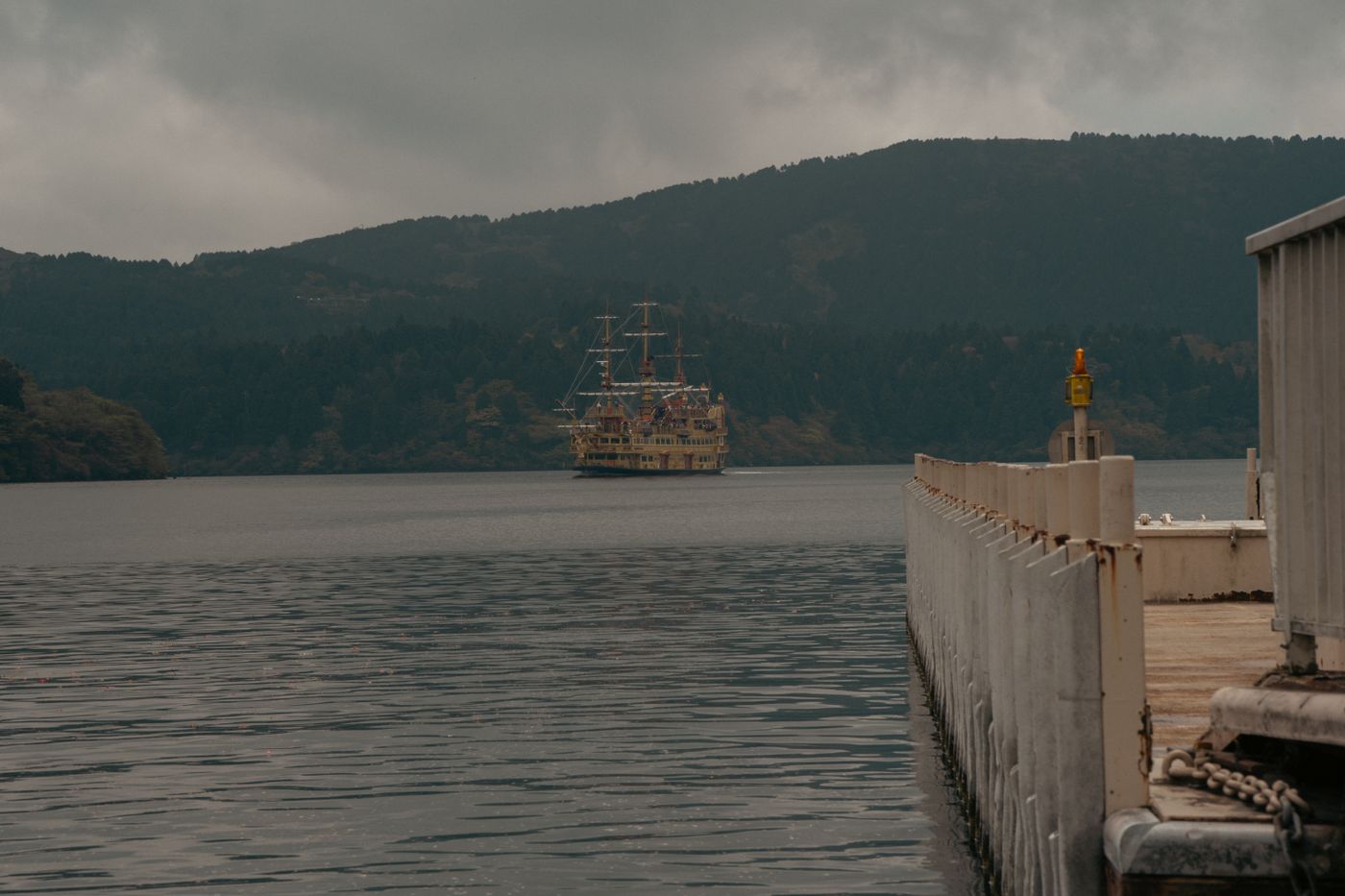
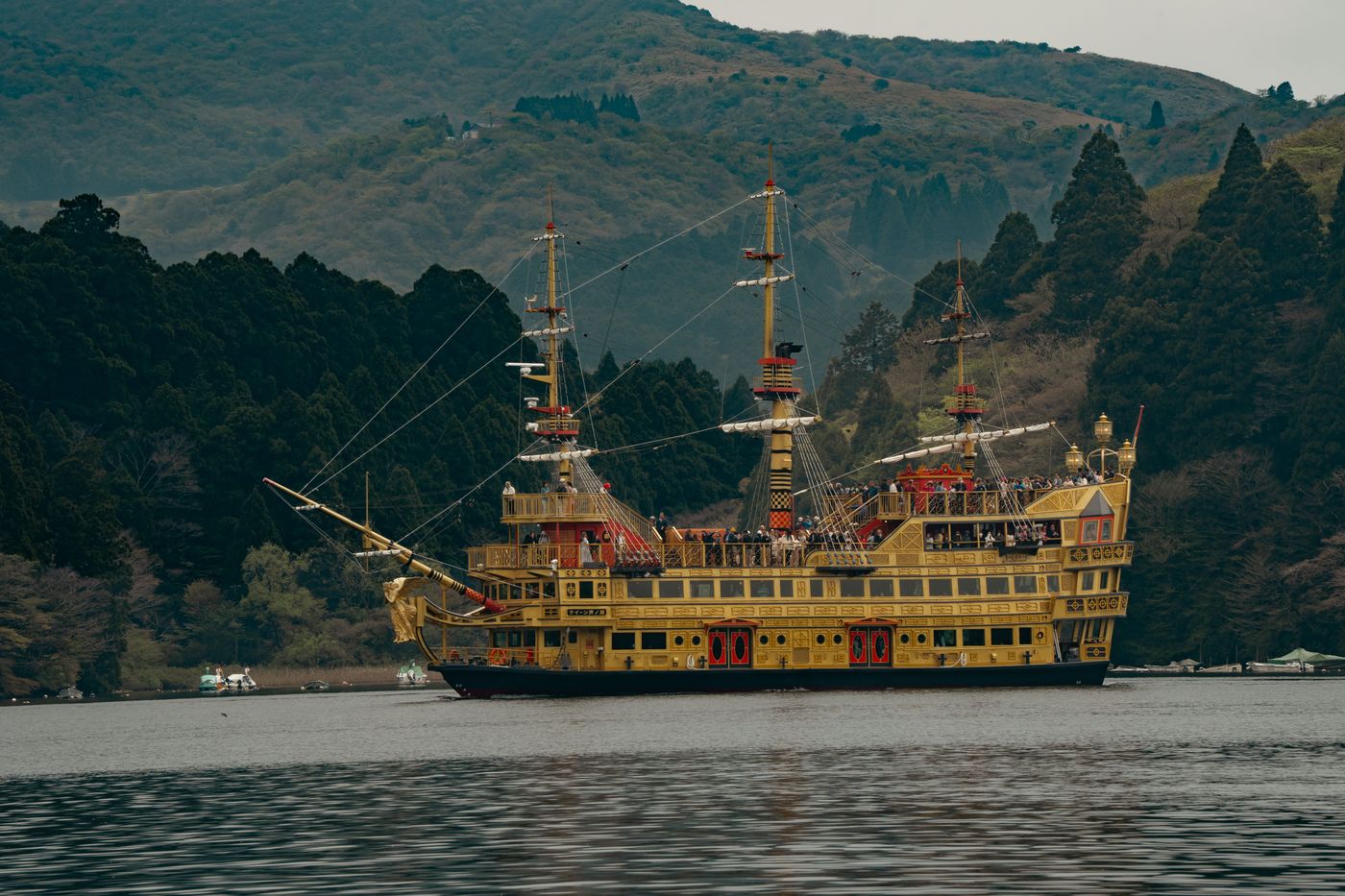
At 723m elevation, Lake Ashi provides the classic Fuji view on clear days — the torii gate of Hakone Jinja standing in the lake with Fuji behind it is the definitive Hakone photograph. The Lake Ashi Sightseeing Cruise (included in Free Pass) crosses in reproduction pirate ships — an eccentric and beloved Hakone tradition. Best Fuji views: winter mornings when air is clearest. Reality check: Fuji is visible only ~30–40% of days; December–February offers the highest probability.
Suggested Itinerary
7:00 AM Romancecar from Shinjuku → 8:30 AM Hakone-Yumoto foot bath → 9:00 AM Tozan Railway to Gora → 10:00 AM Ropeway to Owakudani → 10:30 AM Owakudani volcanic zone → 11:15 AM Ropeway to Togendai → 12:00 PM Lake Ashi cruise to Moto-Hakone → 12:30 PM Hakone Jinja + lunch → 2:00 PM Bus to Hakone-Yumoto → 3:00 PM Day-use onsen (90 min) → 4:30 PM Romancecar to Shinjuku (arrive 6:00 PM)
Hotels
Gora Kadan (Luxury / from approx. ¥60,000/person ~$400 USD) — Japan’s finest ryokan, former imperial villa. Ichinoyu Honkan (Mid-Range / from approx. ¥22,000 ~$147 USD) — historic inn on the old mountain road. Hakone Retreat fore (Luxury / from approx. ¥40,000 ~$267 USD) — award-winning design hotel. All prices approximate per person with two meals.
Who Should Visit Hakone
✔ First-time Tokyo day-trippers (the most complete single day available)
✔ Onsen seekers
✔ Mount Fuji view photographers (clear winter days)
✔ Hydrangea season travelers (June–July on Tozan Railway)
🏨 Planning where to stay?
Every area guide on this site pairs with honest, station-by-station hotel picks. Start here: Kanagawa Hotel Guides →