This article may contain affiliate links. If you book through them, we may earn a small commission at no extra cost to you.
On this page
Introduction: The Most Complex Rice Beverage in the World
Sake (酒 / 日本酒 / nihonshu) — Japan's fermented rice beverage — is one of the most technically complex and culturally rich alcoholic beverages in the world. The combination of the specific chemical characteristics of the rice varieties used, the koji mold fermentation (which converts starches to sugars simultaneously with the yeast fermentation — a process unique to sake called multiple parallel fermentation), the water chemistry of the brewing region, and the craft decisions of the toji (杜氏 / master brewer) produces a beverage of extraordinary variety.
Despite this complexity, sake has one of the most accessible entry points of any sophisticated beverage — the flavor range (from delicate, floral, and fruity to rich, earthy, and umami-driven) is diverse enough that almost any palate finds something immediately appealing, and the formal classification system makes navigation straightforward once the terminology is understood.
The Classification System
The Polishing Ratio (精米歩合 / Seimaibuai)
The fundamental variable in sake classification is the rice polishing ratio — the percentage of the original grain remaining after the outer layers are milled away. The outer layers of rice contain proteins and oils that produce coarser flavors; milling reveals the starch core whose clean fermentation produces the most delicate sake.
Milling from 100% (unmilled) to 50% means removing half the grain — the quantity of rice required to produce a given volume of sake increases significantly with higher polishing ratios, which is why Daiginjo is the most expensive tier.
The Junmai Distinction
Junmai (純米 / "pure rice") designates sake made exclusively from rice, water, koji, and yeast — no brewing alcohol (醸造アルコール / jōzō alcohol) added. The junmai designation indicates that the flavor comes entirely from fermentation rather than from the additional alcohol that adjusts flavor and aroma in honjozo styles.
Junmai vs Honjozo: Both are valid styles with different flavor profiles. Honjozo sake (with a small amount of brewer's alcohol added) tends toward cleaner, more elegant aromas; Junmai tends toward richer, more savory body. Neither is superior — they serve different purposes and food pairings.
The Four Primary Types
Junmai Daiginjo (純米大吟醸)
The apex of the classification system — pure rice, polished to 50% or below. These sakes are the most aromatic (the high polishing ratio produces the specific fruity, floral aromas — melon, pear, lychee — associated with premium sake), the most delicate, and the most expensive.
Best served: Chilled, in a wine glass that allows the aromatics to develop. Not heated — heat destroys the delicate aromatics.
When to drink: Before food or with very delicate dishes — the subtle flavors are overwhelmed by strong sauces or heavy dishes.
Junmai Ginjo (純米吟醸)
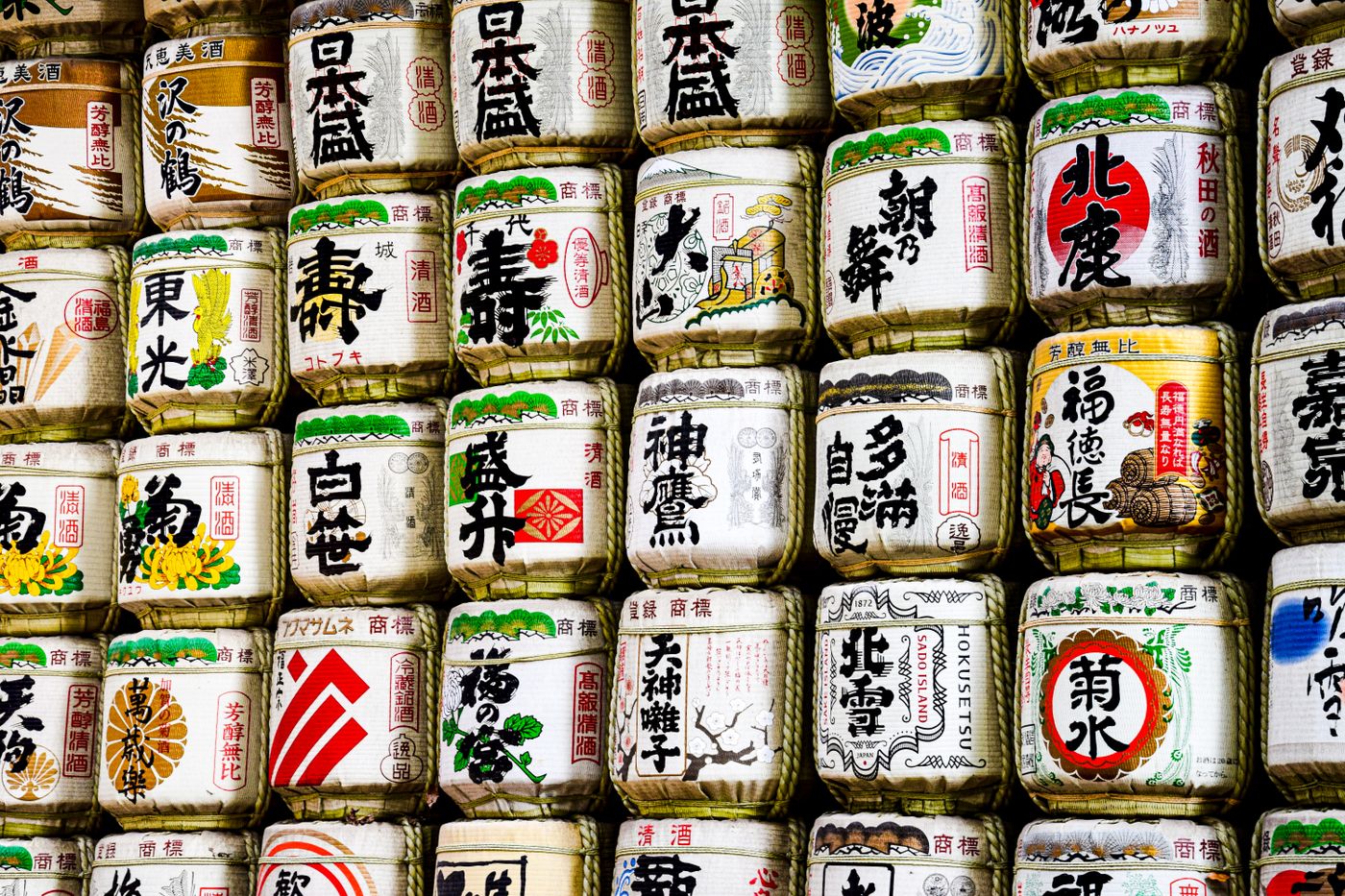
One polishing level below Daiginjo — 60% remaining. More accessible price, similar aromatic profile with slightly more body. The most versatile of the four main types and the recommended starting point for sake exploration.
Junmai (純米)
No polishing requirement below 70% — some junmai are polished to 90%, retaining much of the grain and producing a sake with substantial body, umami richness, and less overt aroma. The most food-friendly sake type — the richness and savory quality complement robust flavors.
Best served: Room temperature to slightly warm — the warming amplifies the umami and body without harming the aromatics (which are less volatile than in ginjo styles).
Honjozo (本醸造)
Brewer's alcohol added to the standard junmai base — the alcohol thins the texture slightly and contributes additional aromas. Produces clean, easy-drinking sake at accessible prices. The category most of Japan drinks daily.
Special Types
Nigori (にごり / Cloudy Sake)
Nigori — "cloudy" — sake is coarsely filtered, leaving rice particles suspended in the liquid. The result is a thick, creamy, sweet sake with a flavor profile dramatically different from clear sake. Often slightly lower alcohol than clear sake.
Best served: Very cold, shaken gently before serving. The most accessible sake for Western palates unfamiliar with dry sake.
Sparkling Sake (スパークリング日本酒)
Secondary fermentation in the bottle produces a naturally sparkling sake — the most recent significant sake innovation, with producers including the prestigious Dassai (獺祭) brand. Festive, accessible, and increasingly available internationally.
Kimoto and Yamahai (生酛 / 山廃)
Traditional fermentation methods — kimoto (生酛) and its derivative yamahai (山廃) — use naturally occurring lactic acid bacteria in the mash rather than adding prepared lactic acid. The slower fermentation produces sake with more complexity, umami depth, and acidity than standard methods. These styles are to sake what natural wine is to Western wine — more diverse, more individual, more demanding.
How to Order
In a restaurant: Ask for the sake menu (日本酒メニュー). Specify your preference — dry (辛口 / karakuchi) or sweet (甘口 / amakuchi), cold (冷 / rei) or warm (燗 / kan).
The ochoko or wine glass choice: Premium sake venues serve in wine glasses. Traditional settings use ochoko (small ceramic cups) or tokkuri (陶器の徳利 / ceramic carafe). Both are correct.
At a sake bar (日本酒バー): Tell the staff what you've tried and what direction you want to explore — sake bar staff in Tokyo and Kyoto increasingly have English-language communication ability and enthusiast knowledge.
Recommended Sake Bars in Tokyo
Sake Bar Yoramu (よろむ): The most internationally respected sake bar in Tokyo — the Israeli owner's deep sake knowledge and English-language communication make it the most accessible introduction to serious sake exploration.
Isomaru Suisan (磯丸水産): Not a sake bar but a seafood izakaya chain whose sake selection at affordable prices makes it an excellent everyday sake-and-food context.
🏨 Planning where to stay?
Every area guide on this site pairs with honest, station-by-station hotel picks. Start here: Hotel Guides by Station →