This article may contain affiliate links. If you book through them, we may earn a small commission at no extra cost to you.
On this page
Introduction: The Art That Arranges Space With Plants
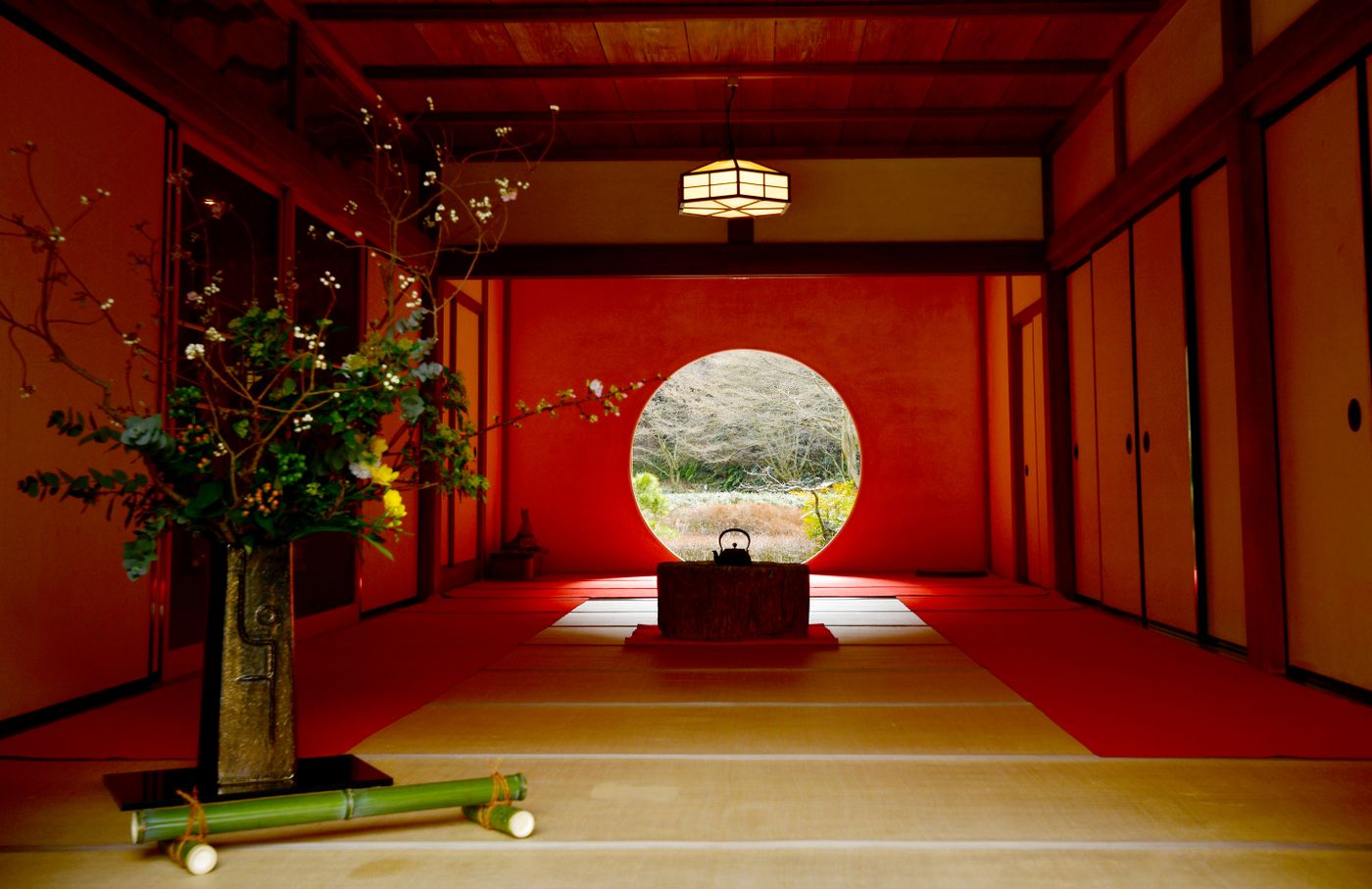
Ikebana (生け花) — the Japanese art of flower arranging — is not decorative floristry. The distinction matters and requires clear statement: Western flower arranging is primarily concerned with the beauty of the flowers themselves, assembled in maximum density to maximize visual impact. Ikebana is concerned with the relationship between flowers, stems, leaves, and empty space — with ma (間) — and with the representation of seasonal time, natural growth, and a specific Japanese aesthetic philosophy within a composed three-dimensional form.
The difference is immediately apparent when you see them side by side: a Western arrangement fills a vase with abundance; an ikebana arrangement uses three stems (or fewer) to create a composition in which the empty space is as important as the plant material.
The Major Schools
Ikenobo (池坊): The Original School
Ikenobo is the oldest ikebana school — founded in Kyoto in the 15th century by Ikenobo Senkei (池坊専慶), a Buddhist monk at Rokkakudō temple. The school's style emphasizes the rikka (立花) classical style — large, formal arrangements of seven or nine branches representing the mountain landscape of Buddhist paradise.
Ikenobo Headquarters (池坊本部): Located directly at Rokkakudō Temple (六角堂) in central Kyoto — a pilgrimage destination in its own right as the 18th temple of the Saigoku pilgrimage. Classes are offered at the Ikenobo headquarters with varying levels of English support.
Ohara School (小原流): The Naturalistic School
Ohara School — founded in 1895 by Ohara Unshin (小原雲心) — developed the moribana (盛り花) style: low arrangements in flat containers using Western flowers (previously excluded from ikebana as non-Japanese), bringing the naturalistic color and horizontal composition that distinguished Ohara from the classical Ikenobo style.
The Ohara School is the most internationally accessible school — its moribana style uses the widest range of plant material, its compositions are the least formally constrained, and its introductory workshops are among the most visitor-friendly in the field.
Sogetsu School (草月流): The Contemporary School
Sogetsu — founded in 1927 by Teshigahara Sofu (勅使河原蒼風) — is the most conceptually radical ikebana school: its fundamental principle is that ikebana can be made anywhere, at any time, using any material. Metal, plastic, found objects, architectural materials — all are legitimate Sogetsu material alongside traditional plant matter.

The Sogetsu Kaikan (草月会館) headquarters in Akasaka, Tokyo — designed by Isamu Noguchi, with Sofu's monumental stone sculpture in the lobby — is both the school's administrative center and a significant work of 20th-century design.
Where to Take a Class
Tokyo
Sogetsu Kaikan (草月会館), Akasaka: The Sogetsu school's headquarters offers introductory English workshops several times per month (typically Saturday or Sunday morning). Sessions run approximately 90 minutes, include all plant materials and containers, and produce one arrangement to take home. Cost: approximately ¥4,000–¥6,000.
Ohara School Tokyo Headquarters (小原流東京芸術センター), Minami-Aoyama: Regular introductory workshops in English for visitors; the South Aoyama location in an aesthetically appropriate neighborhood. Cost: approximately ¥3,500–¥5,000.
Various studio classes through Airbnb Experiences: Multiple English-speaking ikebana teachers offer small-group and private sessions throughout Tokyo. Quality varies; reviews are the best guide.
Kyoto
Ikenobo at Rokkakudō (六角堂): The most historically significant ikebana location available to visitors — attending a workshop at the school where ikebana originated, within the temple where the school was founded 600 years ago. English programs available through advance arrangement. Cost: approximately ¥5,000.
Kyoto Ohara School workshops: Multiple offering points in the Higashiyama area and near major temples; contact the Kyoto tourism center for current English-language workshop listings.
What to Expect in a Workshop
- Duration: Typically 90–120 minutes for introductory sessions.
Materials provided: The workshop fee includes all plant material, container, and tools (hasami scissors / 花鋏) for the session. Wearing dark clothing is sensible — sap and water are involved.
The creative process: An instructor demonstrates the basic proportions of the arrangement style (in Ohara moribana, three main branches called 主枝 / shushi at specific relative heights and angles), then students create their own arrangement using the same material. The instructor moves through the room providing individual guidance.
Taking it home: The arrangement created is yours to take — most studios provide wrapping and, in some cases, the kenzan (剣山 / pin frog) used to hold the arrangement.
Recommended Base Hotels
- Akasaka area hotels: For Sogetsu Kaikan Tokyo access.
- Minami-Aoyama area hotels: For Ohara School Tokyo.
- Kyoto Nishiki area hotels: For Rokkakudō/Ikenobo access.
Planning where to stay in Tokyo? Browse our honest hotel picks and area guides.
🏨 Planning where to stay?
Every area guide on this site pairs with honest, station-by-station hotel picks. Start here: Tokyo Hotel Guides →