This article may contain affiliate links. If you book through them, we may earn a small commission at no extra cost to you.
On this page
- Introduction: Tokyo on a Budget — The Honest Guide
- Area 1: Asakusa (浅草) — Best for Traditional Tokyo Feel
- Area 2: Shinjuku (新宿) — Best for Transport Hub Access
- Area 3: Ueno (上野) — Best for Museum Access and Narita Proximity
- Area 4: Akihabara (秋葉原) — Best for Tech/Pop Culture Proximity
- Area 5: Ginza/Tsukiji — Best for Central Tokyo
- Best Capsule Hotels in Tokyo: Not Just a Bed — Some Are Actually Beautiful
- The Best Capsule Hotels in Tokyo
- Gender Policy: What to Know
Introduction: Tokyo on a Budget — The Honest Guide
Tokyo has an undeserved reputation for expensive accommodation. The city's business hotel network is one of the world's finest in terms of cleanliness, reliability, and location quality at the ¥7,000–¥12,000 per room price point. A traveler with realistic expectations about room size (small) and hotel features (minimal) can sleep well, in an excellent location, in Tokyo for prices competitive with budget accommodation in European capitals.
This guide covers the best budget hotel areas and specific recommendations, with honest assessments of what each area offers for visitors using public transport.
Rates are typical starting prices for two adults, checked July 17, 2026 — expect higher figures on weekends and in cherry-blossom season.
Area 1: Asakusa (浅草) — Best for Traditional Tokyo Feel
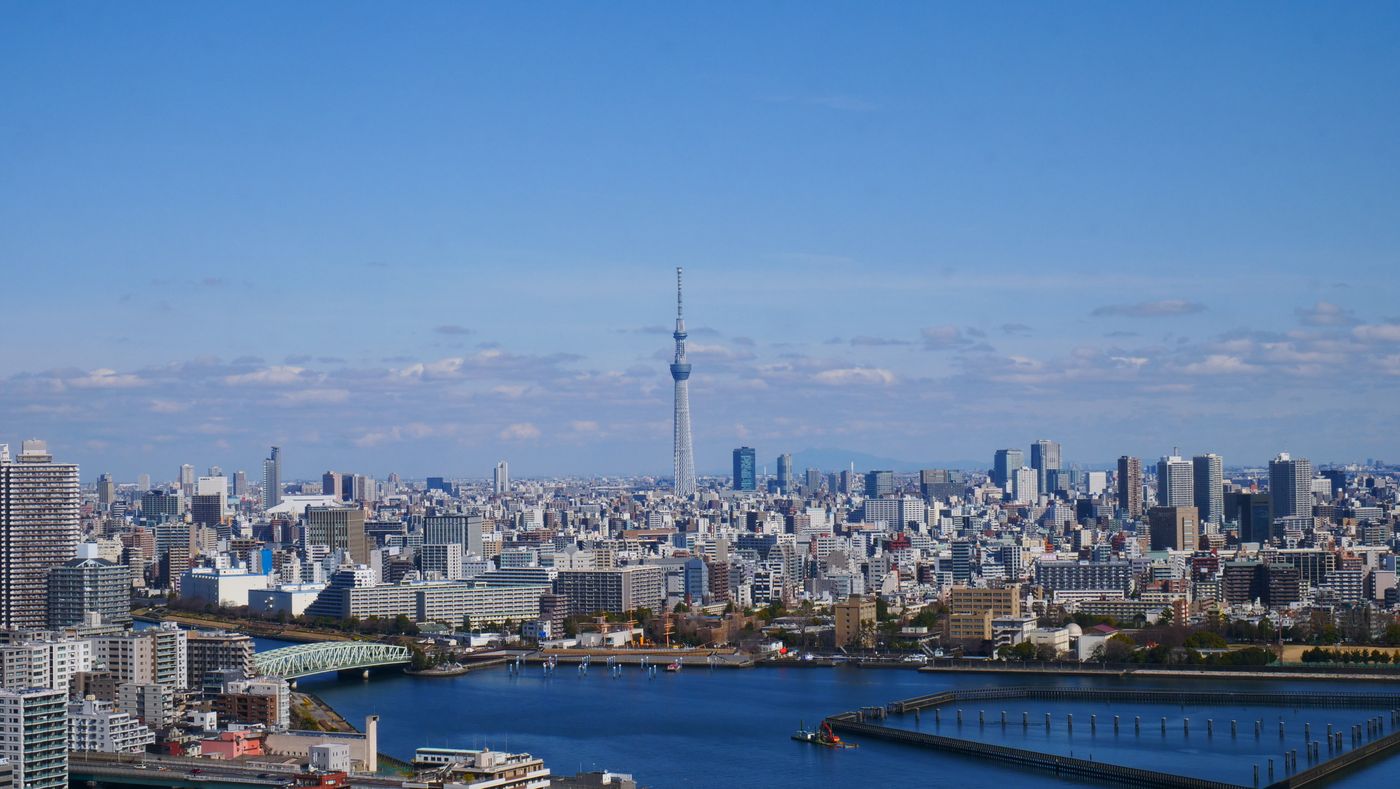
Asakusa — the most traditional surviving district in central Tokyo, home to Senso-ji Temple, the craft shopping streets, and the Tokyo Skytree — offers budget accommodation with the added value of immediate access to Tokyo's most atmospherically historical neighborhood.
The transport equation: Asakusa is connected to Ueno (2 minutes), Ginza (12 minutes via subway), and now directly to Narita Airport via the Narita Sky Access Line (Keisei Line) from Oshiage/Asakusa Station. This Narita connection makes Asakusa particularly practical for arrivals: exit the airport, take the train, arrive directly at your hotel area.
Recommended budget hotels:
Dormy Inn Asakusa (from ¥10,000): Natural hot spring bath, 5 minutes walk from Senso-ji. The combination of onsen and Asakusa location makes this exceptional value.
Wired Hotel Asakusa (from ¥12,000): Design-forward, slightly hipster aesthetic, excellent location near the Sumida River.
Khaosan Tokyo Asakusa (from ¥8,000): Social hotel with both private rooms and dormitories; good common areas for meeting other travelers.
Area 2: Shinjuku (新宿) — Best for Transport Hub Access
Shinjuku — Tokyo's busiest station (3.6 million passengers daily), surrounded by entertainment, shopping, and accommodation — is the most logistically convenient area in Tokyo for travelers moving throughout the city and to day-trip destinations. The station connects directly to the Chuo Line (westbound), the Odakyu Line (to Hakone), the Keio Line (to Fuchu), and multiple subway lines.
The Shinjuku character: The western side of Shinjuku (around the station's west exit) is the business district — clean, efficient, and primarily commercial. The eastern side (Kabukicho, Golden Gai, Omoide Yokocho) is the entertainment district — neon-lit, densely packed, and the best evening atmosphere in Tokyo.
Recommended budget hotels:
Shinjuku Washington Hotel (from ¥10,000): Tower hotel with excellent value; rooms are small but the views from upper floors are exceptional.
APA Hotel Shinjuku Kabukicho Tower (from ¥9,000): One of Tokyo's largest budget-luxury hotels, excellent facilities, ideal location.
Gracery Shinjuku (from ¥13,000): The hotel with a giant Godzilla head on the roof terrace — and rooms with Godzilla views. Genuinely entertaining in addition to being a decent hotel.
Area 3: Ueno (上野) — Best for Museum Access and Narita Proximity
Ueno is Tokyo's museum district — the National Museum, the Science Museum, the Western Art Museum, Ueno Zoo, and Ueno Park itself are all within 10 minutes walk. The area is also on the Keisei Line with direct airport express service to Narita (approximately 36 minutes by Skyliner), making it the most practical Narita-adjacent central Tokyo accommodation area.
Recommended budget hotels:
Mitsui Garden Hotel Ueno (from ¥13,000): Steps from Ueno Station and a short walk to the park — reliable mid-budget comfort in exactly the right spot.
Hotel Niwa Tokyo (Mid-budget / from ¥14,000): Traditional Japanese design influences, a beautiful small garden, refined for the price point. Honest note: it sits near Suidobashi, a few JR stops west of Ueno — worth the short ride for the garden calm.
- APA Hotel Ueno Ekimae (from ¥8,000): Typical APA reliability at Ueno prices.
Area 4: Akihabara (秋葉原) — Best for Tech/Pop Culture Proximity
Akihabara — the electronics and anime/manga district — is conveniently located between Ueno and Tokyo Station on the Yamanote Line and Chuo/Sobu lines, making it an excellent transport hub as well as the obvious base for visitors with specific interest in Japanese pop culture.
Recommended budget hotels:
Remm Akihabara (from ¥13,000): Excellent sleep-focused design (particularly good mattresses and blackout curtains), near the station.
Area 5: Ginza/Tsukiji — Best for Central Tokyo
Ginza accommodation tends toward luxury, but the adjacent Tsukiji and Higashi-Ginza areas have more accessible price points while maintaining central Tokyo access.
Recommended budget hotels:
Sotetsu Fresa Inn Ginza-Sanchome (from ¥11,000): A no-frills, spotless business hotel a couple of blocks from Chuo-dori — a Ginza address on a business-hotel bill.
Higashi-Ginza’s side streets around the Kabukiza Theatre hide several more business hotels at similar rates — the best price-to-address ratio in central Tokyo.
Best Capsule Hotels in Tokyo: Not Just a Bed — Some Are Actually Beautiful
Introduction: The Capsule Hotel That Isn't What You Think
The capsule hotel (カプセルホテル) was invented in Osaka in 1979 by architect Kisho Kurokawa as a response to the specific social reality of Japanese business travel — the salaried worker (salary man) who missed the last train and needed a cheap, immediate sleeping option near the station without paying for a full hotel room. The original capsule hotels were purely functional: a sleeping pod approximately 2 meters long, 1 meter wide, and 1.2 meters high, with a television and a curtain for privacy, in rows of identical units.
That original type still exists. But the capsule hotel has also evolved — dramatically, in the last decade — into a form that bears little resemblance to its origins. The finest contemporary Tokyo capsule hotels have architect-designed pods with mood lighting and Bluetooth speakers, communal areas with designer furniture, rooftop views, excellent restaurant and bar facilities, and in some cases hot spring baths accessible to guests. The per-night price (typically ¥3,500–¥6,000 in a pod, ¥8,000–¥15,000 in a private room equivalent) remains significantly below equivalent business hotels, making these properties exceptional value at any budget level.
The Best Capsule Hotels in Tokyo
THE MILLENNIALS SHIBUYA
THE MILLENNIALS — with properties in Shibuya and Kyoto — represents the design-forward evolution of the capsule hotel concept. The pods are individually designed with a reading light system, a personal screen, and a mechanism that converts the pod from sitting to sleeping position. The communal area is a proper lounge with co-working spaces and a bar; the rooftop terrace has city views.
- Price: From approximately ¥4,500 per pod. Location: Shibuya, 5 minutes from Shibuya Station.
BOOK AND BED TOKYO
Book and Bed addresses a specific visitor: someone who likes both sleeping and books. The concept — a capsule hotel built around a large library — places the sleeping pods within bookshelves, so you literally sleep surrounded by books. The library contains thousands of volumes (Japanese and international), the pods are comfortable sleeping spaces, and the overall aesthetic is warm and bibliophilic.
- Locations: Ikebukuro, Shinjuku, Asakusa. Price: From approximately ¥4,000 per pod.
NINE HOURS SHINJUKU-NORTH
Nine Hours (9h) is the capsule hotel as architecture project — the Shinjuku North branch was designed by Fumie Shibata with a concept of removing all unnecessary elements and focusing entirely on sleep quality. The pods are a specific cylindrical shape that maximizes the sense of enclosed personal space; the sound environment, the lighting temperature, and the mattress specification have all been professionally optimized.
- Price: From approximately ¥4,000 per pod. Location: Shinjuku.
TRUNK(HOTEL) KOENJI — capsule-adjacent
Not strictly a capsule hotel, but TRUNK(HOTEL) KOENJI is the type of socially-conscious, design-driven accommodation that has emerged in the same aesthetic space as modern capsule hotels — offering private rooms at hostel-adjacent prices with strong communal areas.
Traditional Capsule Hotels: Still Excellent Value
For visitors who prefer the original format — functional, simple, cheap — several traditional capsule hotels maintain the concept well:
Capsule Inn Akihabara: Clean, functional, excellent location near Akihabara Station. From approximately ¥3,000 per night.
Green Plaza Shinjuku: One of Tokyo's largest traditional capsule hotels — clean, well-maintained, and with a significant communal area including massage chairs and a sauna.
Gender Policy: What to Know
Most traditional capsule hotels in Japan have separate floors for men and women rather than mixed gender. Some of the newer design-forward capsule hotels have moved to mixed-gender booking with private pods. Check the policy before booking if this matters to your decision.
Planning where to stay in Tokyo? Browse our honest hotel picks and area guides.