This article may contain affiliate links. If you book through them, we may earn a small commission at no extra cost to you.
On this page
Introduction: The Black Castle in the Alps
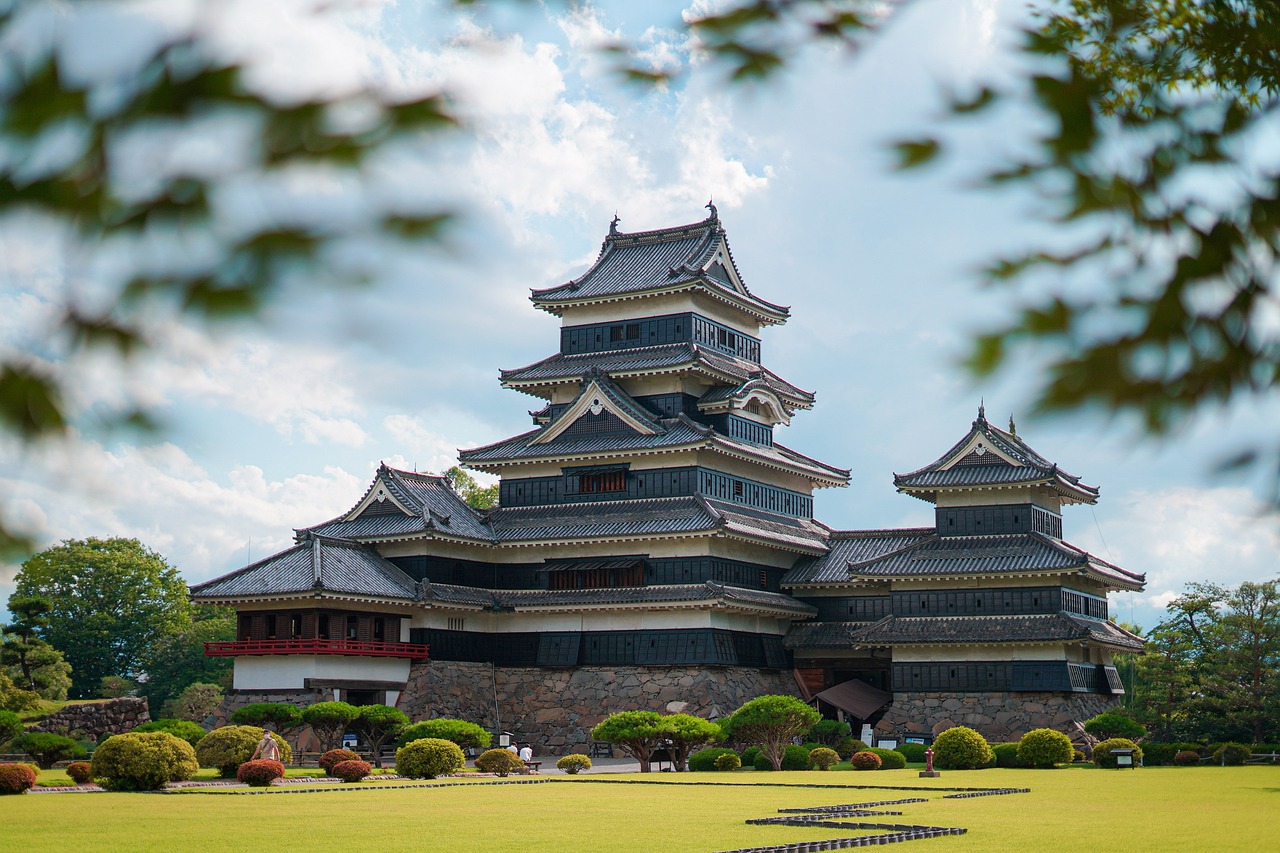
Matsumoto Castle (松本城) is visually unlike any other major Japanese castle. While the dominant color scheme of most famous Japanese castles is white (Himeji, Kumamoto) or white-and-gold (Osaka), Matsumoto's main tower is black and white — its weatherboards lacquered in jet black against white plaster walls — creating a stark, powerful silhouette against the backdrop of the Northern Japan Alps (北アルプス) that forms Matsumoto's dramatic western horizon.
The castle is also among Japan's oldest surviving wooden castle towers — built in the 1590s, it is the oldest five-tiered keep in the country (Inuyama Castle disputes the title of oldest keep overall). Its main tower (天守) has never been destroyed, surviving earthquakes, the Meiji abolition of feudal structures, and more than four centuries of Matsumoto winters. This survival distinguishes it from reconstructed castles (Osaka, Nagoya) and makes every structural element — the massive wooden posts, the ancient stairs, the firing platforms — a genuine physical artifact of the Sengoku period.
The city of Matsumoto itself — a compact, walkable city of 240,000 with a strong arts culture, excellent mountain air, and direct connections to the Japanese Alps hiking and skiing areas — is among the most livable cities in the Chubu region and a destination with depth beyond the castle.
The Castle: Five Centuries of Survival
Matsumoto Castle was built by the Ogasawara clan and subsequently passed to the Ishikawa clan, who completed the main tower complex. The castle served as the military and administrative center of the Matsumoto domain through the entire Edo period, after which the Meiji government's dismantling program threatened its survival.
The 1872 Crisis and Local Preservation
In 1872, Matsumoto Castle was scheduled for auction and demolition under the Meiji government's policy of selling former feudal structures. A local schoolteacher named Ichikawa Ryozo (市川量造) led a public campaign to preserve the castle — organizing community opposition and ultimately successfully lobbying for its preservation as a public monument.
This early preservation effort — remarkable for its time — established the civic commitment to the castle that has maintained it ever since. Without Ichikawa's campaign, the oldest surviving wooden castle tower in Japan would not exist.
Inside the Castle Tower
The interior of the main tower (six floors, including one concealed floor that appears as five from outside) reveals the military logic of Sengoku-period castle architecture:
Basement level: Water storage cisterns (for siege conditions) and stone-throwing platforms (石落とし / ishi-otoshi) through which stones could be dropped on attackers at the base of the walls.
Middle floors: Firearms storage and deployment platforms — Matsumoto Castle was built during the period when Japanese warfare was transitioning to include firearms, and the castle design reflects this: gun ports (鉄砲狭間 / teppo hazama) and arrow ports (弓狭間 / yumi hazama) in the walls allow defensive fire while minimizing exposure.
Upper floors: The increasingly steep staircases (approaching 60 degrees in the uppermost sections) represent the deliberate difficulty of military architecture — stairs designed to slow attacking forces while defenders above had time to prepare.
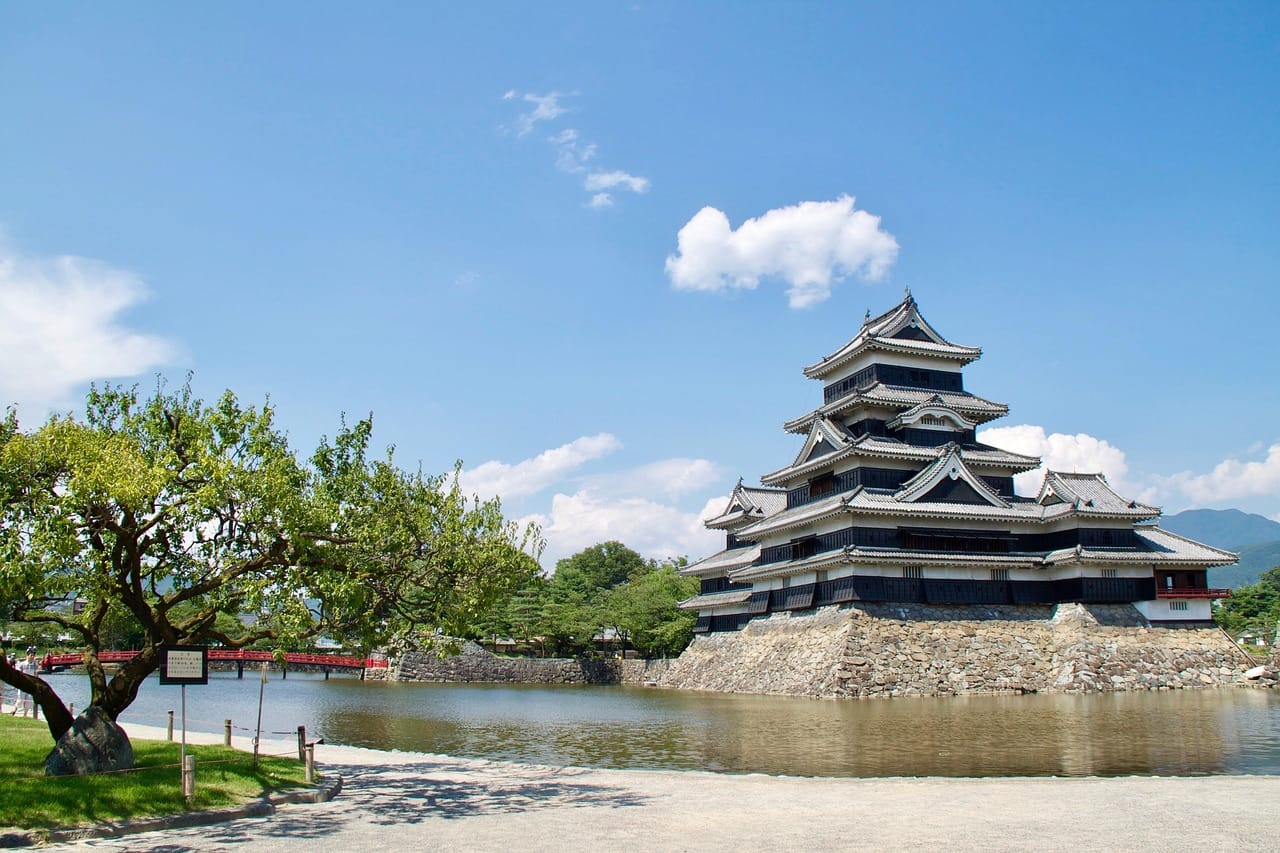
The view from the top: The sixth-floor observation level provides the castle's most distinctive experience: the Northern Japan Alps (北アルプス) visible to the west on clear days — the glacially carved peaks of the Hotaka massif and Mount Yari appearing directly above the castle walls. This combination of medieval military architecture in the foreground and alpine wilderness immediately behind is specific to Matsumoto.
The Tsukimi Yagura (月見櫓): The Moon-Viewing Turret
Adjoining the main tower, the Tsukimi Yagura (月見櫓 / Moon-Viewing Turret) represents a different era and a different intention — added in the peaceful Edo period (1630s) specifically for the aesthetic pleasure of moon-viewing parties. The turret is constructed without firing ports or defensive features, its large open spaces designed for appreciation rather than combat. This juxtaposition — military tower and pleasure pavilion in direct physical connection — visually encapsulates the transition from Sengoku warfare to Edo peace.
The Castle and Cherry Blossoms
In late April, approximately 30 cherry trees planted in the castle grounds bloom simultaneously with the alpine backdrop still snow-covered. The combination of pink blossoms, black-and-white castle, and white mountain peaks produces one of the most compositionally rich spring images in central Japan. The moat reflection — the castle reflected in the water, framed by cherry branches — is particularly photographed.
Matsumoto City: Beyond the Castle
Nawate-dori and Nakamachi (縄手通り・中町)
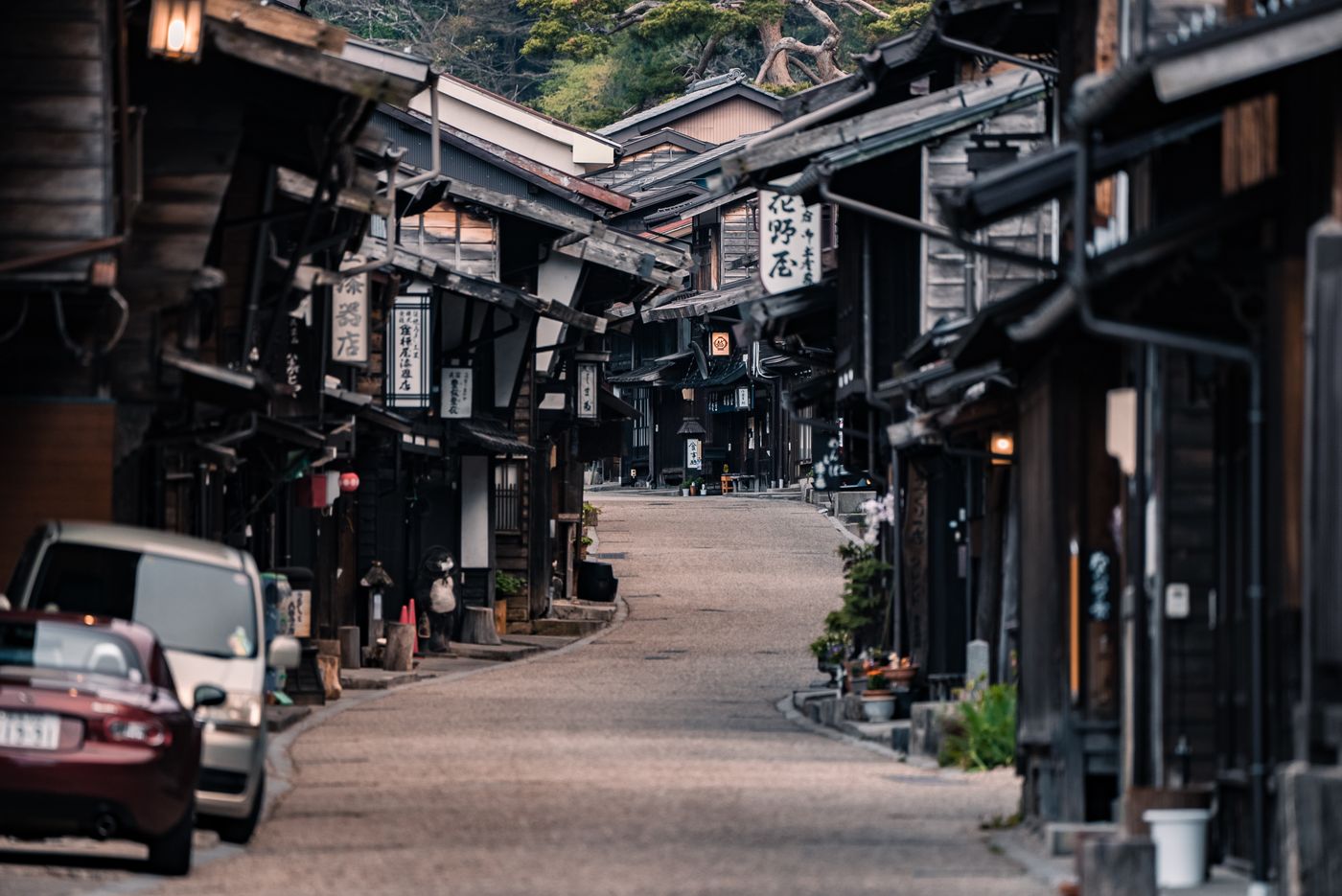
The streets around the castle — particularly Nawate-dori (縄手通り), a short covered arcade near the Metoba River, and the Nakamachi district (中町) of Edo-period merchants' houses (some now converted to cafés and craft shops) — provide the most pleasant urban walking in Matsumoto.
The frog motif: Nawate-dori's shops and decorations are characterized by frog imagery — a consequence of the Metoba River's historical frog population and the Meiji-period nickname "Frog Street." The ceramic frogs, frog-shaped goods, and frog mascots give the street a lighthearted character that contrasts pleasantly with the castle's severity.
Matsumoto City Museum of Art (松本市美術館)
Internationally renowned for its collection of works by Yayoi Kusama (草間彌生) — the Matsumoto-born artist whose polka dot and mirror-room installations have achieved global recognition. The museum's Kusama gallery is one of the most significant permanent collections of her work in Japan, and the red polka-dot pillar at the museum entrance is one of Matsumoto's most-photographed spots.
Mountain Access
Matsumoto is the primary access point for the Kamikochi (上高地) alpine valley — one of Japan's most celebrated mountain landscapes — via bus (approximately 1.5 hours from Matsumoto). The combination of Matsumoto Castle and a Kamikochi day hike constitutes one of the finest single-day travel experiences in the Japanese Alps.
Recommended Base Hotels
- Buena Vista Matsumoto (Mid-range / from ¥14,000): The city's premier hotel, castle-view rooms available.
- Dormy Inn Matsumoto (Mid-range / from ¥10,000): Natural hot spring, central location.
- Matsumoto Tokyu REI Hotel (Mid-range / from ¥11,000): Station area, convenient for Kamikochi bus access.
Planning where to stay in Chubu? Browse our honest hotel picks and area guides.
🏨 Planning where to stay?
Every area guide on this site pairs with honest, station-by-station hotel picks. Start here: Nagano Hotel Guides →