This article may contain affiliate links. If you book through them, we may earn a small commission at no extra cost to you.
On this page
Introduction: The Landscapes That Japan Prints on Calendars
There are two places in Japan that appear on more calendars, more tourism posters, and more desktop wallpapers than any others in the country. Both are in central Hokkaido. Furano (富良野) — the lavender capital — and Biei (美瑛) — the village of rolling agricultural hills — together form a landscape district of exceptional visual quality that has been sustaining the Japanese popular imagination of "beautiful rural Japan" for over four decades.
The photographs are not misleading. The lavender fields of Furano in July, the patchwork hills of Biei in summer green or autumn gold, and the combined backdrop of the Daisetsuzan range (大雪山連峰) behind everything — these are genuinely among the finest agricultural landscapes available anywhere, and the fact that they are Japanese makes them additionally specific: this is a beauty that belongs to a particular climate, a particular farming tradition, and a particular scale of landscape management that is not replicated elsewhere.
Furano: The Lavender Capital
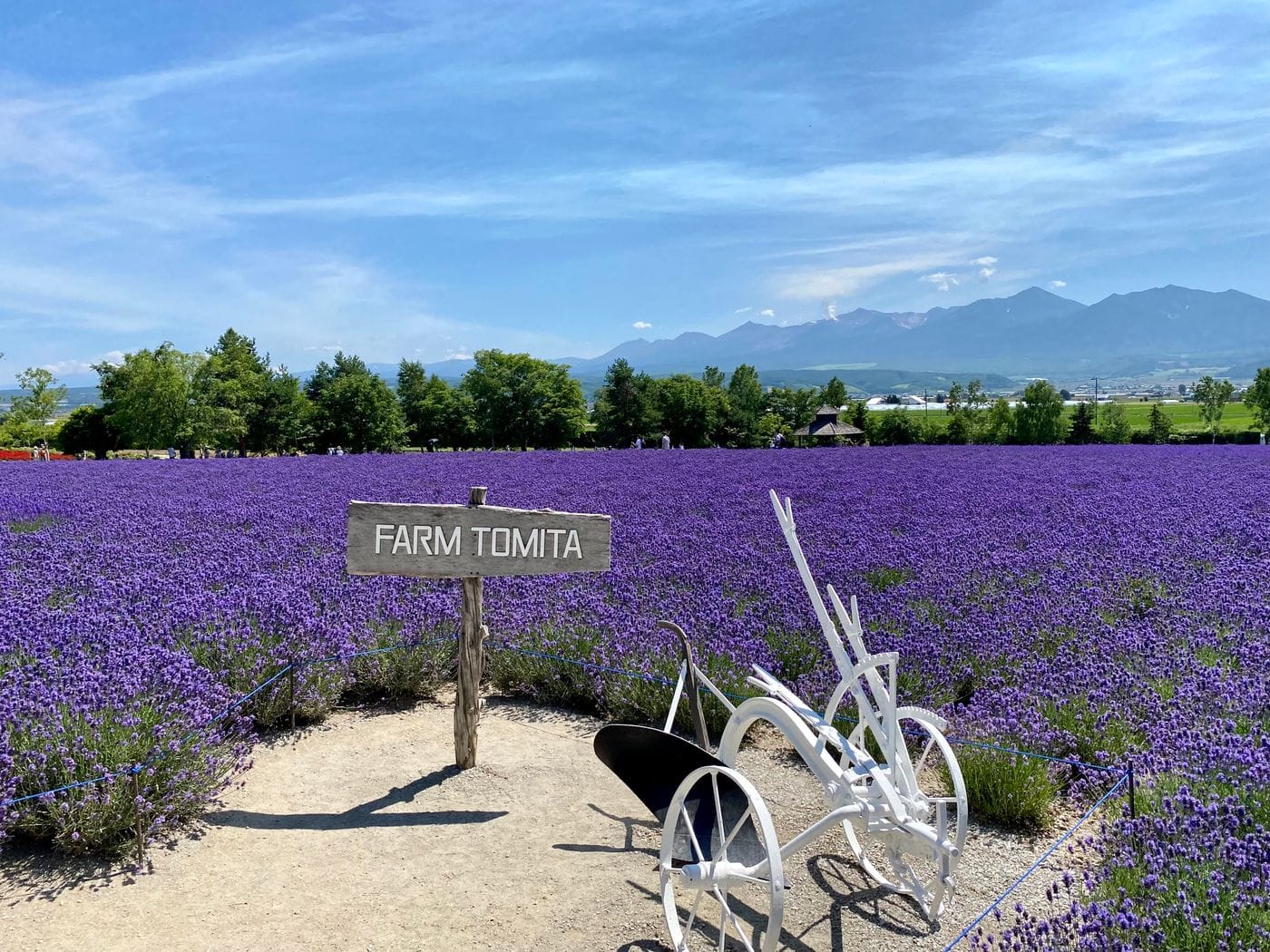
Farm Tomita (ファーム富田): The Defining Image
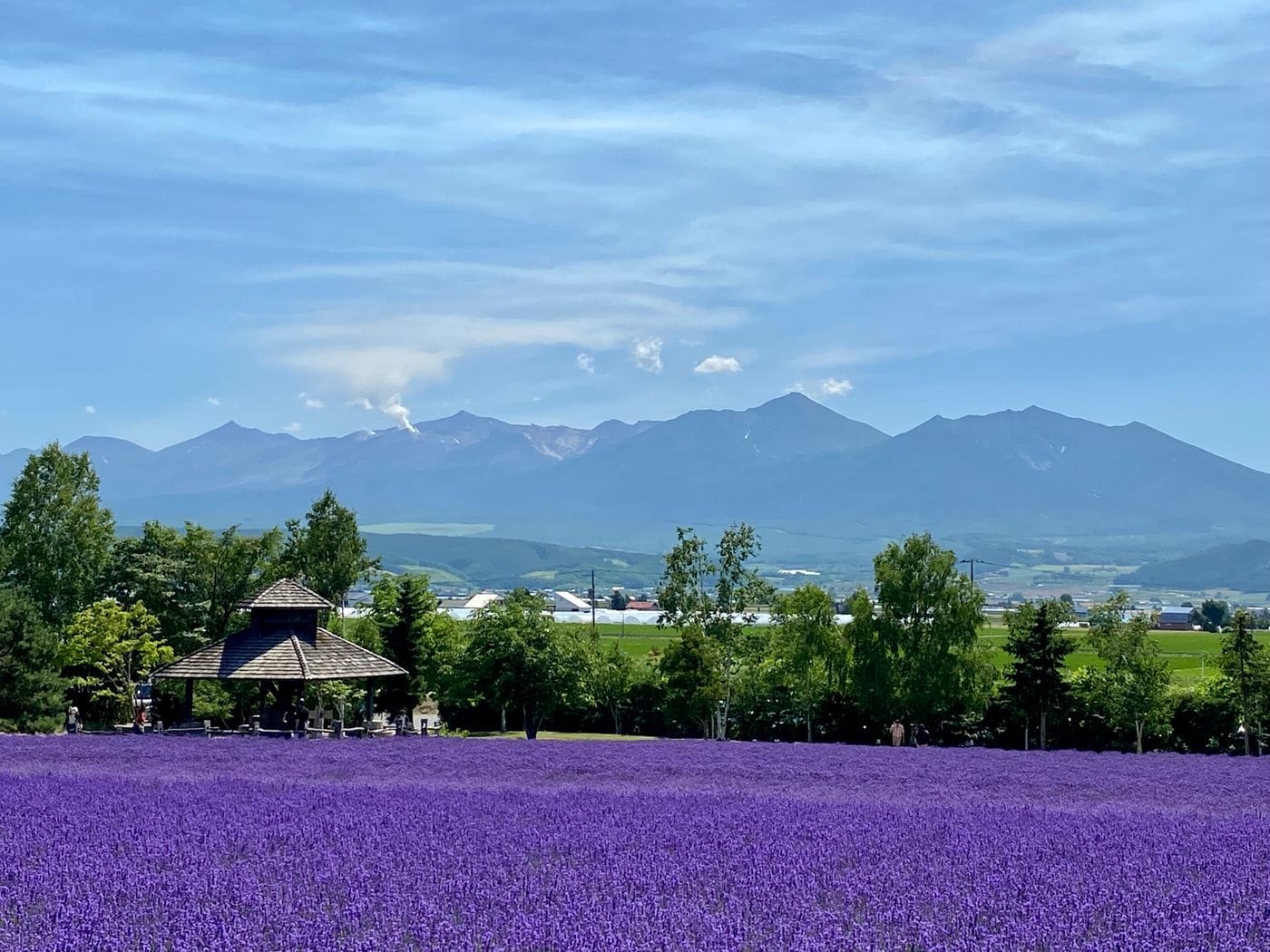
Farm Tomita is the farm that essentially created Hokkaido's lavender tourism industry — and it is still the most photographed individual location in Hokkaido. The farm's approach to lavender cultivation (multiple varieties planted in adjacent rows to create bands of slightly different purple tones) combined with the mountain backdrop behind and the long, flat perspective of the fields produce the composition that has appeared on millions of Japanese travel materials.
The farm is free to enter and experience (there are paid experience gardens within the property), and the facilities — flower shops, soft-serve ice cream using lavender, dried flower products, and multiple viewing platforms at different heights — are geared to handle the enormous crowds that arrive during peak lavender season without creating a sense of confinement.
What to buy at Farm Tomita:
- Dried lavender products: Sachets, soaps, and the remarkably long-lasting lavender-scented products made from the farm's harvest
- Lavender ice cream (ラベンダーソフトクリーム): Pale purple, subtly floral — a gentle rather than overwhelming lavender flavor
Lavender honey: From hives maintained in the fields
The Furano Basin and Other Farms
Furano's lavender cultivation extends well beyond Farm Tomita. Lavender East (ラベンダーイースト) — a single-variety lavender field of approximately 7 hectares operated by Farm Tomita as an overflow and tractor-ride attraction — is particularly impressive when the single purple expanse at peak bloom creates an unbroken color field extending to the horizon.
Several other farms in the Furano–Kamifurano basin — Flower Land Kamifurano (フラワーランドかみふらの), Kanno Farm (かんのファーム) — offer different flower compositions (sunflower, poppy, and salvia fields complement the lavender) that extend the visual diversity of the area and reduce the peak-period concentration at Farm Tomita.
Furano Wine (ふらのワイン)
Furano's agricultural diversity includes wine grape cultivation — the Furano basin's climate (warm summers, cold winters, significant diurnal temperature variation) produces conditions similar to Burgundy in some respects, and Furano Wine has been produced since 1972. The Furano Wine House offers tastings and produces a range of whites, reds, and the distinctive Furano Rosé that has developed a following among Japanese wine enthusiasts.
Biei: The Patchwork Hills
Biei (美瑛) — a small agricultural town of approximately 10,000 people — has become one of Japan's most visited rural destinations on the strength of its rolling agricultural landscape. The hills of Biei are covered in a patchwork of different agricultural products — potatoes, wheat, beet, corn, and in season the various wildflowers used in the cut-flower industry — creating a constantly changing mosaic of color and texture across the undulating terrain.
The Patchwork Road (パッチワークの路)
The Patchwork Road is a network of approximately 20 km of rural roads north of Biei town connecting the most photographed hills in the area. Several specific hills have become individually famous:
Ken and Mary's Tree (ケンとメリーの木): A lone poplar tree at the top of a hill, made famous by a 1972 Nissan Skyline TV commercial, which transformed it overnight from an anonymous agricultural landmark into one of Hokkaido's most photographed single trees.
Mild Seven Hill (マイルドセブンの丘): A row of larch trees along a hillcrest, used in a cigarette advertisement in the 1970s — named for the brand and now famous enough to appear on maps independently of any marketing context.
Patchwork Hill Viewpoint (パッチワークの丘展望台): The most complete elevated view of the Biei patchwork landscape — the full extent of the agricultural mosaic visible, with the Daisetsuzan range providing the backdrop.
The Panorama Road (パノラマロード)
The Panorama Road extends south and east of Biei town toward Shikisai no Oka (四季彩の丘) — a commercial flower hill with planted rows of annual flowers that create a managed version of the patchwork color visible in the agricultural fields around it. The managed planting here (designed specifically for visual impact) produces more intense color fields than the surrounding agricultural patchwork, and the location is widely used for photography.
The Blue Pond (青い池): Biei's Viral Sensation
Shirogane Blue Pond (白金青い池) — a drainage retention pond that accidentally became one of Japan's most photographed natural phenomena — was initially created as part of the volcanic disaster mitigation infrastructure around Mount Tokachi. The specific mineral content of the water (aluminum hydroxide colloidal particles) scatters sunlight in a way that produces a vivid, unnatural blue-green color visible in any weather condition.
The pond became globally famous in 2012 when Apple used an aerial photograph of it as a macOS desktop wallpaper — millions of people around the world briefly had the Blue Pond as their computer background without knowing where it was. The subsequent visitor influx prompted the construction of viewing platforms and parking facilities that now handle hundreds of visitors daily.
The trees standing in the water — white birches and larch killed when the pond was created, now preserved as abstract vertical elements against the blue surface — give the Blue Pond a quality that distinguishes it from a simple color phenomenon.
Best time: Morning, when the water is still and reflections are clearest. Autumn, when the dead white trees are complemented by the yellow and orange of the surrounding living forest.
Getting Around: Car vs. Public Transport
This is the most important practical decision for a Furano/Biei visit. The attractions of both areas are dispersed across 30–40 km of countryside, and public transport connectivity is limited.
By car (strongly recommended): Rental cars available from New Chitose Airport (Sapporo area) or from the Asahikawa rental stations closer to Furano/Biei. Driving the patchwork roads at your own pace, stopping at each hill viewpoint, and combining the two areas in a single day is only possible by car.
By bicycle: Biei's hills are manageable by bicycle for reasonably fit cyclists (some hills are steep). Furano's lavender area around Farm Tomita is flat and easily cycled. Rental bicycles available at both Biei and Furano stations.
By train/bus: The JR Furano Line connects Asahikawa with Biei and Furano. The Lavender Express (フラノラベンダーエクスプレス) seasonal train runs from Sapporo to Furano during July and August. Bus connections between the main attractions are available but limited in frequency.
Recommended Base Hotels
- Furano Natulux Hotel (Mid-range / from ¥15,000): Furano town center, walking distance to ski lifts in winter.
Potato no Oka (ポテトの丘) (Budget / from ¥8,000 per person): Farm guesthouse in Biei, organic breakfast from own farm — the most atmospheric accommodation in the area.
- Hotel Biei Shunkayo (Mid-range / from ¥16,000): Biei town, lavender view rooms.
Planning where to stay in Hokkaido? Browse our honest hotel picks and area guides.
🏨 Planning where to stay?
Every area guide on this site pairs with honest, station-by-station hotel picks. Start here: Hokkaido Hotel Guides →