This article may contain affiliate links. If you book through them, we may earn a small commission at no extra cost to you.
Shinkansen Line Guide · Joetsu Shinkansen
Joetsu Shinkansen Guide: Tokyo to Niigata Across the Snow Country —
Toki, Tanigawa & the Tunnel into the White
12 Stations · Tokyo to the Sea of Japan · Niigata in About 90 Minutes · Japan’s Deepest Snow
🚄 Tokyo → Niigata in as little as ~1 hr 29 min on the Toki
❄️ Through the mountains into Japan’s legendary snow country
⛷️ Ski resorts you can reach on the bullet train itself
🍚 Gateway to Niigata’s rice, sake and the Sea of Japan coast
On this page
What Is the Joetsu Shinkansen?
The Joetsu Shinkansen is the line that carries you from the Tokyo plain, up through the mountains, and out the other side into yukiguni — the “snow country” of Kawabata’s famous novel. It runs about 300 km from Tokyo and Omiya across Gunma, burrows under the Mikuni mountains through a series of long tunnels, and descends into Niigata’s rice plains to terminate at the port city of Niigata on the Sea of Japan.
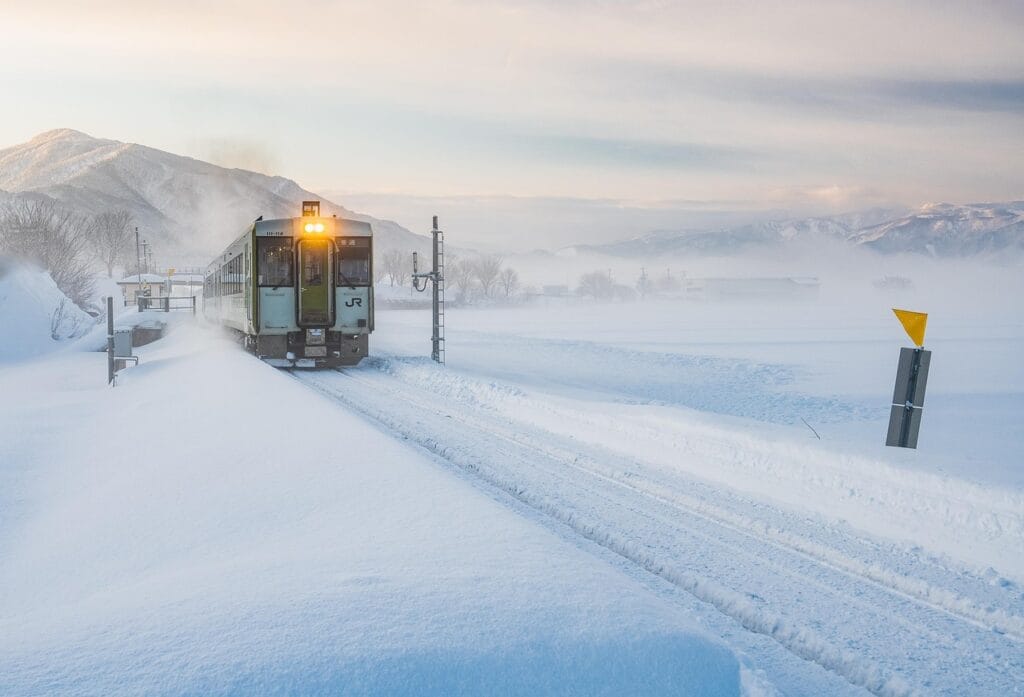
Opened in 1982 and now run entirely by sleek E7-series trains, it is the shinkansen most defined by its scenery: green terraced rice fields in summer, and in winter a startling transformation as the train bursts out of a tunnel into a world buried in metres of snow. It is also the rare bullet-train line that delivers you directly to the ski slopes.
The novelist Kawabata began Snow Country with a train emerging from a long tunnel into a white landscape — written about the old Shimizu Tunnel, whose modern successor the shinkansen bores through on this very route. Ride in winter and you live the opening line: dark tunnel, then suddenly a silent world of snow.
Toki vs Tanigawa: Which Train?
🚄 Toki — the main service, running the full length Tokyo–Niigata. The fastest skip almost everything and reach Niigata in about 90 minutes; most make a handful of stops.
🟢 Tanigawa — the shorter, all-stations service covering Tokyo to Echigo-Yuzawa and Gala-Yuzawa, serving the commuter and ski towns at the mountain end of the line. (The beloved double-decker “Max” trains that once worked this line retired in 2021 — today everything is the sleek single-deck E7.)
Both are fully covered by the Japan Rail Pass and the regional JR East passes. For the small mountain stations you will usually be on a Tanigawa; for Niigata and Nagaoka, a Toki.
The 12 Stations
From south to north, Tokyo to Niigata. Each links to our full area-and-hotel guide.
1. Tokyo (Tokyo) — the southern terminus, shared with every other eastern shinkansen.
2. Ueno (Tokyo) — museums, pandas and easy Narita access.
3. Omiya (Saitama) — the great northern junction and home of the Railway Museum.
4. Kumagaya (Saitama) — a rugby town famous for being one of Japan’s hottest, and a quick hop from Tokyo.
5. Honjo-Waseda (Saitama) — a quiet university-linked stop on the Saitama–Gunma border.
6. Takasaki (Gunma) — the junction where the Joetsu and Hokuriku lines split; daruma dolls and onsen gateway.
7. Jomo-Kogen (Gunma) — the mountain gateway to the hot springs of Minakami and Tanigawa.
8. Echigo-Yuzawa (Niigata) — the snow-country onsen and ski town, with sake and skiing right at the station.
9. Gala-Yuzawa (Niigata) — the seasonal station that is a ski resort — step off the shinkansen onto the gondola.
10. Urasa (Niigata) — a rural stop among the rice paddies, gateway to Uonuma Koshihikari country.
11. Nagaoka (Niigata) — Niigata’s second city, famous for one of Japan’s greatest fireworks festivals.
12. Tsubame-Sanjo (Niigata) — Japan’s metalworking capital, where your kitchen knives and cutlery are made.
13. Niigata (Niigata) — the northern terminus, a rice-and-sake port city on the Sea of Japan.
Journey Times & Fares
Times are for the fastest applicable service; fares are approximate reserved-seat totals, one way.
| Route | Fastest time | Approx. fare (reserved) |
|---|---|---|
| Tokyo → Niigata (Toki) | ~1 hr 29 min | ~¥10,760 |
| Tokyo → Nagaoka | ~1 hr 40 min | ~¥9,110 |
| Tokyo → Echigo-Yuzawa | ~70 min | ~¥6,790 |
| Tokyo → Takasaki | ~50 min | ~¥5,020 |
| Tokyo → Kumagaya | ~40 min | ~¥4,270 |
The Japan Rail Pass covers the whole line, as do the JR East Nagano/Niigata and Tohoku regional passes — excellent value if you are pairing Tokyo with the snow country or a ski trip.
The Snow & the Ski Slopes
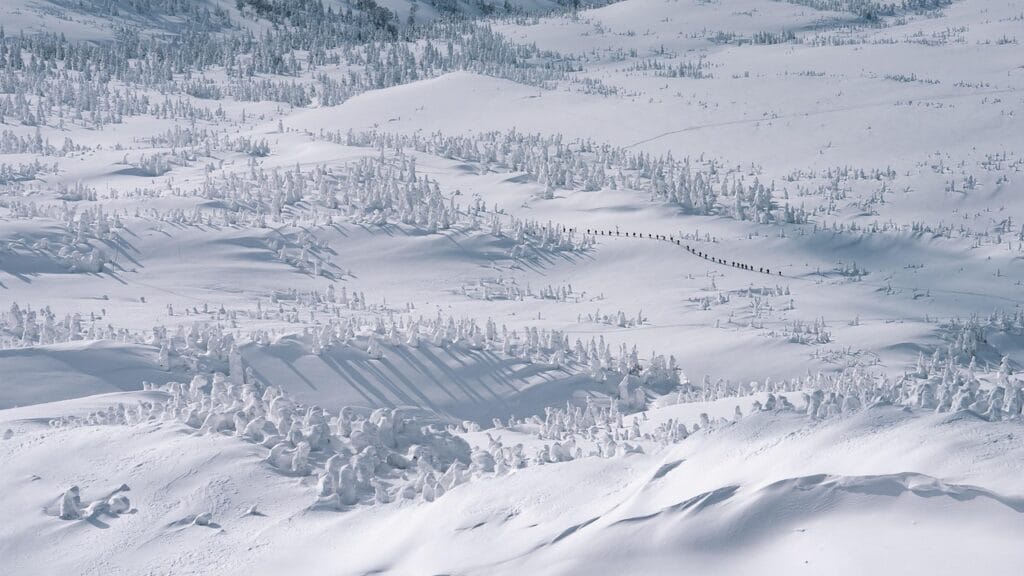
This is Japan’s great snow line. The Mikuni tunnels under the prefectural border separate the dry Kanto plain from the Sea of Japan side, where moisture off the sea dumps some of the heaviest snowfall on earth. Echigo-Yuzawa and Gala-Yuzawa put ski resorts within walking distance of the platform — at Gala, the station building connects straight to the gondola. For many Tokyo residents, a day on the snow here and home by dinner is a normal winter Saturday.
Which Airports Connect to This Line?
✈️ Tokyo Haneda & Narita: Almost everyone starts from Tokyo, Ueno or Omiya, all quick from Haneda (~30 min) or Narita (N’EX, ~55 min).
✈️ Niigata Airport (KIJ): The line’s northern-end airport, about 25 minutes by bus from Niigata Station, with Tokyo, Osaka and some international flights — handy for an open-jaw snow-country trip.
✈️ Ibaraki & others: No airport sits directly on the line between the ends, so the Tokyo airports remain the practical gateway for the mountain stations.
Where Should You Stay Along the Line?
Two very different bases stand out: Echigo-Yuzawa for onsen and skiing steps from the train, and Niigata city for sake, seafood and the Sea of Japan. Nagaoka is worth timing around its August fireworks, and the mountain stops (Jomo-Kogen, Urasa) suit onsen and rice-country detours. The Tokyo-side stations (Kumagaya, Honjo-Waseda) are commuter towns — useful, rarely destinations. Each station guide above gives the honest verdict on staying versus passing through.
Keep exploring
🏨 Planning where to stay?
Every area guide on this site pairs with honest, station-by-station hotel picks. Start here: Tokyo Hotel Guides →