This article may contain affiliate links. If you book through them, we may earn a small commission at no extra cost to you.
On this page
Introduction: The Island That Receives 35 Days of Rain per Month
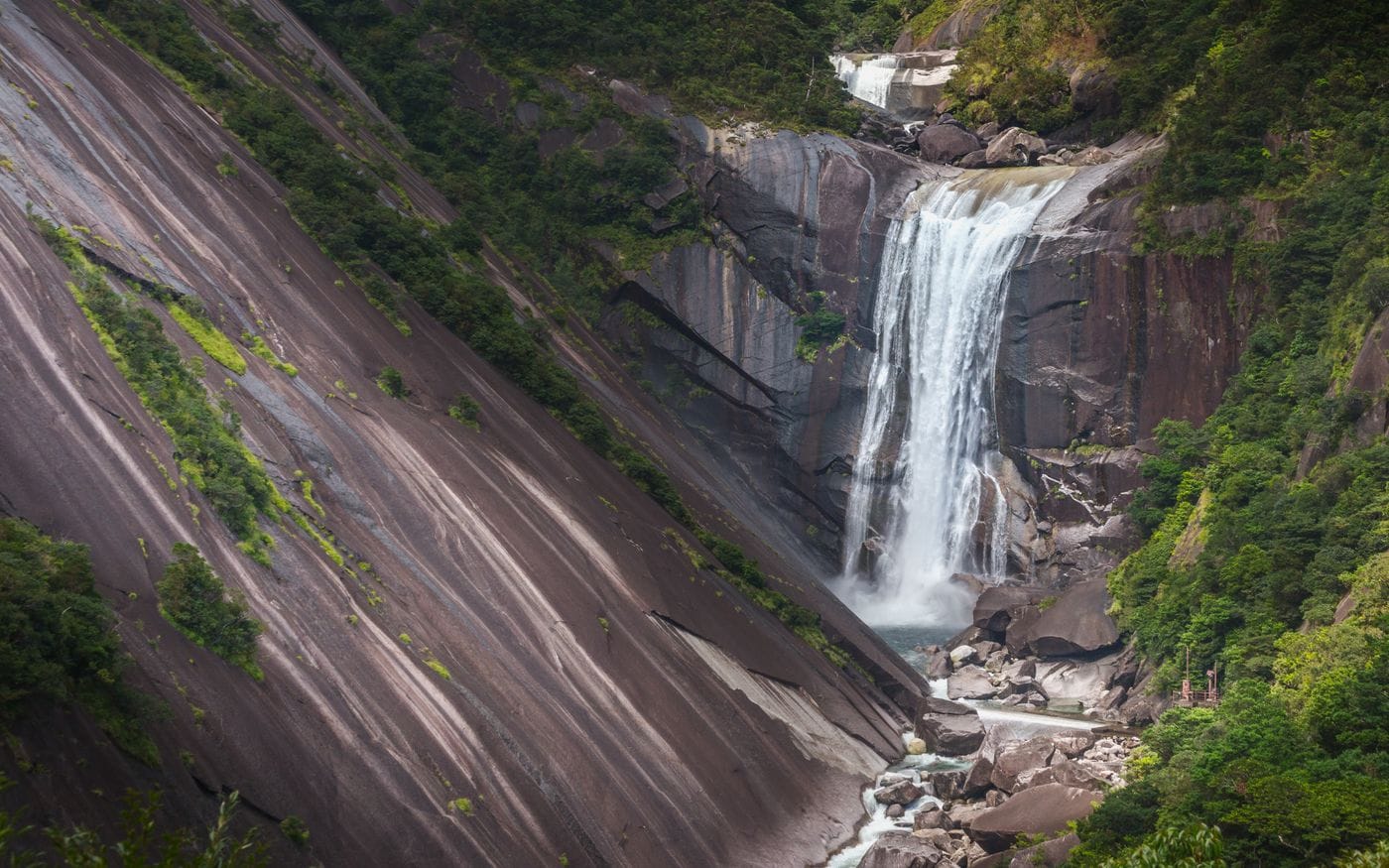
There is a saying about Yakushima: "It rains 35 days a month" (ひと月に35日雨が降る). This is an exaggeration, but not by as much as it sounds. Yakushima receives some of the highest annual rainfall in Japan — certain mountain areas record over 10,000mm per year. The reason this matters is that the rain is the reason for everything that makes Yakushima extraordinary: the extraordinary density and ancient age of the cedar forest that covers the island's mountainous interior, the rivers of extraordinary clarity that drain from the mountain, and the moss of extraordinary richness and variety that covers every exposed surface.
Yakushima (屋久島) — a roughly circular island 130 km south of Kagoshima, covered in mountains that rise to 1,936 meters (the highest point in Kyushu) — was the inspiration for the forest in "Princess Mononoke" and was registered as a UNESCO World Heritage Site in 1993. It is also, for anyone willing to walk its trails in rain gear, one of the most astonishing natural environments in Japan.
What Makes Yakushima Unique: The Rain and the Cedars
The relationship between Yakushima's rainfall and its ancient cedars is direct. Yakusugi (屋久杉) — the name given to cedars that have been growing on Yakushima for over 1,000 years — survive to such extraordinary ages because of the island's unique combination of factors: the volcanic granite bedrock (which contains few nutrients, forcing the trees to grow extremely slowly), the high rainfall (which provides water without the nutrient competition of richer soils), the consistently cool mountain temperatures, and an absence of the human forest management that has limited cedar age elsewhere in Japan.
Only trees over 1,000 years old on Yakushima qualify as yakusugi. Trees under 1,000 years are called ko-sugi (小杉 / "small cedars"). This naming convention gives some sense of the island's temporal perspective: a 999-year-old tree is still a young one.
Jomon Sugi (縄文杉): The Ancient One
Jomon Sugi — estimated to be between 2,170 and 7,200 years old depending on the measurement method used (core sampling has been impossible without damaging the tree; the age is extrapolated from circumference and species growth rates) — is the largest and oldest known yakusugi, with a trunk circumference of 16.4 meters and a height of approximately 25 meters.
The tree is named for the Jomon period (縄文時代) of Japanese prehistory (approximately 14,000–300 BCE), reflecting the belief that the tree was alive during this period. If the higher age estimates are correct, this single tree has been growing since the Neolithic — predating every building, every city, and every political formation in Japanese history.
The Trek: How to Reach Jomon Sugi
The Route
The standard Jomon Sugi trekking route begins at Arakawa Trailhead (荒川登山口) — accessible by shuttle bus from the Yakusugi Museum Bus Stop (personal vehicles are prohibited on the access road during peak season, typically March–November).
Shuttle bus: Operates from approximately 5:00 AM to 5:00 PM. The first bus is typically fully booked on weekends and holidays during peak season — reserve via the Yakushima Environmental Culture Foundation or local accommodations.
Distance and time:
Trailhead to Jomon Sugi: approximately 11 km, 4.5–5 hours
Return: approximately 4–4.5 hours
Total: approximately 9–10 hours moving time, plus rest and photography stops
Minimum 10 hours should be allocated for the full trek
The Trail Character
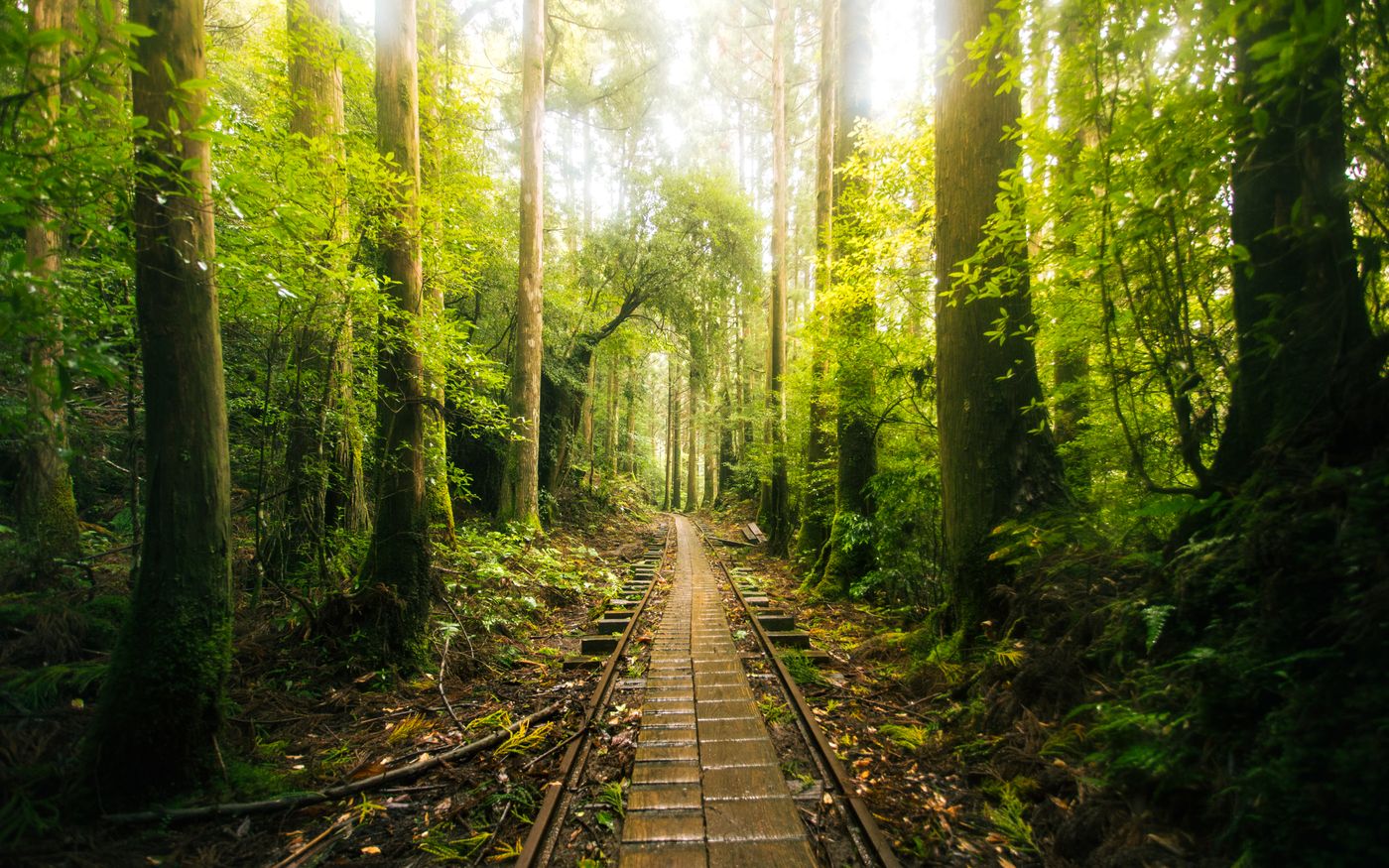
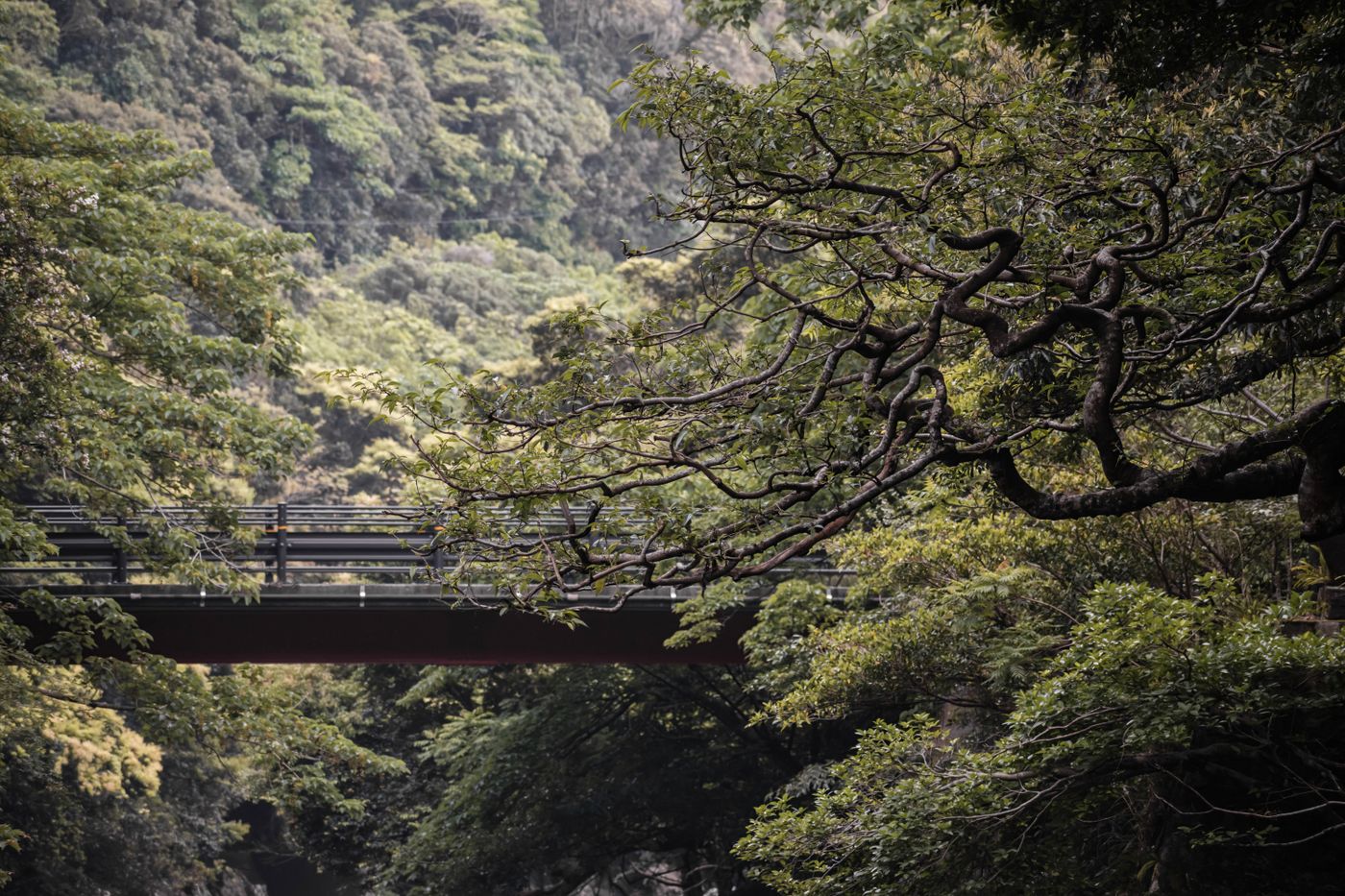
The first section of the trail (approximately 8 km) follows the tracks of the Anbo Forest Railway (安房林業鉄道) — a historical narrow-gauge railway built for timber transport in the postwar period, now decommissioned and used as a walking track. The railway grade is gentle and the track surface is relatively easy — old wooden sleepers remain in place, and the surrounding forest closes in from both sides.
This section passes through secondary forest that is recovering from the period of intensive yakusugi logging (which ended in the 1970s) — the trees here are younger and the forest character is less ancient than the deeper sections.
Wilson Stump (ウィルソン株): Approximately 2 hours from the trailhead, the Wilson Stump is the enormous hollow base of a yakusugi felled by Toyotomi Hideyoshi's order in the 16th century for the construction of Kyoto's Hōkoku Shrine. The stump's interior cavity is large enough to enter — a small spring emerges from the bottom, and the interior ceiling of root-wood reaches several meters above. Looking straight up from inside the stump produces the famous heart-shaped sky photograph that has circulated widely in Japanese travel media.
The Upper Trail: Beyond Wilson Stump, the trail climbs more steeply and enters the older forest — here the yakusugi become progressively more massive and ancient, their trunks covered in moss that softens their outline and gives the forest a cumulative quality of great age. The trail passes Daiō Sugi (大王杉) and Meoto Sugi (夫婦杉 / "Husband and Wife Cedar") before the final approach to Jomon Sugi.
Jomon Sugi: The Arrival
Jomon Sugi is now viewable only from a fixed viewing platform approximately 20 meters from the tree — direct access was prohibited in 1997 after root damage from visitor traffic. The viewing platform positions you at roughly mid-height of the trunk, with the full profile of the tree visible.
The first sight of Jomon Sugi — after 5 hours of walking — produces a response that most visitors find difficult to describe adequately. The scale (the trunk is simply larger than you expected), the age (visibly expressed in the density and complexity of the root system, the bark texture, the multiple sub-trunks that have merged over millennia), and the presence (a quality of existing that trees with this much historical depth possess in a way younger organisms do not) combine to create an experience that seems to exceed its physical components.
Many visitors sit at the platform for 20–30 minutes without speaking. This is the appropriate response.
Shiratani Unsuikyo (白谷雲水峡): The Mononoke Forest
For visitors who cannot commit to the full Jomon Sugi trek, Shiratani Unsuikyo — a ravine walk of 2–5 hours in the western part of Yakushima's mountain forest — provides the most direct access to the Mononoke forest atmosphere. The mossy ancient cedars, the clear streams, and the density of the green here are what inspired Miyazaki's research visits, and the atmosphere — particularly in mist or light rain — is the most complete available approximation of the film's visual world.
Practical Trekking Notes
Rain gear: Non-negotiable. Even on clear mornings, the mountain forest produces its own rainfall through mist and condensation. A fully waterproof jacket and waterproof pack cover are essential.
Footwear: Waterproof hiking boots with good ankle support and grip on wet wood and roots are essential. The railway sleeper sections are slippery when wet.
Start time: The first shuttle bus (approximately 5:00 AM) is strongly recommended. Starting later compresses the available time and increases the chance of returning after the last shuttle.
Food and water: Carry a full day's food and minimum 2 liters of water from the trailhead. There are no facilities on the trail.
Accommodation: Staying at least two nights on Yakushima is strongly recommended — one to recover from travel and prepare for the trek, one after the trek. The island's accommodation options range from basic minshuku to comfortable ryokan.
Recommended Base Hotels
Sankara Hotel & Spa Yakushima (Luxury / from ¥60,000 per person): The island's finest accommodation, with forest and sea views.
Simple minshuku in Miyanoura and Anbo (Budget / from ¥4,500): family-run and perfectly located for trekking access.
Yakushima Green Hotel (Mid-range / from ¥12,000): Reliable, convenient, good English support for trekking logistics.
Planning where to stay in Kyushu & Okinawa? Browse our honest hotel picks and area guides.
🏨 Planning where to stay?
Every area guide on this site pairs with honest, station-by-station hotel picks. Start here: Kagoshima Hotel Guides →