This article may contain affiliate links. If you book through them, we may earn a small commission at no extra cost to you.
On this page
Introduction: The System That Works Because Everyone Follows the Rules
Japan's train system — the most used and most punctual in the world — functions not merely through engineering excellence but through a specific set of behavioral norms that millions of passengers follow simultaneously without explicit enforcement. The absence of significant disorder in Japanese train cars, despite the extraordinary density of passengers during peak hours, is a direct product of these norms being sufficiently internalized that violation is both unusual and self-correcting.
Understanding these norms matters for visitors both practically (to avoid unintentional rudeness) and as one of the most direct windows available into how Japanese social life manages the coordination problem of millions of people sharing extremely limited space.
The Boarding Process
The queue: At station platforms, lines mark the boarding position for each car door — passengers queue in orderly single files on both sides of each door marker. The queue discipline is genuine and near-universal: no pushing to the front, no general milling, no crossing in front of queueing passengers.
Entering and exiting: Exiting passengers have priority — the correct behavior is to step aside from the door opening (left or right, following the flow) and allow all exiting passengers to leave before entering.
The rush-hour push: During peak commute hours (7:00–9:00 AM and 5:30–8:00 PM on major Tokyo lines), train cars reach a density that requires passengers to compress significantly. White-gloved platform attendants (乗車係員) at the busiest stations actively push passengers inward to allow the doors to close. Participating in this process without resistance — allowing yourself to be compressed, compressing proportionally in return — is the correct behavior.
On the Train
Silence: Japanese train cars are significantly quieter than the equivalent in most countries. The norms: phone conversations are avoided (a constant announcement requests this); earphones in when listening to music; speaking voices kept low. The silence is not unfriendly — it is a specific understanding that the shared space is not a social one.
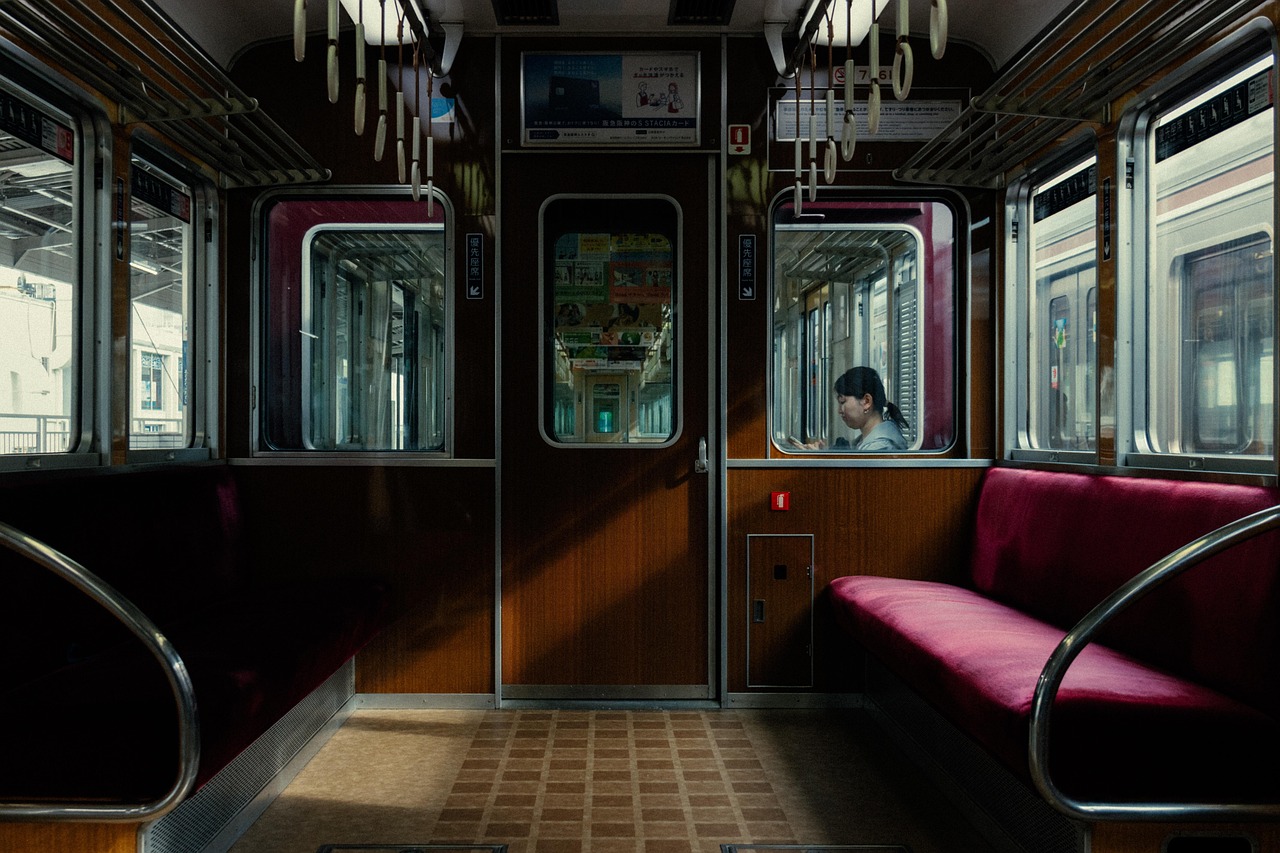
Phone use: Using phones for everything except calls is completely normal — looking at screens (games, videos with earphones, social media) is universal. Taking photos of other passengers is not acceptable.
Priority seating (優先席 / yūsen seki): Designated sections of seating are marked with stickers indicating they are for elderly passengers, pregnant women, passengers with injuries, and passengers with infants. Phone use is specifically asked to be avoided entirely in these sections (the risk of pacemaker interference is cited, though the practical distance makes this scientifically questionable — the norm remains). Giving up a priority seat to someone who needs it is expected.
Eating: Not standard on most urban commuter trains, though eating is common on longer-distance trains, particularly shinkansen (新幹線), where ekiben (駅弁 / train station bento) eating is entirely normal and expected.
Makeup: Many Japanese women apply makeup during the morning commute — a topic of some domestic debate but currently an accepted practice.
The Backpack Etiquette
During crowded conditions, the convention is to remove large backpacks and carry them in front of the body or place them in the overhead rack — a backpack on your back doubles your effective volume in a space where everyone is negotiating inches. The overhead rack is underused by foreign visitors who don't know it exists or don't realize it is for their use.
Escalator Behavior (Currently Transitioning)
The historical Tokyo convention (stand right, walk left on escalators) and the Osaka convention (stand left, walk right) are both technically being discouraged by railway operators who prefer that passengers stand on both sides (walking on escalators has caused accidents). In practice, most passengers still maintain the conventional standing convention — follow what you see the majority doing in each specific location.
The Drunk Passenger
Late-night trains in entertainment districts (Shinjuku, Shibuya, Roppongi) carry significant volumes of intoxicated passengers — a cultural understanding that train companies and other passengers accommodate with greater tolerance than daytime behavior would receive. This is a specific cultural accommodation that has its own social norms of not drawing attention to the state of others.
🏨 Planning where to stay?
Every area guide on this site pairs with honest, station-by-station hotel picks. Start here: Hotel Guides by Station →