This article may contain affiliate links. If you book through them, we may earn a small commission at no extra cost to you.
On this page
Introduction: The Town That Miyazaki Loved
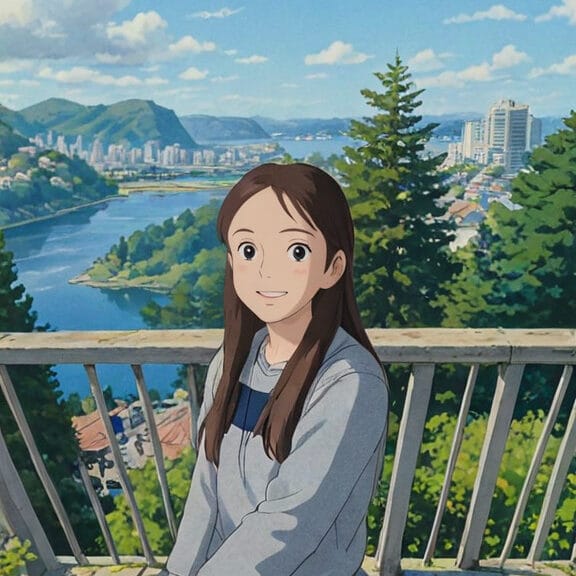
In 2005, Hayao Miyazaki rented a house in a small port town in Hiroshima Prefecture and began sketching. He stayed for months, walking the harbor, observing the light on the sea, watching the old stone walls and the boats and the tidal patterns of the Seto Inland Sea. From these months emerged the visual world of "崖の上のポニョ" (Ponyo / Ponyo on the Cliff by the Sea, 2008) — and the town where he stayed was Tomo no Ura (鞆の浦).
Unlike some "Ghibli inspiration" claims that are approximate or circumstantial, the Tomo connection is direct and documented — Miyazaki himself has spoken about spending time there, and the production studio's records confirm the connection. The town's harbor, its stone walls, the position of the lighthouse, the cliff-side houses looking over the sea — all appear in the film with varying degrees of fidelity.
The History: Japan's Most Complete Surviving Port Town
Tomo no Ura (鞆の浦) has been an active port since at least the 8th century CE, when it served as a staging point for ships waiting for the tide to change in the complex currents of the Seto Inland Sea. The harbor's extraordinary historical significance comes from this tidal function: ships could not proceed west against the incoming tide, and could not proceed east against the outgoing tide — so Tomo became a mandatory stopping point where ships waited, sometimes for days, in the harbor.
The result is a port town that accumulated over 1,000 years of maritime infrastructure and history in a single harbor. What makes Tomo extraordinary — and what attracted Miyazaki — is that this infrastructure survives essentially intact: the 17th-century stone sea walls, the tidal waiting facilities (常夜燈 / jōyatō lighthouse, 雁木 / gangi stone steps, 波止 / hato stone breakwaters, 焚場 / takiba boat maintenance areas, 船番所 / funa-bansho harbor checkpoint) form a complete set of traditional harbor facilities found nowhere else in Japan in their original configuration.
This completeness — five elements of traditional port infrastructure all surviving in one place — forms the basis of Tomo no Ura's UNESCO World Heritage candidacy as a "Historical Port Town of Japan."
The Harbor Facilities: What to Look For
Jōyatō (常夜燈): The Stone Lighthouse
The stone lighthouse (常夜燈) at the end of the main breakwater is the image most strongly associated with Tomo no Ura — photographed at dawn, at dusk, reflected in the harbor water at twilight, or surrounded by autumn fog. Built in 1859, the lighthouse served as a navigation aid for the harbor entrance and is considered the symbol of Tomo's maritime heritage.
The lighthouse and the harbor view behind it — the fishing boats, the island of Sensui-jima (仙酔島) visible across the channel, the forested hillside — appears in the opening scenes of Ponyo with sufficient fidelity that standing at the lighthouse and looking at the scene feels like stepping into the film.
Gangi (雁木): The Stone Steps
The gangi — stone steps descending from the sea walls to the water at multiple points around the harbor — were designed to allow boats to tie up and passengers and cargo to embark and disembark regardless of tide level. The irregular stone steps, worn smooth by centuries of use, are visible along the harbor walls throughout the town.
The Honjin Iroha-maru Exhibition Hall
The harbor area contains a small museum related to the Iroha-maru incident (いろは丸事件) — a collision in 1867 between a steamship owned by Sakamoto Ryōma's (坂本龍馬) trading company and a ship owned by the Kii Domain (now Wakayama Prefecture). Ryōma — the same historical figure associated with Fushimi's Teradaya inn — used the incident skillfully in the complex political negotiations of the final years before the Meiji Restoration, and the memory of his presence in Tomo is one of the town's significant historical associations.
Sensui-jima (仙酔島): The Island Across the Harbor
The small island visible from Tomo's harbor — Sensui-jima (仙酔島), "island where immortals become drunk on the beauty" — is accessible by a five-minute ferry (¥240 round trip) from the harbor. The island's western coast features Goshiki-iwa (五色岩) — dramatic volcanic rock formations in five colors (red, yellow, green, white, grey) exposed along the shoreline.
Sensui-jima appears in Ponyo as the rocky island near Sōsuke's house, and the ferry crossing between Tomo and the island provides the water-level perspective of the harbor that is present throughout the film's early sequences.
The Town Itself: Living Heritage
What distinguishes Tomo from Hiroshima's more famous sights is the sense that the town is still living inside its history. The stone walls and gangi are not museum pieces but working infrastructure — fishing boats tie up to them every morning, nets are spread to dry on the sea walls, elderly residents walk the same paths their grandparents walked.
The main street (tomo-dōri) runs parallel to the harbor and contains the town's commercial life: a pharmacy that has occupied the same building since the Edo period, long-established houmeishu shops (保命酒 — the town's herbal liqueur, first brewed here in the 1600s), fishmongers selling the morning's catch including taimeshi (鯛飯) — sea bream rice — that is the town's definitive food.
Recommended Base Hotels
Migiwatei Ochi Kochi (汀邸 遠音近音) (Luxury / from ¥35,000 per person): The finest inn in Tomo, with direct harbor views and the opportunity to watch the tide change from your room.
- Fukuyama New Castle Hotel (Mid-range / from ¥12,000): Fukuyama city base for day trips to Tomo.
Planning where to stay in Chugoku? Browse our honest hotel picks and area guides.
🏨 Planning where to stay?
Every area guide on this site pairs with honest, station-by-station hotel picks. Start here: Hotel Guides by Station →