This article may contain affiliate links. If you book through them, we may earn a small commission at no extra cost to you.
On this page
Osaka in 2 Days: The Local Itinerary — Eat, Walk & Don't Stop
Introduction: The City That Measures Everything in Food
There is a concept in Osaka called kuidaore (食い倒れ) — "to ruin yourself by eating." It is not a warning. It is an aspiration. Osaka's relationship with food is not merely culinary; it is civic, philosophical, and deeply competitive. The city has more Michelin-starred restaurants per capita than Tokyo, a street food culture that has been developing for 400 years, and a population that will argue about the correct recipe for takoyaki with the intensity of a constitutional debate.
But Osaka is not only food. It is one of Japan's most historically significant cities — the commercial capital of the Edo period, the home of Japan's first professional theatre culture, the city that produced Japan's most influential merchant class and the urban culture they created. Understanding this context makes the food better, the streets more interesting, and the people — who are the most immediately friendly in Japan — more comprehensible.
This is a two-day itinerary built around experiencing Osaka as Osaka people experience it: on foot, eating constantly, without a fixed schedule, in neighborhoods rather than attractions.
Before You Begin: The Osaka Mindset
Osaka operates differently from Tokyo and Kyoto. A few orientations:
Eat standing up. Much of Osaka's best food is consumed at counters, stalls, or in the street. This is not a compromise — it is the correct way to eat Osaka food. Takoyaki from a stall, kushikatsu at a counter, ramen at a bar with six seats — these contexts are part of the experience.
Talk to people. Osaka residents are, by the standards of Japanese urban culture, extraordinarily outgoing. They will initiate conversation, ask where you are from, offer recommendations, and frequently be funnier than you expect. Respond in kind.
Move between neighborhoods. Osaka's character changes radically between districts that are geographically close. Dotonbori is Las Vegas; Nakazakichō is Brooklyn; Shinsekai is 1950s Japan. Walk between them.
Day 1: South Osaka — Food, Neon, and History
9:00 AM — Kuromon Ichiba Market (黒門市場): Breakfast in Osaka's Kitchen
Begin where Osaka's food culture begins — at Kuromon Ichiba (黒門市場), the 580-meter covered market that has supplied Osaka's restaurants and households for nearly 200 years. The market's 170 shops cover fresh fish, meat, pickles, fruits, and prepared foods, and the culture of eating while walking — aruki-gui (歩き食い) — is fully accepted here.
What to eat at Kuromon:
Tuna sashimi: Several fishmongers serve freshly cut tuna directly from the block — the fatty toro (とろ) available here at market prices is extraordinary.
- Grilled crab legs: Whole snow crab legs grilled on the spot, available from several stalls.
- Fresh oysters: Served with lemon from counters throughout the market.
- Tamagoyaki (玉子焼き): The Osaka version — sweeter and softer than Tokyo's.
- Access: 5-minute walk from Namba Station (Midōsuji Line).
11:00 AM — Dotonbori (道頓堀): The Spectacle
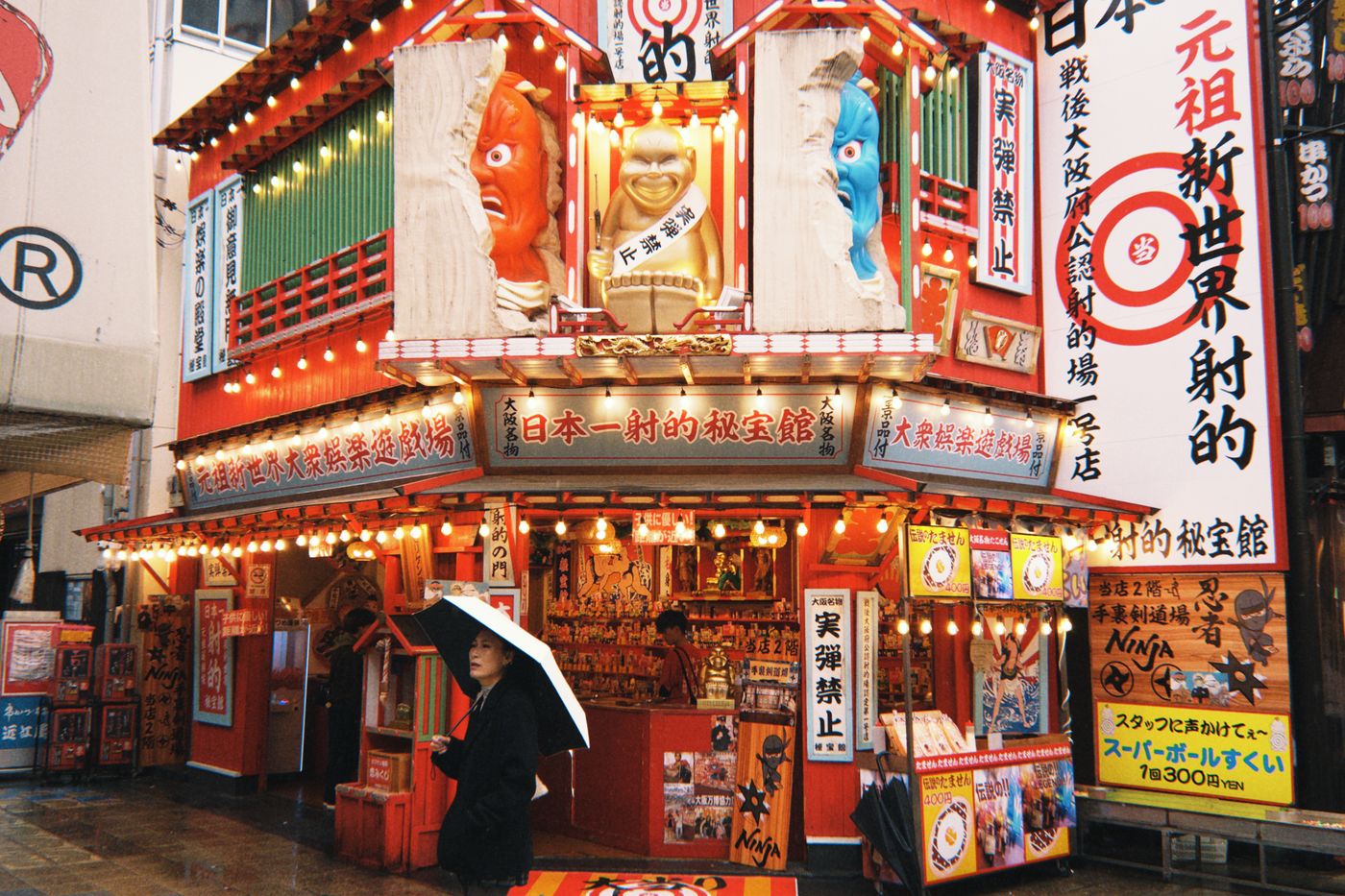
Walk north through Namba to Dotonbori — Osaka's entertainment and food center, whose neon-lit canal has become one of the most photographed urban environments in Asia. The scale and density of the signage — the Glico Running Man, the giant mechanized crab of Kani Dōraku, the blowfish lanterns of the fugu restaurants — creates a visual intensity that is uniquely Osaka.
Walk the canal-side Dotonbori Riverside Walk (とんぼりリバーウォーク) first, then turn into the covered arcade for the food experience.
What to eat on Dotonbori:
Takoyaki (たこ焼き): The canonical version at Wanaka (わなか) or Aizuya (会津屋) — the original takoyaki shop, whose recipe dates to 1933.
Kushikatsu (串カツ): Breaded and fried skewers — the Osaka original, served with a communal dipping sauce that carries the rule: no double-dipping (二度づけ禁止).
1:00 PM — Shinsaibashi and Amerika-mura (アメリカ村)
Walk north on Shinsaibashi-suji (心斎橋筋) — Osaka's main shopping arcade — to the Shinsaibashi area, then turn west into Amerika-mura (America Village): a grid of streets around Mitsu Park (三角公園) that has been Osaka's youth fashion and street culture center since the 1970s. Vintage clothing stores, independent record shops, takoyaki stalls, and the visual energy of Japanese youth subculture — this is the street culture version of Osaka that exists alongside the tourist Dotonbori.
3:00 PM — Nakazakichō (中崎町): Osaka's Creative Neighborhood
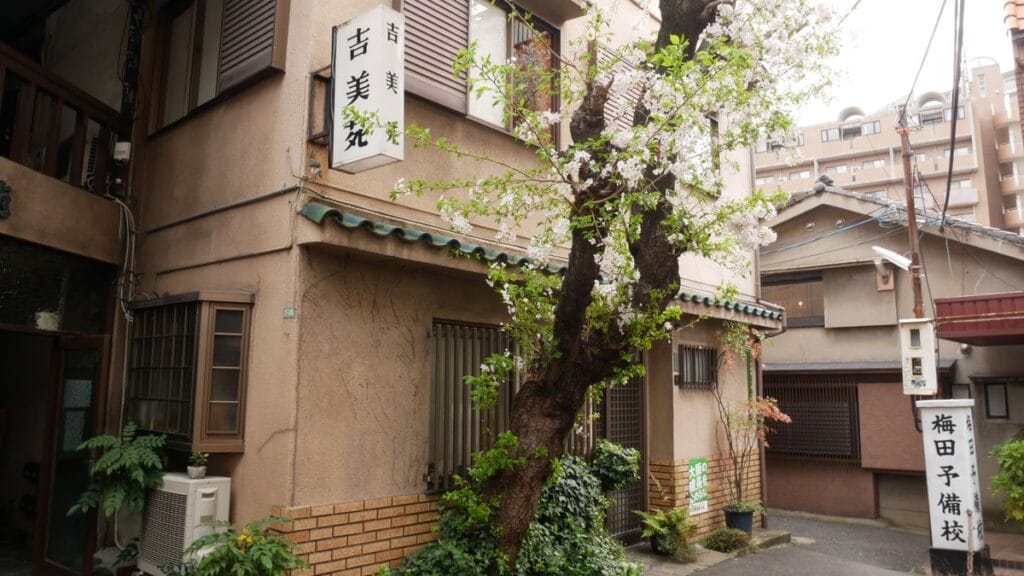
A 15-minute walk north from Shinsaibashi (or one subway stop on the Tanimachi Line to Nakazakichō Station), this neighborhood survived the wartime bombing that destroyed most of central Osaka — and its surviving prewar machiya buildings have been converted into cafés, galleries, vintage clothing stores, and small restaurants that give it a completely different character from the commercial south.
Walk slowly through the narrow streets. The contrast between the building scale (human), the street width (narrow), and the visual detail (handmade signs, aged wood, pot plants in doorways) and the commercial districts you came from is the most instructive single walk in Osaka.
6:00 PM — Namba's Ramen District for Dinner
Return south for evening. Namba's ramen street and the Dotonbori side streets contain an extraordinary concentration of ramen shops, kushikatsu bars, and standing sushi counters. The correct Osaka dinner is not a single restaurant — it is hashigo-zake (梯子酒) style: a drink and snack at one place, then moving to the next, eating a little at each stop over two or three hours.
Day 2: North and East Osaka — Castle, Markets, and Local Life
8:30 AM — Osaka Castle and Nishinomaru Garden (大阪城・西の丸庭園)
Osaka Castle (大阪城) is best approached early — before tour groups arrive and before the heat builds in summer months. The Nishinomaru Garden (西の丸庭園) to the west of the main castle provides the classic view — the restored main tower above the stone walls and the cherry trees (in blossom season) or the deep green of the moat — without requiring entry into the castle itself.
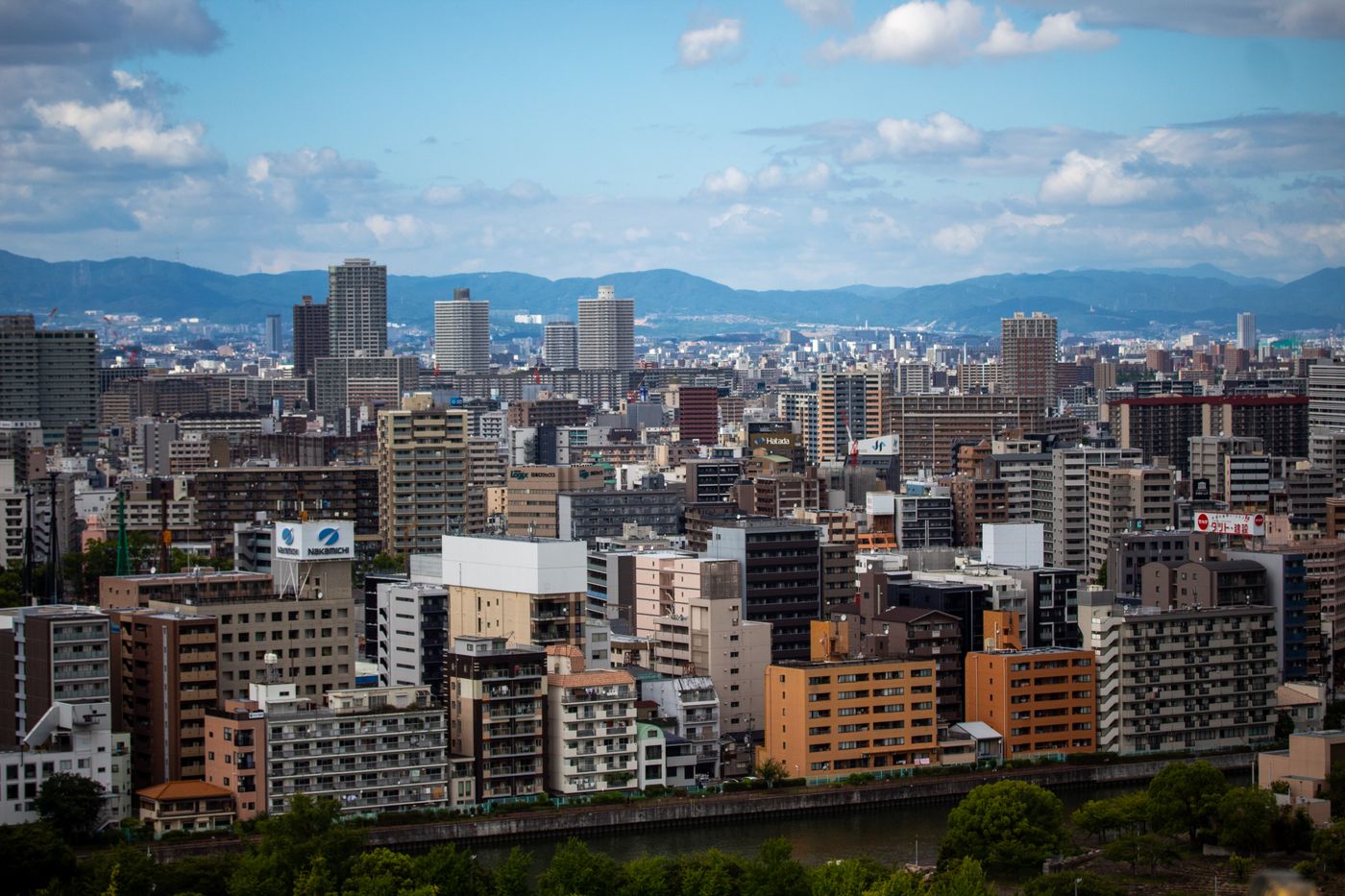
The castle interior (museum) is extensive and well-presented, covering the history of the castle through the Toyotomi and Tokugawa periods. The 8th-floor observation deck provides the best elevated view of central Osaka.
11:30 AM — Tanimachi and Osaka's Old Downtown
Walk south from the castle through Tanimachi (谷町) — Osaka's historical religious district, where over 50 temples and shrines occupy a compact area. The concentration of temple architecture in an otherwise commercial city creates a neighborhood that feels like a different layer of Osaka — quieter, more thoughtful.
1:00 PM — Tennoji Area: Zoo, Department Store, and Shitamachi
The Tennoji (天王寺) area contains Osaka's oldest zoo (天王寺動物園), the Abeno Harukas (あべのハルカス) skyscraper (Japan's second-tallest building, with a 360-degree observation deck), and the Tsūtenkaku (通天閣) tower in Shinsekai — a retro entertainment district that is the most complete surviving piece of prewar Osaka atmosphere.
3:30 PM — Shinsekai: Retro Osaka
Shinsekai (新世界) — full guide in separate article — is the afternoon destination: kushikatsu restaurants, retro bars, the old-fashioned atmosphere of a working-class entertainment district that has maintained its character against all odds.
6:00 PM — Umeda for the Evening
End the day in Umeda (梅田) — Osaka's northern commercial center around Osaka Station. The covered shopping arcades, the underground shopping city, and the rooftop gardens of Osaka Station provide a completely different urban energy from the south. The Sky Building (梅田スカイビル) — two towers connected by a "floating garden" observation deck between them — is one of Osaka's finest architectural experiences and best at sunset.
Where to Stay in Osaka
Luxury
- Conrad Osaka (from ¥45,000 (approx. $300)): Nakanoshima riverside, excellent views.
- The St. Regis Osaka (from ¥50,000 (approx. $335)): Shinsaibashi area, flagship luxury.
Mid-Range
- Cross Hotel Osaka (from ¥12,000 (approx. $80)): Namba area, excellent value and location.
- Dormy Inn Namba (from ¥11,000 (approx. $73)): Natural hot spring, outstanding Namba access.
Budget
- Grids Osaka Namba Hostel (from ¥3,500 (approx. $23)): Best-value Namba hostel.
Planning where to stay in Osaka? Browse our honest hotel picks and area guides.
🏨 Planning where to stay?
Every area guide on this site pairs with honest, station-by-station hotel picks. Start here: Osaka Hotel Guides →