This article may contain affiliate links. If you book through them, we may earn a small commission at no extra cost to you.
On this page
- Introduction: The Ancient Capital's Depth Beyond the Famous Image
- The Deer: What You Need to Know
- Todai-ji (東大寺): The World's Largest Wooden Building
- Kasuga Grand Shrine (春日大社): Lanterns and Deer in the Forest
- Kofuku-ji (興福寺): The Five-Story Pagoda
- Beyond the Usual: What Most Itineraries Miss
- Recommended Base Hotels
Introduction: The Ancient Capital's Depth Beyond the Famous Image
The image of Nara (奈良) in international travel culture is specific and limited: a park full of deer that bow for crackers, a large bronze Buddha, a few temples. This image is accurate as far as it goes — the deer are real, the Buddha is genuinely enormous, and the temples are significant. But it captures perhaps 20% of what makes Nara worth a full day from Osaka.
Nara was Japan's capital from 710 to 784 CE — the Nara period, during which Japanese culture absorbed enormous amounts of continental (Chinese and Korean) influence and produced some of the finest art, architecture, and literature in Japanese history. The temples, shrines, and cultural artifacts of this period that survive in Nara are, in the judgment of many specialists, the most historically important collection of pre-Heian cultural heritage remaining anywhere.
Understanding even a little of this context makes the deer funnier (they genuinely do bow), the Buddha more moving, and the temples — particularly the ones that most itineraries ignore — genuinely extraordinary.
The Deer: What You Need to Know
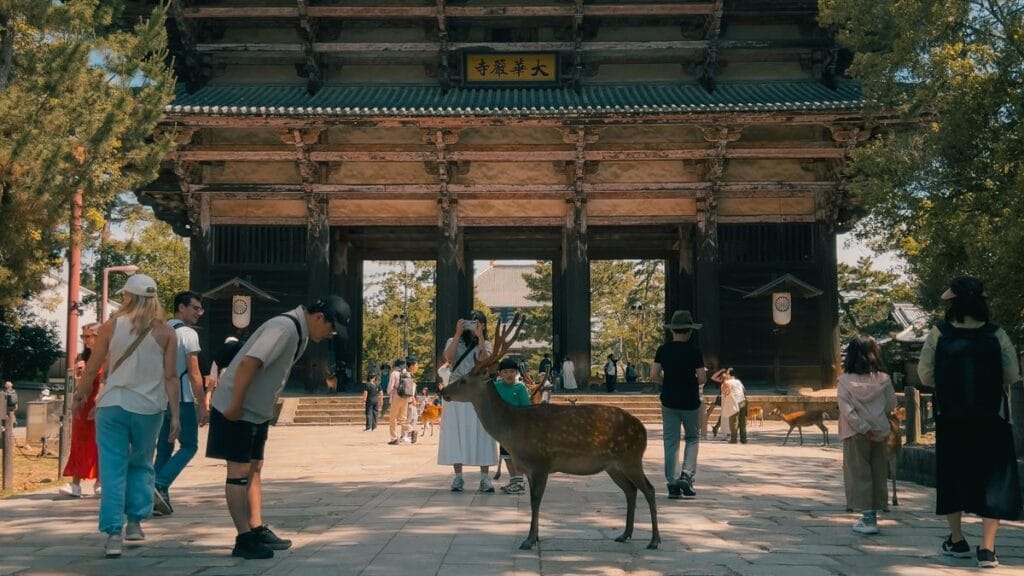
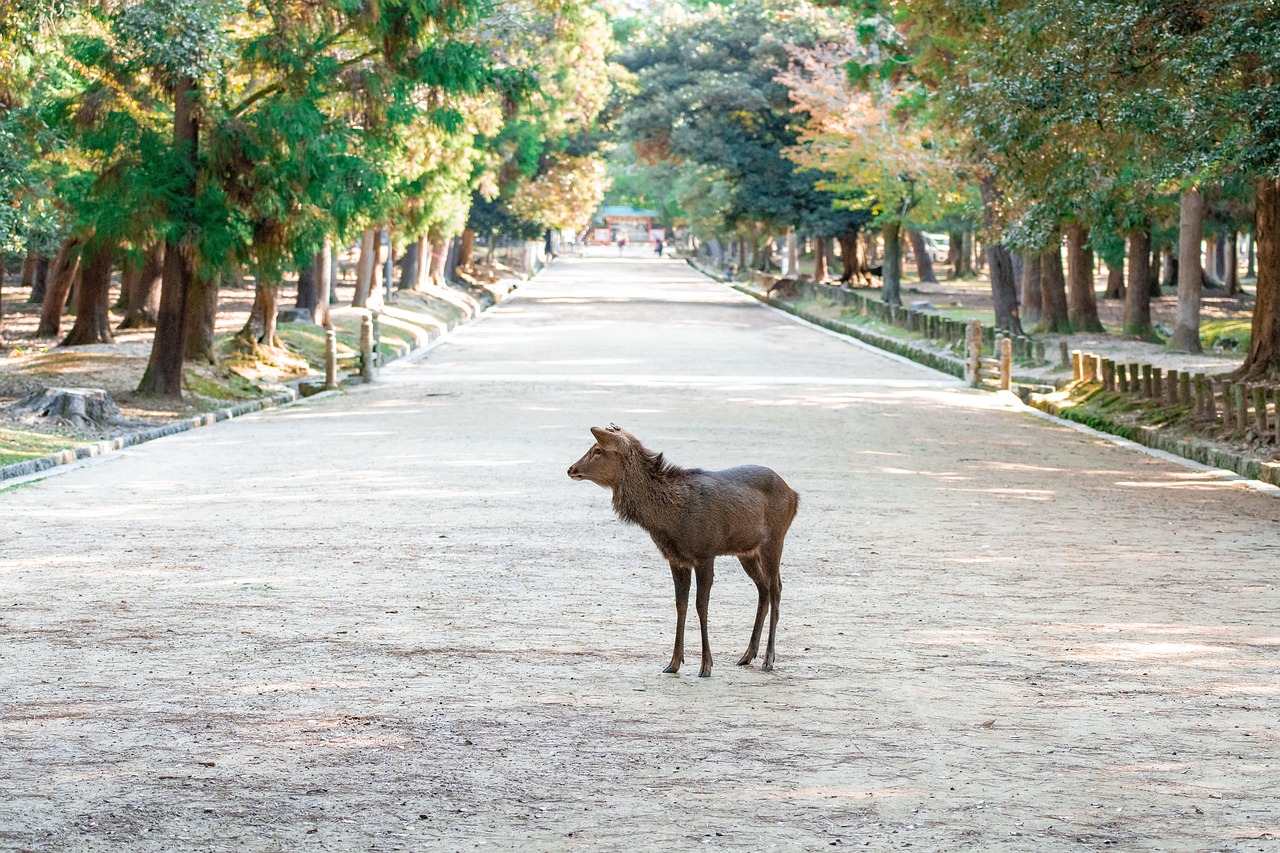
Nara's deer (奈良の鹿) — approximately 1,300 of them — roam freely through Nara Park and the surrounding temple precincts. They are sika deer (ニホンジカ) designated as National Natural Monuments, protected since the Kasuga Grand Shrine established them as divine messengers in the Nara period.
The deer have learned to bow for shika senbei (鹿せんべい / deer crackers) — flat rice crackers sold by vendors throughout the park for ¥200 per packet. The bowing behavior is not trained; it is a naturally developed begging behavior that mimics the head-lowering gesture humans make when offering food.
Practical warnings:
The deer are wild animals and will use their heads (and occasionally their teeth) aggressively if they smell crackers but aren't receiving them immediately.
Hold crackers clearly visible and distribute them quickly.
- Protect bags and pockets — deer have learned to investigate anything that might contain food.
In rutting season (October–November), male deer with antlers can be more aggressive.
Todai-ji (東大寺): The World's Largest Wooden Building
Todai-ji is the most important Buddhist temple in Nara and the most significant Buddhist heritage site in Japan outside Kyoto. Its Great Buddha Hall (大仏殿 / Daibutsuden) is the world's largest surviving wooden building — 57 meters tall, 50 meters wide — and contains the Great Buddha (大仏 / Daibutsu): a bronze Vairocana Buddha 14.98 meters tall, completed in 752 CE.
The scale of the Great Buddha is difficult to convey. The sitting figure's face alone is 5 meters tall. One hand is 2.5 meters tall. The entire statue weighs an estimated 500 tons. The conscious purpose of Todai-ji's construction — ordered by Emperor Shomu as a statement of imperial power and Buddhist protection of the state — required an enormous mobilization of resources: the casting used most of Japan's copper supply, required 50,000 craftsmen, and took eight years.
The practical details: Entry to the Great Buddha Hall costs ¥600. The building opens at 7:30 AM (summer) and 8:00 AM (winter), and arriving early allows the interior to be experienced without the significant crowds that develop from 10:00 AM onward.
The pillar hole (柱の穴): One of the wooden pillars in the Great Buddha Hall's interior has a hole at its base, approximately the size of one of the Great Buddha's nostrils, through which visitors crawl — said to bring enlightenment to those who pass through it. The queue for this is long during busy periods.
Kasuga Grand Shrine (春日大社): Lanterns and Deer in the Forest
Kasuga Taisha — the principal Shinto shrine of Nara — was founded in 768 CE as the tutelary shrine of the Fujiwara clan, who dominated Japanese court politics for centuries. The shrine's forest precinct is immediately adjacent to Todai-ji and offers a complete shift in atmosphere: from the massive Buddhist architecture of the Great Buddha Hall to the dense cedar forest where the shrine's 3,000 stone and bronze lanterns line the approach paths.
The lantern festivals: Twice annually (Setsubun in February and Obon in August), all 3,000 lanterns are lit simultaneously — an event that produces one of Japan's most atmospheric night experiences. During the rest of the year, the lanterns along the forest paths are unlit but visually impressive in their stone arrangement and the shadows they cast.
Kofuku-ji (興福寺): The Five-Story Pagoda
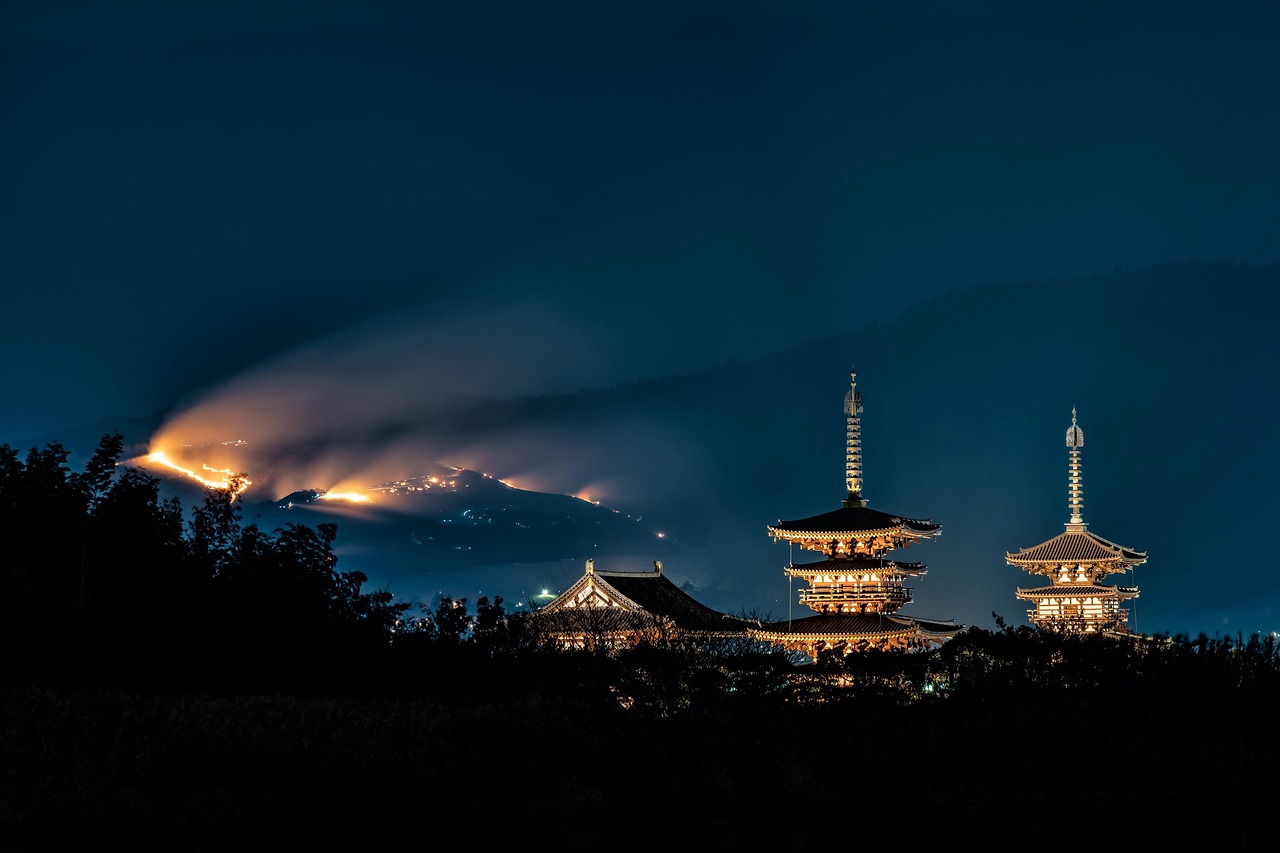
The Kofuku-ji pagoda — its five-story silhouette visible from much of central Nara — is Japan's second-tallest pagoda (50.1 meters) and the defining visual element of the Nara skyline. The pagoda's reflection in Sarusawa Pond (猿沢池) below is one of Nara's most photographed compositions, particularly at dusk when the pagoda is lit against the darkening sky.
The Kofuku-ji complex also contains the National Treasure Hall (国宝館), which houses a stunning collection of Nara-period Buddhist sculpture — the most concentrated display of 8th-century Japanese art in existence. The Ashura sculpture (阿修羅像) — a six-armed, three-faced deity figure from 734 CE, considered by many scholars the finest sculptural work from the Nara period — alone justifies the ¥700 entry fee.
Beyond the Usual: What Most Itineraries Miss
Shin-Yakushi-ji (新薬師寺)
A 20-minute walk east from Todai-ji, Shin-Yakushi-ji is a small 8th-century temple that contains twelve clay guardian figures (十二神将) — some dating from the Nara period — surrounding the main Yakushi Buddha. The quality of these figures is exceptional and the temple receives a fraction of Todai-ji's visitors.
Naramachi (ならまち): Edo-Period Merchant Town
South of Kofuku-ji, the Naramachi district preserves the street pattern and building types of the Edo-period merchant town that grew around the older religious sites. Small museums, traditional craft workshops, and cafés in preserved machiya provide an Edo-period urban atmosphere that most Nara itineraries never reach.
Isuien Garden (依水園): Nara's Finest Garden
Isuien — two connected gardens in the northern Higashiyama section, one from the 17th century and one from the 19th — uses the borrowed scenery of the Wakakusa Mountain and the Todai-ji pagoda visible above the garden walls to create one of the finest examples of shakkei garden design in Japan. Entry ¥1,200.
Recommended Base Hotels
Nara Hotel (Luxury / from ¥30,000): Historic 1909 hotel adjacent to Nara Park — the finest accommodation option in the city.
- Super Hotel Nara (Budget / from ¥8,000): Efficient, clean, central.
Planning where to stay in Osaka? Browse our honest hotel picks and area guides.
🏨 Planning where to stay?
Every area guide on this site pairs with honest, station-by-station hotel picks. Start here: Osaka Hotel Guides →