This article may contain affiliate links. If you book through them, we may earn a small commission at no extra cost to you.
On this page
Introduction: The Last Tropical Frontier of Japan
At the southwestern extreme of Japan's territory — 410 km from Okinawa main island, closer to Taiwan than to Tokyo — the Yaeyama Islands (八重山諸島) constitute the most remote, the most tropical, and arguably the most beautiful island group in Japan. The archipelago's largest island, Ishigaki (石垣島), serves as the transportation hub for a collection of smaller islands — Taketomi (竹富島), Iriomote (西表島), Kohama (小浜島), Kuroshima (黒島), Yonaguni (与那国島) — each with a distinct character and distinct reasons to visit.
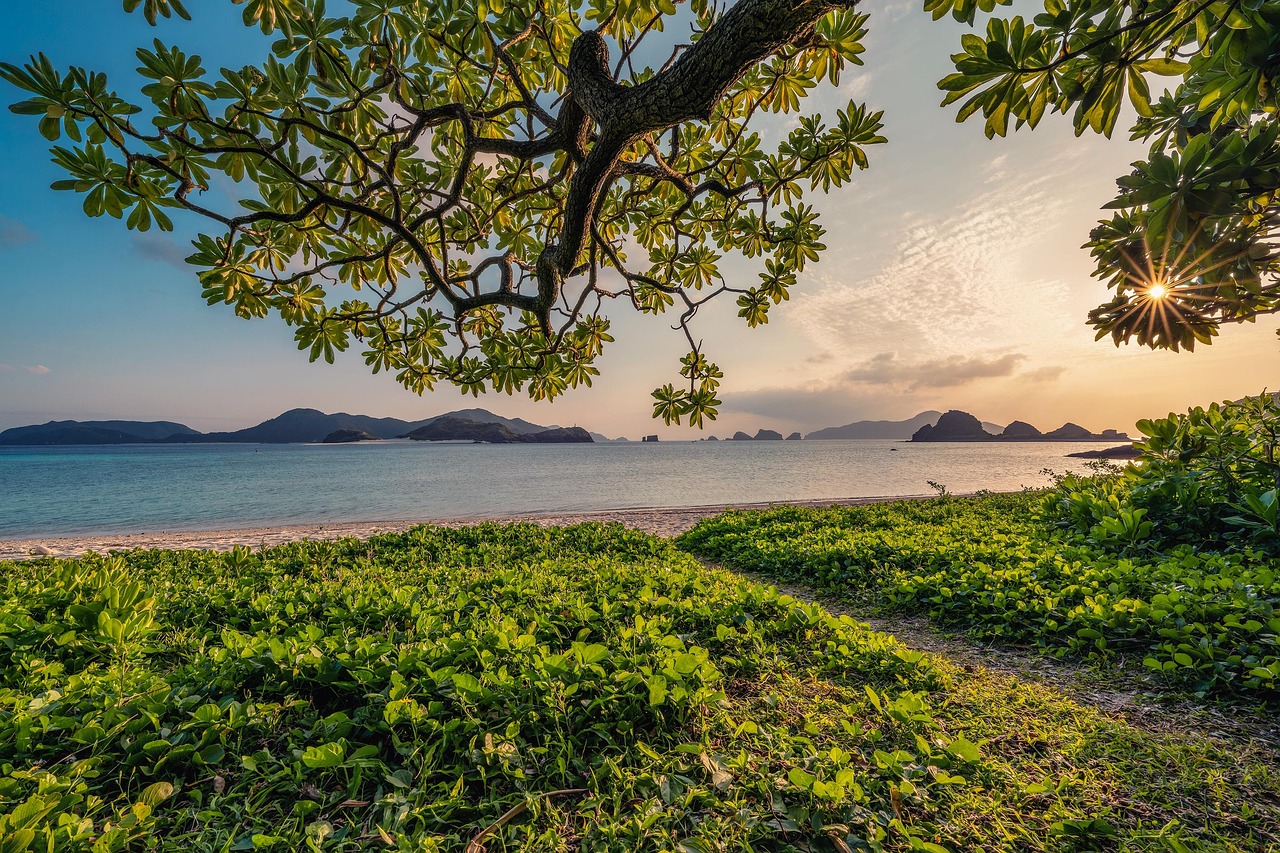
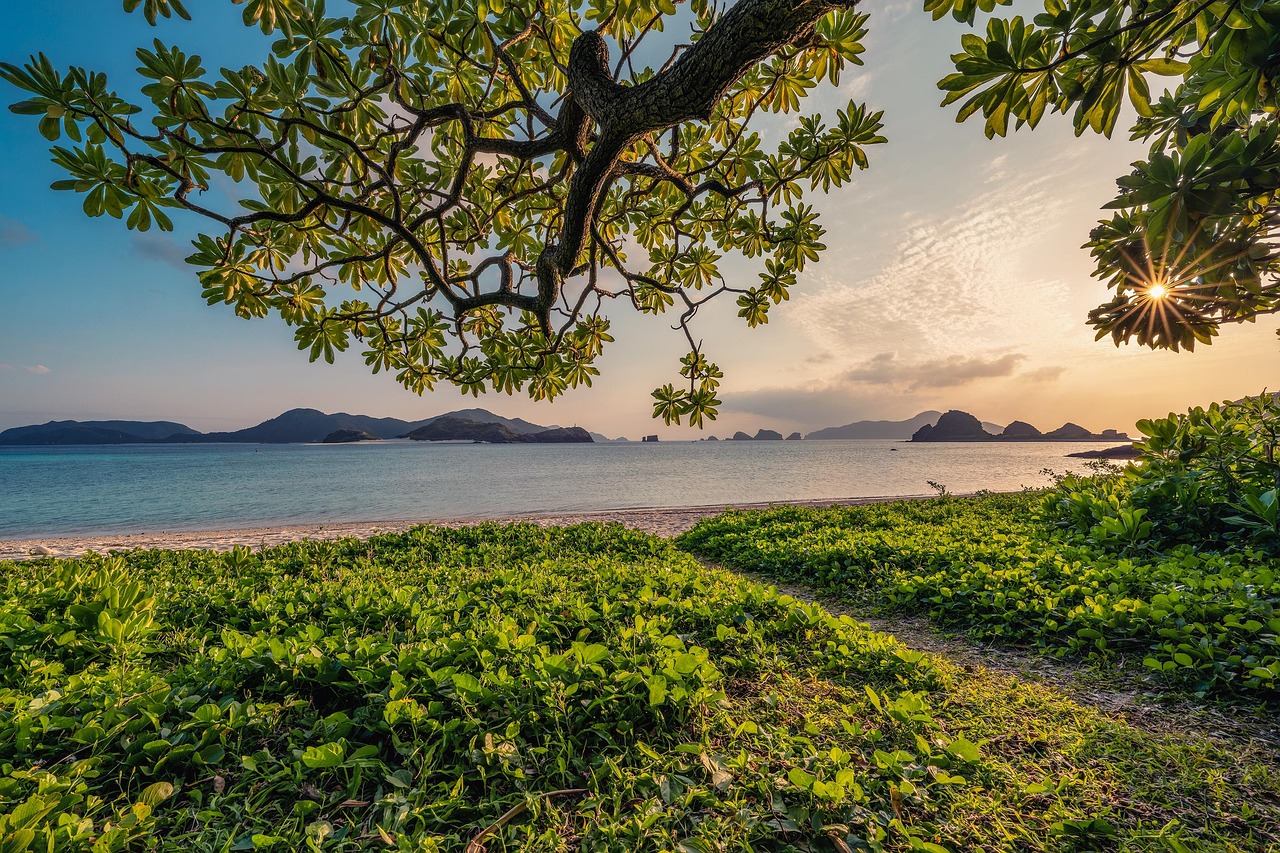
The Yaeyamas are subtropical rather than tropical by strict meteorological definition, but the visual vocabulary — mangrove rivers, coral sand beaches of white intensity, water colors shifting from turquoise to deep blue, star sand beaches, subtropical forest — belongs to the tropics. The Kabira Bay (川平湾) of Ishigaki, consistently rated among Japan's most beautiful bays, presents a combination of coral islands, white sand, and the specific blue-green of shallow tropical water that produces photographs indistinguishable from the Maldives.
Ishigaki Island (石垣島): The Gateway
Ishigaki is the administrative and transportation center of the Yaeyamas — a city of approximately 50,000 people with an airport, a port connecting to the smaller islands, and enough infrastructure to serve as a comfortable base while providing immediate access to extraordinary nature.
Kabira Bay (川平湾): Japan's Most Beautiful Bay
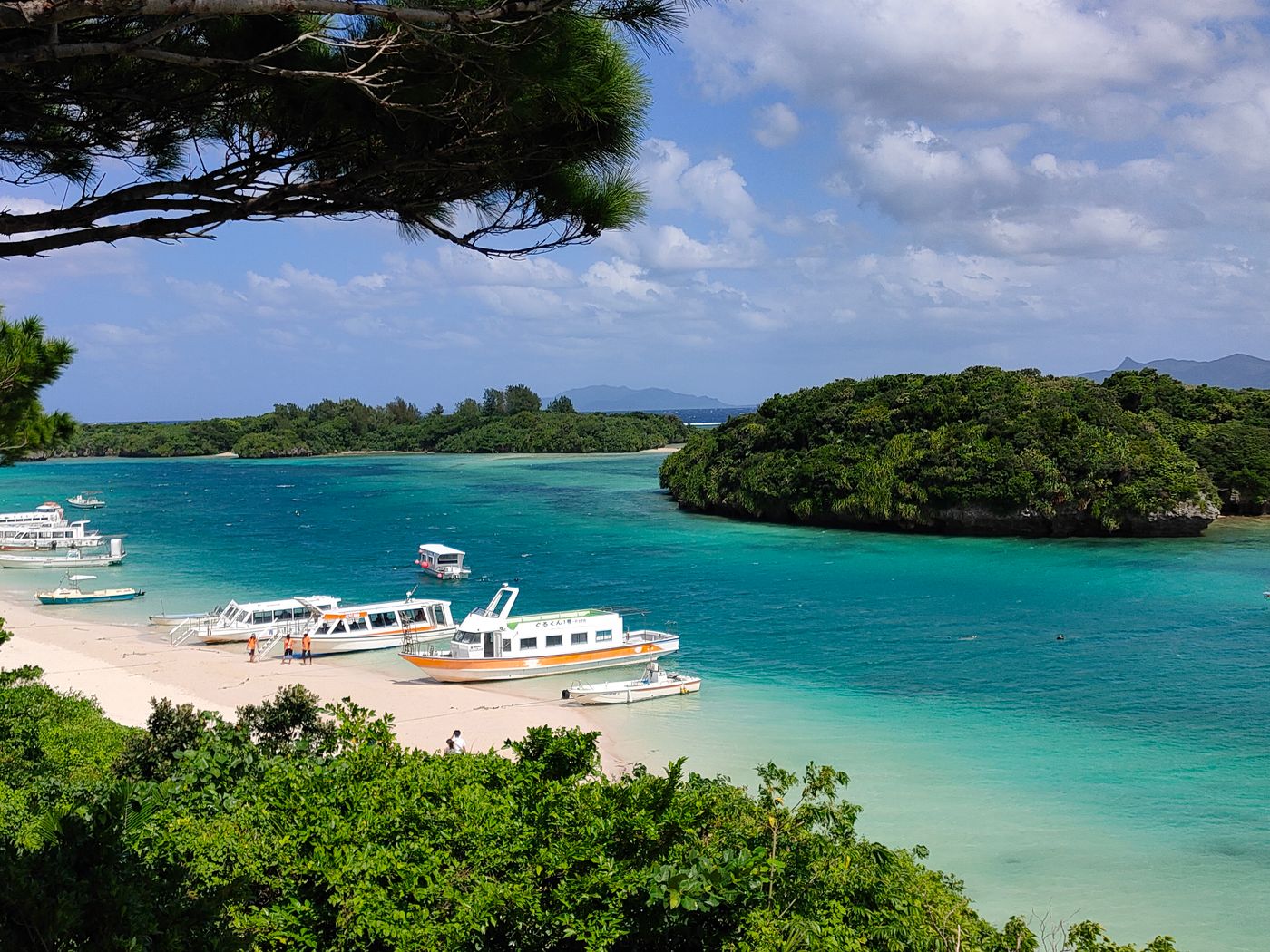
Kabira Bay — on the northwest coast of Ishigaki — is consistently ranked among Japan's most beautiful bays and is the most photographed natural landscape in Okinawa Prefecture. The bay is enclosed by a curve of shoreline with several small forested islands sitting in the shallow water, the white sand seafloor visible through the water at depths of 3–5 meters, and the water color shifting from pale turquoise at the shore to deep cobalt at the open bay entrance.
Glass-bottom boats: Swimming and diving are prohibited in Kabira Bay (to protect the black pearl oyster cultivation that has operated here for decades), but glass-bottom boat tours (approximately ¥1,200, 30 minutes) allow viewing of the coral and marine life below from the boat surface. The pearl farm that operates in the bay is also visible, and the combination of the bay's extraordinary color and the working marine agriculture gives the visit a dual character.
Yaeyama Palm Forest (米原のヤエヤマヤシ群落)
On the central-western coast of Ishigaki, a stand of Yaeyama palms (ヤエヤマヤシ) — a species endemic to the Yaeyama Islands, found nowhere else in the world — grows in a limestone forest. The palms' distinctive appearance (tall, straight trunks topped with large feathered fronds) creates a landscape visually unlike anything elsewhere in Japan.
Star Sand Beaches (星砂の浜)
Several beaches in the Yaeyamas — particularly on Taketomi Island and the coast of Iriomote — have sand composed significantly of star sand (星砂 / hoshi-zuna): the calcified skeletal remains of foraminifera (Baculogypsina sphaerulata), microscopic organisms whose shells have a star-like form when viewed closely. The sand's specific texture is immediately distinct — lighter, more irregular, and less uniform than mineral sand — and collecting a small amount in the plastic containers sold at local shops is the standard Yaeyama souvenir activity.
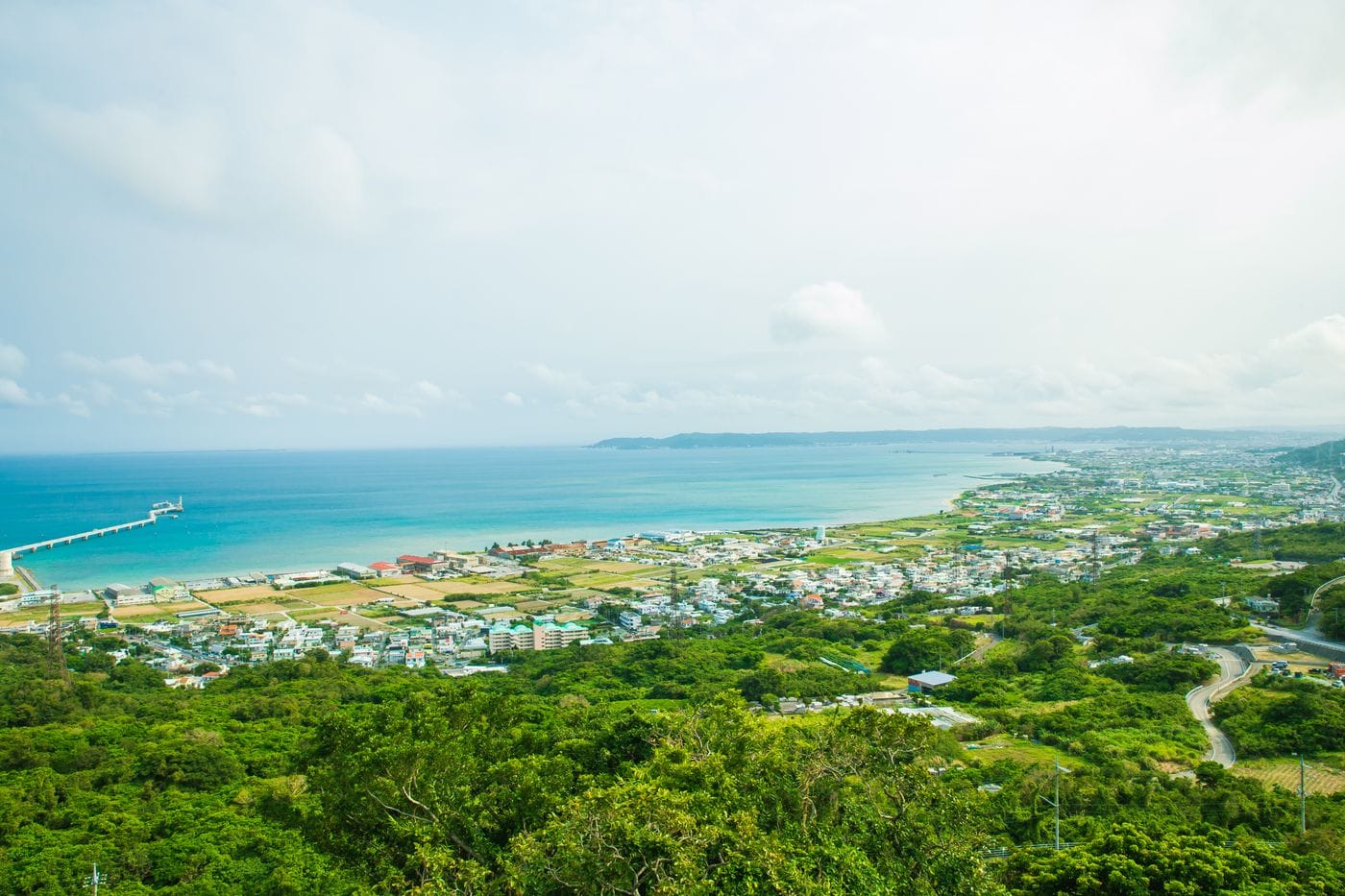
Taketomi Island (竹富島): The Village That Refused to Change
Taketomi Island — 10 minutes by high-speed ferry from Ishigaki Port — is a tiny island of approximately 350 people that has maintained the traditional Ryukyuan village architecture more completely than anywhere else in the Yaeyamas: white coral sand streets, low stone walls, red-tiled roofs with ceramic shisa (獅子) guardians, bougainvillea overflowing the walls in brilliant magenta, the community well (ヒナイ / Hinai) at the village center.
Suiyukankai (water buffalo cart ride): The standard Taketomi activity — a slow ride through the village streets on a cart pulled by a water buffalo, while the cart driver plays sanshin (三線) — Okinawa's three-stringed instrument — and sings Yaeyama folk songs. The combination of the unhurried pace, the village scenery, and the music creates an experience of profound tropical languor.
Kondoi Beach (コンドイビーチ): The best beach on Taketomi — a sweep of white coral sand on the island's western shore, the shallow water extending far offshore before dropping to depth, and the Yaeyama island silhouettes visible on the horizon.
Kohama Island (小浜島): Sugarcane and Resort
Kohama Island — the setting for the beloved Japanese TV drama "Churasan (ちゅらさん, 2001)" — is an island of sugarcane farms, coral beaches, and a single large resort (Haimurubushi resort) that has carefully maintained the island's low-key agricultural character. The view from the Shugaren hill (シュガーロードの丘) over the sugarcane fields to the sea beyond is one of the Yaeyamas' most characteristic landscapes.
Kuroshima (黒島): The Island of Cattle
Kuroshima — nicknamed "Heart Island" for its shape when seen from above — has a human population of approximately 200 and a cattle population of over 2,000. The island's economy is centered on cattle breeding (supplying Wagyu cattle to the mainland), and the sight of cattle grazing among the subtropical vegetation, with coral beaches on either side, is unique in the Japanese island experience.
Getting Between Islands
The Yaeyama Kanko Ferry (八重山観光フェリー) and Anei Kanko (安栄観光) operate multiple daily high-speed ferry services between Ishigaki Port and all major Yaeyama islands. Journey times range from 10 minutes (Taketomi) to 40 minutes (Iriomote). A multi-island day trip — typically combining Taketomi (morning) and Iriomote (afternoon) — is the most popular visitor itinerary.
Recommended Base Hotels
Ishigaki
- Fusaki Beach Resort Hotel & Villas (Luxury / from ¥28,000): Finest resort on Ishigaki, private beach.
- ANA InterContinental Ishigaki Resort (Luxury / from ¥32,000): Premium resort with full facilities.
- Hotel East China Sea (Mid-range / from ¥12,000): Central Ishigaki, convenient for ferry connections.
Taketomi
Taketomi-jima Nohara-so (Mid-range / from ¥15,000 per person with meals): Traditional red-tile inn within the village.
Planning where to stay in Kyushu & Okinawa? Browse our honest hotel picks and area guides.
🏨 Planning where to stay?
Every area guide on this site pairs with honest, station-by-station hotel picks. Start here: Okinawa Hotel Guides →