This article may contain affiliate links. If you book through them, we may earn a small commission at no extra cost to you.
On this page
Introduction: The Street That Made Subculture into Style
Harajuku (原宿) — specifically the area around Takeshita-dori (竹下通り) and its surroundings — became internationally famous through "FRUiTS" magazine (1997–2017), photographer Shoichi Aoki's documentation of the extraordinary visual creativity that Japanese youth were expressing in street fashion in the late 1990s and early 2000s. The images — intensely styled individuals in elaborate costumes that drew from gothic, Lolita, punk, fairy kale, and entirely idiosyncratic visual languages — circulated globally and established Harajuku as the world's reference point for youth fashion experimentation.
The 2026 version of Harajuku is more complex than either the peak-era mythology or the "it's all gone" lament that frequently replaces it — the street fashion scene has evolved rather than disappeared, moved into different venues and different social channels, and continues to produce genuine creative expression alongside the tourist-souvenir infrastructure that has colonized Takeshita-dori's commercial surface.
The Historical Fashion Tribes
Lolita (ロリータ ファッション)
Lolita fashion is the most enduring and most internationally recognized of Harajuku's distinct fashion traditions — a deliberately anti-sexualized doll aesthetic drawing from Victorian and Rococo European fashion (wide petticoat skirts, lace, ribbons, elaborate headwear) combined with Japanese craftsmanship and a specific attitude of deliberate innocence and interiority.
The Lolita philosophy: The fashion philosopher Novala Takemoto articulated Lolita as a refusal of conventional Japanese femininity (the worker bee, the wife/mother, the sexualized service worker) — a declaration of self-ownership through the adoption of an elaborate, expensive, demanding aesthetic that exists to please the wearer rather than observers.
Sub-styles (2025):
- Sweet Lolita (スウィートロリータ): Pastel colors, maximum girlishness, the most recognizable internationally.
Gothic Lolita (ゴシックロリータ): Black and white palette, macabre elements, a more severe version of the basic silhouette.
Classic Lolita (クラシックロリータ): More muted palette, more directly Victorian references, often considered the most "historically accurate" version of the aesthetic.
Wa-Lolita (和ロリータ): The hybrid of Lolita and traditional Japanese textile and costume elements — kimono fabrics in Lolita silhouettes.
Where to find Lolita fashion in 2025: The dedicated brand shops — Baby, The Stars Shine Bright (ベイビー、ザ スターズ シャイン ブライト) in Harajuku, Angelic Pretty (アンジェリックプリティ) in Shinjuku, Innocent World (イノセント ワールド) in Shinjuku — remain active. The community's primary social gathering is Shinjuku's monthly Lolita flea market and various organized events rather than street spontaneous display.
Decora (デコラ)
Decora — maximum colorful accessory accumulation, layered primary colors, the visual vocabulary of childhood toys and candy applied to adult fashion — was the most visually extreme of Harajuku's main subcultures at its peak, associated with the artist Kyary Pamyu Pamyu (きゃりーぱみゅぱみゅ) whose early aesthetic directly embodied the decora spirit.
2025 status: Decora has diminished as a street phenomenon but persists in event contexts and among committed practitioners who document their looks primarily through social media rather than street visibility.
Gyaru (ギャル)
Gyaru — a fashion and lifestyle culture emphasizing tanned skin, bleached or colored hair, dramatic eye makeup (particularly the application of false lashes and colored contacts to create exaggeratedly large eyes), and fashion influenced by California beach culture but transformed into something specifically Japanese — was one of the most commercially significant Harajuku subcultures of the 1990s–2000s.
Sub-categories at peak:
- Kogal (コギャル): School uniform-influenced gyaru, particularly associated with Shibuya's 109 building (渋谷109).
Ganjiro (ガングロ): The extreme deep-tan variant — faces darkened to extreme bronze/blackened shades, white or silver eye and lip makeup creating a high-contrast effect.
- Yamamba (山姥): Even more extreme than ganguro — the aesthetic pushed to its most radical expression.
2025 status: Gyaru culture experienced a significant decline in the 2010s — the Shibuya 109 building retains some gyaru-adjacent fashion but at significantly reduced intensity. A gyaru revival (ギャル復活) movement among Gen-Z has emerged in recent years, reinterpreting the aesthetics through contemporary social media contexts.
Visual Kei (ヴィジュアル系)
Visual Kei is technically a music genre (Japanese rock with an emphasis on extreme visual presentation by band members — elaborate costuming, dramatic makeup, hair in multiple colors) that has a fashion parallel — the audience and fan community adopting similar aesthetic elements as an expression of identification with the music culture.
2025 status: Visual Kei as a fashion tribe is more concentrated in the live music districts (Shinjuku, Shibuya) surrounding the concert venues where the music is performed than in Harajuku street display.
Where to Find Street Fashion in 2025
The shift from street to event:
The most elaborate expressions of Tokyo youth fashion subculture have largely moved from spontaneous street display to organized events:
Harajuku Fashion Walk: A regular organized event (typically monthly) where participants in elaborate fashion meet at a designated Harajuku location and walk together — the event format provides a social context for displaying fashion that the street no longer spontaneously provides.
Comiket and adjacent events: Major anime and manga events draw participants in elaborate fashion that overlaps with the traditional subculture categories.
Ikebukuro's Otome Road: A shift of certain fashion subcultures (particularly those connected to BL / Boys' Love manga culture and certain game fandoms) toward Ikebukuro rather than Harajuku as a concentration point.
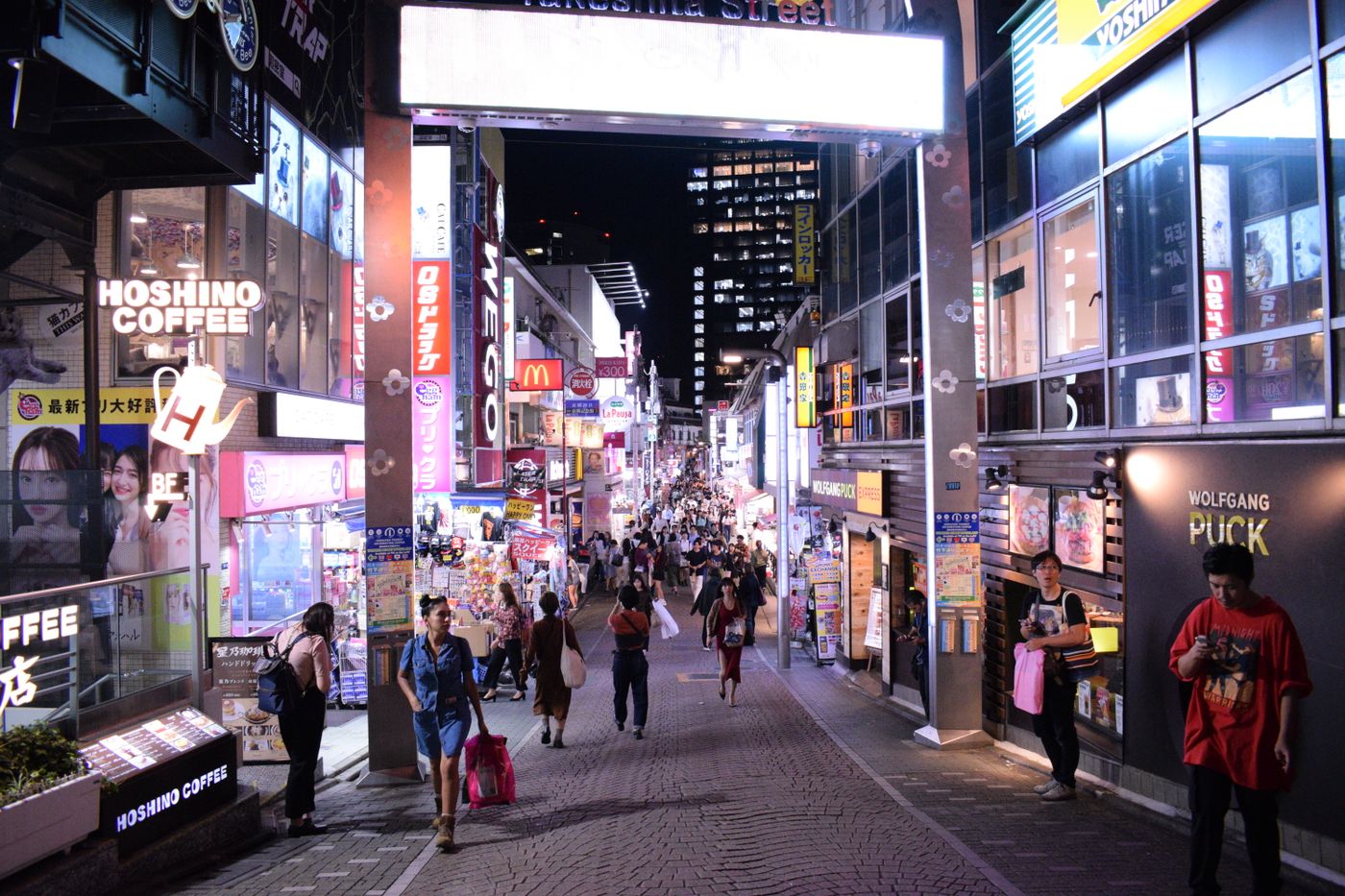
Takeshita-dori in 2026: The street itself remains a fashion shopping street, though the merchandise trends toward mass-market festival fashion (rainbow fluffy accessories, themed headwear) rather than the artisan-level subculture fashion of the peak era. The street is still worth visiting as a visual experience and for specific shops (used clothing, imported jewelry, accessory surplus) but the spontaneous encounter with extreme fashion that "Fruits" magazine documented is not reliably present.
Ura-Harajuku (裏原宿 / "behind Harajuku"): The streets behind Takeshita-dori — Urahara (ウラハラ) — maintain a more serious, design-oriented fashion culture, focused on streetwear and limited-edition collaboration pieces from brands like Comme des Garçons (CDG), A Bathing Ape (BAPE), and their contemporaries. This is where Japanese street fashion's influence on global fashion most directly manifests.
Planning where to stay in Tokyo? Browse our honest hotel picks and area guides.
🏨 Planning where to stay?
Every area guide on this site pairs with honest, station-by-station hotel picks. Start here: Hotel Guides by Station →