This article may contain affiliate links. If you book through them, we may earn a small commission at no extra cost to you.
On this page
Introduction: Japan's Underwater World
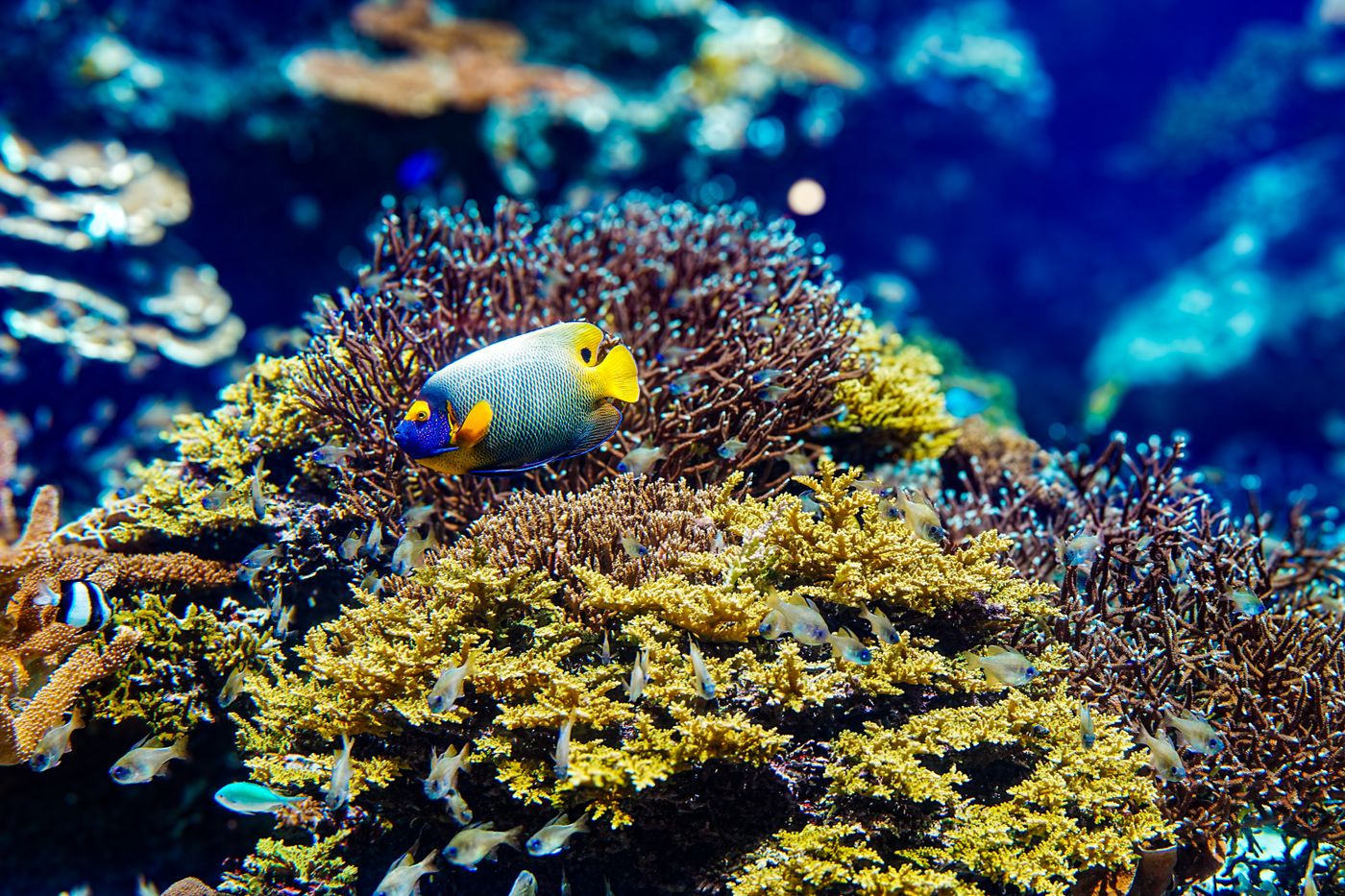
The waters surrounding the Okinawa island chain — where the warm Kuroshio Current (黒潮 / Japan Current) flows north from the Philippine Sea — support coral reef ecosystems of extraordinary diversity. The combination of warm water temperatures (24–29°C year-round), exceptional visibility (often exceeding 30 meters), and the biodiversity of tropical Indo-Pacific reef systems makes Okinawa one of Asia's premier diving destinations and Japan's undisputed diving capital.
The range of diving experiences across the Okinawan archipelago is exceptional: from the famous Blue Cave (青の洞窟) at Cape Maeda on the main island (accessible to complete beginners) to the hammerhead shark schools of Yonaguni Island's oceanic sites (requiring experience and current management skills), the islands offer decades of diving exploration at every skill level.
Main Island Okinawa Diving
The Blue Cave (青の洞窟 / Ao no Dokutsu): Okinawa's Most Famous Dive
The Blue Cave at Maeda Cape (真栄田岬) in Onna Village is the single most visited dive site in Japan. The cave itself is a sea cave whose narrow entrance admits limited direct sunlight — the light refracts off the white sand seafloor to fill the cave interior with an intensely vivid electric blue that photographs beautifully and impresses even experienced divers.
The site is appropriate for complete beginners (depth: 5–7 meters in the cave) and can be done as a snorkeling tour or an entry-level experience dive with a certified instructor. The combination of the blue cave phenomenon, the coral reef immediately outside the cave entrance, and the accessibility from Naha (approximately 60 minutes by car) makes this the standard introduction to Okinawa diving.
Practical note: The Blue Cave is extremely popular — dozens of dive operations run tours here simultaneously during peak season. For a less crowded experience, first entry (before 8:00 AM) or late afternoon sessions are preferable to the midday peak.
Manza (万座): The Wall and the Arch
Manza — on the west coast of the main island near the major resort hotels — has several excellent sites beyond the Blue Cave:
Manza Dream Hole: A spectacular vertical wall dropping from 15 meters to beyond recreational diving limits, covered with soft corals (sea fans, whip corals) and frequented by sea turtles.
Manza Arch: A natural arch at approximately 18 meters depth, through which the standard dive route passes — the framing of open blue water through the arch, occasionally with a turtle or school of fish visible beyond, is one of the main island's most photographed underwater compositions.
Kerama Islands (慶良間諸島): World-Class Coral
The Kerama Islands (Zamami, Aka, Geruma) — 40 km west of Naha, accessible by high-speed ferry (approximately 50–70 minutes) — offer the finest diving and snorkeling available from the main island. The waters were designated a National Park in 2014, and the coral health and marine biodiversity here are significantly superior to most main island sites.
Kerama Blue (ケラマブルー): The extraordinary water color of the Kerama lagoons — a vivid, transparent turquoise that is unlike the color of water anywhere else in Japan — is the most immediate impression of arriving at these islands. The color results from the combination of water clarity, the white sand seafloor, and the specific depth range of the lagoons.
Sea turtles: The Kerama Islands support one of Japan's healthiest green sea turtle populations. Turtle encounters on virtually every dive — the animals habituated to divers and moving unhurriedly through the coral — are the most reliable marine wildlife experience in Okinawa.
Ishigaki Island: Hammerhead Sharks
Ishigaki Island's (石垣島) oceanic dive sites provide Okinawa's most dramatic large animal encounters:
Manta Scramble (マンタスクランブル): Cleaning Station Diving
Manta Scramble at Kabira Bay (川平湾) area is the most reliable manta ray encounter site in Japan — a cleaning station at approximately 15–20 meters where oceanic manta rays (ナンヨウマンタ) congregate to be serviced by cleaner wrasse. During the peak season (June–October), multiple mantas are routinely present simultaneously, approaching divers with apparent indifference at very close range.
Yaeyama Hammerheads: The Deep School
The dive sites around Yonaguni (与那国) and the deep oceanic channels near Ishigaki attract scalloped hammerhead sharks (シュモクザメ) in schools during the winter months (December–March). The encounter — hundreds of hammerheads in formation in open water at 20–30 meters, the school sometimes blocking out the light above — is one of the most intense large-animal diving experiences in Asia.
Yonaguni: The Underwater Monument
Yonaguni Island (与那国島) — Japan's westernmost point, closer to Taiwan than to Okinawa main island — has a specific diving distinction: the Yonaguni Underwater Monument (与那国海底遺跡), a large geological formation at 5–25 meters depth whose regular, flat surfaces and sharp angles have generated ongoing debate about whether they represent natural geological formation or human construction.
Whether natural or artificial (the academic consensus leans toward natural, but the debate continues), the underwater monument is one of the most atmospheric dive sites in Japan — the scale of the formations, the hammerhead sharks that frequent the area, and the remoteness of the island itself create an experience of frontier diving unavailable elsewhere in Okinawa.
Diving Logistics
Dive operators: Every Okinawan island has multiple certified dive operators offering everything from beginner experience dives (体験ダイビング / taiken daibingu) to advanced multi-day liveaboard trips. English-speaking guides are available throughout the main island and at Ishigaki; English availability at more remote islands is more limited.
Certification: For the main island's introductory sites, no certification is required (supervised experience dives are legally available). For Kerama and Ishigaki, Open Water certification is expected. For the advanced hammerhead and blue water sites at Yonaguni, Advanced Open Water and current management experience are strongly recommended.
Visibility by season: The best visibility is typically March–May (before the rainy season / tsuyu) and October–December (after typhoon season). Typhoon season (July–September) brings unpredictable conditions and some site closures.
Recommended Base Hotels
- Kariyushi Beach Resort Ocean Spa (Mid-range / from ¥18,000): Onna Village, near Blue Cave and Manza sites.
- ANA InterContinental Manza Beach Resort (Luxury / from ¥35,000): Direct beach access, dive operator on-site.
- Ishigaki Island Hotels (various): See dedicated Ishigaki article.
Planning where to stay in Kyushu & Okinawa? Browse our honest hotel picks and area guides.
🏨 Planning where to stay?
Every area guide on this site pairs with honest, station-by-station hotel picks. Start here: Okinawa Hotel Guides →