This article may contain affiliate links. If you book through them, we may earn a small commission at no extra cost to you.
On this page
Introduction: Japan's Most Intact Small Castle Town
Tsuwano (津和野) — a town of approximately 7,000 people in the mountains of Shimane Prefecture, 3 hours from Hiroshima or Shin-Osaka by Shinkansen and the Yamaguchi Line (the famous SL Yamaguchi steam train has been suspended in recent years for locomotive repairs — check whether it has returned) — is one of the most complete surviving examples of an Edo-period jōkamachi (城下町 / castle town) in Japan. Where larger cities like Kyoto and Kanazawa have preserved pockets of historical character amid modern development, Tsuwano's decline in population and economic significance since the Meiji period has resulted in the preservation of its Edo townscape almost by default — there was insufficient commercial pressure to redevelop what the town already had.
The Town Character
Tonomachi (殿町): The Preserved Samurai District
Tonomachi Street — the primary preserved historical street — runs through the former samurai residential area of the castle town. The specific character: white-walled kura (倉 / storehouses), tile-roofed samurai residences whose gates and walls face the street, and the famous carp-filled irrigation channels (錦鯉の流れる掘割) running alongside the pavement.
The carp channels: The town's most immediately distinctive visual feature — clear water channels along both sides of Tonomachi containing large, brilliantly colored koi carp whose presence dates to the Edo period (the channels were originally used for fire prevention water supply; the carp were added to improve water quality by feeding on debris). The combination of the preserved architecture and the moving color of the carp creates a visual composition unlike any other comparable Japanese historical street.
Scale and pace: Tsuwano's Tonomachi is genuinely small — approximately 400 meters of preserved street, walkable in 10 minutes, rewarding of a much longer visit. The pace appropriate to Tsuwano is not the rushing efficiency of Kyoto day-trippers but the slower attention of someone who has traveled specifically to be in this particular place.
Tsuwano Castle Ruins (津和野城跡)
The Tsuwano Castle — originally built in the 13th century, significantly expanded and modified through the Edo period — now exists as ruins on the mountain above the town, accessible by chairlift (リフト) and a short walk. The mountain location provides views across the basin in which Tsuwano sits — the surrounding mountains and the compact town below explain the location's defensive logic and its post-feudal isolation.
The stone walls (ishigaki) of the castle, increasingly colonized by vegetation but intact in their essential form, are a specific pleasure of the ruins-walking experience — the craftsmanship of the original construction visible in the precise fitting of stone against stone across several centuries of exposure.
Taiko-dani Inari Shrine (太鼓谷稲成神社)
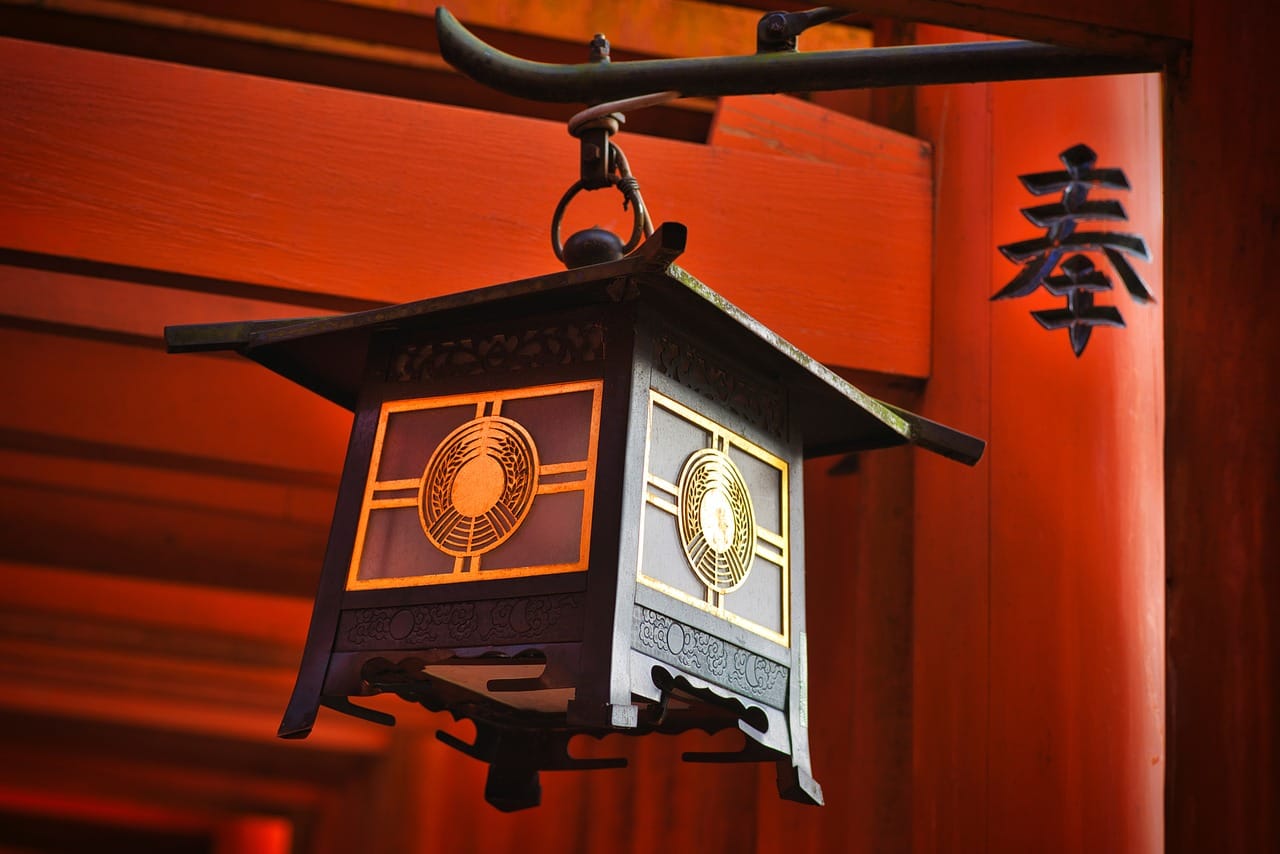
One of Japan's most dramatically positioned Inari shrines — Taiko-dani sits on the mountain slope above the town, approached through a corridor of approximately 1,000 vermilion torii gates ascending the hillside. The visual effect is comparable to Fushimi Inari in Kyoto but with Tsuwano's emptiness creating a quieter, more contemplative version of the same experience.
The shrine's position on the slope provides alternating views down through the torii corridor and across the town and basin — the combination of the compressed red corridor and the openings to wider landscape creates a walking experience of unusual visual rhythm.
The Mori Ōgai Connection
Mori Ōgai (森鴎外, 1862–1922) — one of Meiji Japan's most important literary figures, simultaneously a military surgeon who rose to Surgeon General and a novelist, poet, and translator who introduced European Romanticism to Japanese literature — was born in Tsuwano. The town's Mori Ōgai Memorial Museum (森鴎外記念館) and his preserved childhood home provide a specific literary pilgrimage for readers of his work.
Ōgai's significance for understanding Meiji Japan: he embodied the productive tension of the period — a man who studied medicine in Germany, who translated European literature into Japanese, who served as the imperial army's senior medical officer, and who simultaneously produced literary work exploring the human cost of Japan's forced modernization. His novel "The Dancing Girl" (舞姫, 1890), about a Japanese student in Germany torn between a German love and duty to Japan, was drawn from his own experience and became one of Meiji literature's central texts.
The Christian Persecution Memorial
As covered in the Meiji Restoration article — the Otome Tōge chapel (乙女峠マリア聖堂) above Tsuwano commemorates the roughly 150 Urakami Christians exiled here from 1868, dozens of whom died during the forced apostasy campaign. The chapel — a simple structure on the mountain pass — is a site of genuine historical gravity that adds an additional layer to Tsuwano's accumulated history.
Recommended Base Hotels
Wataya (津和野温泉 宿 わた屋) (Mid-range / from ¥15,000 per person): The town's hot-spring ryokan, with traditional character.
- Noren Yado Meigetsu (のれん宿 明月) (Mid-range / from ¥12,000 per person): Long-established inn in the old town.
Planning where to stay in Chugoku? Browse our honest hotel picks and area guides.
🏨 Planning where to stay?
Every area guide on this site pairs with honest, station-by-station hotel picks. Start here: Hotel Guides by Station →