This article may contain affiliate links. If you book through them, we may earn a small commission at no extra cost to you.
On this page
Introduction: The Textile District That Dressed the Imperial Court
Nishijin (西陣) — the weaving district of northwestern Kyoto, roughly bounded by Imadegawa and Kuramaguchi streets to north and south, Horikawa and Senbon streets to east and west — has been the center of Japanese luxury textile production since the Heian period (794–1185). The specific product of Nishijin: high-quality silk textiles for kimono (着物) and particularly obi (帯), the wide decorative sash that is the most visually elaborate element of formal Japanese dress.
Nishijin's specific historical role was supplying the imperial court, the aristocracy, and subsequently the wealthy merchant class with the textiles that demonstrated social status through clothing — a function that made the district among Japan's most economically significant during the premodern period.
The Textile and Its Complexity
Nishijin-ori (西陣織) is not a single fabric but a designation covering multiple specific weaving techniques — all produced in the Nishijin district, all using high-quality silk, and all characterized by the specific complexity that distinguishes Nishijin weaving from mass textile production:
Tsuzure-ori (綴れ織り / "nail weaving"): The most labor-intensive Nishijin technique — the weaver uses the serrated edge of their fingernails to press each weft thread precisely into position, creating a tapestry-like surface where patterns are woven rather than printed. A single tsuzure-ori obi may require 3–6 months of single-artisan work at a loom.
Nishiki (錦 / "brocade"): Multi-colored pattern weaving using complex threading sequences — the distinctive Nishijin brocade with its dense, jewel-like pattern quality. The Jacquard loom (ジャカード織機) — introduced to Nishijin through technical exchange with Lyon, France in the Meiji period — automated the threading sequence control that previously required a second person managing pattern cards above the loom.
Ra (羅) and Sha (紗) / Open weaves: Gauze-weave techniques producing lightweight, semi-transparent textiles — summer obi and lighter kimono accessories.
The Loom Sound
Walking through the remaining weaving workshops in Nishijin produces one of the most specific sensory experiences in Kyoto — the rhythmic mechanical sound of traditional Jacquard looms (ジャカード機) operating in narrow wooden buildings that may be 100+ years old. The specific clack-and-thud rhythm of weft insertion and beater swing, heard from the street outside, is Nishijin's ambient soundtrack and one of the most distinctively pre-industrial sounds still present in a major Japanese city.
The number of looms operating in Nishijin has declined dramatically from the postwar peak (approximately 30,000 looms operating in the 1960s versus approximately 2,000 by 2020) — the sound is less continuous now than it was, but where it is heard it remains unmistakable.
The Nishijin Textile Center (西陣織会館)
The Nishijin Textile Center — a public facility in the heart of the weaving district — provides the most accessible introduction to Nishijin weaving for visitors:
Loom demonstrations: Working looms displaying active weaving, with staff explaining the process. The visible threading complexity — hundreds of individual warp threads passing through specific heddles controlled by the Jacquard mechanism — provides an immediate sense of the technical sophistication involved.
Kimono shows (着物ショー): Twice-daily (10:30 AM and 2:00 PM) fashion shows displaying the full range of Nishijin textiles as worn — useful for understanding how the fabric translates from loom to garment.
The textile museum and gallery: A display of historical and contemporary Nishijin textiles with information on techniques — the most comprehensive single-room overview of the tradition available to non-specialist visitors.
The shop: Nishijin products for purchase — from affordable small items (neckties, scarves, small purses using Nishijin off-cuts) through serious obi and kimono at prices reflecting the production labor.
The Artisan Workshop Experience
Beyond the Textile Center, several Nishijin workshops offer visitor access with advance arrangement:
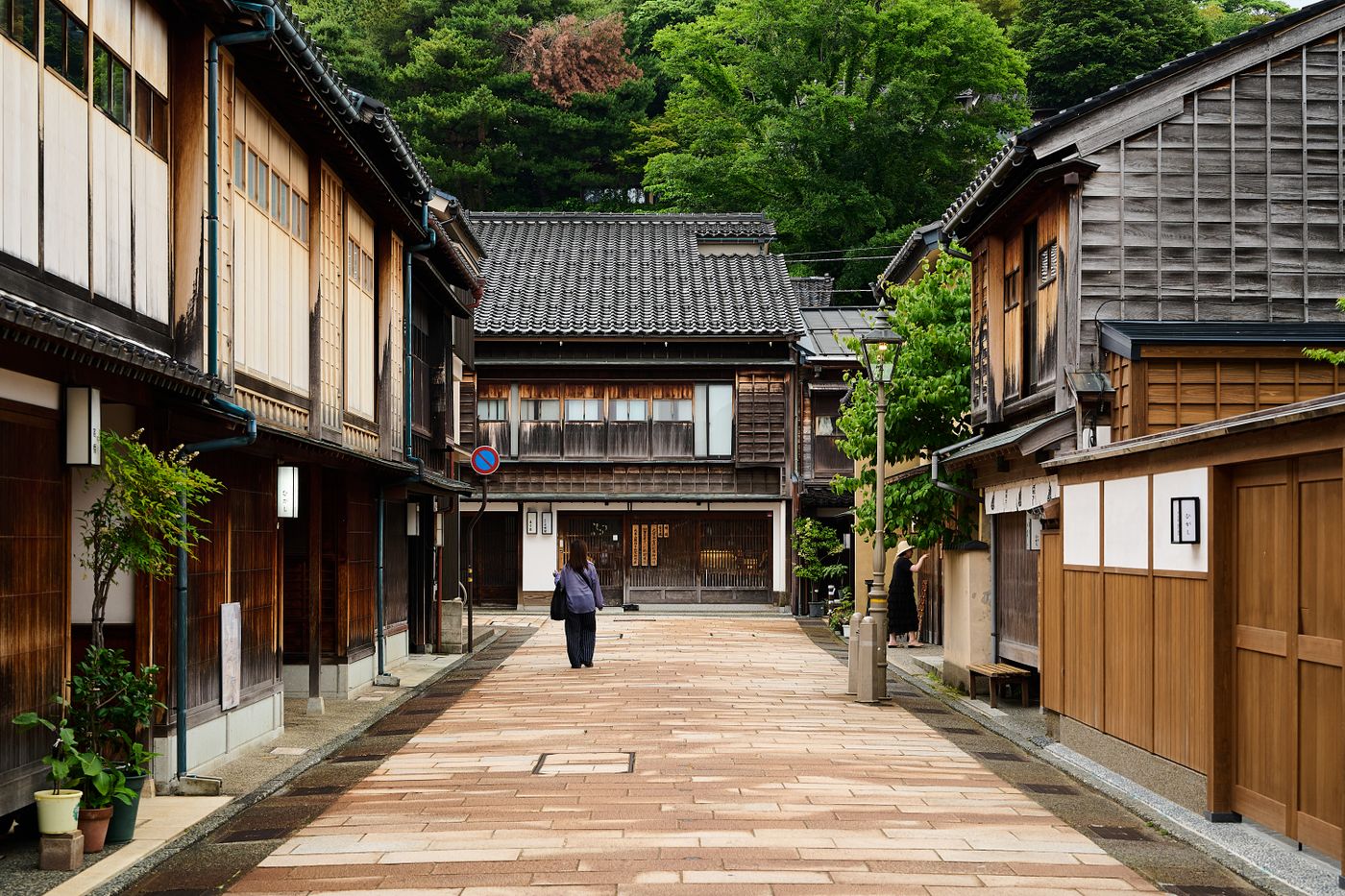
Orinasukan (織成館): A Taisho-era weaving house preserved as a small museum — the interior displays Jacquard loom mechanisms, historical textiles, and the specific architecture of a Nishijin machiya (townhouse) adapted for textile production.
Hosoo (細尾): A high-end Nishijin weaving company that has successfully expanded into contemporary interior textile design — their showroom near the district's center demonstrates how Nishijin technique is being applied to contemporary applications.
Planning where to stay in Kyoto? Browse our honest hotel picks and area guides.
🏨 Planning where to stay?
Every area guide on this site pairs with honest, station-by-station hotel picks. Start here: Kyoto Hotel Guides →