This article may contain affiliate links. If you book through them, we may earn a small commission at no extra cost to you.
On this page
Introduction: The Prefecture That Has More Udon Than People
Kagawa Prefecture (香川県) — the smallest prefecture in Japan by area, on the island of Shikoku — has approximately 950,000 residents and approximately 700 udon restaurants. This produces a ratio of roughly one udon shop per 1,350 people — a density that reflects not merely economic activity but a genuine cultural obsession.
The nickname — "Udon Prefecture (うどん県)" — was officially adopted by Kagawa Prefecture in 2011 as a tourism branding initiative and has been embraced with enough sincerity that the governor briefly changed his official title to "Udon Prefecture Governor (うどん県知事)" during the campaign. The branding succeeded because it was accurate: Kagawa's relationship with Sanuki udon (讃岐うどん) is not a marketing construction but a 700-year culinary tradition.
What Makes Sanuki Udon Different
Sanuki (讃岐) is the historical name for Kagawa Prefecture and the name given to the udon style that originated here. The specific characteristics that distinguish Sanuki udon from udon available elsewhere in Japan:
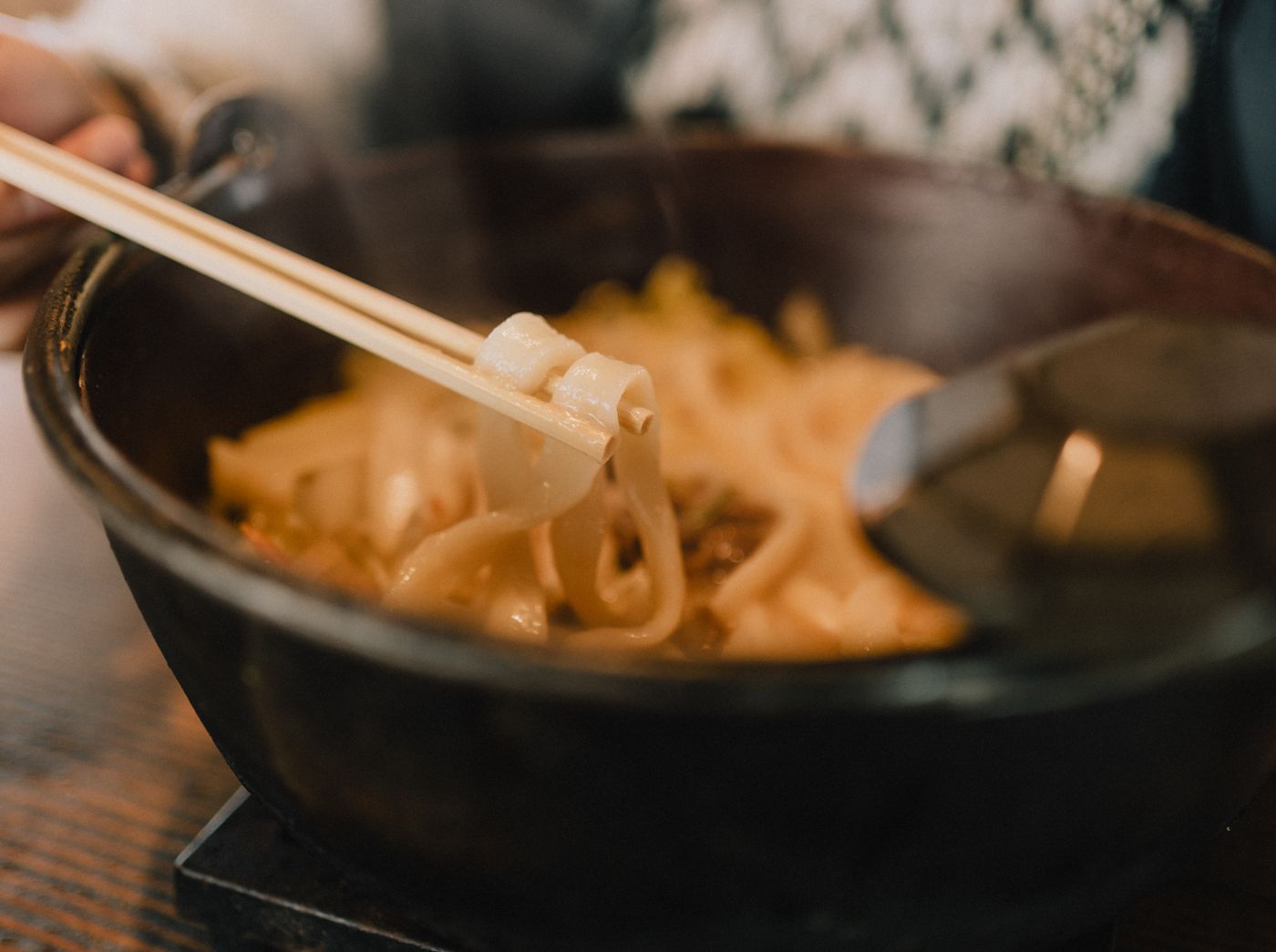
Texture: The defining characteristic — Sanuki udon has a specific combination of firmness (コシ / koshi) and chewiness (もちもち / mochimochi) that is achieved through specific flour varieties (local wheat with a higher protein content), a kneading technique that develops gluten precisely, and a resting period before cutting that affects the final texture. The udon should push back against the bite rather than surrendering to it.
Noodle dimensions: Wider and slightly flatter than standard udon, with a slightly irregular cross-section that distinguishes hand-made from machine-cut production.
The dashi: Kagawa's dashi — the broth poured over or alongside the udon — is primarily made from iriko (いりこ / small dried sardines), producing a more intense, fishier base than the kombu-and-bonito dashi standard in most Japanese cooking. The iriko dashi is both the fundamental and the most regionally specific element of Sanuki udon's flavor.
The Udon Shop Categories
Sanuki udon shops operate in several formats that determine the ordering and eating experience:
Seishi-ya (製麺所 / noodle factory shops): The most basic and most authentic — shops that primarily make udon for distribution and serve a small number of bowls at minimal cost (roughly ¥250–¥400 these days) from a counter, often with self-service toppings. The shop may not look like a restaurant at all; the sign may simply say "Udon (うどん)" and the hours may be limited to morning. These are the pilgrimage destinations.
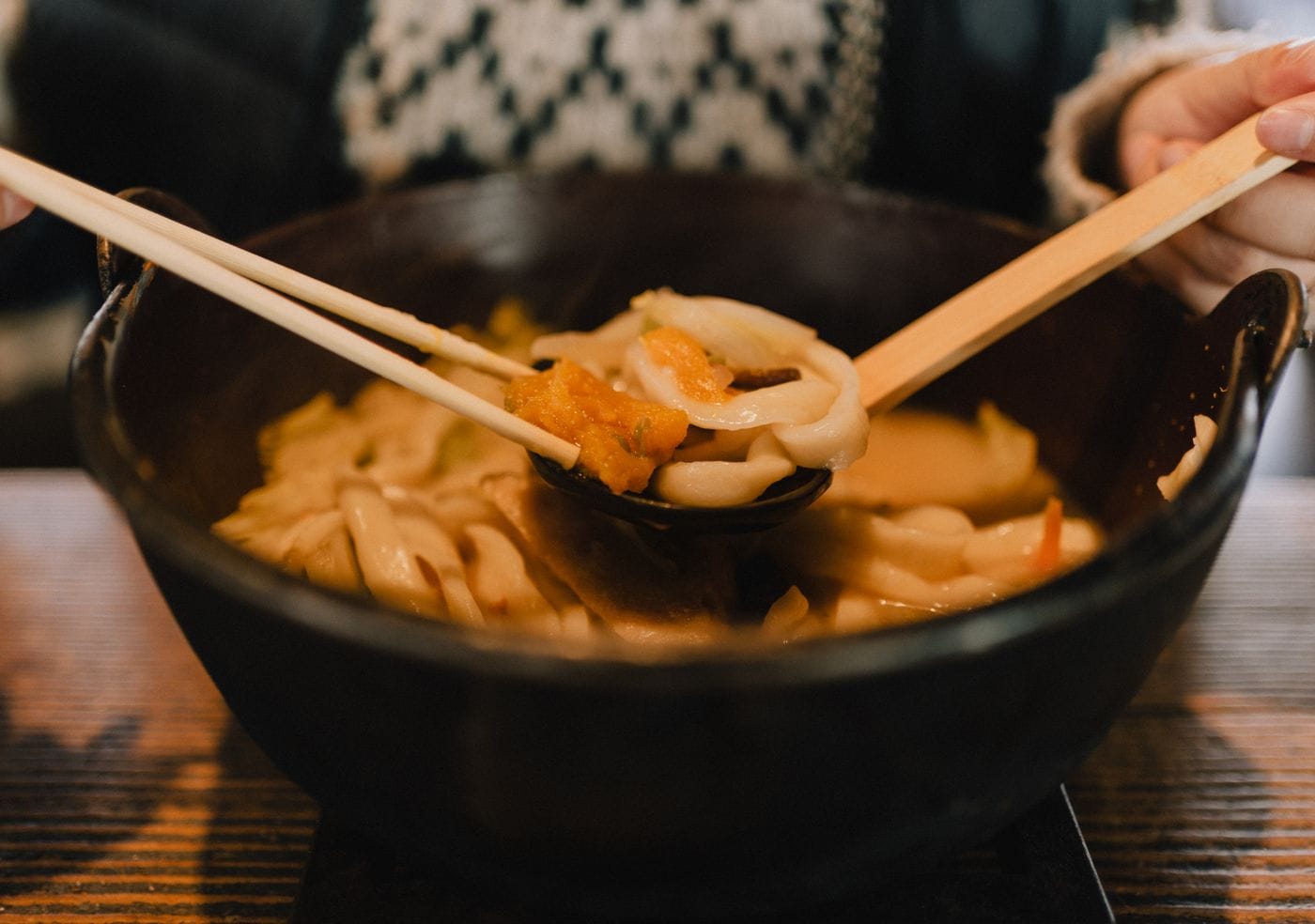
Kake udon (かけうどん): The simplest Sanuki preparation — noodles in hot dashi broth with green onion and optionally a sheet of nori or a tempura piece. The minimum preparation that best reveals the noodle's own quality.
Zaru udon (ざるうどん) / Hiyashi udon (冷やしうどん): Cold noodles served with a separate dipping broth — a summer preparation that makes the noodle texture most apparent.
Kama-age udon (釜揚げうどん): Noodles served directly from the cooking water into a bowl — the starches from the cooking water thicken the accompanying dipping broth, creating a specific richness unavailable from washed noodles.
The Udon Pilgrimage (うどん巡礼 / Udon Junrei)
The Udon Pilgrimage — visiting multiple udon shops in sequence, comparing styles, noodle textures, and dashi qualities — is a documented subculture with its own apps, websites, ranking systems, and devoted practitioners who visit Kagawa specifically to eat udon at 10–15 shops across a single day.
The logistics: shops open as early as 6:00 AM, some close by noon (particularly the seishi-ya factory shops). A single bowl is typically 150–300 grams of noodles — smaller portions allow more shops to be visited. A serious pilgrimage of 5–8 shops in one day requires early starts, efficient navigation (a car is strongly recommended), and the willingness to be extraordinarily full by 11:00 AM.
Key pilgrimage shops:
Yamagoshi (山越うどん): The most famous Kagawa udon shop — famous specifically for the kamatama (釜玉 / egg udon), a style where a raw egg is cracked over hot fresh-from-the-pot noodles and mixed with a splash of soy sauce. The egg cooks on the hot noodles, producing a rich, silky coating. Queue begins 30 minutes before opening.
Nakamura (中村うどん): A seishi-ya shop in a residential neighborhood — the absence of signage, the family running the counter, and the ¥100 bowls represent the Sanuki udon experience at its most authentic.
Tsurumaru (つるまる): A Takamatsu city shop for visitors without a car — central, accessible, and reliably excellent.
Recommended Base Hotels
JR Hotel Clement Takamatsu (Mid-range / from ¥15,000): Adjacent to Takamatsu Station, convenient for udon pilgrimage planning.
- Dormy Inn Takamatsu (Mid-range / from ¥10,000): Natural hot spring, central Takamatsu.
Planning where to stay in Shikoku? Browse our honest hotel picks and area guides.
🏨 Planning where to stay?
Every area guide on this site pairs with honest, station-by-station hotel picks. Start here: Kagawa Hotel Guides →