This article may contain affiliate links. If you book through them, we may earn a small commission at no extra cost to you.
On this page
Introduction: The Japan That Breathes in Summer
In July and August, when the rest of Japan is operating under a combination of extreme heat and extreme humidity that makes outdoor activity genuinely unpleasant, Hokkaido is doing something different. The island's subarctic latitude means average summer temperatures of 17–22°C in most areas — warm enough for outdoor activity, cool enough for comfort, and accompanied by the low humidity that the rest of Japan categorically lacks.
This climatic reality makes Hokkaido Japan's best summer destination by a significant margin. The combination of cool air, vast agricultural landscapes at peak productivity, clear lakes reflecting mountain ranges, and some of Japan's finest national park terrain creates a summer experience unlike anything available in the country's warmer regions.
Why Hokkaido Summer Is Different: The Climate Argument
The case for Hokkaido in summer is fundamentally climatic and requires a brief comparison to make it concrete.
Tokyo in July: Average high temperature 32°C, relative humidity approximately 80%, Heat Index (体感温度) equivalent to approximately 40°C+. Outdoor activity is possible but uncomfortable for most of the day.
Sapporo in July: Average high temperature 26°C, relative humidity approximately 65%, Heat Index approximately 26°C. Outdoor activity is comfortable throughout the day.
Daisetsuzan mountains in July: Average daytime temperature 18–22°C, low humidity, mountain breeze. Hiking conditions equivalent to the British Highlands in June.
The practical result: visitors who come to Japan in summer and spend time only in the cities of Honshu experience Japan at its most meteorologically challenging. Hokkaido offers an entirely different relationship with summer that most Japanese people from Honshu actively seek out — the summer visitor pattern within Japan flows north, and Hokkaido accommodation books out early for the peak July–August period.
Lavender (ラベンダー): Hokkaido's Visual Identity
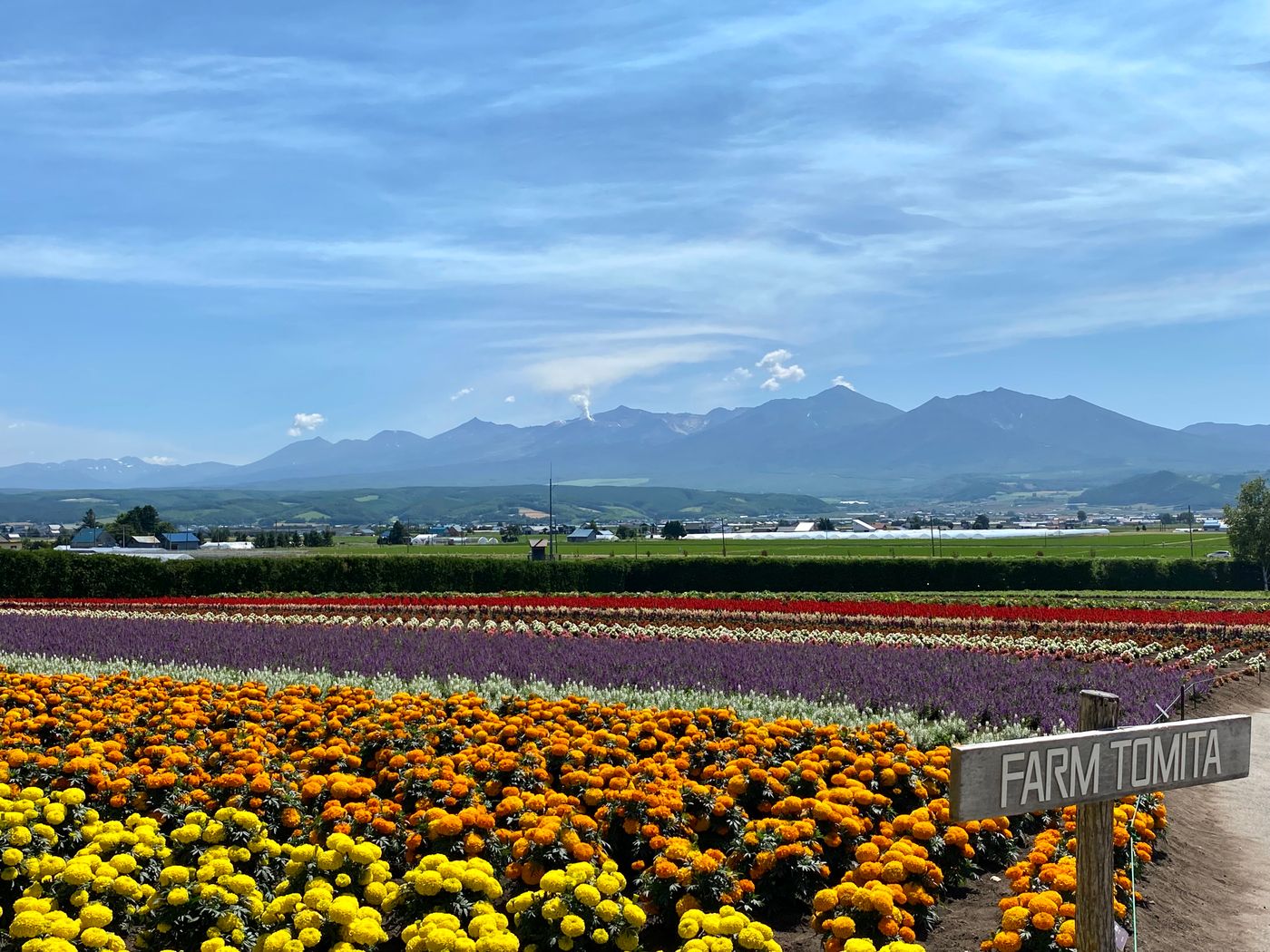
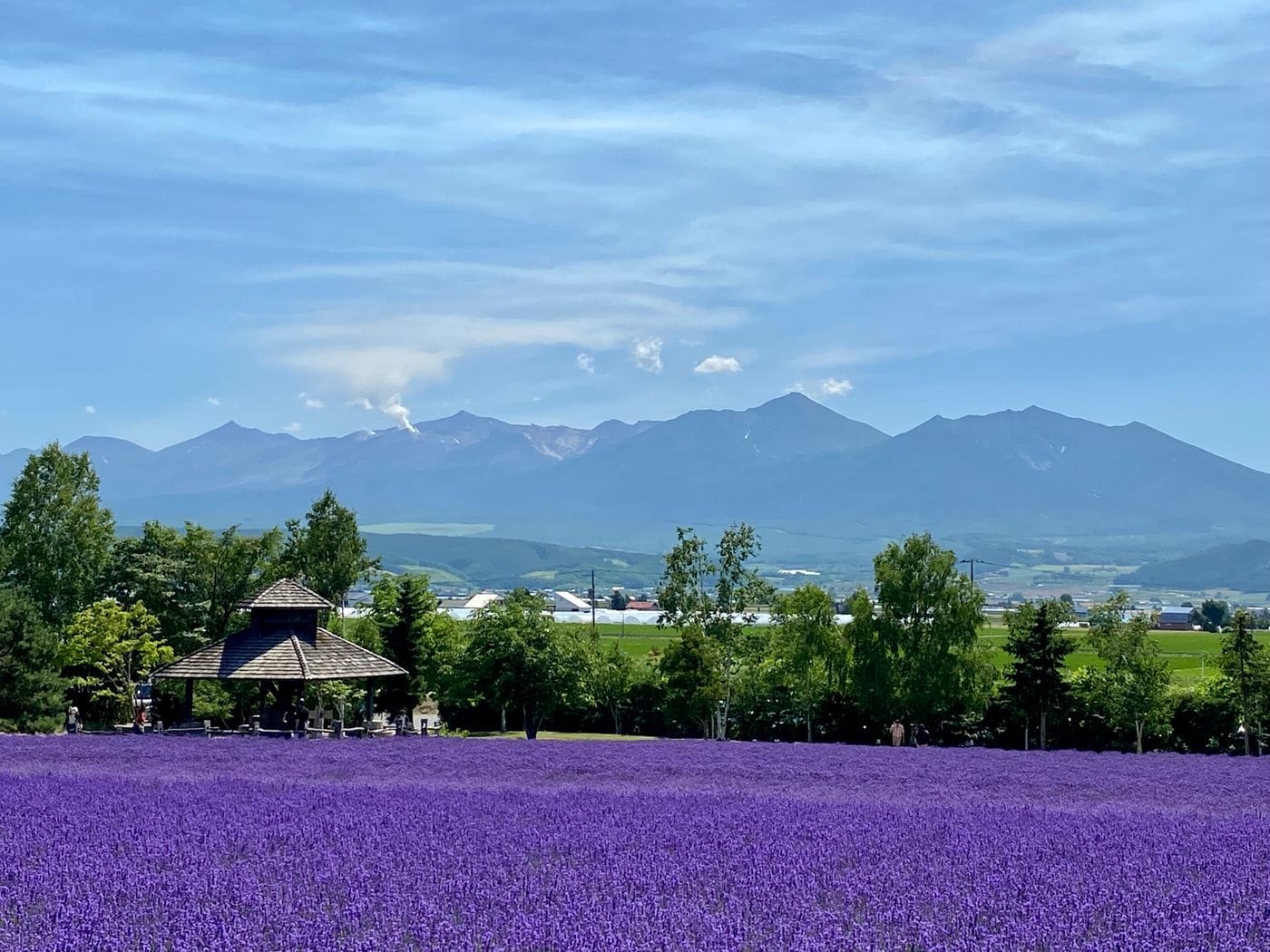
The association between Hokkaido and lavender is so deeply embedded in Japanese popular culture that the image of purple lavender fields with a blue summer sky has become the definitive visual shorthand for Hokkaido. This association is the product of a specific agricultural history in Furano (富良野) — a basin in central Hokkaido where lavender cultivation began in the 1950s to supply the domestic perfume industry.
When synthetic fragrance chemicals displaced domestically grown lavender in the 1970s, Furano's lavender fields — now attractively photogenic — became tourist attractions. Farm Tomita (ファーム富田) in particular, with its precisely maintained rows of multiple lavender varieties creating bands of purple at slightly different hues, became the image that defined Hokkaido summer for the rest of Japan.
The lavender peak (typically the second and third weeks of July) draws hundreds of thousands of visitors to Furano, and the visual — lavender rows leading to the horizon, the Daisetsuzan range behind — justifies the pilgrimage. Full coverage in the dedicated Furano/Biei article.
The Lakes: Hokkaido's Mirror Surfaces
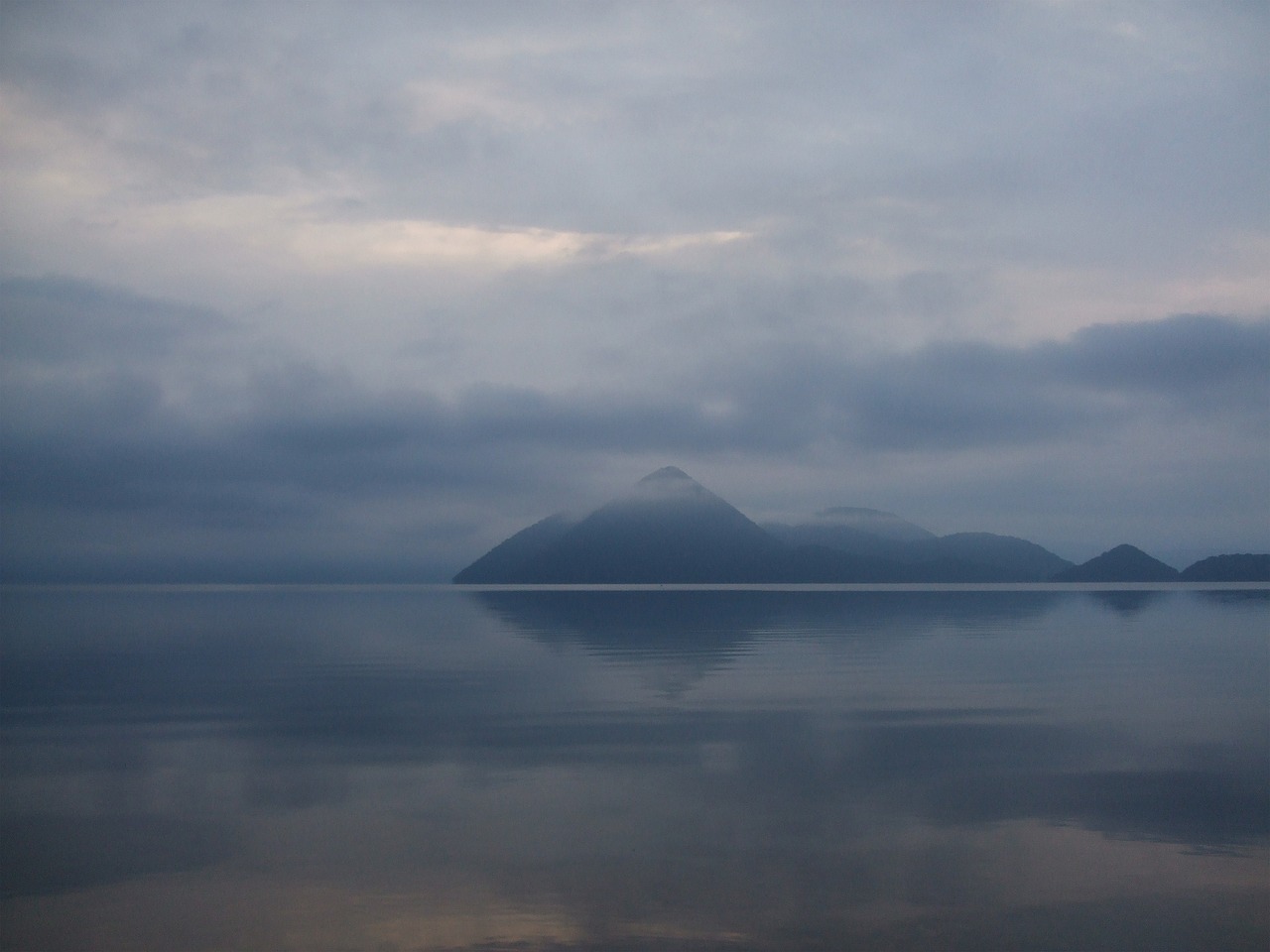
Hokkaido's volcanic history has created an extraordinary collection of caldera lakes — lake basins formed by the collapse of volcanic calderas, typically at high elevation, with extraordinarily clear water produced by the absence of river sediment input.
Lake Mashu (摩周湖): The Mystical Lake
Lake Mashu — in eastern Hokkaido's Akan-Mashu National Park — is the clearest lake in Japan and one of the clearest in the world, with Secchi depth measurements of up to 41.6 meters. The lake sits in a caldera with no surface inlet or outlet, its water level maintained entirely by precipitation and groundwater — the reason for its extraordinary clarity.
The lake is accessible only from three observation points on the caldera rim — no boats, no swimming, no direct water access. This restriction, combined with the lake's characteristic morning fog, gives Mashu a quality of inaccessibility that the Ainu people recognized: "Kamuy-to" — "Lake of the Gods" — was their name for it.
On a clear summer morning, arriving at the observation point before the fog lifts to reveal the lake below — perfectly still, the deepest imaginable blue, the caldera walls reflected in the surface — is one of the most affecting natural experiences in Japan.
Lake Akan (阿寒湖): The Marimo Lake
Lake Akan is famous for marimo (マリモ) — spherical balls of green algae (Aegagropila linnaei) that form naturally in the lake's specific water chemistry and light conditions. Akan marimo grow to sizes of up to 30 cm — the largest in the world — and are designated a Special Natural Monument of Japan. The Ainu Kotan — the largest Ainu village that continues operating as a living community on Hokkaido — is located on the lake shore, offering craft sales, cultural performances, and the most direct encounter with Ainu culture available to visitors.
Lake Kussharo (屈斜路湖): The Swan Lake
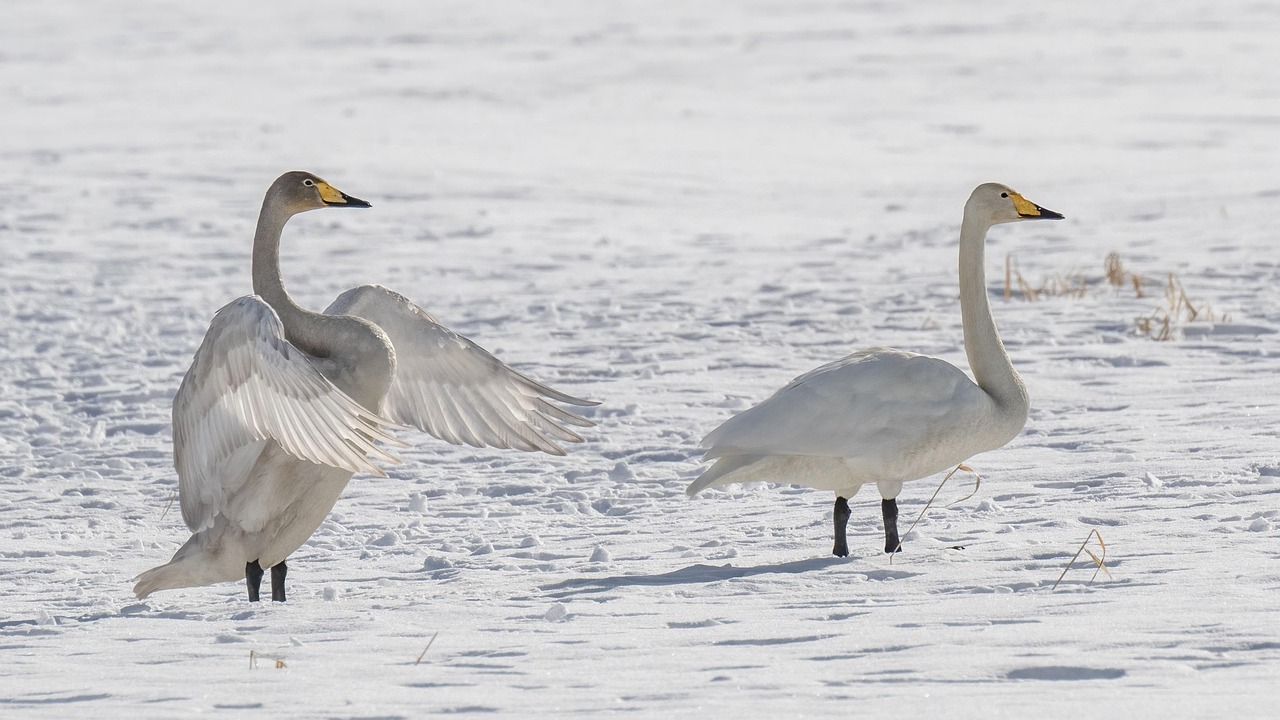
Lake Kussharo — Japan's largest caldera lake — is home to a large resident population of whooper swans (コハクチョウ) in winter and early spring, but in summer presents a different attraction: the lake shore's natural hot spring emerges directly on the beach at Sunayu (砂湯), where digging into the sand reveals hot water immediately below the surface. Swimming in the lake while hot spring water seeps up through the sand is one of Hokkaido's most distinctive natural experiences.
Summer Outdoor Activities
Cycling: The Biei and Furano Patchwork Roads
The network of rural roads connecting the farms and hills of the Biei area — known as the Patchwork Road (パッチワークの路) — is the finest cycle touring terrain in Japan: gentle gradients, minimal traffic, and a visual diversity of agricultural fields that changes with each kilometer. Full coverage in the Furano/Biei article.
Hiking: Daisetsuzan in Summer
The Daisetsuzan range in July and August supports hiking from mid-elevation trailheads through subalpine meadows in full flower — the alpine flower season (高山植物の季節) transforms the mountain slopes into botanical gardens of extraordinary variety. Full coverage in the dedicated Daisetsuzan article.
Whale Watching and Marine Wildlife
The Shiretoko Peninsula and the Sea of Okhotsk coast offer summer wildlife experiences of international significance — Minke whales, orca, Steller's sea lions, and bird colonies accessible by tour boat. Full coverage in the Shiretoko article.
Hokkaido Summer Food
Hokkaido corn (とうきびorトウモロコシ): Street-grilled corn, buttered and soy-sauced, at roadside stalls throughout Hokkaido in summer — the sweetness of Hokkaido corn (a consequence of the cool growing season concentrating sugars) is genuinely superior to warmer-region corn. The stalls that appear on rural roads in July are one of Hokkaido's most beloved summer institutions.
Fresh dairy: Hokkaido produces over half of Japan's dairy output, and the butter, cheese, cream, and milk available directly from farms and farm stands in the agricultural areas of central and eastern Hokkaido is of a quality that reflects proximity to source. Soft-serve ice cream (ソフトクリーム) using Hokkaido milk is universally excellent throughout the island.
Sea urchin (ウニ): The summer peak of sea urchin season in Hokkaido — particularly the Rishiri/Rebun islands in the north and the Shakotan Peninsula on the western coast — produces the finest sea urchin in Japan. The sweet, creamy, non-bitter urchin available at Hokkaido fish markets in July and August is a revelation compared to the imported varieties available elsewhere.
Recommended Base Hotels
- Sapporo JR Tower Hotel Nikko (Luxury / from ¥28,000): Sapporo hub for all summer day trips.
Various Farm Stays (農家民宿): Multiple options in Furano, Biei, and agricultural areas from ¥8,000–¥15,000 per person — the most immersive Hokkaido summer experience.
Planning where to stay in Hokkaido? Browse our honest hotel picks and area guides.
🏨 Planning where to stay?
Every area guide on this site pairs with honest, station-by-station hotel picks. Start here: Hokkaido Hotel Guides →