This article may contain affiliate links. If you book through them, we may earn a small commission at no extra cost to you.
On this page
Introduction: The Best-Value Restaurant in Japan
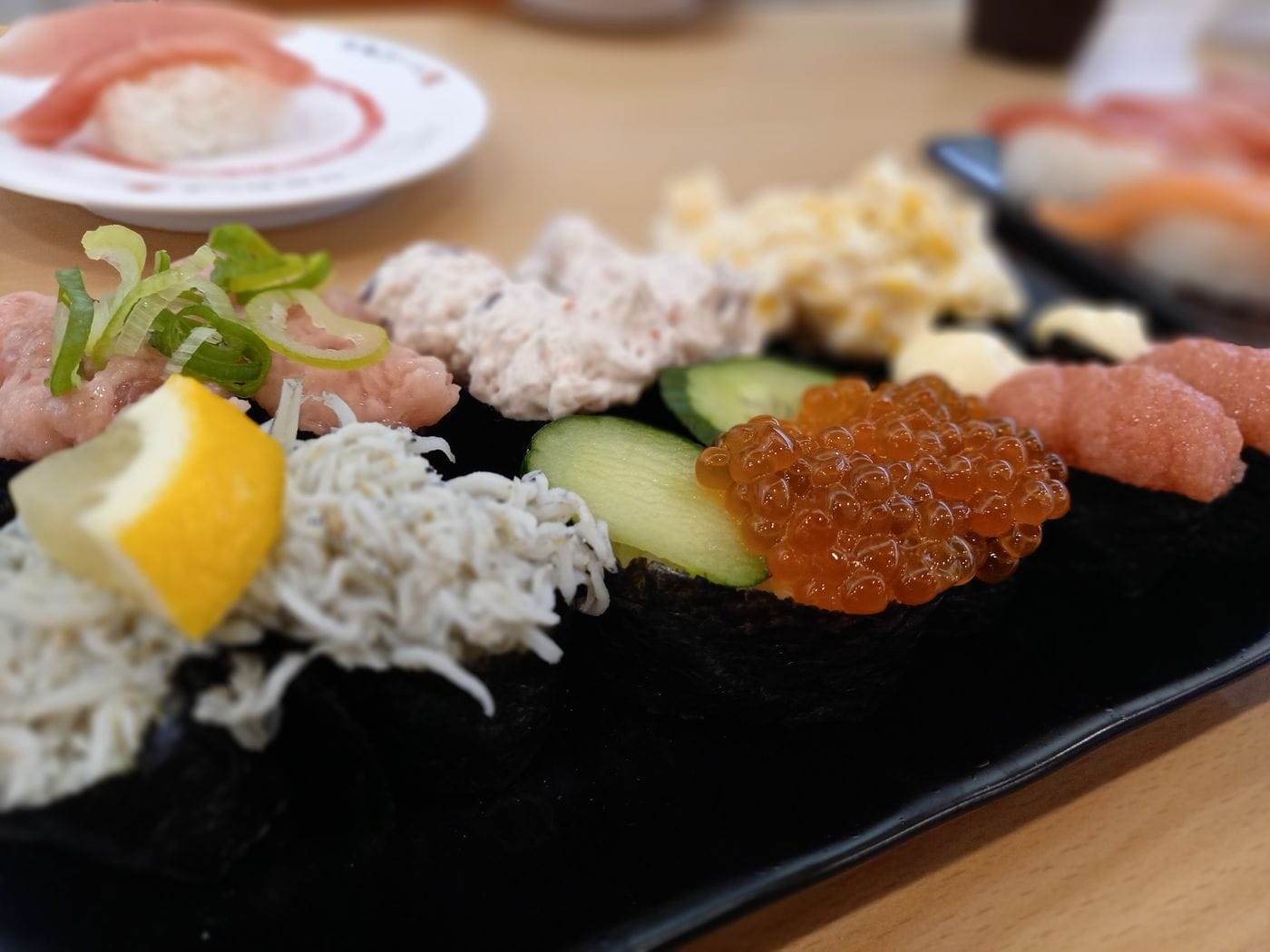
Kaitenzushi (回転寿司 / conveyor belt sushi) — the sushi restaurant format where plates of sushi travel on a conveyor belt past the customer's counter or table position — was invented in 1958 in Higashi-Osaka by Genroku Sushi (元禄寿司) proprietor Yoshiaki Shiraishi (白石義明), who adapted a beer-bottling conveyor line into a sushi delivery mechanism.
In 2024, the format supports approximately 5,000 kaitenzushi restaurants in Japan, accounting for approximately 60% of all sushi restaurant revenue nationally. The quality of the format has improved dramatically since its origins — the finest contemporary kaitenzushi chains serve fish quality that independent sushi restaurants at twice the price cannot consistently match, using data-driven supply chain management and direct fishing port relationships that the large chain's purchasing volume makes possible.
For foreign visitors, kaitenzushi offers a combination of advantages that the more formal sushi counter cannot: self-service requires no language, the visual selection process requires no menu reading, the pricing is transparent (each plate color indicates a price), and the total experience is affordable, quick, and reliably good.
The Major Chains: An Honest Comparison
Sushiro (スシロー): The Volume Leader
Sushiro is Japan's highest-revenue kaitenzushi chain — approximately 600 stores nationally, the result of a business model that uses data analysis of plate removal rates to minimize waste and optimize production. The moment a plate is picked up from the belt, Sushiro's system records it, informs the kitchen of demand, and adjusts production in real time.
Quality assessment: The most consistent quality across the chain — base plates now run ¥120–¥180 after the industry-wide price rises of recent years. The tuna (maguro), salmon (sake), and shrimp (ebi) are reliably good. Limited premium options at higher price points.
For foreign visitors: Excellent English touch panel ordering. Multiple plate options visible in advance. The most internationally navigable of the major chains.
Kurazushi (くら寿司): The Gamification Chain
Kurazushi has developed a specific differentiation: a prize game (bikkura pon / びっくらぽん) that rewards customers with capsule toy prizes every five plates — a system that makes the experience particularly appealing to families with children and adds an entertainment dimension absent from competitors.
Quality assessment: Comparable to Sushiro in price (base plates from about ¥115) and quality. The menu is slightly more adventurous, with more non-traditional items (various fried foods, desserts) than the more fish-focused Sushiro.
Hamazushi (はま寿司): The Price Leader
Hamazushi (Zensho Group) is the most aggressive on price, frequently operating at ¥100/plate promotions. Quality is the most variable of the major chains — on good days comparable to Sushiro; on less good days the difference in supply chain is perceptible.
Best use: When price is the primary consideration or when visiting with a large group where per-person cost management matters.
Kappa Sushi (かっぱ寿司): The Middle Market
Kappa Sushi, one of the longest-running big chains (from the 1970s), maintains a middle position in both price and quality. The menu breadth is greater than Sushiro — more premium options, more elaborate rolls — at a slightly higher price point.
The Premium Chains: When to Upgrade
For visitors who want kaitenzushi quality with a step up from the ¥100 chains:
Uobei (魚米): A Shibuya-based chain that delivers sushi on bullet train-style tracks directly to your table from the kitchen — a technological delivery system that is genuinely fun and impressive. Quality is good; the experience has theatrical appeal.
Mawaru Genroku Sushi (回る元禄寿司): The original chain (Shiraishi's founding location) — now operating with a heritage angle that acknowledges the format's 1958 origin.
How to Use the System
Touch panel ordering: All major chains have touch panels at each seat with English language option. Ordered items arrive on a dedicated lane above or below the main conveyor — a small train or pod delivers the specific item directly to your position.
Conveyor selection: Take plates directly from the belt as they pass. The color of the plate indicates the price.
Calling the waiter: A button at each seat calls staff for hot tea (free at all major chains), extra soy sauce, or bill payment.
- The bill: Staff count your plates at the end of the meal and calculate the total.
🏨 Planning where to stay?
Every area guide on this site pairs with honest, station-by-station hotel picks. Start here: Hotel Guides by Station →