This article may contain affiliate links. If you book through them, we may earn a small commission at no extra cost to you.
On this page
Introduction: Kyoto's Other Great Season
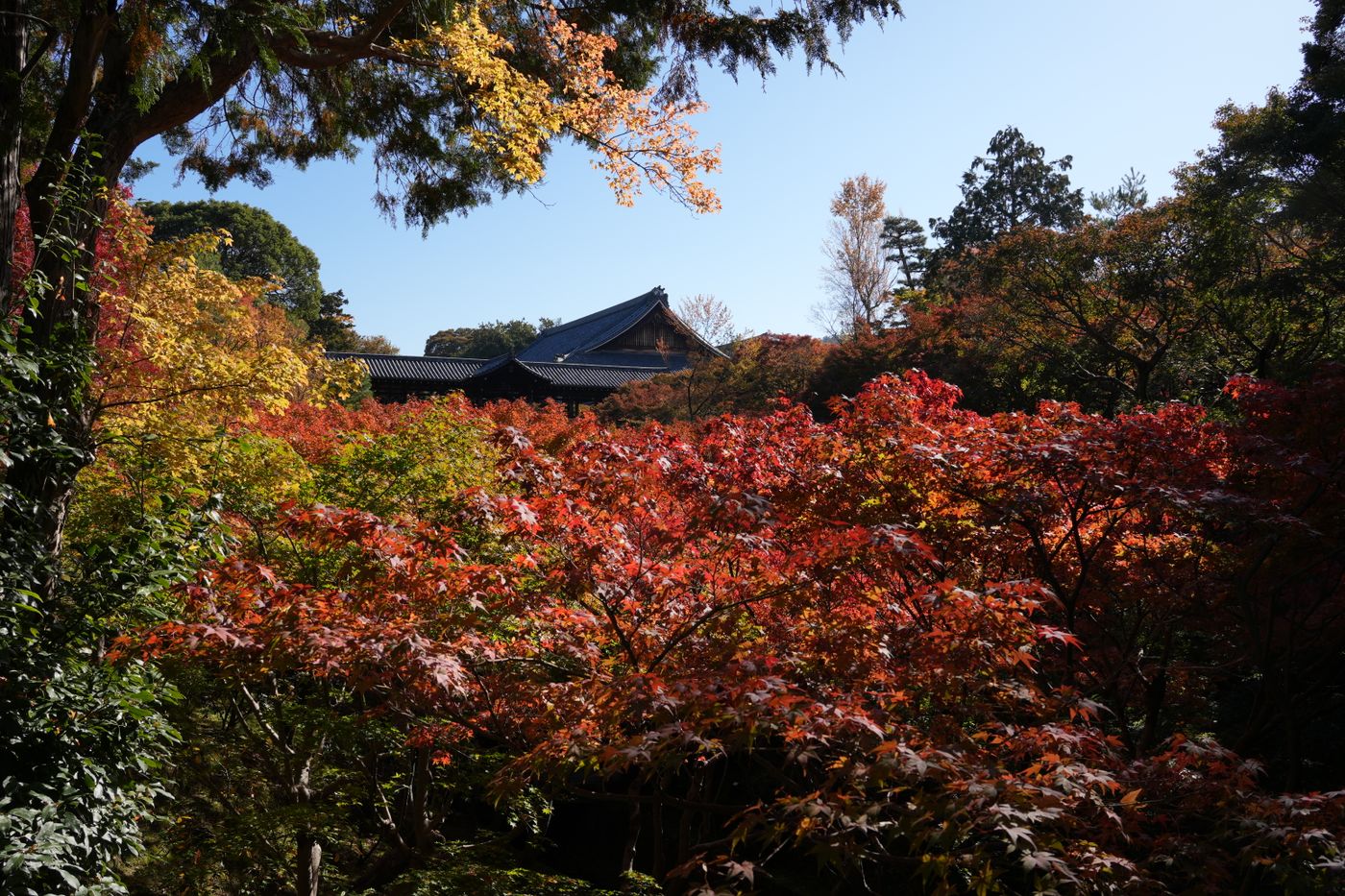
If cherry blossom is Kyoto's spring obsession, autumn foliage is its complementary autumn one — arguably even more visually sophisticated, given that maple color (unlike cherry blossom's relatively brief and uniform pink) produces a complex spectrum from yellow through orange to deep crimson, often within a single tree, that interacts with Kyoto's temple architecture in ways that create the country's most celebrated koyo photography.
Tofuku-ji (東福寺): The Reference Standard
Tofuku-ji — a major Rinzai Zen temple in southern Kyoto — has approximately 2,000 maple trees planted across its valley garden, and the temple's specific design (a wooden bridge, Tsuten-kyo (通天橋), crossing directly above the valley at canopy height) allows visitors to look down into the maple canopy from above — a viewing angle that most koyo sites cannot provide.
The experience: Standing on Tsuten-kyo bridge, looking down across an unbroken expanse of red and orange maple canopy filling the valley below, with the temple's traditional wooden architecture visible at the valley's edges, is considered by many specialists Japan's single finest koyo composition.
- Peak timing: Typically mid-to-late November (November 18–28 window, varying by year).
Crowd reality: Tofuku-ji during peak weekend is among the most crowded single sites in Japan during koyo season — arriving at the 8:30 AM opening is essential for a manageable experience; by 10:00 AM the bridge crossing can require significant queuing.
Arashiyama in Autumn
The bamboo grove described in the dedicated Arashiyama article doesn't change color (bamboo is evergreen), but the surrounding temples and hillside maples make Arashiyama one of Kyoto's finest complete autumn destinations:
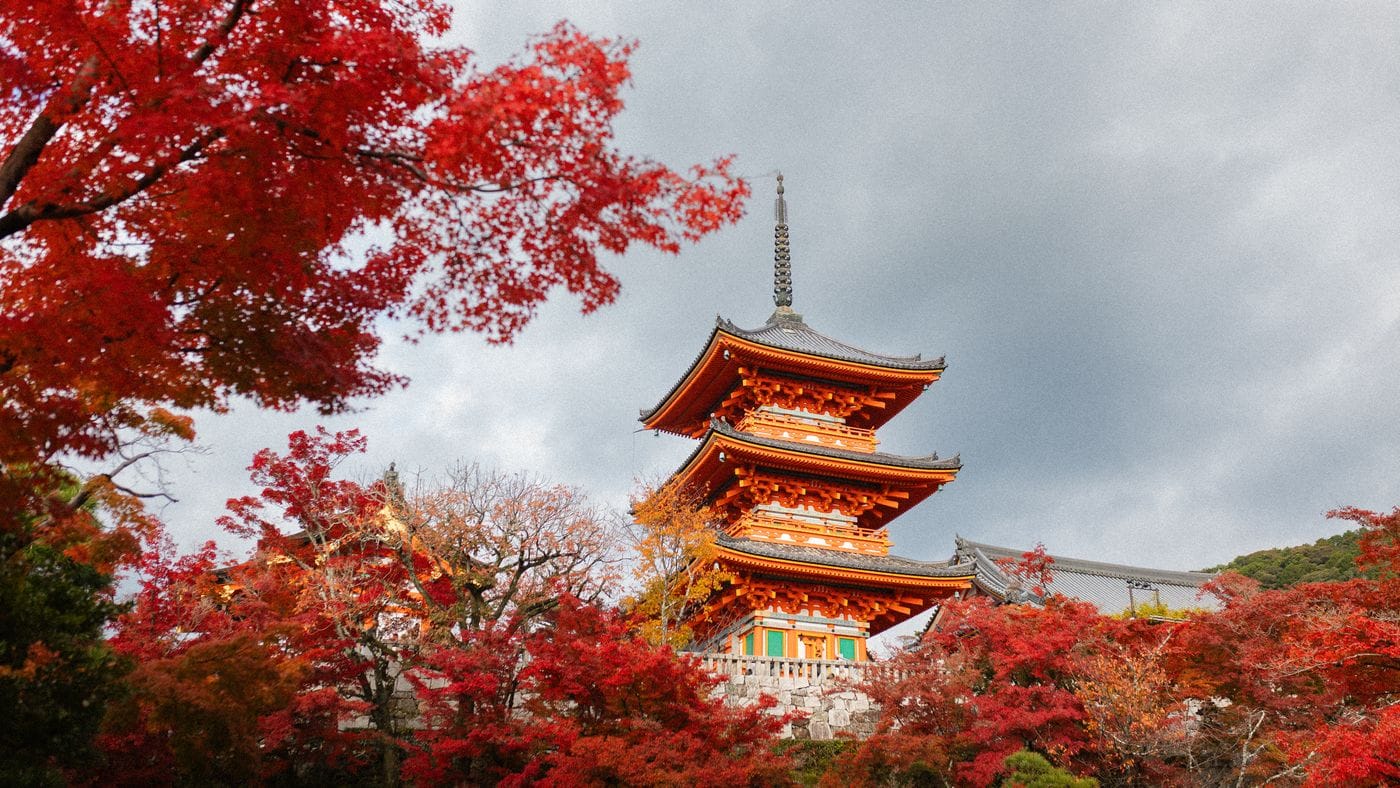
Jōjakkō-ji (常寂光寺): As covered in the autumn-specific section of the Arashiyama article — this hillside temple's maple display, viewed with the pagoda visible through the canopy, rivals Tofuku-ji's quality with a fraction of the crowd.
Tenryū-ji's garden: The Sōgen Pond garden, whose summer green and spring blossom are covered elsewhere, transforms in autumn — the borrowed-scenery technique (incorporating the Arashiyama mountain slope into the garden composition) means the entire hillside's autumn color becomes part of the garden's visual structure.
The Local's Additional Spots
Enko-ji (圓光寺): Covered in the Kyoto autumn momiji article previously — a small temple with exceptional autumn color and minimal crowds.
Eikan-dō (永観堂): One of Kyoto's most celebrated official autumn destinations — the multicolored maple display around the central pond and the evening illumination period make this a worthy addition despite significant crowds. Arrive at the 9:00 AM opening for the best experience.
Gio-ji (祇王寺): The moss-and-maple temple covered in the autumn momiji article — the specific combination of green moss carpet and fallen red maple leaves creates a two-dimensional color composition unavailable elsewhere.
Shōren-in's camphor trees and gardens: Covered in the Higashiyama walking route article — the garden here, with its 800-year-old camphor trees, has a quality autumn display that most itineraries pass without entering.
The Night Illumination Circuit
Several major Kyoto temples offer night illumination (ライトアップ) during peak koyo season, typically running from sunset to approximately 9:00 PM:
Kōdai-ji: Particularly celebrated for its illuminated garden, with projected light patterns on the pond surface.
Kiyomizudera: The night illumination here, viewed from the famous wooden stage, provides a dramatically different version of the daytime experience.
- Eikan-dō: The illuminated pond and surrounding maples.
Planning where to stay in Kyoto? Browse our honest hotel picks and area guides.
🏨 Planning where to stay?
Every area guide on this site pairs with honest, station-by-station hotel picks. Start here: Kyoto Hotel Guides →