This article may contain affiliate links. If you book through them, we may earn a small commission at no extra cost to you.
On this page
Introduction: The Night Japan Becomes Something Ancient
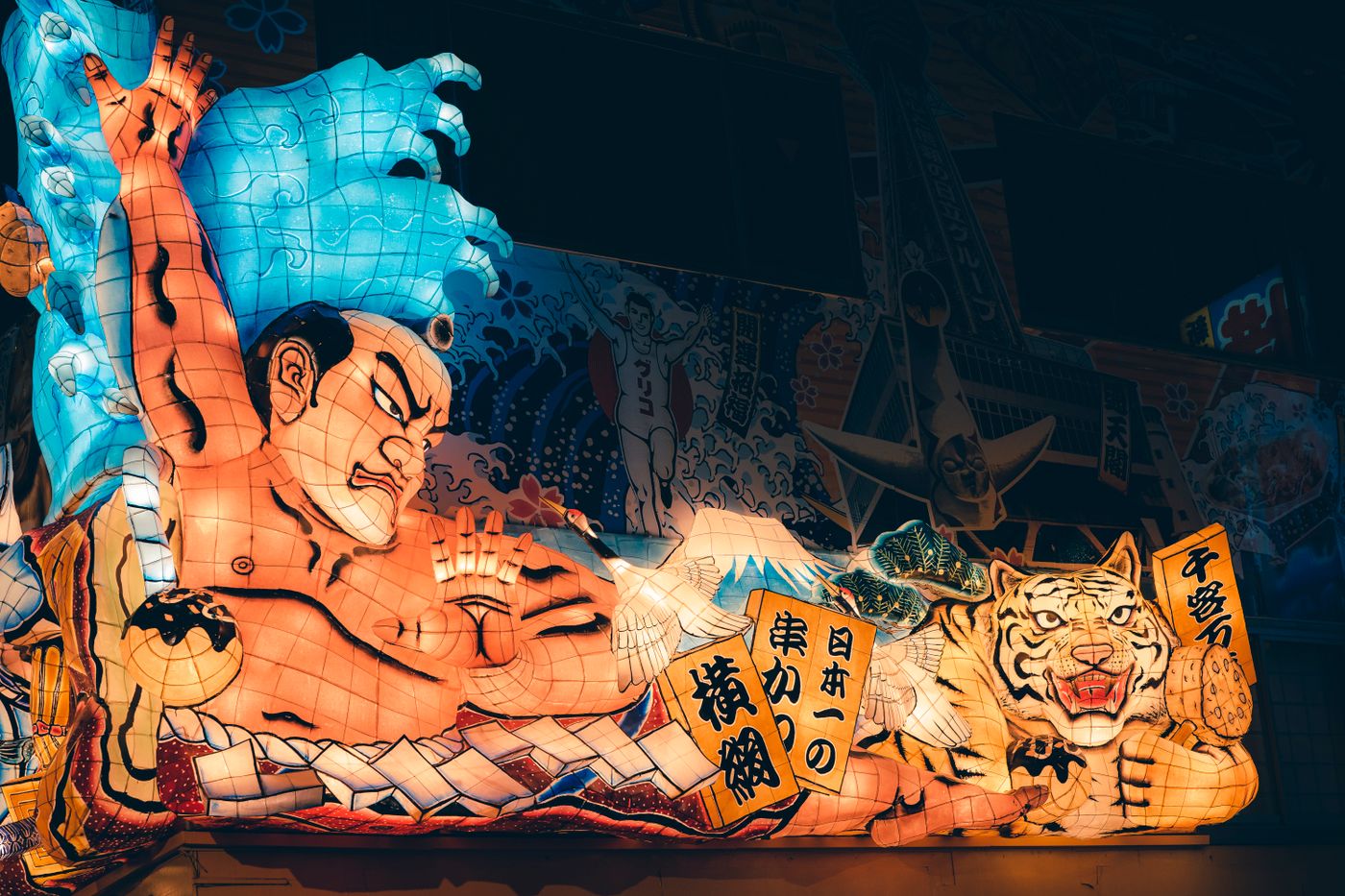
On the evenings of August 2nd through 7th each year, the streets of Aomori City (青森市) are taken over by something that defies straightforward description. Giant illuminated figures — warriors, demons, legendary animals — mounted on enormous wheeled floats, move through the streets surrounded by thousands of haneto (ハネト): dancers in colorful costumes jumping in a specific rhythmic pattern, accompanied by musicians playing hayashi (囃子) — the traditional percussion-and-flute ensemble that drives the festival's pace.
The scale is immediately apparent: the largest Nebuta (ねぶた) floats reach heights of 5 meters and widths of 9 meters, their internal wood and wire frameworks covered with translucent washi paper and painted in brilliant colors — the figures backlit from within to create a lantern effect of extraordinary power when seen moving through the dark streets.
The Aomori Nebuta Festival (青森ねぶた祭) is one of Tōhoku's three great festivals (alongside Akita's Kanto Festival and Sendai's Tanabata), and in terms of pure visual and sensory impact, it is arguably the most overwhelming of the three.
The Origin: What Nebuta Is and Where It Came From
The origin of the Nebuta festival is debated among folklorists, but the most widely cited theory connects it to the Natsu Matsuri (夏祭り / summer festival) tradition of driving away nemui-ke (眠気 / sleepiness) and evil spirits at the height of summer — "nebuta" being a dialectal variant of "nemuta" (sleepy).
The association with Sakanoue no Tamuramaro (坂上田村麻呂) — the 8th-century military commander sent to pacify the Tohoku region — suggests another origin: that Tamuramaro used giant lanterns and drums to confuse and draw out enemy forces from their fortifications in the northern wilderness. Whether historically accurate or not, this warrior mythology permeates the visual content of the floats — the figures are almost invariably drawn from Japanese history and legend, with a particular emphasis on the dramatic, the powerful, and the supernatural.
The Floats: Making of a Nebuta
Each Nebuta float is constructed by a dedicated Nebuta artisan (ねぶた師) — a specialist whose training requires years of apprenticeship and whose creations are the competitive centerpiece of the festival. Approximately 20 large floats compete annually, each crafted by a different artisan under the sponsorship of a corporation, organization, or civic group.
Construction process:
Framework: Steel wire bent and shaped into the three-dimensional form of the figures — warriors in dynamic poses, animals in motion, mythological creatures — supported on a wheeled platform.
Paper application: Japanese washi paper is applied over the framework in multiple layers, producing the translucent surface through which the internal lighting will glow.
Painting: Highly skilled painters apply the color designs directly to the paper surface — the distinctive Nebuta aesthetic (bold outlines, flat color planes, dramatic expressions) requires specialized technique developed over decades.
Internal lighting: Originally candles (and still sometimes candles for the traditional aesthetic), now typically LED systems that produce even, bright illumination throughout the structure.
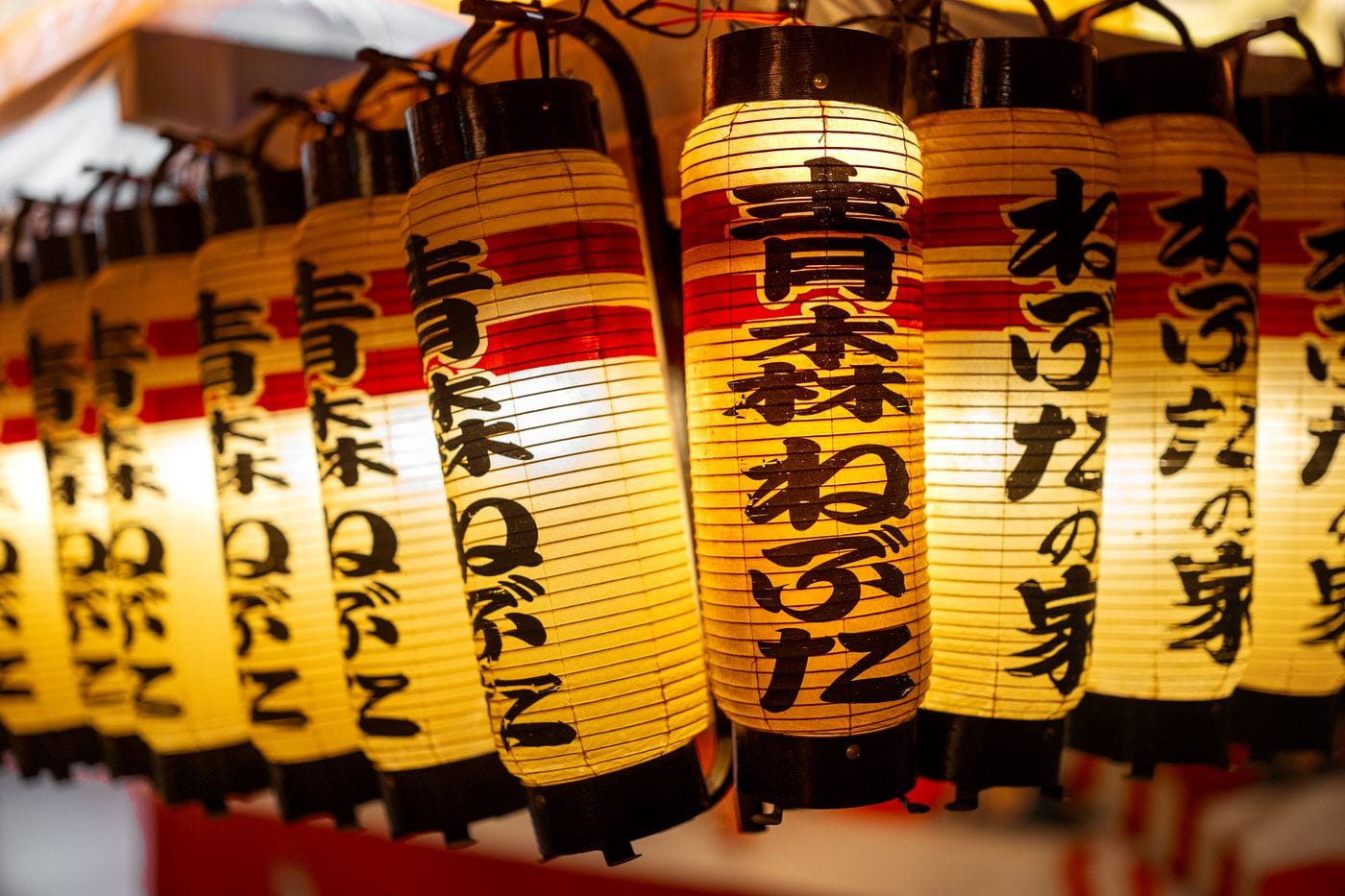
The prize: The Grand Prize for Best Nebuta (最優秀ねぶた賞) is the most coveted award in the festival's competitive framework. Winning artisans and their sponsoring organizations receive significant recognition and publicity.
The Haneto Dancers: Joining the Festival
Haneto (ハネト) — the festival dancers who surround each float — perform a specific jumping motion (the name derives from "haneru" / 跳ねる — to jump) while chanting "Rassera! Rassera! Rasseramasse!" (ラッセラー!) — a phrase whose meaning is debated but whose rhythmic function in driving the crowd's energy is undeniable.
The crucial distinction of the Haneto system: anyone can become a Haneto for the evening. The costumes — a specific design of colorful short kimono, elaborate hair decoration for women, fan, and bells — are available for rental throughout the city during the festival period. Paying the rental fee and joining a float's dance group for the evening parade is one of the most genuinely participatory festival experiences in Japan.
Haneto costume rental: Available from festival official rental points, hotels, and specialist shops. Approximately ¥3,000–¥5,000 for the full costume.
What to expect as a Haneto: You will join hundreds of other dancers surrounding a float, following the pattern of the jumping and the chant, moving approximately 3 km through the streets over 2–3 hours. The physical demands are real (the jumping is repetitive), the heat from the crowd and the summer air is significant, and the sensory experience of being inside the parade rather than watching from the sides is categorically different from spectating.
Viewing the Parade: The Spectator Experience
For those who prefer to watch:
Official viewing seats (有料観覧席): Reserved seats along the parade route — available from JTB and other travel agencies, typically ¥2,000–¥3,500 per seat. Booking well in advance is essential.
Standing viewing: Free positions along the parade route are available on a first-come basis. Arriving 2 hours before the 7:00 PM parade start secures good positions on the main route.
Best viewing position: The Shin-Machibashi section of the parade route, where the floats navigate a corner and must rotate, showing their full three-dimensional form in all directions — the moment when the full scale and detail of the largest floats is most visible.
The Final Morning: The Harbor Farewell (海上運行)
On the morning of August 7th, the Nebuta floats are transported by boat into Aomori Bay for the sea parade (海上運行) — a brief procession of the largest floats on water before they are retired. The combination of the illuminated floats on the harbor water in the early morning light is one of the festival's most beautiful and least-seen moments.
After the harbor parade, winning floats are designated for preservation; others are dismantled.
Recommended Base Hotels
Book 6–12 months in advance for festival period. Aomori's accommodation is sold out by January for the August festival.
JR Hotel Aomori (Mid-range / from ¥15,000): Adjacent to Aomori Station, the most convenient festival location.
- Hotel JAL City Aomori (Mid-range / from ¥12,000): Walking distance to parade route.
Sendai hotels + Shinkansen: For those unable to find Aomori accommodation, Sendai is 1.5 hours by Shinkansen and hotel availability is better.
Planning where to stay in Tohoku? Browse our honest hotel picks and area guides.
🏨 Planning where to stay?
Every area guide on this site pairs with honest, station-by-station hotel picks. Start here: Aomori Hotel Guides →