This article may contain affiliate links. If you book through them, we may earn a small commission at no extra cost to you.
Tokyo Travel Guide · Asakusa
Asakusa: Tokyo’s Most Atmospheric
Neighbourhood — Old Japan, Right Now
Senso-ji Temple · Kaminarimon Gate · Rickshaws · Skytree Views · Traditional Craft Shops
⛩️ Senso-ji — steps from your hotel
🛺 Rickshaw rides & yukata rental
🗼 Tokyo Skytree views
🚇 Ginza & Asakusa Lines
On this page
- What Kind of Area is Asakusa? A Local’s Honest Take
- Getting Around from Asakusa: Well-Connected to All of Tokyo
- Sightseeing Near Asakusa: Tokyo’s Living Heritage District
- Food & Drink Near Asakusa: Traditional Flavours & Hidden Gems
- Top 3 Recommended Hotels Near Asakusa
- Frequently Asked Questions
- Overall Rating: Asakusa Area
- Who Should Stay in Asakusa?
- Keep exploring
What Kind of Area is Asakusa? A Local’s Honest Take
Asakusa is the neighbourhood that answers the question most first-time visitors to Tokyo quietly carry: is there anywhere here that still feels like old Japan? The answer is yes, and it’s here. Senso-ji Temple, Tokyo’s oldest and most visited, anchors a district of traditional craft shops, rickshaw pullers, incense smoke, and wooden gate architecture that has maintained its character through decades of development pressure that reshaped the rest of the city.
That said, Asakusa is not a museum. It is a living neighbourhood — with excellent restaurants, a thriving arts scene centred on the nearby Ryogoku and Kuramae districts, and practical subway connections that make it a genuinely functional base for exploring all of Tokyo. The Ginza Line and Toei Asakusa Line both serve the area, giving direct access to Ueno, Akihabara, Ginza, and connections onward to every major destination in the city.
For families, Asakusa is particularly well-suited: the streets around Nakamise-dori are safe and easy to navigate with children, the visual interest is immediate and constant, and the accommodation options include some of the best family-format hotels in central Tokyo.
Visit Senso-ji at dawn — the temple is open 24 hours and at 5–6am you will have it almost entirely to yourself. By 10am it can be extremely crowded. This single scheduling decision transforms the experience.
Getting Around from Asakusa: Well-Connected to All of Tokyo
Two subway lines serve Asakusa directly, giving practical access to central Tokyo and both airports.
✈️ To Haneda Airport
Toei Asakusa Line runs direct to Haneda via Keikyu Line — no transfer required. Total approximately 35–40 minutes. One of the best Haneda connections available from any central Tokyo neighbourhood.
🛬 To Narita Airport
Ginza Line to Ueno (~10 min), then Keisei Skyliner to Narita — total approximately 55 minutes. Or transfer at Nihonbashi for the Narita Express (NEX).
🚄 Shinkansen Access
Ginza Line to Ueno (~10 min) for Tohoku/Hokuriku Shinkansen. Tokyo Station (all lines) is approximately 20 minutes by subway — straightforward for Shinkansen travelers.
💡 The Toei Asakusa Line direct connection to Haneda is Asakusa’s single strongest transport advantage — no transfer, no platform change with luggage.
Sightseeing Near Asakusa: Tokyo’s Living Heritage District
⛩️ Senso-ji Temple & Kaminarimon Gate
Tokyo’s oldest temple, founded in 628 AD, draws more visitors annually than almost any other site in Japan. The Kaminarimon (Thunder Gate) with its enormous red lantern is one of the most photographed images in the country. Beyond the gate, Nakamise-dori — a shopping street lined with traditional craft and souvenir shops — leads to the main hall. The temple grounds are free to enter and open at all hours.
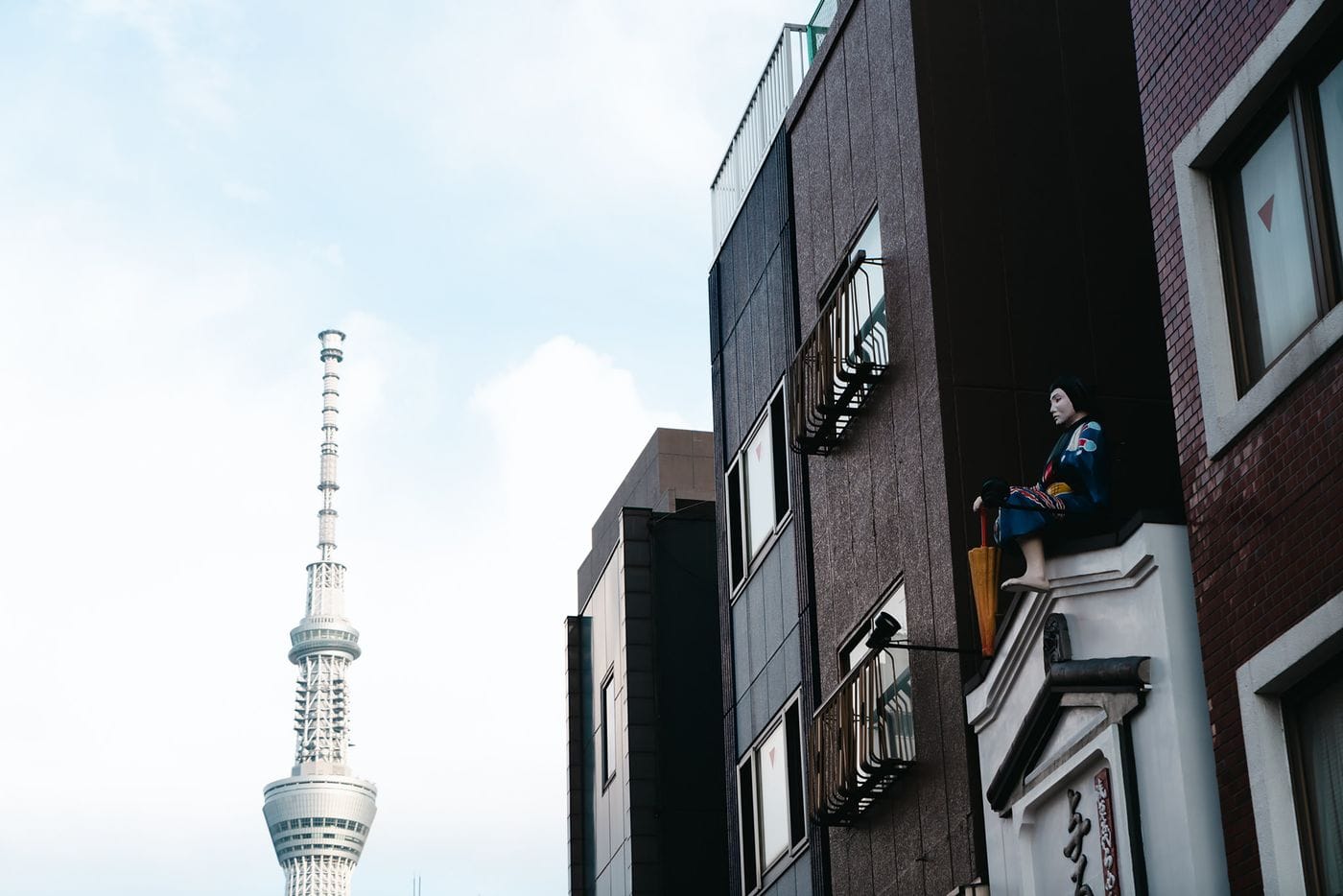
🗼 Tokyo Skytree (10 min walk)
At 634 metres, the world’s tallest tower is walkable from Asakusa along the Sumida River. The observation decks at 350m and 450m deliver extraordinary views — including, on clear days, Mount Fuji to the west and the Pacific Ocean to the east. The surrounding Solamachi shopping complex contains excellent food and retail options.
🛺 Rickshaw Rides & Yukata Rental
Several operators offer human-pulled rickshaw tours of the Asakusa temple district — the pullers double as knowledgeable guides and the experience is genuinely memorable. Yukata (summer kimono) rental shops near Senso-ji let you spend a full day in traditional dress, which transforms the experience of walking the temple grounds significantly.
🚢 Tokyo Mizube Water Bus — Asakusa to Odaiba
The Tokyo Cruise water bus departs from Asakusa Pier along the Sumida River, passing under 12 bridges before reaching Odaiba on Tokyo Bay. The journey takes approximately 50 minutes and offers a completely different perspective on Tokyo’s waterfront than any other form of transport. Affordable, scenic, and genuinely enjoyable.
Food & Drink Near Asakusa: Traditional Flavours & Hidden Gems
Asakusa’s food scene reflects its character — rooted in tradition, surprisingly affordable, and rewarding for those who explore beyond the main temple approach.
🍣 Edo-mae Sushi & Unagi
Asakusa has long been associated with Edo-period cuisine — particularly unagi (eel) and traditional sushi. Several multi-generation restaurants in the area serve dishes that have remained essentially unchanged for over a century.
🍡 Nakamise Street Food
The stalls along Nakamise-dori and the surrounding lanes sell ningyo-yaki (small cakes filled with bean paste), melonpan, senbei (rice crackers), and seasonal sweets. One etiquette note: on Nakamise-dori itself, stallholders ask you to eat standing beside the stall rather than while walking — step aside, enjoy, and move on.
🍺 Hoppy Street (Hoppy-dori)
A short street of standing and seated izakayas that has served the neighbourhood since the postwar era. The specialty is hoppy — a low-alcohol beer substitute from the 1940s — alongside motsu (offal) stew. Unpretentious, inexpensive, and very local.
Top 3 Recommended Hotels Near Asakusa
From a rooftop view of Kaminarimon to family-sized apartment suites — Asakusa’s hotel options match its neighbourhood’s depth. (Rates are typical doubles, checked July 17, 2026.)
🏮 The Gate Hotel Kaminarimon by Hulic
UPPER MID-RANGE
From approx. ¥25,000 / night · 2 min walk from Asakusa Station
The Gate Hotel’s position directly opposite Kaminarimon Gate gives upper-floor rooms one of the most extraordinary hotel views in Tokyo — the temple gate, the lantern, and the Senso-ji approach stretching back through the cityscape. The rooftop bar is one of the neighbourhood’s finest evening destinations, combining the temple view with Tokyo Skytree visible to the east. For a hotel that puts you inside the Asakusa experience rather than adjacent to it, this is the premier choice.
✦ Best for: Couples, special occasions, Senso-ji view rooms, rooftop bar evenings
🏠 Mimaru Tokyo Asakusa Station
MID-RANGE
From approx. ¥20,000 / night · 1 min walk from Asakusa Station
Mimaru’s apartment-style rooms — with full kitchens, washing machines, and floor plans designed to sleep 4 to 6 people comfortably — are genuinely rare in central Tokyo and a significant practical advantage for families and groups. The per-person cost at Mimaru, once divided across a family, is often lower than comparable mid-range options. One minute from the station and within easy walking distance of Senso-ji, the location is exceptional. A consistent recommendation for family travel in Tokyo.
✦ Best for: Families, groups, extended stays, self-catering travelers
🌿 OMO3 Asakusa by Hoshino Resorts
MID-RANGE
From approx. ¥18,000 / night · 5 min walk from Asakusa Station
Hoshino Resorts’ OMO brand is built around a specific philosophy: hotels should make guests experts in their surrounding neighbourhood. The OMO Rangers — staff trained as local guides — run free walking tours of Asakusa and curate constantly updated recommendations for food, craft, and culture. For solo travelers and couples who want to understand Asakusa rather than simply be near it, OMO3 offers something no other hotel in the area matches: genuine local knowledge, built into the stay.
✦ Best for: Solo travelers, curious couples, neighbourhood explorers, culture-focused visits
Frequently Asked Questions
Is Asakusa a good area to stay in Tokyo?
Yes — particularly for first-time visitors who want to experience traditional Japanese culture alongside modern Tokyo. The area is well-connected by two subway lines, within easy reach of Ueno, Akihabara, and central Tokyo, and offers some of the most visually distinctive streets in the city. It is quieter than Shinjuku or Shibuya, which many travelers find preferable.
How far is Asakusa from Shinjuku?
Approximately 35–40 minutes by subway. The most direct route is the Ginza Line to Shibuya, then transfer to the Yamanote Line north to Shinjuku — or the Toei Oedo Line with one transfer. The journey is entirely manageable and does not require taxis or express trains.
Is Asakusa safe at night?
Yes. Like the overwhelming majority of central Tokyo, Asakusa is extremely safe at all hours. The area becomes noticeably quieter after 9pm as most temple-area shops close, which some visitors find peaceful and others find limiting — plan evening dining in advance or explore the Hoppy Street izakaya area which stays lively later.
When is the best time to visit Senso-ji?
Early morning — ideally before 7am. The temple is open 24 hours and the dawn light on the main hall, with almost no other visitors present, is one of Tokyo’s genuinely special experiences. By mid-morning the crowds are significant; by midday in high season they can be extreme.
Overall Rating: Asakusa Area
| Category | Rating | Notes |
|---|---|---|
| Haneda Airport Access | ★★★★★ | Toei Asakusa Line direct — no transfer, ~35 min |
| Narita Airport Access | ★★★★☆ | Ueno Skyliner or NEX transfer, ~55 min |
| West Japan Shinkansen | ★★★☆☆ | Tokyo Station ~20 min by subway |
| North Japan Shinkansen | ★★★★☆ | Ueno Station ~10 min on Ginza Line |
| Local Neighbourhood Feel | ★★★★★ | Most atmospheric old-Tokyo character in the city |
| Family Friendliness | ★★★★★ | Safe streets, visual interest, family hotel options |
Who Should Stay in Asakusa?
✔ First-time Tokyo visitors
✔ Families with children
✔ Traditional Japan seekers
✔ Photographers & culture lovers
✔ Haneda Airport users
✔ Tokyo Skytree visitors
This post contains affiliate links. If you book through our links, we may earn a small commission at no extra cost to you. We only recommend hotels we genuinely believe in.