This article may contain affiliate links. If you book through them, we may earn a small commission at no extra cost to you.
Tokyo Subculture Walking Tour · Neon to Retro
Walking Akihabara, Kanda, and Jimbocho:
Tokyo’s Ultimate Subculture & Retro Route
Watch Modern Pop Culture Melt into Showa Nostalgia and Historic Literary Charm
🚶 Non-stop walk: ~30 mins
☕ With stops: 1.5–2.5 hours
🗺️ Distance: Approx. 2.5 km (1.5 miles)
📚 Vintage Books & Curry
On this page
- Introduction: The Hidden Connection of Tokyo’s Cultural Trio
- Route Overview & Fast Facts
- STEP 1: Start in the Neon Heart of Akihabara (Electric Town)
- STEP 2: Cross Manseibashi to Retro Kanda
- STEP 3: Walk Yasukuni-dori toward the Literary Haven of Jimbocho
- The Ultimate Subculture Food Guide: What to Eat Along the Way
- Conclusion: Connecting Tokyo’s Creative Brains
- Practical Access & Transit Information
- Where to Stay Nearby
- Who is This Walking Route Perfect For?
- Keep exploring
Introduction: The Hidden Connection of Tokyo’s Cultural Trio
To most international travelers, Akihabara, Kanda, and Jimbocho represent three completely unrelated subcultures. Akihabara is the neon-lit capital of anime and electronics. Kanda is the gritty, historic neighborhood of corporate salarymen and traditional festivals. Jimbocho is a quiet, nostalgic haven for vintage book hunters and curry lovers.
If you look at a train map, you might think you need to take multiple train lines to visit them all. But as a Tokyo born-and-raised local, let me reveal the truth: These three neighborhoods are practically the same area, connected by a single, flat, fascinating walking route.
[Akihabara Otaku Culture] ➔ 10-Min Walk ➔ [Kanda Retro Streets & Food] ➔ 15-Min Walk ➔ [Jimbocho Book & Curry Town]
Walking from the heart of Akihabara to Kanda takes about 10 minutes. From Kanda to Jimbocho is another 15 minutes. By taking this Akihabara Jimbocho walking route on foot, you will experience an incredible cultural transformation—watching modern Japanese pop culture seamlessly melt into Showa-era nostalgia and historic literary charm.
Let’s dive into Tokyo’s ultimate 1-hour subculture walk.
Route Overview & Fast Facts
| Item | Details |
|---|---|
| Starting Point | Akihabara Station (Electric Town Exit) |
| Ending Point | Jimbocho Station |
| Total Distance | Approx. 2.5 km (1.5 miles) |
| Duration | 30 mins (Walking only) / 1.5–2.5 hours (With shopping & eating) |
| Difficulty | ★☆☆☆☆ (Completely flat, very easy to navigate) |
| Best Time to Visit | Afternoon (Shops in Akihabara and Jimbocho open around 11:00 AM) |
| Best Season | Year-round |
The Route Flow at a Glance
Akihabara Station (Electric Town Exit)
↓ (Exploration of Anime & Electronics Shops)
Manseibashi Bridge & Kanda River
↓ (10-min walk / Akihabara to Kanda walk)
Kanda Station Area (Historic Alleys & Architecture)
↓ (15-min walk along Yasukuni-dori)
Jimbocho Used Book District
↓ (Exploration of Bookstores & Curry Cafes)
Jimbocho Station
STEP 1: Start in the Neon Heart of Akihabara (Electric Town)
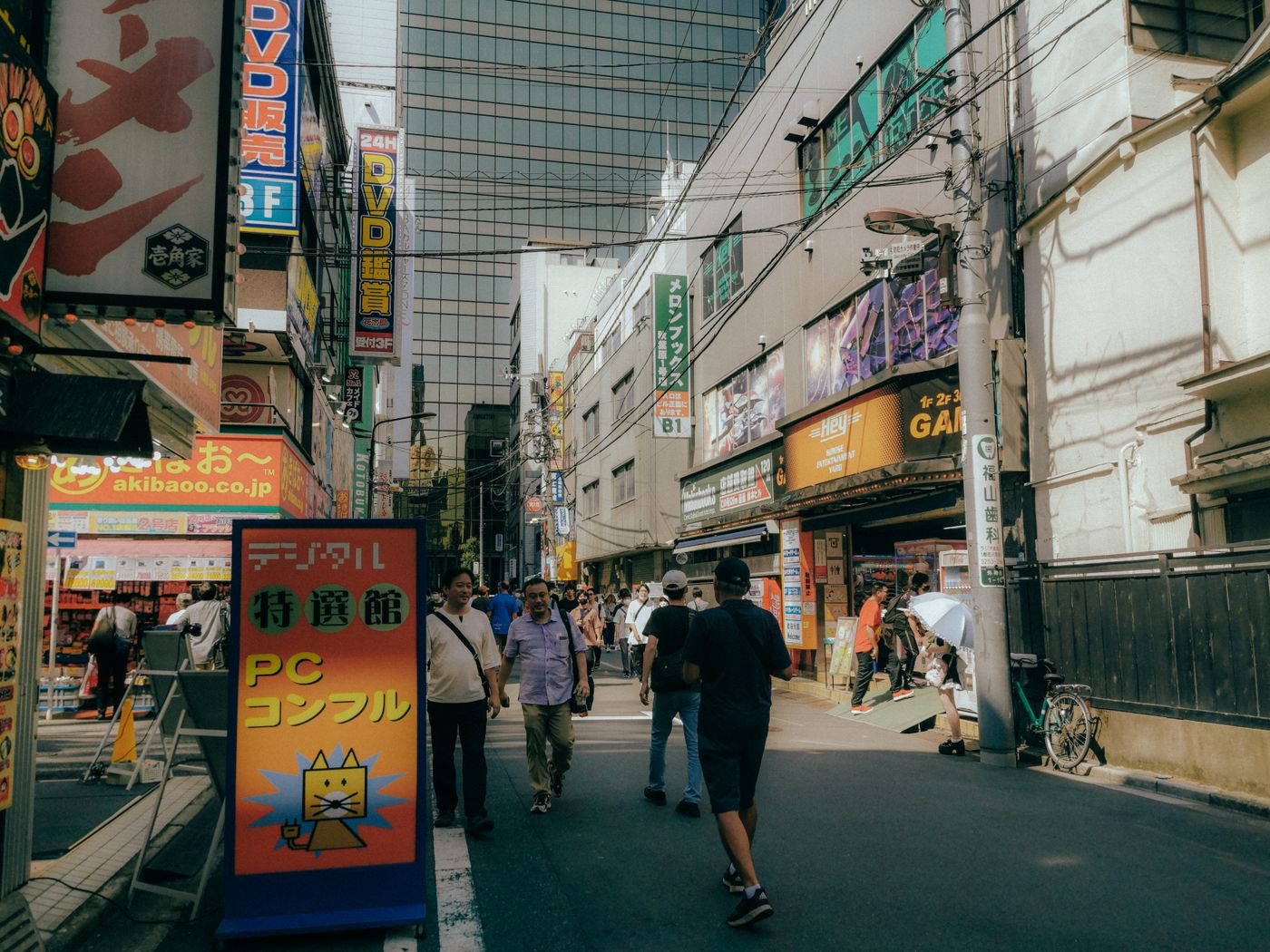
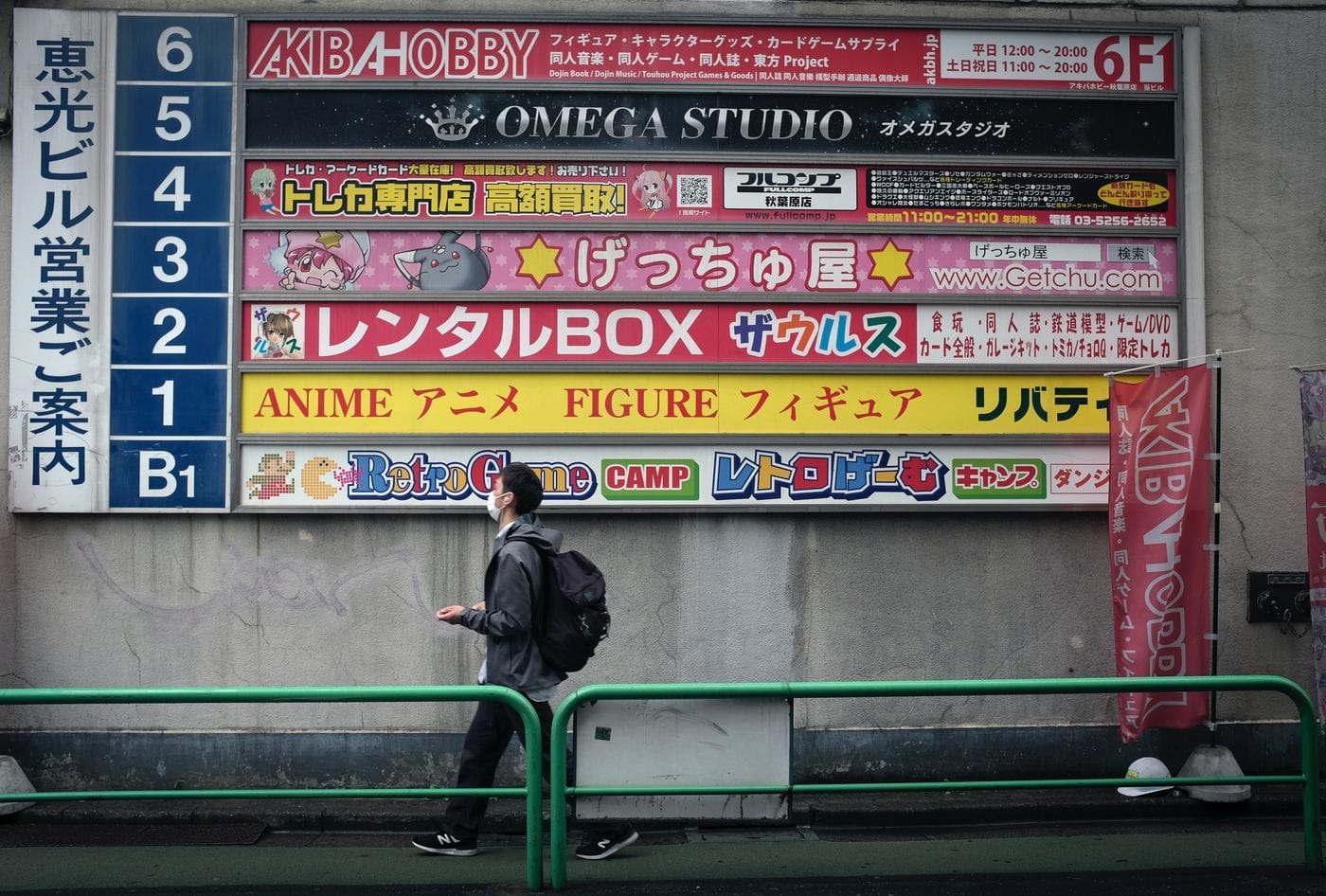
Your journey begins at Akihabara Station. Head out through the Electric Town Gate (Denki-gai), and you are instantly greeted by towering skyscrapers covered in anime billboards, massive retro gaming arcades, and multi-story electronics mega-stores like Yodobashi Camera.
Spend some time exploring the multi-level hobby shops like AmiAmi or Mandarake, or hunt for vintage video games at Super Potato. Once you’ve had your fill of modern pop culture, head south down the main street (Chuo-dori) toward the Kanda River.
💡 Local’s Hidden Gem: The Electronic Components Alleys
Before leaving Akihabara, duck into the narrow, maze-like alleyways directly underneath the JR train tracks near the station. Known as the Akihabara Radio Center, these tight corridors are packed with tiny stalls selling wires, microchips, radio parts, and LEDs. This is the raw, 1950s blueprint of Akihabara before the anime boom arrived.
STEP 2: Cross Manseibashi to Retro Kanda
As you enjoy your Akihabara to Kanda walk heading south, you will cross the Kanda River via Manseibashi Bridge. Immediately on your left, you will see a beautiful red-brick structure built into the side of the river. This is mAAch ecute Kanda Manseibashi.
Originally built in 1912 as a bustling train station, it has been beautifully preserved and converted into a chic, modern promenade filled with craft beer bars, artisan coffee shops, and boutique design stores. You can even walk up to the old platform level to watch trains pass right by your table. Crossing the bridge brings you straight into Kanda, a neighborhood that feels like stepping back into mid-century Tokyo.
🏮 Local’s Insight: Pre-War Architecture
Kanda is famous for its historic, pre-war architecture that miraculously survived both the Great Kanto Earthquake of 1923 and the bombings of WWII. Keep an eye out for places like Kanda Yabusoba (a legendary handmade soba restaurant operating in a classic Japanese house) or Kanda Matsuya. The architectural shift from Akihabara’s glass skyscrapers to Kanda’s wooden facades happens in a matter of minutes. For more detail, check out a complete Kanda neighborhood guide Tokyo.
STEP 3: Walk Yasukuni-dori toward the Literary Haven of Jimbocho
From the Kanda Station area, turn west onto Yasukuni-dori Street. This wide, straight avenue leads you directly into Jimbocho. As you walk this 15-minute stretch, the loud neon signs completely fade away, replaced by a quiet, sophisticated atmosphere. The air begins to smell faintly of old paper and freshly brewed coffee. You have arrived in the world’s largest secondhand bookstore district.
Jimbocho book town curry culture is legendary. The area is home to around 150 bookstores, specialized publishing houses, and cozy literary cafes. Here are the three highlights you cannot miss along this section of your stroll:
Three Must-Visit Highlights in Jimbocho
📚 1. The North-Facing Bookstalls
Almost all bookstalls face North to protect delicate vintage books from direct sunlight damage. Even if you don’t read Japanese, shops like Kitazawa Shoten specialize in vintage English literature, antique maps, and beautiful woodblock prints (Ukiyo-e).
☕ 2. Classic Jazz Cafes (Jazz Kissa)
Jimbocho beautifully preserves traditional coffee shops (Kissaten). Many are Jazz Kissa—dark, moody hideaways where high-end vinyl record players spin jazz while patrons read in silence. Try Milonga Nueva or Ladrio.
🍛 3. The Holy Land of Curry
Jimbocho is universally recognized as the curry capital of Tokyo. Local lore says that because university students and bookworms wanted a quick meal they could easily eat with one hand while holding a book with the other, curry became the ultimate comfort food.
The Ultimate Subculture Food Guide: What to Eat Along the Way
🤖 1. Akihabara Area
Maid Cafes & Character Food: For a purely subcultural experience, stopping at a Maid Cafe for a decorated omelet rice (Omurice) is a classic tourist rite of passage.
Gritty Gado-shita Ramen: Under the tracks, Akihabara features highly competitive, heavy-broth ramen shops catering to hungry shoppers and tech hunters.
🏮 2. Kanda Area
Traditional Soba: Kanda has some of the oldest buckwheat noodle shops in Tokyo. Eating cold Zaru Soba with a side of crispy tempura in a century-old room is an incredible local experience.
Salaryman Izakayas: If you walk through Kanda in the evening, the area under the tracks transforms into a paradise of casual yakitori (chicken skewer) stalls and standing bars.
🍛 3. Jimbocho Area
Jimbocho Curry: You cannot leave without trying the local curry. Bondy is legendary for its rich, European-style beef curry served with a side of steamed potatoes. If you prefer Japanese-style retro curry, head to Kyoeido for their unique, dark-roasted Sumatra curry.
Conclusion: Connecting Tokyo’s Creative Brains
If Akihabara represents the hyper-modern, digital imagination of Tokyo, Jimbocho represents its historic, literary soul, while Kanda serves as the timeless, hardworking bridge between them.
By walking this short 2.5 km route, you get to see how Tokyo transitions between its different creative subcultures. It proves that Tokyo isn’t just a collection of disconnected train stations—it is a living, breathing tapestry where tech, history, and literature live side-by-side.
Practical Access & Transit Information
| Station | Available Train & Subway Lines |
|---|---|
| Starting Point: Akihabara Station |
JR East: Yamanote Line, Keihin-Tohoku Line, Chuo-Sobu Line Tokyo Metro: Hibiya Line (H16) Tsukuba Express |
| Ending Point: Jimbocho Station |
Tokyo Metro: Hanzamon Line (Z07) Toei Subway: Mita Line (I10), Shinjuku Line (S06) |
Where to Stay Nearby
The Akihabara/Kanda area is one of the most practical transit locations in Tokyo. It offers an abundance of modern capsule hotels, high-tech business hotels, and mid-range accommodations. Staying here gives you immediate, easy train access to Tokyo Station, Shinjuku, and both Haneda and Narita airports. It’s an exceptional choice for those embarking on a self-guided Tokyo subculture walking tour.
Who is This Walking Route Perfect For?
✔ Anime fans who also want to discover Tokyo’s nostalgic, pre-war history
✔ Book lovers looking for unique English vintage finds and antique woodblock prints
✔ Foodies determined to hunt down the best authentic Japanese-style curry and classic coffee
✔ Travelers looking for a completely flat, easy-to-navigate 1-hour walking itinerary
“`
🏨 Planning where to stay?
Every area guide on this site pairs with honest, station-by-station hotel picks. Start here: Tokyo Hotel Guides →