This article may contain affiliate links. If you book through them, we may earn a small commission at no extra cost to you.
On this page
Introduction: The Town at the End of the Peninsula
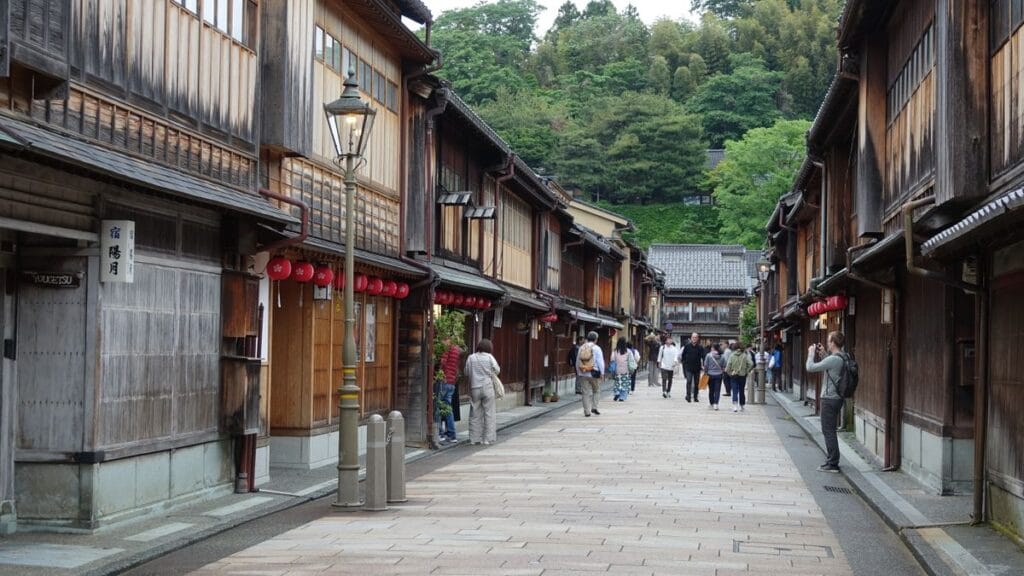
The Noto Peninsula (能登半島) extends northward from Kanazawa into the Sea of Japan like a peninsula reaching toward the Asian continent. As you travel north along this peninsula — through rice paddies, fishing villages, salt farms, and the gradually narrowing roads of the remote coast — the landscape becomes progressively more isolated from the infrastructure of modern Japan until, at the northern tip, you arrive at Wajima (輪島).
Wajima is a city of approximately 25,000 people (declining, as rural Japan depopulates) that has maintained two specific cultural practices at the highest level for several centuries: the production of Wajima-nuri (輪島塗 / Wajima lacquerware) — considered Japan's finest quality lacquer tradition — and the Wajima Asaichi (輪島朝市 / Wajima Morning Market) — one of Japan's three great morning markets, held nearly every day for roughly 1,000 years until the 2024 earthquake and fire.
The city was severely damaged by the Noto Peninsula Earthquake on January 1, 2024 (magnitude 7.6), which caused significant loss of life and structural damage throughout the peninsula. Wajima was one of the most affected areas — visitors should check current conditions, as recovery is ongoing. Many of the lacquerware workshops and the morning market area sustained damage; recovery efforts reflect the community's deep commitment to preserving these traditions.
Wajima-nuri (輪島塗): Japan's Supreme Lacquer Tradition
Wajima lacquerware has been produced in the area for approximately 600 years, and the quality designation — the specific combination of materials, techniques, and standards that defines genuine Wajima-nuri — is recognized by Japanese craft specialists as the most demanding and most durable of Japan's lacquer traditions.
What Makes Wajima-nuri Different
The base material (地の粉 / Ji-no-ko): Wajima lacquerware uses a specific type of diatomite (珪藻土 / keisōdo) found only in the local geology as a powder mixed with the lacquer base coats. This material — siliceous earth composed of fossilized diatom shells — creates a bond between the base layers that is significantly more durable than standard lacquer preparations.
The number of coats: A genuine Wajima-nuri piece undergoes 75–124 separate lacquer applications, each applied individually and cured between applications. The building of these layers over weeks or months creates the specific depth and resilience of the finished surface.
The urushi (漆 / raw lacquer): The sap of the Rhus vernicifera tree — applied in its raw state and each coat hardening through a specific curing process involving temperature and humidity control — is the fundamental material. Wajima's lacquer tradition maintains the highest standards for both raw material quality and application technique.
The Wajima Museum of Urushi Art (石川県輪島漆芸美術館)
The museum — which fully reopened on November 23, 2024 after the earthquake — provides the most complete English-language presentation of the tradition's history, techniques, and masterwork examples — the essential context for understanding what distinguishes Wajima-nuri from other Japanese lacquer traditions.
Workshop visits: Several lacquerware workshops in Wajima allow visitors to observe the production process and, in some cases, participate in applying a simple coat of lacquer (experience programs available, approximately ¥2,000–¥3,000). The specialization within the tradition — different craftspeople responsible for different stages — is visible in the workshop structure.
The Wajima Asaichi (輪島朝市): Japan's Living Morning Market
Wajima Asaichi — the Wajima Morning Market — is one of Japan's three celebrated morning markets, traditionally counted alongside Katsuura’s market in Chiba and Takayama’s in Gifu. For roughly 1,000 years it ran on the town’s main street from morning to noon nearly every day — until the fire that followed the January 2024 earthquake destroyed the market street. As of July 2026, the market has restarted in a reduced form inside the “Wai Plaza Wajima” commercial building nearby, with some vendors also running traveling “Asaichi Caravan” markets in Kanazawa; the historic street itself is being rebuilt. Visiting the temporary market is one of the most direct ways travelers can support the recovery. (Status checked July 17, 2026.)
The sellers: The market is operated primarily by local women — fishing families, farm families, and food processors — selling directly from their production: fresh and dried seafood from the local fishers' wives, preserved vegetables, pickles, seasonal produce from the surrounding agricultural area, and the craft products (lacquerware, textiles) of the Wajima tradition.
The atmosphere: The Wajima market is not a formatted tourist attraction — it is an active commercial operation serving the local community as its primary function, with visitor participation as a secondary benefit. The women who sell at the market have often occupied the same stall space for decades, and the relationships between sellers and regular buyers reflect the market's community function.
What to buy:
Dried and pickled seafood: The Noto Peninsula's Sea of Japan seafood — dried squid, dried sea cucumber, pickled tuna — in forms with shelf life appropriate for travel.
Noto salt (能登の塩): Sea salt from the traditional salt pans of the Noto Peninsula coast — one of Japan's most distinctive and finest sea salts.
- Lacquerware: Small lacquer pieces (cups, chopstick rests, trays) at market prices rather than gallery prices.
The Noto Peninsula: Beyond Wajima
The peninsula surrounding Wajima has significant natural and cultural interest:
Shiroyone Senmaida Rice Terraces (白米千枚田): The "Thousand Rice Paddies" — a series of 1,004 small terraced rice paddies descending a cliff face to the Sea of Japan — is one of Japan's most celebrated agricultural landscapes. In autumn, the terraces' golden color against the grey Sea of Japan below creates photographs of extraordinary power. The terraces are illuminated with solar-powered LED lights from October through March.
Recommended Base Hotels
Wajima
Accommodation in Wajima itself remains limited during reconstruction — check current availability carefully before planning an overnight stay.
Kanazawa (Day Trip Base)
The 2024 earthquake has affected Noto Peninsula accommodation significantly. For current conditions, Kanazawa hotels provide the most reliable base for a Noto Peninsula day trip:
- Hotel Nikko Kanazawa (Mid-range / from ¥16,000): Direct highway bus access to Wajima.
- Note: Please verify current accessibility and accommodation availability due to ongoing earthquake recovery.
Planning where to stay in Chubu? Browse our honest hotel picks and area guides.
🏨 Planning where to stay?
Every area guide on this site pairs with honest, station-by-station hotel picks. Start here: Hotel Guides by Station →