This article may contain affiliate links. If you book through them, we may earn a small commission at no extra cost to you.
On this page
Introduction: The Sound That Defines Japanese Summer
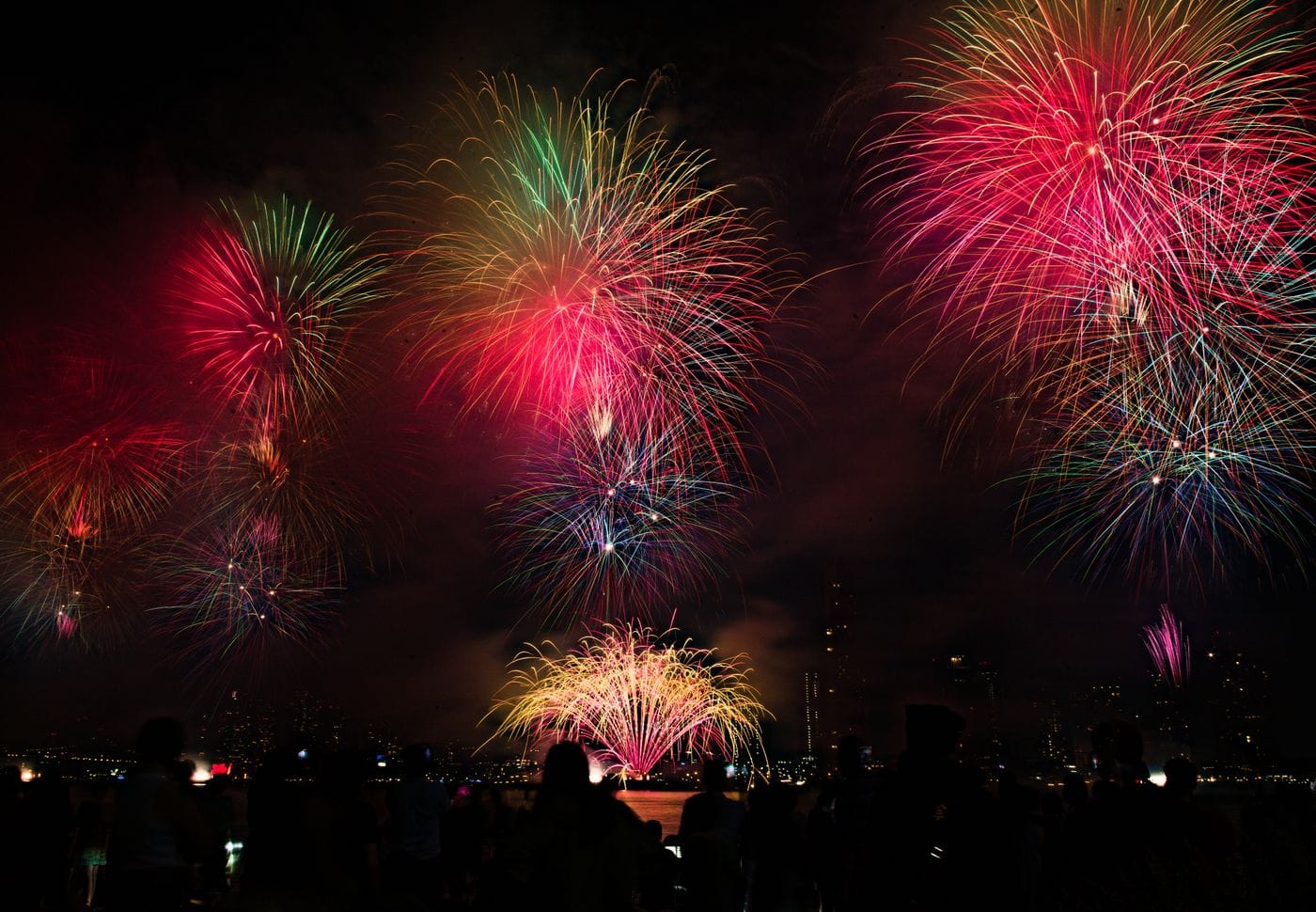
Hanabi taikai (花火大会 / fireworks festivals) are the defining summer event of the Japanese calendar — large-scale, professionally produced firework displays, often launching tens of thousands of shells over a single evening, attended by crowds in traditional yukata, accompanied by festival food stalls and the specific social ritual of claiming riverside or parkside viewing positions hours before the display begins.
Tokyo hosts dozens of hanabi taikai throughout July and August, ranging from neighborhood-scale displays to the massive Sumida River Fireworks Festival, which draws over 900,000 spectators in a single evening.
The Major Tokyo Fireworks Festivals
Sumidagawa Hanabi Taikai (隅田川花火大会): The Original
Sumida River Fireworks Festival — held annually on the fourth Saturday of July (July 25 in 2026, from 7:00 PM) — is Tokyo's oldest and most prestigious fireworks display, with origins traced to 1733. The festival launches approximately 20,000 shells over two competing launch sites along the Sumida River, attracting approximately 900,000–1,000,000 spectators along the riverbanks between Asakusa and the surrounding districts.
Viewing strategy: The official riverside viewing areas near Asakusa become extremely crowded; arriving by 3:00–4:00 PM is necessary to secure a comfortable position for the 7:00 PM start. Alternative viewing from the upper floors of buildings, rooftop restaurants, and the Tokyo Skytree's observation decks (advance booking essential) provides comfortable viewing without the ground-level crowd management.
Jingu Gaien Fireworks Festival (神宮外苑花火大会)
Held in mid-August near the Meiji Jingu Gaien sports complex — one of Tokyo's largest fireworks festivals by shell count, with the advantage of the Gaien's open spaces providing more comfortable viewing logistics than the riverside festivals.
Edogawa Hanabi Taikai (江戸川花火大会)
Held along the Edogawa River in eastern Tokyo in early August — approximately 14,000 shells over 75 minutes, with a less central but also less crowded viewing experience than the Sumidagawa festival.
Itabashi Hanabi Taikai (板橋花火大会)
Northern Tokyo's major fireworks festival, notable for its starmine (スターマイン) — rapid-fire continuous launches that create sustained visual sequences rather than individual isolated shells.
How to Watch: Practical Strategy
The picnic strategy: Bring a blue tarp (ブルーシート / buruu shiito, sold at every convenience store during festival season) to claim and mark a viewing position. Arriving several hours early and picnicking while waiting is the standard Japanese approach to fireworks viewing — not a compromise but the actual intended experience.
The yukata tradition: Wearing a yukata (浴衣) — the casual summer cotton kimono — to fireworks festivals is a specific Japanese custom, particularly among young people and couples. Rental yukata services (¥3,000–¥6,000 including dressing assistance) are available near most major festival sites.
The premium alternative: For visitors who prefer comfort over the ground-level crowd experience, rooftop bars, hotel rooms with river views, and reserved restaurant seating along major fireworks routes (particularly along the Sumida River) provide premium viewing at significant cost (¥10,000–¥50,000+ depending on the venue) but without the multi-hour ground positioning requirement.
Food: All major fireworks festivals are accompanied by extensive yatai (屋台) food stall corridors — the festival food culture (takoyaki, yakisoba, kakigori, candy apples) is a significant part of the experience independent of the fireworks themselves.
Crowd Management Reality
The Sumidagawa festival's scale means that train stations near the venue experience significant congestion both before and especially after the display — the post-fireworks crowd surge at Asakusa Station can mean 30–60 minute waits for train access. Planning a post-fireworks meal or drink at a venue away from the immediate crowd, allowing the initial surge to disperse before heading to the station, is the locally understood strategy.
Planning where to stay in Tokyo? Browse our honest hotel picks and area guides.
🏨 Planning where to stay?
Every area guide on this site pairs with honest, station-by-station hotel picks. Start here: Tokyo Hotel Guides →