This article may contain affiliate links. If you book through them, we may earn a small commission at no extra cost to you.
On this page
Introduction: The Neighborhood That Refused to Change
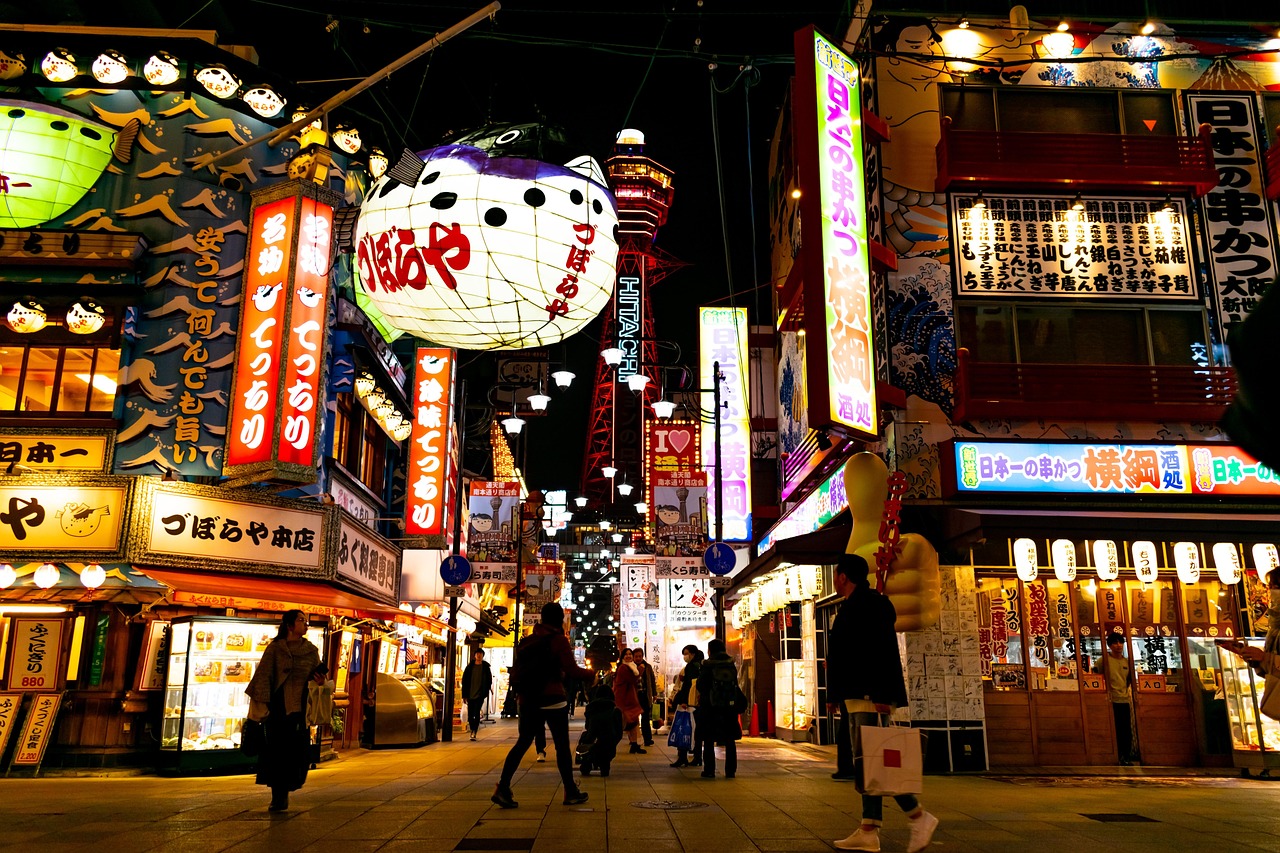
In the late 19th century, the area south of Osaka's Tennoji district was developed as a model of international modernity — Shinsekai (新世界 / "New World") was laid out as two intersecting axes, the northern half modeled on Paris (with the Tsūtenkaku tower as an Eiffel-Tower analogue), the southern half on Coney Island in New York. It was Osaka's vision of the future, built in 1912.
The future did not cooperate. Economic downturns, wartime privation, and the migration of Osaka's commercial gravity northward left Shinsekai behind — its entertainment culture persisting in an increasingly anachronistic form, its residents remaining while the surrounding city modernized around them. The neighborhood became known for poverty, gambling, and social marginalization.
What it also became, without intending to, is the most complete surviving piece of prewar Osaka urban culture in existence. And what no one anticipated is that this accidental preservation would make it, in the 21st century, one of the most interesting neighborhoods in Japan.
Tsūtenkaku (通天閣): The Tower That Defines Shinsekai
The Tsūtenkaku — "Tower Reaching Heaven" — is Shinsekai's symbol and one of Osaka's most recognizable landmarks. The current tower (the second, built in 1956 after the original was dismantled for wartime metal) stands 103 meters tall and is visible from most of the surrounding streets. Its neon illumination pattern changes with weather forecasts — a function dating to 1963 that gives it the quality of a civic weather oracle.
The observation deck (entry approximately ¥900) provides views across Osaka that are less elevated than Abeno Harukas but more intimately connected to the surrounding neighborhood. The exterior elevator is glass-walled and faces the Shinsekai streetscape below — a good orientation exercise before descending to street level.
Billiken (ビリケン): Inside the Tsūtenkaku, a golden statue of the Billiken — a cheerful American "god of things as they ought to be," imported as a good-luck figure by Japanese merchants in the early 20th century — is Osaka's unofficial mascot. Rubbing his feet is said to bring good luck.
Janjan Alley (ジャンジャン横丁): Old Osaka Under the Tracks
Janjan Alley (正式名称:南陽通商店街) — the covered arcade running beneath the Nankai railway tracks in Shinsekai — is the most complete surviving example of a prewar Osaka shotengai (shopping street) in the city. The arcade's 80-meter length contains:
Shogi (将棋) and go (囲碁) parlors where elderly men play board games as they have since the postwar years
Standing bars serving kushikatsu and draft beer from 10:00 AM
Small restaurants where the menu prices are the lowest of anywhere in central Osaka
- The particular quality of light that comes through an old covered arcade — dim, amber-toned, slightly out of time
Walking through Janjan Alley at any time of day is the most direct experience of the Osaka that existed before economic growth transformed the rest of the city.
Kushikatsu in Shinsekai: The Original
Kushikatsu was invented in Shinsekai. The specific origin is contested between several establishments — Daruma (だるま) and Yanagiya (柳屋) both claim historical precedence — but the character of Shinsekai kushikatsu is distinct from the versions served elsewhere in Osaka: simpler, less varied in ingredients, with a focus on beef, pork, and basic vegetables rather than the more elaborate ingredient lists of upscale kushikatsu restaurants.
Daruma is the most famous Shinsekai kushikatsu establishment — identified by the large Daruma doll faces on its exterior. At lunchtime, a queue typically forms outside. The experience inside is the original: narrow counter seating, no-nonsense service, communal sauce pot, the rule prominently posted: no double-dipping.
The Social Ecology of Shinsekai
It would be dishonest to describe Shinsekai without acknowledging its social complexity. The neighborhood has historically been home to Osaka's most economically marginalized residents — and this history is visible in the concentration of day-labor hotels, the presence of elderly men with nowhere else to go, and the general infrastructure of a district that has served people with limited options.
This is not a reason to avoid the neighborhood. It is a reason to approach it with the same respect you would any community rather than treating it as a themed attraction. The people eating kushikatsu at the standing bars, playing shogi in the arcades, and drinking beer in the afternoon are Shinsekai residents, not extras in a period drama.
Tsūtenkaku Neighborhood Walk
Beyond the main arcade and the kushikatsu restaurants, the streets surrounding Tsūtenkaku contain several specific points of interest:
Spa World (スパワールド): A large-scale hot spring and swimming pool complex in the southern part of Shinsekai — kitsch, comprehensive, and genuinely popular with Osaka residents. Themed bathing floors (European floors, Asian floors) represent a particular strain of Japanese spa culture.
Tennoji Zoo (天王寺動物園): Japan's third-oldest zoo (1915), sharing the park space with Tennoji Park — a good half-day destination if combining Shinsekai with the zoo.
Recommended Base Hotels
- Cross Hotel Osaka (Mid-range / from ¥12,000): Accessible to both Shinsekai and Dotonbori.
- Dormy Inn Namba (Mid-range / from ¥11,000): Natural hot spring, good Shinsekai access.
Planning where to stay in Osaka? Browse our honest hotel picks and area guides.
🏨 Planning where to stay?
Every area guide on this site pairs with honest, station-by-station hotel picks. Start here: Osaka Hotel Guides →