This article may contain affiliate links. If you book through them, we may earn a small commission at no extra cost to you.
On this page
Introduction: The Two Kilometers That Define Osaka
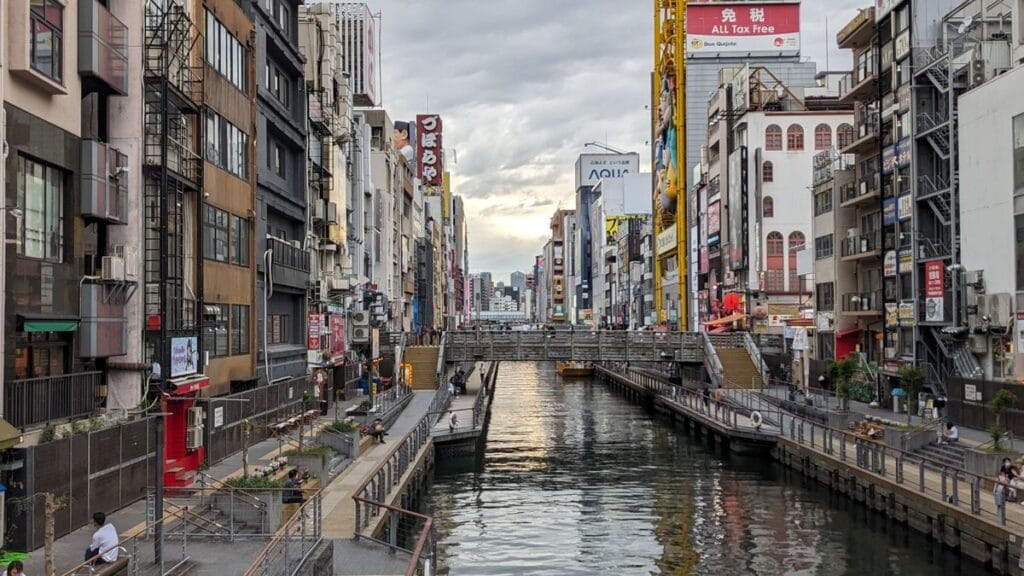
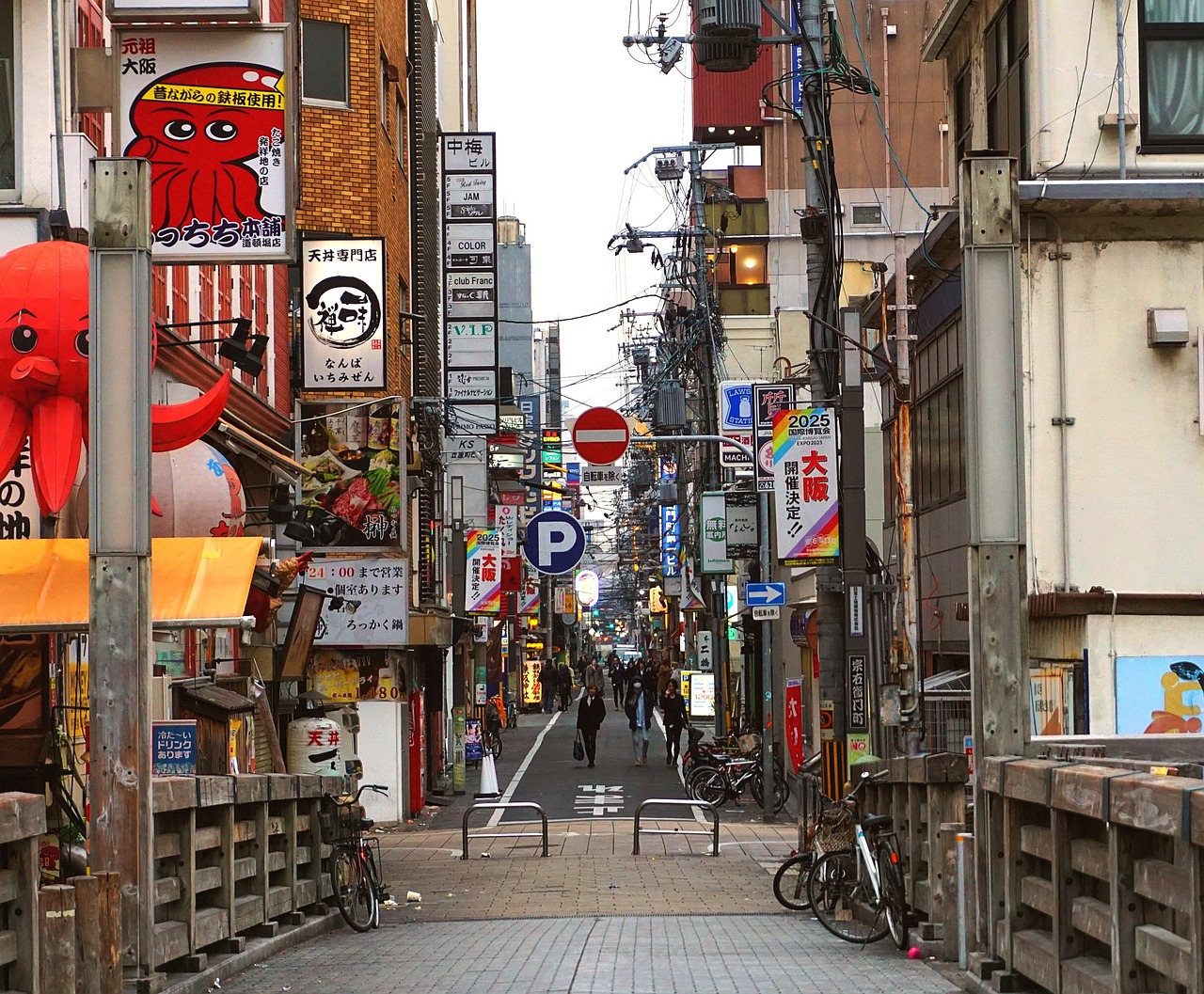
There are two kilometers of central Osaka that contain more restaurants, more visual spectacle, more human energy, and more food per square meter than almost any comparable urban space on earth. The corridor running from Dotonbori (道頓堀) canal north through the covered arcades of Shinsaibashi-suji (心斎橋筋) and its surrounding streets is not just Osaka's tourist center — it is the active, functioning heart of a city whose identity is inseparable from commercial and culinary life.
Walking this corridor slowly, stopping frequently, eating more than seems advisable, and paying attention to the details of the urban environment as well as the food — this is the correct way to experience the most concentrated expression of what Osaka actually is.
Dotonbori (道頓堀): Understanding the Spectacle
Dotonbori takes its name from Yasui Doton (安井道頓) — the merchant who funded the construction of the canal in 1615 during Osaka's commercial expansion under Toyotomi Hideyoshi. For 400 years, this canal-side strip has been Osaka's entertainment center: puppet theaters, kabuki stages, food stalls, and the merchant culture that gave Osaka its "merchant city" (商人の街) identity.
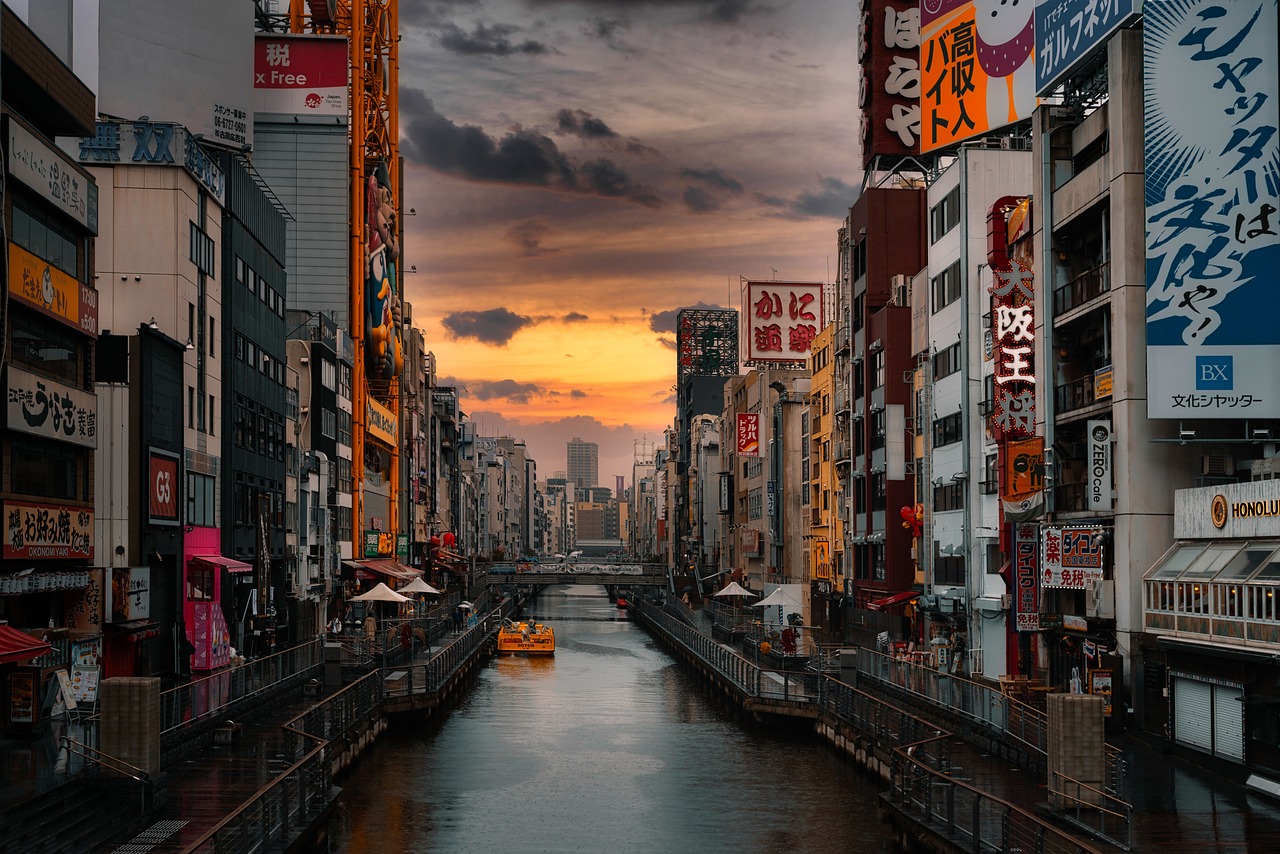
The contemporary neon spectacle — the Glico Running Man, the giant mechanical crab, the blowfish lanterns, the massive electronic displays — is the 21st century iteration of a performance that Dotonbori has been putting on for four centuries.
The Glico Running Man (グリコサイン)
The Glico Man — the running athlete silhouetted against an illuminated Osaka skyline — has been the symbol of Dotonbori since 1935. The current sixth-generation sign (installed 2014) is LED-illuminated and changes color. It is the most photographed spot in Osaka, and the canal-side Ebisu Bridge (戎橋) directly in front of it is always crowded with people taking the same photograph.
Composition tip: The best Glico Man photograph is not from Ebisu Bridge but from the western end of the canal walk, looking east, where the full sign appears in proportion with the canal and the surrounding buildings.
What to Eat on Dotonbori
Takoyaki (たこ焼き): Osaka's defining street food — golf-ball-sized battered dumplings containing octopus (tako), grilled in a special dimpled pan and topped with takoyaki sauce, bonito flakes, and mayonnaise. The bonito flakes move in the heat rising from the fresh-cooked balls, creating the characteristic "dancing" effect visible at every stall.
Key distinction: Aizuya (会津屋) in Dotonbori is the shop of the man who is credited with inventing modern takoyaki in 1933 — and their version is notably different from the sweeter, saucier versions sold at most Dotonbori stalls: firmer exterior, less sweet, with a focus on the octopus and dashi flavor rather than the toppings.
Kushikatsu (串カツ): Breaded and deep-fried skewers — every imaginable ingredient skewered on bamboo sticks, battered, and fried. The canonical rule of Osaka kushikatsu: no double-dipping the skewer in the communal sauce. Once it has touched your mouth, use the small ladle or pour sauce over the skewer directly.
Fugu (河豚): Dotonbori's blowfish restaurants — identifiable by the enormous lantern-shaped blowfish hanging above their entrances — serve the notoriously dangerous pufferfish that requires licensed chefs for preparation. The danger (the toxin, if incorrectly prepared, is lethal) is mostly managed; the experience of eating fugu in one of these restaurants is the combination of theatrical setting and genuine quality seafood.
The Canal Walk: Evening Illumination
The Dotonbori Riverside Walk (とんぼりリバーウォーク) runs alongside the canal — accessible via stairs from Ebisu Bridge. At night, the canal reflects the neon of the buildings above, creating a doubled spectacle that is one of Osaka's finest urban night experiences.
Walking west from Ebisu Bridge along the canal gives successively different angles on the signage above — the mechanical crab, the running man, the tower of various restaurant illuminations — and then opens onto a quieter stretch where the canal continues beneath older bridges with less commercial character.
Shinsaibashi-suji (心斎橋筋): Japan's Longest Shopping Arcade
Shinsaibashi-suji is a 600-meter covered shopping arcade running north from Dotonbori to Nagahori — one of Japan's longest and most commercially successful covered shopping streets. The arcade contains:
Apple Store Shinsaibashi: The flagship Japan Apple Store, housed in a building of notable architectural interest.
Department stores: The Daimaru Shinsaibashi store has occupied this location since 1726 — one of Japan's oldest department stores, though the current building dates to the postwar period.
Independent fashion: Interspersed between the international chains, small Osaka-based fashion shops maintain a local character.
Amerika-mura (アメリカ村): The Youth Culture District
Turn west from Shinsaibashi-suji into the grid of streets around Mitsu Park (三角公園) to enter Amerika-mura — "America Village." Despite the name (which comes from the American vintage goods that were sold here in the 1970s), this is one of the most distinctively Japanese youth fashion districts in the country: streetwear brands, vintage clothing, sneaker shops, takoyaki stalls, and the social energy of young Osaka.
The park at the center is Osaka's equivalent of Tokyo's Yoyogi Park on a Sunday afternoon — groups of young people, occasional street performers, and a sense of the city's youth culture doing what it actually does rather than performing for observers.
Evening: Dotonbori After Dark
Return to Dotonbori at 8:00 PM. The transformation of the corridor at night — the neon fully illuminated, the restaurants at full service, the streets at maximum density — is the version that most completely represents what Osaka is in popular imagination, and it is genuinely extraordinary. The combination of the visual spectacle, the food smells, the crowd energy, and the sound of the city creates a sensory environment that few places in the world match.
Recommended Base Hotels
- Cross Hotel Osaka (Mid-range / from ¥12,000 (approx. $80)): Shinsaibashi, ideal location for this walk.
Swissôtel Nankai Osaka (Luxury / from ¥35,000 (approx. $235)): Directly on Dotonbori — the view from upper floors over the canal is extraordinary.
Planning where to stay in Osaka? Browse our honest hotel picks and area guides.
🏨 Planning where to stay?
Every area guide on this site pairs with honest, station-by-station hotel picks. Start here: Osaka Hotel Guides →