This article may contain affiliate links. If you book through them, we may earn a small commission at no extra cost to you.
Kyoto Guide · Philosopher’s Path
Philosopher’s Path in Spring:
The Most Beautiful Urban Walk in Japan
2km Canal · 450 Cherry Trees · The Blossom Blizzard That Photographers Chase
🌸 Late March–early April: peak blossom
🌸 Hanafubuki (花吹雪) — petals on the canal water
⏰ Before 8:00 AM during blossom season
🍁 Beautiful in autumn & winter too
On this page
The Path Named for a Philosopher
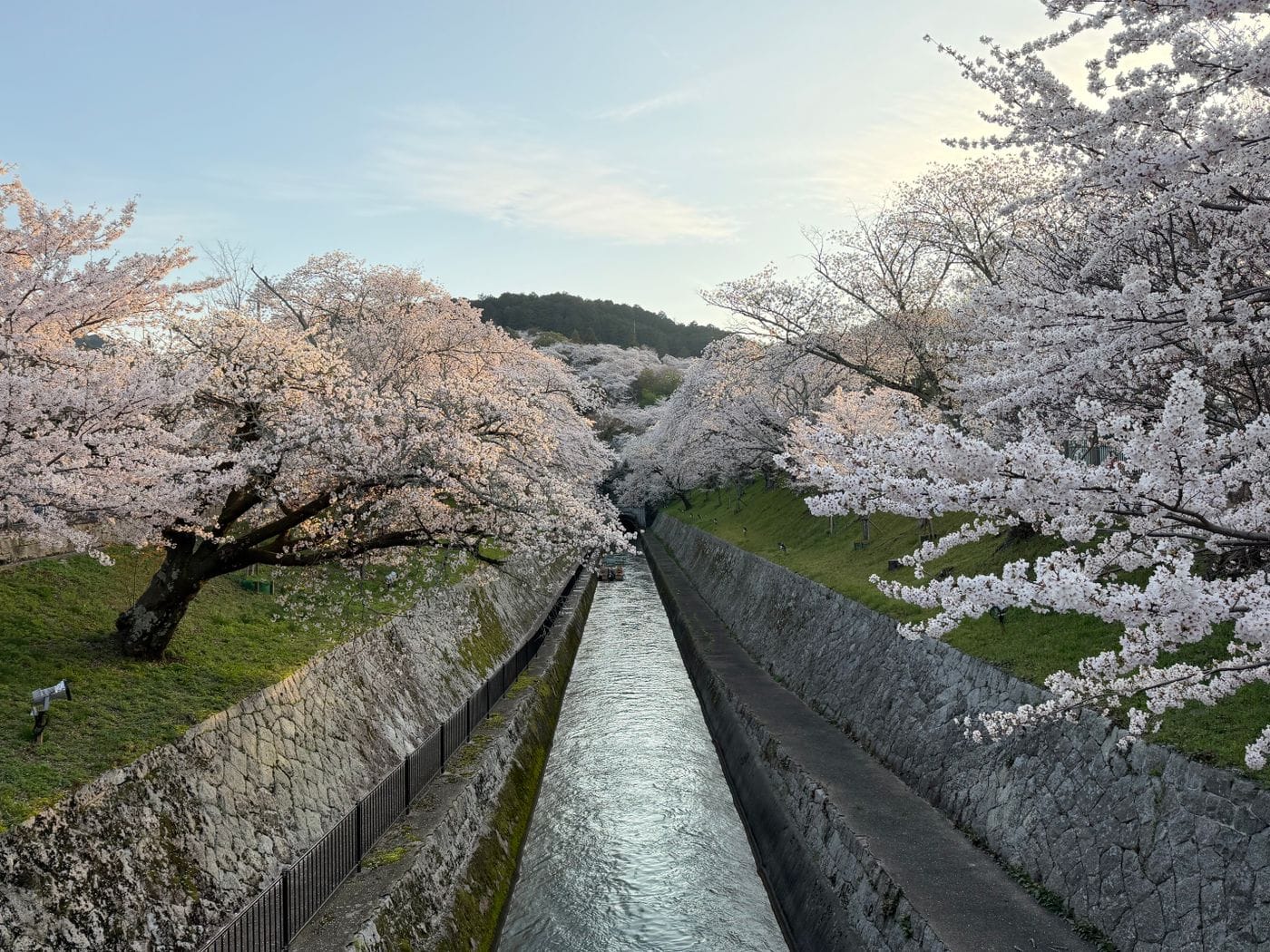
The Philosopher’s Path (哲学の道 / Tetsugaku no Michi) — named for Kyoto University philosopher Nishida Kitarō (西田幾多郎), who walked it daily in meditation — runs 2 kilometers along the Lake Biwa Canal through the Higashiyama foothills, lined with approximately 450 cherry trees. In late March and early April, the branches form a complete canopy over the canal when in full bloom.
At its best — early morning of peak blossom season, the canal still and the path empty — it invites exactly what Nishida practiced: a slow, wordless walk through an extraordinary natural phenomenon.
| Location | Sakyō-ku, Kyoto (between Nanzen-ji and Ginkaku-ji) |
| Length | Approximately 2 km · 30 min walking only; 1–2 hrs with stops |
| Best season | Late March to early April (cherry blossom) |
| Best time | Before 8:00 AM during blossom season |
| Access | 15 min walk from Nanzen-ji · 10 min from Ginkaku-ji |
Cherry Blossom Timing
Early March
Bare branches
Late March
Opening begins (20–30%)
Early April
PEAK BLOOM · 3–7 days
Mid-April
Hanafubuki (petals falling)
Late April
Full leaf, blossom finished
🌸 The Blossom Blizzard (花吹雪 / Hanafubuki)
When petals begin falling (typically 4–7 days after peak), the wind carries them along the canal surface in waves. Petals accumulate on the water, creating a pink carpet drifting slowly southward. Many photographers consider this falling-petal stage — rather than full bloom — the most visually extraordinary phase of the season.
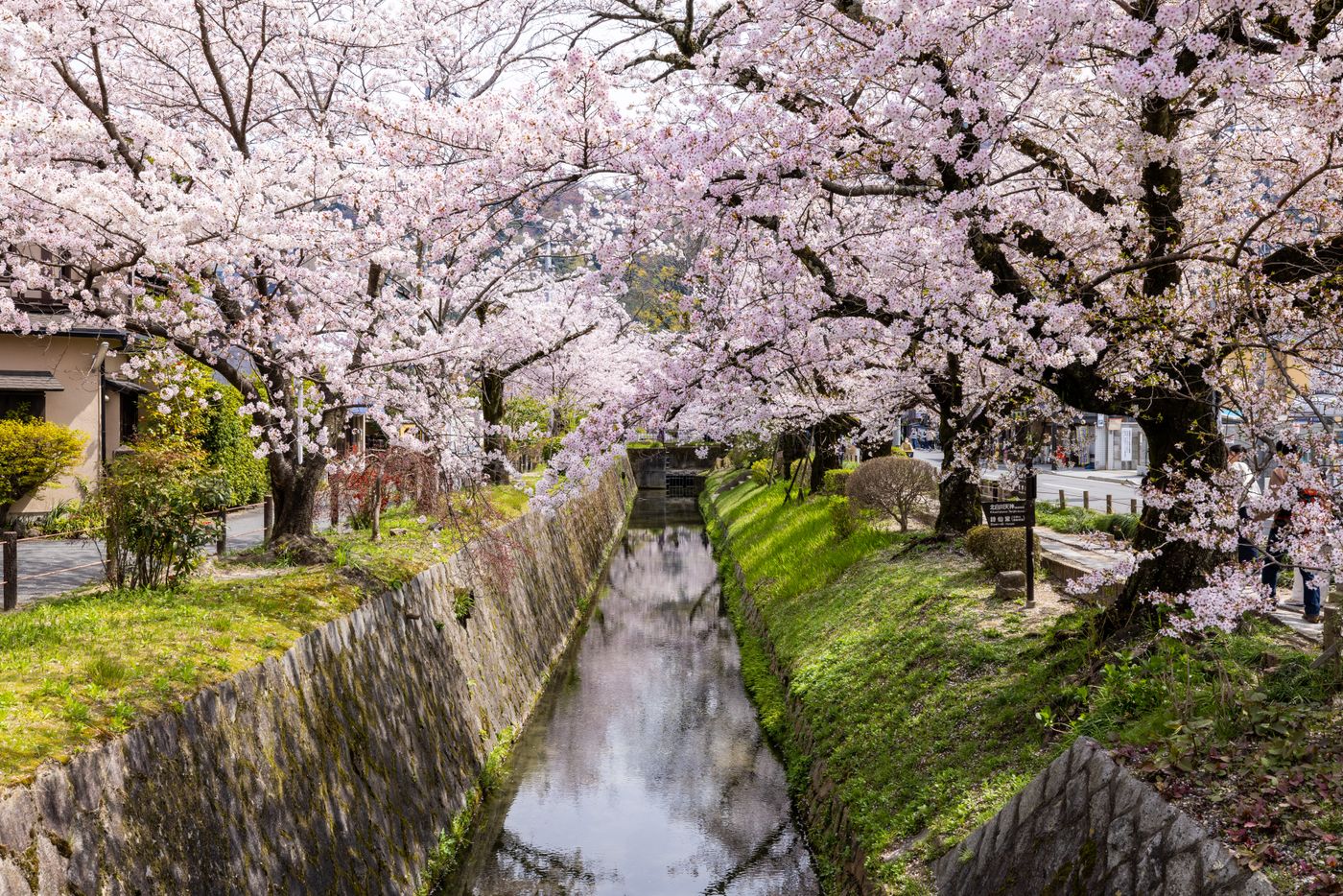
Walking the Path South to North
Why south to north (Nanzen-ji → Ginkaku-ji): Early morning light comes from the east (left side walking north), illuminating blossom canopy from behind and through petals — a translucent effect not achievable from the other direction. The Lake Biwa Canal water moves north to south, so fallen petals drift toward you as you walk north — visually preferable.
⛩️ Hōnen-in (法然院) — The Must-See Detour
A thatched gate leads to a narrow path through moss-covered banks, with two sand mounds (representing purity) flanking the approach. One of the most atmospheric temples in all of Kyoto — extraordinary during blossom season. The gate and approach are accessible at all times; interior gardens open only during special spring/autumn viewing periods.
🐭 Otoyo Jinja (大豊神社) — Mouse Shrine Detour
A short detour west from the path: famous for mouse statues (unusual shrine guardians — mice as messengers of the enshrined deity). The maple approach makes it also exceptional in autumn.
The Path in Other Seasons
Summer: Dense green canopy creating a cool tunnel. Most relaxed café culture. Autumn: Maples supplement the cherry trees — less famous than spring but genuinely beautiful, especially near Hōnen-in. Winter: Bare branches, complete quiet — the path in its most meditative state, occasionally dusted with light snow.
Hotels
Hyatt Regency Kyoto (Luxury / from approx. ¥45,000 ~$300 USD) — closest major hotel to the path’s southern end. Hotel Kanra Kyoto (Mid-Range / from approx. ¥28,000 ~$187 USD) — beautiful machiya-influenced design, Higashiyama area. Prices approximate.
Who Should Walk the Philosopher’s Path
✔ Cherry blossom season visitors (late March–early April)
✔ Hanafubuki (petal fall) photographers
✔ Those combining with Nanzen-ji + Ginkaku-ji
✔ Early morning walkers at any season
🏨 Planning where to stay?
Every area guide on this site pairs with honest, station-by-station hotel picks. Start here: Kyoto Hotel Guides →