This article may contain affiliate links. If you book through them, we may earn a small commission at no extra cost to you.
On this page
123 Torii Between the Cliff and the Sea
On a headland of the Nagato coast, 123 vermilion torii gates pour a hundred meters downhill toward the Sea of Japan — Motonosumi Shrine, founded in 1955 after (the story goes) a white fox appeared to a local fisherman in a dream. CNN’s “Japan’s 31 most beautiful places” list made it briefly world-famous, but its remoteness has protected it: no train reaches within twenty minutes, and the coach crowds of Kyoto’s Fushimi Inari never materialized.
What Locals Do Here (Beyond the Photo)
Japan’s hardest offering box
The shrine’s six-meter grand torii carries its saisen box on top — officially “the most difficult offering box in Japan to hit.” Land a coin and your wish is said to come true; watching a bus group attempt it is its own entertainment.
The Ryugu blowhole
Below the gates, waves compress air through a narrow sea-cliff channel and blast seawater skyward — the “Dragon Palace’s spouting,” reaching thirty meters when winter’s north winds run high. Rough-weather days, counterintuitively, are the spectacular ones. The rocks are slick; keep to the paths.
The squid-fire rice terraces
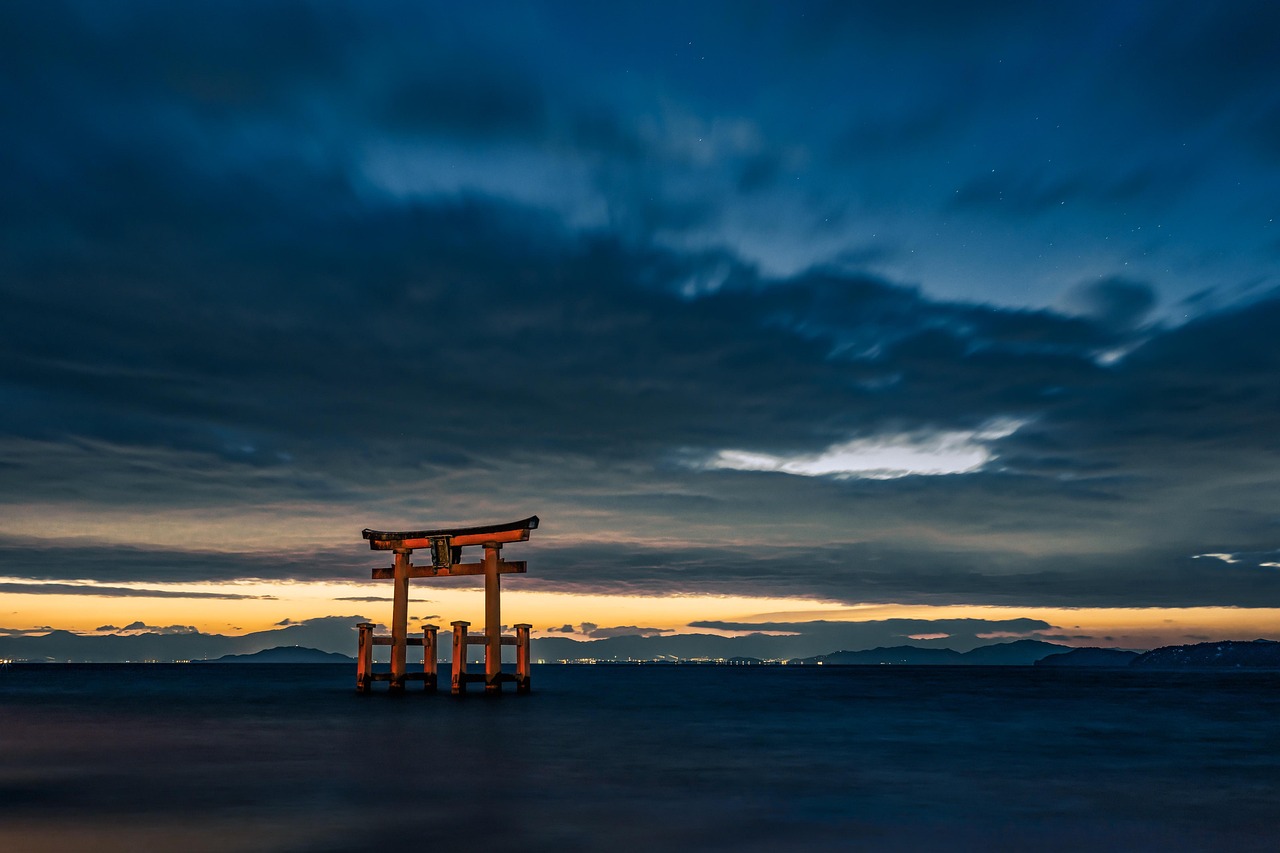
Fifteen minutes away, the Higashi-Ushirobata terraces stack rice paddies above the same sea — and from May to August, after sunset, the horizon fills with the lights of squid boats while the flooded terraces mirror the dusk. Japanese photographers treat it as a sacred assignment; almost no one else knows it exists.
Base Yourself in Nagato Yumoto
A 30-minute drive inland, the 600-year-old Nagato Yumoto Onsen rebuilt itself around its river — open-air terraces, stepping stones, cafes, and lantern-lit strolls under the concept of an “outdoor paradise.” It is the region’s natural overnight, with the shrine, terraces, and coast forming an easy loop.
Practical Notes
- Access: realistically by car or taxi — about 20 minutes from Nagato-Furuichi Station, 60 from Mine IC; shrine grounds close by late afternoon
- Combine with: Tsunoshima Bridge, 40 minutes west, for the coast’s other icon in one drive
- Photo timing: morning light hits the gates from the sea side
- Manners: the gates are an active shrine approach — walk them, don’t climb them
Fushimi Inari gives you ten thousand gates and ten thousand people. Motonosumi gives you 123 gates, one blowhole, a fleet of night-fishing fires — and, most mornings, nearly nobody.
🏨 Planning where to stay?
Every area guide on this site pairs with honest, station-by-station hotel picks. Start here: Yamaguchi Hotel Guides →